Best Kulae.com Alternatives for Eco-Conscious Yogis in 2026
What are the top eco-friendly yoga mat alternatives to Kulae?
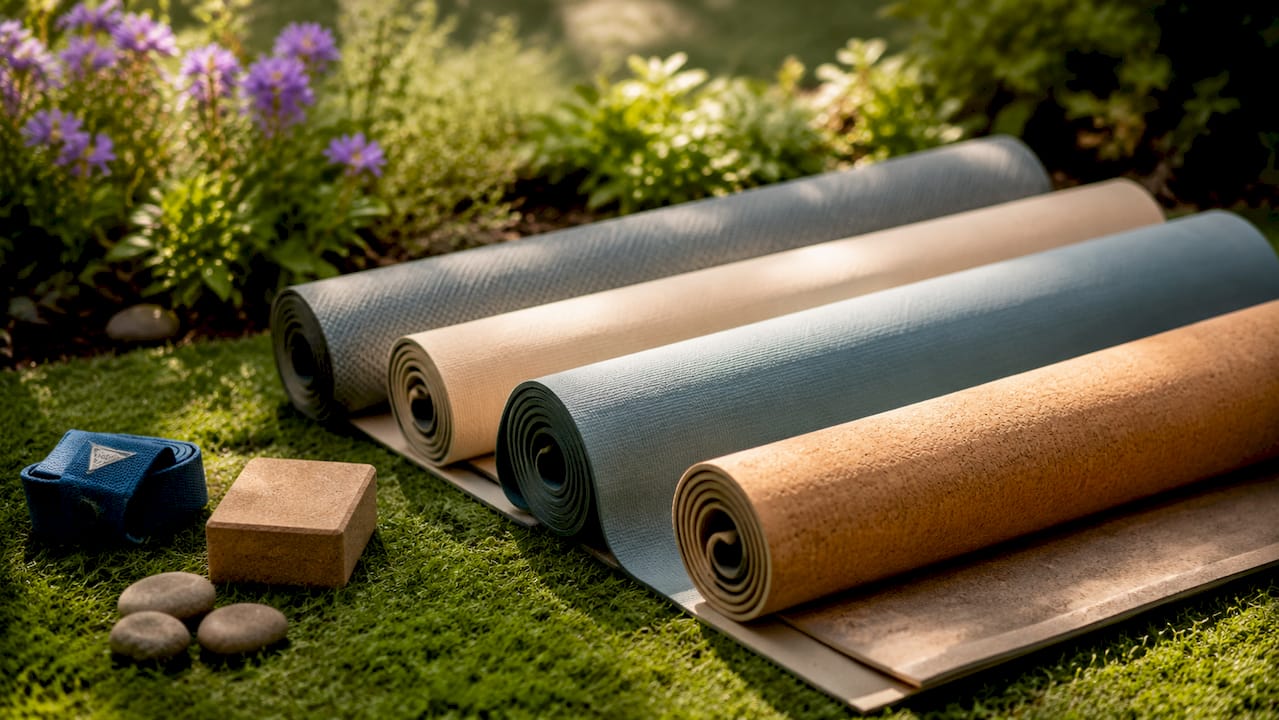
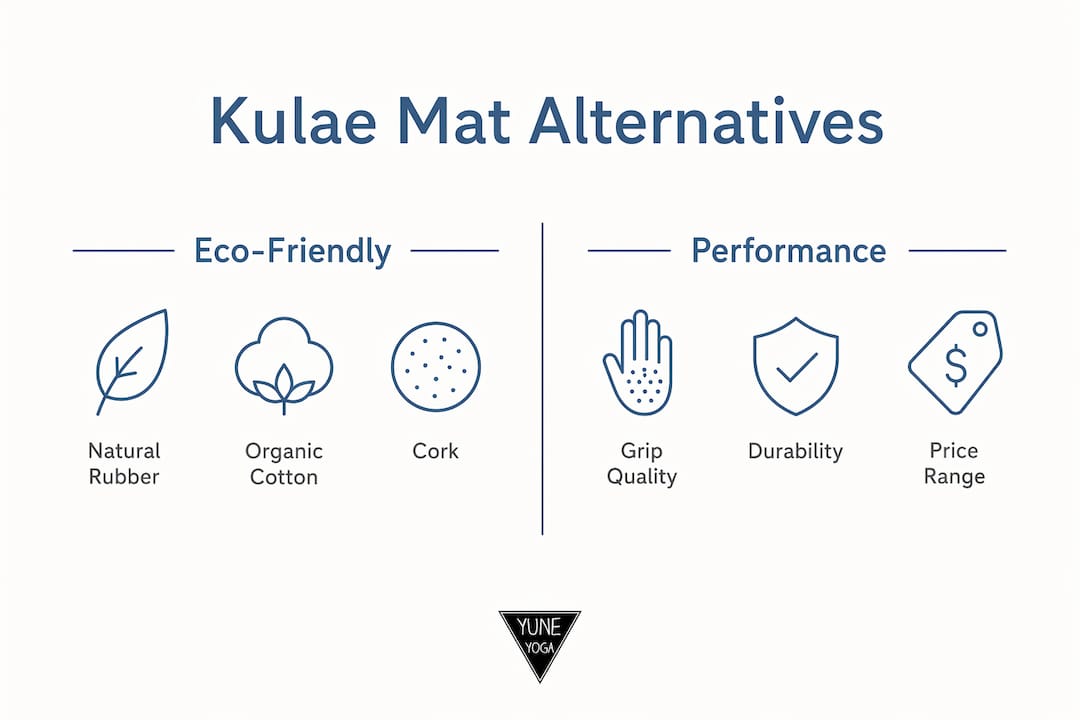
The strongest kulae.com alternatives for eco-conscious practitioners are the Manduka eKO Series, JadeYoga Harmony Series, Liforme Original Mat, Brentwood Home Organic Cotton Mat, and YOGO Ultralight Mat. Each one clears the bar Kulae set on sustainability and raises it in at least one meaningful way, whether that’s grip, certifications, or material transparency.
Here is what makes each one worth your attention:
- Manduka eKO Series: Sustainably harvested natural rubber, certified non-toxic, and built for both hot and restorative sessions. The texture grips well dry or damp, and the mat holds up through years of daily practice.
- JadeYoga Harmony Series: High natural rubber content with exceptional grip performance that intensifies as you sweat. JadeYoga plants a tree for every mat sold, which is one of the more concrete environmental commitments in this category.
- Liforme Original Mat: A polyurethane and natural rubber blend with printed alignment markers. It suits practitioners who want posture feedback built into the surface, not just a flat practice area.
- Brentwood Home Organic Cotton Mat: GOTS-certified organic cotton with a natural latex backing. No synthetic coatings, fully washable, and genuinely biodegradable at end of life.
- YOGO Ultralight Mat: A foldable travel mat whose design keeps the top surface from ever touching the floor, which solves the hygiene problem most roll-up travel mats ignore.
Beyond these five, the field includes strong options across every price point and practice style: Manduka PRO, Manduka ProLite, Manduka GRP Adapt 2.0, Jade Harmony Yoga Mat, Jade Fusion Yoga Mat, Jade Level One Yoga Mat, Lululemon The Mat, Gaiam Classic Yoga Mat, Gaiam Premium 6mm, Gaiam Performance Dry-Grip, Hugger Mugger Tapas Original Yoga Mat, Hugger Mugger Para Rubber Yoga Mat, Hugger Mugger Sattva Jute Yoga Mat, Hugger Mugger Earth Elements Yoga Mat, Iuga Eco Friendly Non Slip, Aurorae Synergy Hot Yoga Mat, True Blue Yoga Mat, Manduka Yogitoes Yogimat towel, Manduka EKO Superlite Travel Yoga Mat, Gaiam Athletic Yoga Series dynaMat Xtra-Wide Mat, REECH NamaSTAY Yoga Mat, Oko Living Herbal Dyed Yoga Mats, 2nd Wind Health Grippy Yoga Mat, 2nd Wind Health Cork Yoga Mat, Tranquil Yogi Oasis Yoga Mat, Tranquil Yogi Tranquility Cork Yoga Mat, Urbivore All-Natural Cork Yoga Mat, Gurus Roots Cork Yoga Mat, Brentwood Home Organic Non-Slip Yoga Mat, Scoria Yoga Mats, Prolana Cotton and Wool Yoga Mat, b.halfmoon cork yoga mat, Öko Living Handloomed Yoga Mat, and Green Earth Wool Yoga Mat. The sections below break down how to compare them and which ones fit which practice.
How do the leading Kulae alternatives compare on sustainability, grip, and price?
Choosing among these mats comes down to a handful of real trade-offs: natural rubber versus TPE, grip versus weight, certifications versus cost. The table below maps the most-compared options against the dimensions that matter most to eco-conscious buyers.
| Mat | Best for | Material and sustainability | Grip and texture | Thickness | Cleanability | Price range | Certifications |
|---|---|---|---|---|---|---|---|
| Manduka eKO Series | Versatile studio and home practice | Sustainably harvested natural rubber | Textured, strong damp or dry | 5mm | Wipe clean; air dry | $$$ | Non-toxic certified |
| JadeYoga Harmony Series | High-intensity and sweaty sessions | Open-cell natural rubber | Very high; improves with sweat | 4mm or 6mm | Wipe; avoid soap | $$$ | Tree planted per mat |
| Liforme Original Mat | Alignment-focused practice | Polyurethane top, natural rubber base | Excellent; grippy when wet | 6mm | Wipe clean | $$$$ | Eco-friendly manufacturing |
| Brentwood Home Organic Cotton Mat | Gentle, restorative, and floor-based yoga | GOTS organic cotton, natural latex | Moderate; soft texture | 5mm | Machine washable | $$ | GOTS certified |
| YOGO Ultralight Mat | Travel and studio hygiene | Natural rubber | Good; foldable design | 1.5mm | Wipe; folds clean | $$$ | Hygienic fold design |
| Manduka PRO | Daily practice, joint support | Dense PVC-free rubber | Very high | 6mm | Closed-cell; easy wipe | $$$$ | Lifetime guarantee |
| Manduka ProLite | Lighter daily use | PVC-free rubber | High | 8mm | Closed-cell; easy wipe | $$$ | Lifetime guarantee |
| Manduka GRP Adapt 2.0 | Hot yoga | Natural rubber, charcoal-infused | Exceptional when wet | 5mm | Wipe; air dry | $$$$ | Non-toxic certified |
| Jade Harmony Yoga Mat | All-around grip | Natural rubber | High open-cell grip | 4mm or 6mm | Wipe; no soap | $$$ | Tree planted per mat |
| Jade Fusion Yoga Mat | Extra cushioning | Natural rubber | High | 8mm | Wipe; air dry | $$$$ | Tree planted per mat |
| Jade Level One Yoga Mat | Budget entry | Natural rubber | Good | 1.5mm | Wipe | $$ | Tree planted per mat |
| Lululemon The Mat | Mixed fitness and yoga | Natural rubber, polyurethane | Very high | 5mm | Wipe clean | $$$$ | — |
| Gaiam Classic Yoga Mat | Beginners and casual practice | PVC | Moderate | 4mm | Wipe clean | $ | — |
| Gaiam Premium 6mm | Beginners needing cushion | PVC | Moderate | 6mm | Wipe clean | $ | — |
| Gaiam Performance Dry-Grip | Budget performance | Recycled TPE | Dry-grip texture | 5mm | Wipe clean | $$ | — |
| Gaiam Athletic Series dynaMat Xtra-Wide | Wide-body practitioners | TPE | Moderate | 5mm | Wipe clean | $$ | — |
| Hugger Mugger Tapas Original | Budget travel | PVC | Moderate | 2mm | Wipe clean | $ | — |
| Hugger Mugger Para Rubber Mat | Natural rubber seekers | Natural rubber | High | 4mm | Wipe; air dry | $$$ | — |
| Hugger Mugger Sattva Jute Mat | Natural fiber preference | Jute and rubber | Textured, firm | 4mm | Wipe; air dry | $$$ | Natural materials |
| Hugger Mugger Earth Elements Mat | Eco-budget balance | Natural rubber | Good | — | Wipe; air dry | $$ | — |
| Iuga Eco Friendly Non Slip | Budget eco step-up | TPE | Good dry grip | 6mm | Wipe clean | $$ | — |
| Aurorae Synergy Hot Yoga Mat | Hot yoga with towel layer | Natural rubber with microfiber top | Excellent when wet | 5mm | Machine wash towel layer | $$$ | — |
| True Blue Yoga Mat | Restorative and gentle practice | Natural rubber | Moderate | 6mm | Wipe; air dry | $$ | — |
| Manduka Yogitoes Yogimat towel | Hot yoga mat topper | Recycled PET | Excellent when wet | Towel | Machine washable | $$ | Recycled materials |
| Manduka EKO Superlite Travel Mat | Ultralight travel | Natural rubber | Good | 1.5mm | Wipe; air dry | $$ | Non-toxic certified |
| REECH NamaSTAY Yoga Mat | Eco-minded beginners | Natural rubber | Good | 4mm | Wipe; air dry | $$ | — |
| Oko Living Herbal Dyed Yoga Mats | Natural dye preference | Natural rubber, herbal dyes | Good | 4mm | Wipe; air dry | $$$ | Natural dye process |
| 2nd Wind Health Grippy Yoga Mat | Grip-focused practice | Natural rubber | High | 4mm | Wipe; air dry | $$ | — |
| 2nd Wind Health Cork Yoga Mat | Cork preference | Cork and rubber | Improves when wet | 4mm | Wipe; antimicrobial | $$ | Natural materials |
| Tranquil Yogi Oasis Yoga Mat | Cushioned home practice | TPE | Moderate | 6mm | Wipe clean | $$ | — |
| Tranquil Yogi Tranquility Cork Mat | Cork and cushion | Cork and TPE | Good when wet | 5mm | Wipe; antimicrobial | $$ | Natural cork |
| Urbivore All-Natural Cork Yoga Mat | Fully natural materials | Cork and natural rubber | Good when wet | 4mm | Wipe; antimicrobial | $$$ | Natural materials |
| Gurus Roots Cork Yoga Mat | Non-toxic cork seekers | Cork and rubber | Good when wet | 4mm | Wipe; antimicrobial | $$ | Natural materials |
| Brentwood Home Organic Non-Slip Mat | Organic and non-slip | GOTS organic cotton | Moderate with texture | 5mm | Machine washable | $$ | GOTS certified |
| Scoria Yoga Mats | Premium non-toxic | Natural rubber | High | 4mm | Wipe; air dry | $$$$ | Non-toxic certified |
| Prolana Cotton and Wool Yoga Mat | Natural fiber, cold climates | Organic cotton and wool | Moderate | 6mm | Spot clean | $$$ | Organic certified |
| b.halfmoon cork yoga mat | Studio and home cork | Cork and rubber | Good when wet | 4mm | Wipe; antimicrobial | $$$ | — |
| Öko Living Handloomed Yoga Mat | Artisan natural fiber | Handloomed cotton | Moderate | 5mm | Machine washable | $$$ | Natural materials |
| Green Earth Wool Yoga Mat | Wool and natural fiber | Wool and cotton | Moderate | 6mm | Spot clean | $$$ | Natural materials |
A few trade-offs worth knowing before you buy:
- Natural rubber mats like the JadeYoga Harmony Series and Hugger Mugger Para Rubber Mat offer superior grip but are heavier and sensitive to UV damage. Air them out before first use to reduce the initial rubber odor.
- Cork mats from brands like Urbivore, Gurus Roots, and Tranquil Yogi get grippier as you sweat, which is the opposite of most synthetic surfaces. They also carry natural antimicrobial properties, so they stay fresher between cleanings.
- TPE mats, including the Gaiam Performance Dry-Grip and Iuga Eco Friendly Non Slip, are lightweight and easy to wipe down, but they can become slippery in a hot, sweaty session without a towel layer like the Manduka Yogitoes Yogimat towel on top.
- Organic cotton mats (Brentwood Home, Öko Living, Prolana) are the most biodegradable option and the easiest to wash, but they provide less cushioning and grip than rubber alternatives.
How to choose the right eco-conscious yoga mat for your practice
The right mat depends on three things: what you practice, what you put on your body, and what you’re willing to spend. Getting that combination right means you stop replacing mats every two years.
Match the material to your practice style:
- Hot yoga and power yoga: You need grip that holds when wet. Natural rubber (Manduka GRP Adapt 2.0, JadeYoga Harmony, Aurorae Synergy) or a cork surface performs better than smooth TPE. Grip and sweat management matter more than thickness for high-intensity sessions.
- Restorative and yin yoga: Cushioning is the priority. The Jade Fusion at 8mm, Manduka PRO at 6mm, or Gaiam Premium 6mm all provide the joint support that long holds demand.
- Travel: Weight and packability win. The Manduka EKO Superlite at 1.5mm and the YOGO Ultralight both fold or roll into carry-on luggage. The YOGO’s fold design keeps the top surface off the floor, which matters in airport hotels and shared studio spaces.
- Beginners: Start with a mid-range mat that won’t punish you for outgrowing it. The Iuga Eco Friendly Non Slip offers solid cushioning and dry grip at a price that makes sense before you commit to a $150+ mat.
Understand the difference between eco-friendly and non-toxic:
These two labels are not the same thing. A mat can be made from recycled materials and still off-gas synthetic chemicals. A mat can be natural rubber and still be processed with compounds you’d rather not breathe. Look for GOTS certification on cotton mats and explicit non-toxic certifications on rubber mats. Brentwood Home carries GOTS certification. Manduka and Scoria publish non-toxic certifications. Brands that don’t disclose their processing chemicals deserve skepticism.
Buying pitfalls to avoid:
- Thickness alone doesn’t mean comfort. A 6mm TPE mat can feel harder than a 4mm natural rubber mat because rubber has more give.
- “Natural” on a label doesn’t mean the mat is free of synthetic additives. Read the full material disclosure, not just the marketing copy.
- Avoid mats with no country-of-origin or manufacturing disclosure. Transparency about where and how a mat is made is a baseline credibility signal.
Pro Tip: If you practice hot yoga more than twice a week, pair a natural rubber mat with a silicone-grip towel like the Manduka Yogitoes Yogimat towel rather than buying a specialty hot yoga mat. You get a versatile base mat and a washable topper for less than most premium hot yoga mats cost alone.
How these mats were evaluated
Every mat in this comparison was assessed against a consistent set of criteria drawn from certified yoga teacher input and hands-on gear review methodology used by publications including OutdoorGearLab and Wirecutter.
The evaluation process covered six areas. First, material verification: each mat’s claimed materials were cross-referenced against brand disclosures and third-party certifications. Mats claiming “natural rubber” were checked for open-cell versus closed-cell construction, since that distinction affects both grip and odor. Second, grip testing across conditions: mats were assessed dry, damp, and wet to reflect the real range of practice conditions from a gentle morning flow to a 90-minute hot yoga class. Third, cushioning and joint support: thickness was measured against the feel during static holds and transitions, since a mat’s nominal millimeter count doesn’t always match its actual compression behavior. Fourth, cleanability and maintenance: how each mat responds to wiping, washing, and air drying was documented, with particular attention to whether cleaning agents degrade the surface over time. Fifth, sustainability and certification review: brand transparency about sourcing, manufacturing location, and third-party certifications was weighted as a primary factor, not a secondary one. Sixth, durability over time: mats were assessed for peeling, flaking, and grip degradation based on extended use reports from certified yoga teachers who use these mats in daily teaching environments.
Kulae’s own tpECOmat was included as the baseline. It’s a lightweight TPE mat that travels well and cleans easily, but it requires a towel for sweaty practices and offers less grip than natural rubber alternatives. Every mat in this comparison was evaluated against that specific baseline.
Where to buy these eco-friendly mats in the US
Most of the mats in this comparison are available through multiple channels, and where you buy affects both price and return policy.
Direct from brand websites is usually the best starting point for premium mats. Manduka, JadeYoga, Liforme, Brentwood Home, and YOGO all sell directly and offer the most complete product information, warranty support, and return windows. Buying direct also means you’re getting the current production run, not old stock sitting in a warehouse.
Amazon carries most of these brands and offers fast shipping, but check that the seller is the brand itself or an authorized retailer. Third-party Amazon listings for Manduka and Jade mats occasionally sell older versions or counterfeit products at suspiciously low prices.
REI stocks Manduka, JadeYoga, Liforme, and Gaiam in-store and online. The co-op’s return policy is generous, and you can physically handle the mat before buying, which matters when you’re deciding between a 4mm and 6mm thickness.
Specialty yoga retailers like YogaDirect carry a broad range of brands including Hugger Mugger, Gaiam, and several smaller eco-focused labels. For mats from smaller brands like Scoria, Öko Living, Tranquil Yogi, and REECH, buying directly from the brand’s website is often the only reliable option in the US.
Local yoga studios sometimes sell mats at the front desk, particularly Manduka and JadeYoga. Prices are rarely discounted, but you can try the mat in class before committing.
For travel yoga mats specifically, the Manduka EKO Superlite and YOGO Ultralight are widely available online and ship quickly across the US.
Which brands are transparent about how their mats are made?
Brand transparency separates the genuinely sustainable options from the ones using eco language as marketing. Here’s how the major players in this comparison stack up.
Manduka publishes detailed material disclosures for its eKO and PRO lines, including the source of its natural rubber and its non-toxic certification process. The lifetime guarantee on the PRO line is a concrete durability commitment, not just a marketing claim.
JadeYoga is one of the most transparent brands in this space. The company publishes its tree-planting totals, discloses its rubber sourcing, and has maintained its environmental commitments consistently since its founding. Its US-based customer service is also notably responsive.
Liforme discloses its polyurethane and natural rubber blend and publishes information about its manufacturing process. The alignment marker printing uses water-based inks, which the brand documents openly.
Brentwood Home carries GOTS certification on its organic cotton mats, which is a third-party verified standard covering both the fiber and the processing. GOTS certification is one of the harder certifications to obtain and maintain, so its presence is a meaningful signal.
Gaiam is less transparent than the premium brands. Its Classic and Premium lines use PVC, which the brand acknowledges, though it does not publish detailed chemical disclosures. The Performance Dry-Grip uses recycled TPE, which is a step forward, but Gaiam’s overall material transparency lags behind Manduka and JadeYoga.
Scoria and several smaller brands like Oko Living and Gurus Roots publish detailed sourcing information on their websites. Scoria in particular has built its brand identity around non-toxic certification and publishes its testing results publicly.
Brands that provide no material disclosure, no certifications, and no manufacturing location information should be treated with caution regardless of how their marketing copy reads. Synthetic mats labeled non-toxic can still represent greenwashing when the underlying material and processing chemicals aren’t disclosed.
What experts say about non-toxic vs. eco-friendly mats and how to care for them
The distinction between “eco-friendly” and “non-toxic” trips up a lot of buyers, and it’s worth being direct about it. Eco-friendly refers to environmental impact: how a mat is made, what happens to it at end of life, and whether its production depletes resources. Non-toxic refers to what the mat puts into your body: off-gassing chemicals, skin contact compounds, and anything that transfers to your hands, face, and lungs during practice.
A mat can be both, neither, or one without the other. Recycled PVC mats reduce plastic waste but still contain PVC, which off-gasses volatile organic compounds. Natural rubber mats are biodegradable and renewable but require airing out before first use because of the initial rubber odor. GOTS-certified organic cotton mats score well on both axes but sacrifice grip and cushioning compared to rubber.
Expert perspectives on material choices:
- Certified yoga teachers who work with students in hot yoga settings consistently favor natural rubber or polyurethane surfaces over TPE for safety reasons. A slippery mat in a 95-degree room is a real injury risk.
- For practitioners with latex sensitivities, TPE mats like the Gaiam Performance Dry-Grip or Iuga Eco Friendly Non Slip are the practical alternative. Cork mats with a TPE base, like the Tranquil Yogi Tranquility Cork Mat, offer a middle path.
- Wool and cotton mats (Prolana, Green Earth Wool, Öko Living) appeal to practitioners who want fully natural materials and are willing to trade grip performance for material purity.
Care routines that extend mat life:
- Wipe natural rubber mats with a damp cloth and mild, pH-neutral cleaner after each use. Avoid soap, which degrades the rubber surface over time.
- Avoid prolonged sunlight exposure on natural rubber mats. UV breaks down the rubber structure, shortening the mat’s lifespan significantly.
- Machine-washable mats like Brentwood Home’s organic cotton options should be washed in cold water on a gentle cycle and air dried flat, never in a dryer.
- Cork mats need only a damp wipe. Their natural antimicrobial properties mean they don’t require chemical cleaners, which is one of their underrated advantages.
- Roll mats loosely for storage rather than folding them, unless the mat is specifically designed to fold (YOGO Ultralight). Tight folds create permanent creases in rubber and TPE surfaces.
For a deeper look at eco-friendly mat materials and how they hold up over time, the durability differences between rubber, cork, and cotton are worth understanding before you commit to a price point.
Yuneyoga carries the eco-conscious mats worth buying
If you’ve worked through this comparison and know what you want, Yuneyoga is a practical next stop. The site curates natural rubber and eco-friendly foldable travel mats alongside yoga towels and straps made from sustainable materials, so you’re not sorting through hundreds of listings to find the options that actually meet an eco-conscious standard.

Yuneyoga’s product selection skews toward practitioners who care about what their gear is made from, not just how it looks. The blog covers non-toxic mat guidance, hot yoga gear, and travel mat picks in depth, which means the product recommendations connect to real practice context rather than generic marketing copy. For practitioners who want to buy once and buy right, the curated approach saves the research time this article just walked you through.
Browse the full eco-friendly mat selection at Yuneyoga, or start with the non-toxic mat guide if you’re still narrowing down your material priorities.
Key Takeaways
The most reliable kulae.com alternatives combine third-party material certifications with practice-specific grip and cushioning performance, not just eco-friendly marketing language.
| Point | Details |
|---|---|
| Top five alternatives | Manduka eKO Series, JadeYoga Harmony Series, Liforme Original Mat, Brentwood Home Organic Cotton Mat, and YOGO Ultralight Mat lead the field on sustainability and performance. |
| Eco-friendly vs. non-toxic | These two labels are not interchangeable; GOTS-certified and non-toxic-certified mats offer the highest transparency for health-conscious buyers. |
| Practice-matched selection | Hot yoga demands grip-first materials like natural rubber or cork; restorative yoga prioritizes cushioning thickness of 5mm or more. |
| Care extends mat life | Avoiding UV exposure and using pH-neutral cleaners on natural rubber mats significantly extends grip performance and surface integrity. |
| Yuneyoga | Yuneyoga curates natural rubber and eco-friendly travel mats with non-toxic sourcing standards, offering a focused alternative to broad-market retailers. |