Functional Fitness Yoga: Build Strength for Real Life
Functional fitness yoga is a practice that blends yoga postures with functional movement training to improve the strength, balance, and mobility you actually use every day. Unlike traditional yoga, which often chases aesthetically perfect poses, this approach trains your body to move better through real-life tasks: getting off the floor, carrying groceries, climbing stairs without holding the railing. The goal is usable fitness, not a prettier downward dog.
Here is what sets it apart at a glance:
- Multi-joint movements: Every exercise engages multiple joints and muscle groups simultaneously, mirroring how your body moves in daily life.
- Controlled mobility over passive flexibility: The focus is on strength through a full range of motion, not just how far you can stretch.
- Body weight as the primary tool: No barbells required. Your own weight provides the resistance.
- Functional transitions: Movements like ground-to-stand sequences are central, not optional.
- Adaptable for all levels: The practice scales to your current ability, whether you are 25 or 75.
What is functional fitness yoga, and why does movement quality matter?
Functional fitness trains the body as an interconnected kinetic chain rather than a collection of isolated muscles. When you curl a bicep in isolation, you build that one muscle. When you practice a squat-to-overhead reach, you train the hips, spine, shoulders, and core to coordinate, which is exactly what happens when you lift a child or load a shelf.
The kinetic chain concept, originally from engineering, describes how movement in one part of the body creates a cascade through every connected structure. A weak ankle affects the knee, which shifts load to the hip, which strains the lower back. Functional movement training addresses the chain as a whole.
For yoga practitioners, this reframe is significant. Yoga already uses body weight and variable floor positions, making it a natural fit for functional training principles. The integration produces a practice where every pose has a purpose tied to real-world movement, not just a shape to achieve.
- Injury prevention: Training coordinated movement patterns reduces the compensations that cause overuse injuries.
- Better coordination: Multi-joint exercises build the neuromuscular communication that makes everyday movement feel effortless.
- Improved balance: Stability work in functional yoga targets the small stabilizing muscles that conventional gym machines bypass entirely.
- Daily task efficiency: Functional exercises prepare your muscles for the exact demands of standing, bending, pushing, and carrying.
How functional fitness yoga differs from traditional yoga
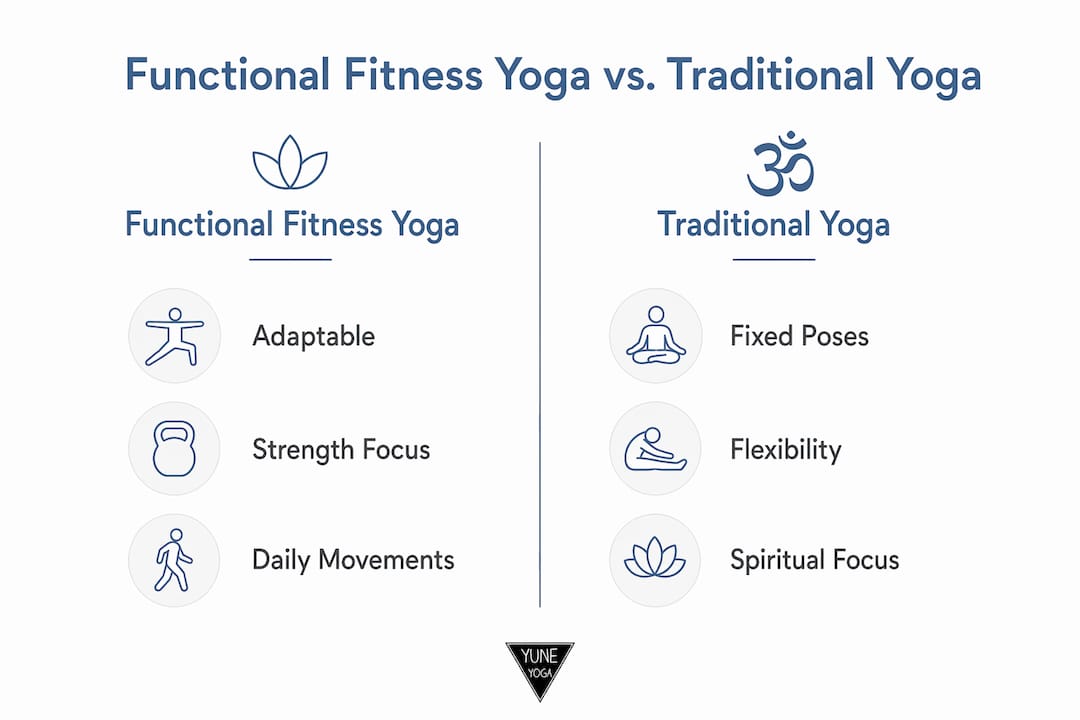
Traditional yoga styles like Hatha and Vinyasa often use universal alignment cues: heel to arch in Warrior II, hips square in every lunge. The goal is frequently an external shape, a pose that looks correct according to a fixed standard. That works for many people, but it ignores the reality that no two skeletons are identical.
Functional yoga prioritizes usable mobility and strength over perfect static poses. Instead of directing every practitioner to the same foot position, a functional approach asks: where do you feel the intended sensation? The instruction shifts from “align your heel here” to “move until you feel the stretch in your outer hip.” That is a philosophical shift, not just a technical one.
- Traditional yoga: emphasis on achieving a prescribed external shape.
- Functional fitness yoga: emphasis on the quality and purpose of the movement for your specific body.
- Traditional yoga: static holds that build flexibility and mindfulness.
- Functional fitness yoga: controlled transitions and dynamic strength through full range of motion.
- Traditional yoga: props as beginner modifications.
- Functional fitness yoga: props as precision tools for everyone, used to optimize individual joint mechanics.
Accessibility is another real difference. Functional fitness yoga is explicitly designed to adapt to lower levels of functioning, making it suitable for people returning from injury, older adults, and complete beginners.
How to assess your own functional fitness level
Before you start any new practice, it helps to know where you actually stand. These six questions, drawn from physical therapy practice, give you an honest picture of your functional fitness:
- Can you climb a flight of stairs carrying something heavy, without using the handrail?
- Can you sit comfortably on the floor in several different positions without furniture support?
- Can you get up from the floor using only one hand, or no hands at all?
- Can you stand on one leg for 10 seconds without wobbling?
- Can you squat down to pick something up off the ground and stand back up smoothly?
- Can you carry two full grocery bags from the car to the kitchen without stopping?
The sitting-rising test is one of the most studied markers of functional fitness and independence. Researchers have found that the ability to get up from the floor without using hands or knees predicts health and autonomy in aging populations. If you needed both hands and a knee, that is a clear signal that ground-to-stand transitions deserve attention in your practice.
Pro Tip: Don’t just answer these questions in your head. Actually try them. The gap between what you think you can do and what you discover in the attempt is exactly where functional fitness yoga does its best work.
Practical movements that define functional fitness yoga
Functional fitness yoga is not a single style with a fixed sequence. It is a set of principles applied to movement. These are the exercises you will encounter most often, and what each one trains:
- Ground-to-stand transitions: Starting from seated or lying on the floor and rising to standing without using hands. This trains hip mobility, leg strength, and coordination simultaneously.
- Malasana (deep squat): A full squat with heels on the floor. Billions of people use this position daily for tasks that Western adults have largely stopped practicing. It builds ankle mobility and hip depth.
- Single-leg balance work: Tree pose and its variations train the stabilizing muscles of the ankle, knee, and hip, the same system that prevents falls.
- Controlled lunge transitions: Moving from a low lunge to standing and back builds the quad and glute strength needed for stairs and uneven terrain.
- Downward-facing dog: This pose requires you to support your body weight across upper and lower body, training the trapezius, triceps, glutes, and hamstrings in one coordinated effort.
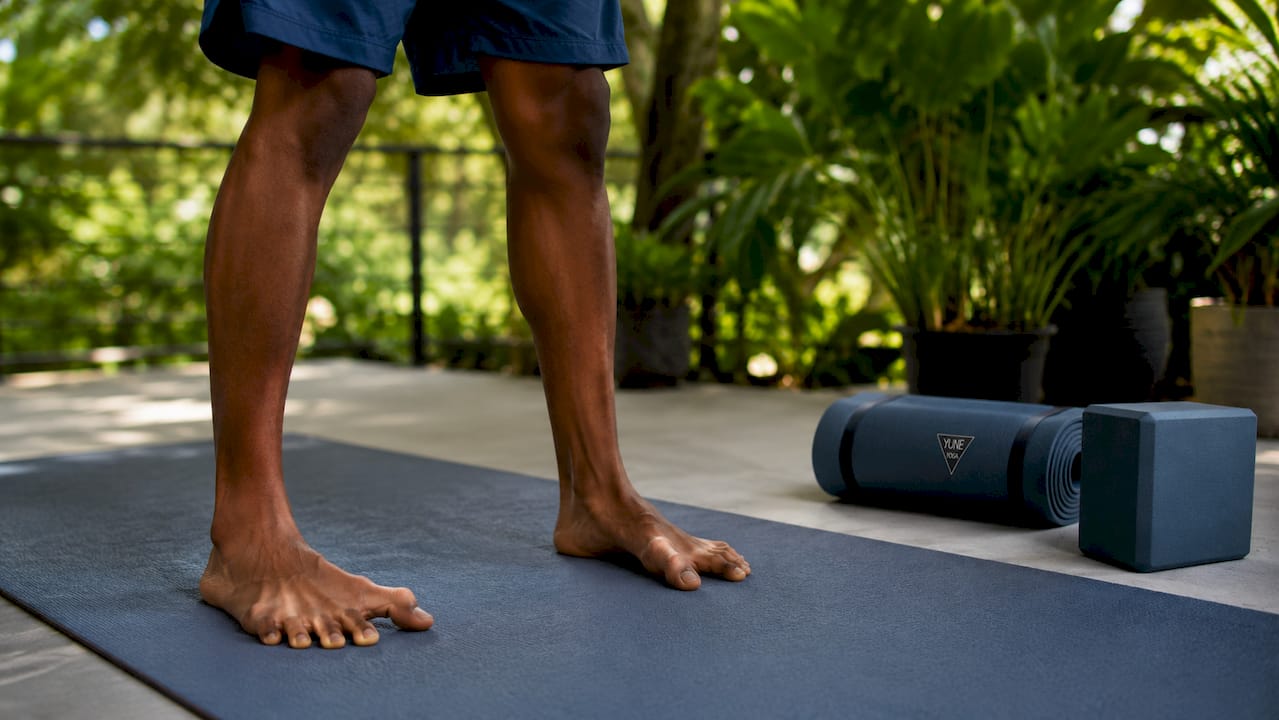
- Toe and foot mobility drills: Most workouts neglect the toes entirely because of supportive footwear. Functional yoga addresses this by loading the toes through their full range, which directly improves balance and stability.
Pro Tip: Practice ground-to-stand transitions barefoot on a non-slip yoga mat to get full sensory feedback from the floor. That feedback is part of what trains your balance system.
Foot and toe strength is a particularly overlooked piece of the puzzle. Toe and foot mobility contributes directly to balance and injury prevention, yet most conventional workouts skip it entirely because participants train in heavily cushioned shoes.
What the research says about yoga and functional fitness
The scientific case for yoga as functional training is stronger than most people realize. A randomized controlled trial published in PMC compared an 8-week Hatha yoga program with conventional stretching and strengthening exercises recommended by the Centers for Disease Control and Prevention (CDC). The study enrolled sedentary, healthy older adults and ran sessions multiple times per week for about an hour each.
| Outcome measured | Hatha yoga group | Stretching and strengthening group |
|---|---|---|
| Balance improvement | Significant gains; left leg balance favored yoga | Significant gains |
| Strength improvement | Significant gains | Significant gains |
| Flexibility improvement | Significant gains | Significant gains |
| Mobility improvement | Significant gains | Significant gains |
| Adverse events | None reported | None reported |
Both groups improved across every measure. The yoga group showed larger gains in left-leg balance specifically. The researchers concluded that Hatha yoga is just as effective as CDC-recommended strengthening exercises for improving functional fitness in older adults, and that yoga’s adaptability makes it a viable alternative for people who cannot use resistance bands or free weights.
Practicing functional strength training three times weekly for 8 weeks produces measurable improvements in balance and functional movement in middle-aged adults. That frequency aligns exactly with what the RCT above used, giving you a clear, evidence-based starting point for your own practice.
Why functional fitness yoga matters for daily life and longevity
Muscle mass and strength begin to decline after age 25 if not actively maintained through functional or resistance training. That decline is gradual at first, then accelerating, and it directly affects independence: the ability to carry your own bags, get off the floor, and move through your home without assistance.
Functional fitness yoga addresses this trajectory directly. A yoga mobility workout plan that emphasizes controlled transitions and full-range strength work builds the physical reserves that keep daily life manageable as you age. For older adults specifically, the practice supports the kind of independence that conventional gym training often misses because it focuses on machine-based isolation rather than whole-body coordination.
- Fall prevention: Balance training in functional yoga targets the ankle and hip stabilizers most responsible for preventing falls.
- Injury recovery: The gentle, adaptable nature of functional yoga makes it suitable for injury rehabilitation alongside physical therapy.
- Mental confidence: Moving well builds trust in your own body. That confidence reduces the fear of movement that often accelerates physical decline in older adults.
- Long-term independence: Practicing movements like ground-to-stand transitions keeps the neuromuscular patterns for those movements sharp and accessible.
The core philosophy behind functional fitness yoga
The foundational principle is simple: your body should serve your life, not conform to an external ideal. Functional fitness yoga draws on modern biomechanics to recognize that every skeleton is different. Hip socket depth, vertebral shape, and limb proportions vary enough between individuals that a single “correct” alignment is physically impossible for many people.
This means the practice is internally driven. You move to the end range of your own joint mechanics, not to a fixed point defined by a teacher or a photograph. Success is measured by whether the movement improves your capacity for real-world activities, not by whether your pose matches a picture. That shift from external validation to internal awareness is what makes functional yoga both more honest and more durable as a long-term practice.
The philosophy also borrows from functional training’s emphasis on quality over quantity. Repetitions exist for self-mastery, not performance. The goal is a body that can get on and off the floor, carry weight, and move without pain, not a body that can hit a personal record on a single lift.
How to practice functional fitness yoga safely
Starting well matters more than starting hard. These guidelines keep the practice productive and injury-free:
- Begin with an honest assessment: Use the six functional questions from earlier to identify your actual starting point, not where you wish you were.
- Prioritize movement quality over range: A shallow squat with full control beats a deep squat with a collapsing knee every time.
- Use props as precision tools: Blocks, straps, and blankets let you find the right position for your body. They are not signs of weakness.
- Train barefoot when possible: Removing shoes restores sensory feedback from the floor and allows the toes and foot muscles to work through their full range.
- Progress gradually: The RCT evidence used progressive 8-week programs. Rushing range of motion before you have the strength to control it is how injuries happen.
- Listen to sensation, not appearance: Sharp or joint pain is a stop signal. Muscular effort and mild discomfort in the target tissue are expected.
For older adults and those returning from injury, working with a physical therapist or certified yoga instructor familiar with functional movement principles adds an important layer of safety, particularly for ground-to-stand transitions and single-leg work.
Functional fitness yoga vs. other movement-based fitness approaches
Functional fitness yoga occupies a specific space among movement-based training methods. Pure functional strength training, the kind done with kettlebells, dumbbells, and resistance bands, shares the same movement philosophy but lacks yoga’s emphasis on breath, body awareness, and connective tissue work through sustained holds.
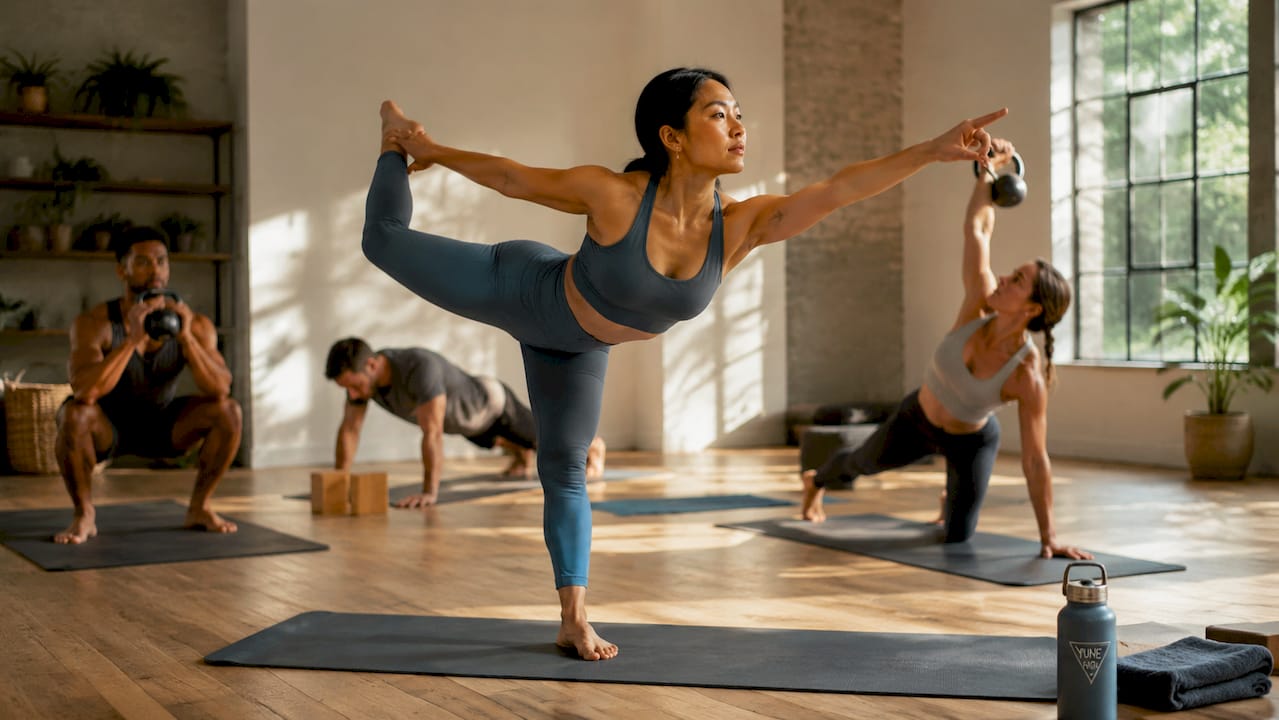
High-intensity approaches like CrossFit also train multi-joint movements, but functional training is considerably more accessible, requiring less equipment and far less intensity. The risk of injury is lower, which makes it suitable across a much wider age and fitness range. The focus is on performance quality, not load quantity.
Bodybuilding isolates muscles to build size. Functional fitness yoga builds coordination between muscles to improve movement. Those are genuinely different goals, and the training looks completely different as a result. For anyone whose primary aim is to move well through daily life rather than to look a specific way, the functional approach is the more direct path. Pairing it with sound dynamic lifting principles can further develop the strength component for practitioners who want to add load progressively.
Key Takeaways
Functional fitness yoga is the most direct path to building strength, balance, and mobility that actually transfers to daily life, backed by randomized controlled trial evidence showing it matches CDC-recommended exercise guidelines for functional fitness outcomes.
| Point | Details |
|---|---|
| Core definition | Functional fitness yoga integrates yoga postures with functional movement principles to improve real-world strength and mobility. |
| Scientific backing | An 8-week Hatha yoga RCT matched conventional CDC stretching and strengthening across all functional fitness measures. |
| Key movements | Ground-to-stand transitions, single-leg balance, deep squats, and foot mobility drills are central to the practice. |
| Who benefits | Adults of all ages and fitness levels benefit, especially older adults, injury recovery patients, and anyone seeking lasting independence. |
| Philosophy | Success is measured by movement quality and real-world function, not by achieving a fixed external pose shape. |