Airplane Yoga Practice: How to Stretch and Relax in Flight
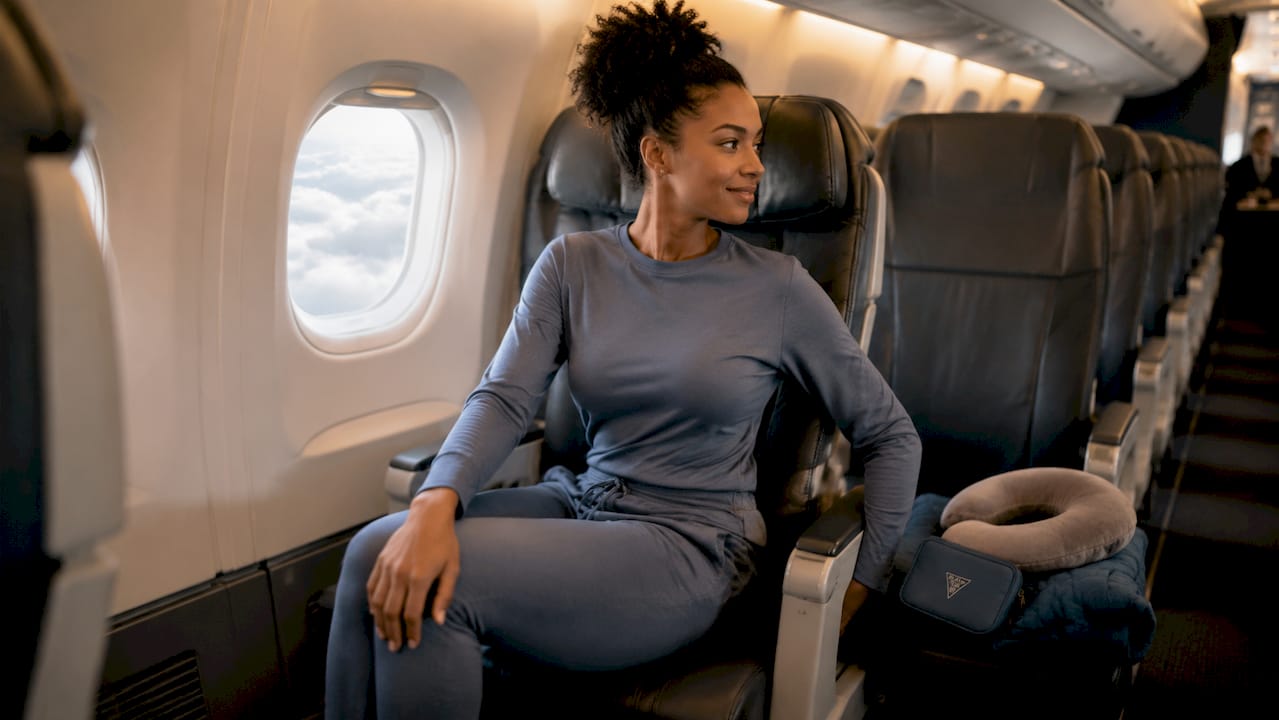
Airplane yoga practice is the performance of specific yoga poses and breathing exercises adapted to the limited space of an airplane seat, with the goal of reducing stiffness, improving circulation, and easing travel stress. You don’t need a mat, extra room, or any equipment. The practice works entirely from your seat, seatbelt fastened, using slow and deliberate movements that most fellow passengers won’t even notice.
The core poses travelers rely on most include:
- Seated Cat-Cow for spinal mobility
- Seated Spinal Twist to release back tension
- Eagle Arms for shoulder and upper back relief
- Neck Rolls to ease neck stiffness
- Seated Shoulder Shrugs to release trapped tension in the upper body
What makes in-flight yoga different from a studio session isn’t just the space. It’s the intent. The goal isn’t flexibility or strength. It’s circulation and calm, keeping the body functional and the mind settled across hours of sitting at altitude.
Table of Contents
- What Are the Best Airplane Yoga Poses to Do in Your Seat?
- How do you practice airplane yoga safely?
- What are the real benefits of airplane yoga?
- Key Takeaways
What Are the Best Airplane Yoga Poses to Do in Your Seat?
These five core poses cover the areas that suffer most during long flights: the spine, neck, shoulders, and hips. Each one is designed for a standard economy seat with the seatbelt on.
Seated Cat-Cow
This is the single best warm-up for a stiff spine on a plane. It mobilizes the entire back in two directions and coordinates naturally with breath.
- Sit upright with feet flat on the floor, hands resting on your thighs.
- Inhale and tilt your pelvis forward, letting your chest lift and arch slightly upward (Cow).
- Exhale and curl your pelvis back, rounding your spine outward and dropping your chin toward your chest (Cat).
- Repeat several times, moving slowly and matching each shift to your breath.
Pro Tip: Keep the movement small. You’re not performing for anyone. A subtle spinal wave is enough to get the blood moving.
Seated Spinal Twist
Sitting compresses the spine. A gentle twist decompresses it and increases circulation through the mid and lower back.
- Sit upright with both feet on the floor.
- Place your right hand on your left knee and your left hand on the seat behind your left hip.
- Inhale to lengthen your spine, then exhale and rotate slowly to the left, looking over your left shoulder.
- Hold for several deep breaths, then repeat on the other side.
Eagle Arms
Long flights tighten the upper back and shoulders more than most travelers realize. Eagle Arms targets exactly that area.
- Extend both arms forward at shoulder height.
- Cross your right arm under your left, then bend both elbows and wrap your forearms so your palms face each other (or touch).
- Lift your elbows slightly and breathe into the space between your shoulder blades.
- Hold for several breaths, then switch sides.
Neck Rolls
The neck holds more tension during flights than almost any other body part, partly from the awkward headrest angle and partly from stress.
- Sit upright and drop your left ear toward your left shoulder.
- Wrap your left arm gently over the right side of your head, resting your hand near your right cheek.
- Breathe deeply into the right side of your neck for several breaths.
- Slowly roll your chin down and across to the right side, then repeat the stretch on the other side.
Seated Shoulder Shrugs
Simple and almost invisible to neighbors, this pose releases the trapezius muscles that seize up from hours of tension.
- Sit with your back against the seat, arms relaxed at your sides.
- Inhale and lift both shoulders up toward your ears, squeezing them back slightly.
- Exhale and release them down firmly, drawing the shoulder blades together.
- Repeat a few times.
Seated Hip Stretch (Figure-4)
Hip flexors and glutes tighten fast when you’re locked in a seat for hours. This pose opens both.
- Sit at the edge of your seat and cross your right ankle over your left knee.
- Flex your right foot to protect the knee joint.
- Breathe deeply and, if comfortable, hinge slightly forward from the hips to deepen the stretch.
- Hold for 8–10 breaths, then switch sides.
Preparation before you board
What you do before the flight shapes how well these poses work. Wearing loose, breathable layers and hydrating well before boarding makes a real difference in how your muscles respond to movement at altitude. Tight jeans and dehydration are the two fastest ways to make in-flight stretching feel pointless.
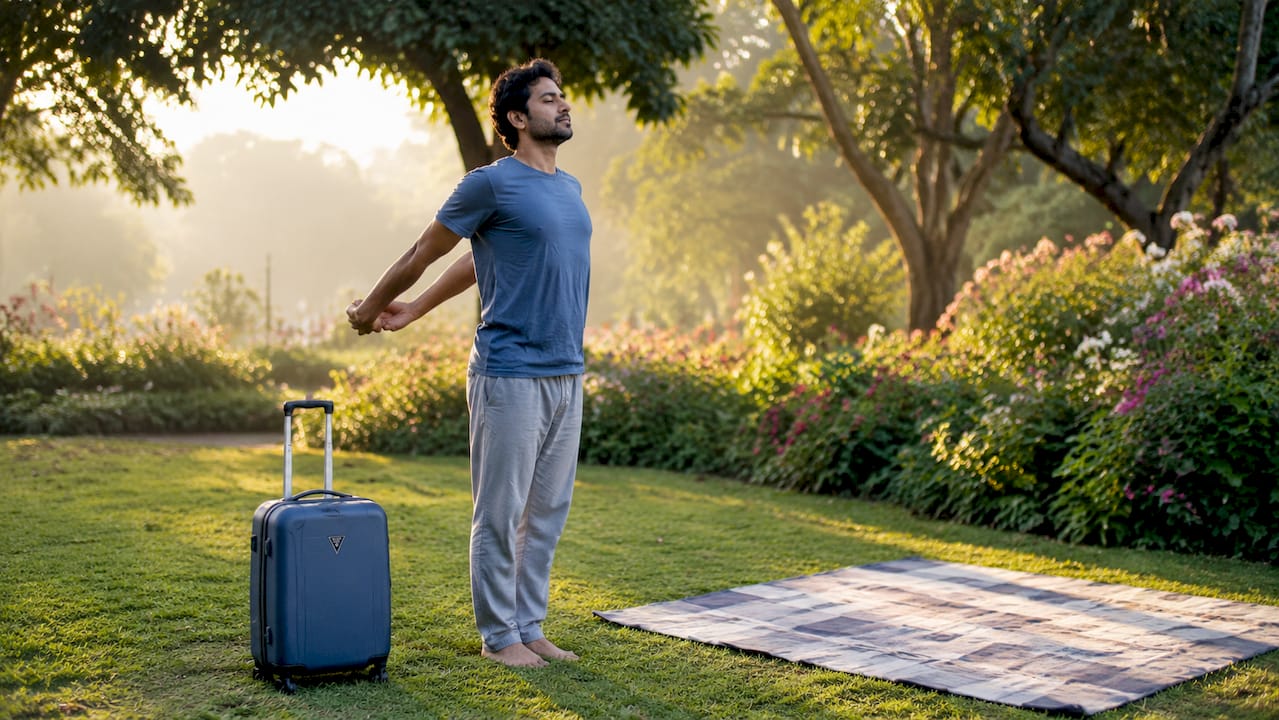
Frequency: Aim to move through 2–3 poses every 60–90 minutes on flights longer than three hours. You don’t need a full sequence every time. Even one or two poses done mindfully counts.
If you practice yoga at home in tight spaces, the same principles apply here, as explained in this guide to Yogamatten: Einsatzmöglichkeiten für Trainer und Vereine. Poses adapted for small space yoga translate directly to an airplane seat.
How do you practice airplane yoga safely?
The biggest mistake travelers make with in-flight yoga is treating it like a workout. Cabin pressure reduces oxygen absorption, which means your muscles fatigue faster and recover more slowly than they would at sea level. Gentle, slow movements are not just more considerate of your neighbors. They’re physiologically smarter.
Key safety guidelines:
- Consult your doctor first if you have a cardiovascular condition, recent surgery, or chronic joint issues.
- Avoid forward folds if you’re prone to motion sickness or migraines. In a pressurized cabin, placing your head below your heart can worsen both conditions.
- Stop immediately if you feel dizzy, lightheaded, or short of breath. These are signals that your body needs stillness, not movement.
- Keep your seatbelt fastened throughout every pose. Turbulence is unpredictable.
- Use the seat as a prop. The seatback provides resistance for twists. The armrest steadies your balance. Treating the seat structure as support keeps movements stable and nearly invisible to the people around you.
Respecting your neighbors matters too. Avoid poses that require extending arms wide, shifting your weight into the next seat, or making audible sounds. The goal is a private, internal practice, not a demonstration.
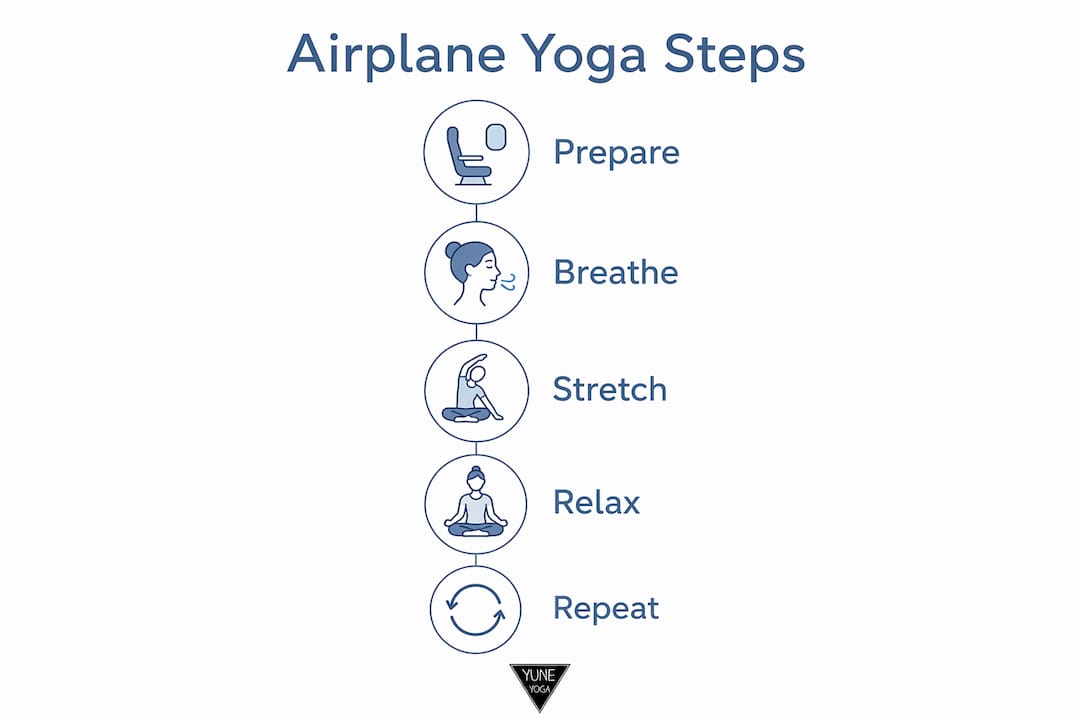
Pro Tip: Match every movement to your breath. Inhale to prepare, exhale to deepen. When your motion follows your breath cycle, the whole practice becomes quieter, slower, and far more effective at calming your nervous system.
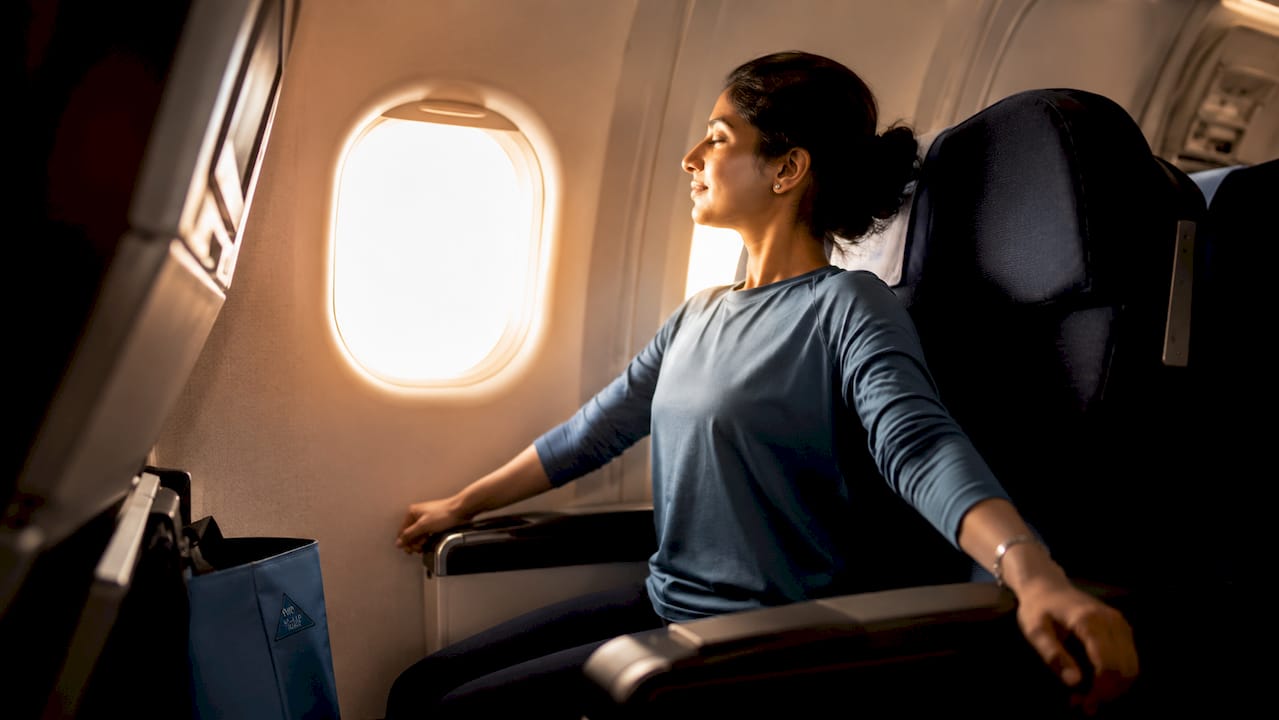
Mid-flight movement sometimes triggers self-consciousness. Yoga instructor guidance from Yoga Journal notes that treating airplane yoga as a subtle, private practice using the seat as props is the most effective way to stay consistent without social anxiety getting in the way.
What are the real benefits of airplane yoga?
The physiological case for moving during flights is well established. Prolonged sitting reduces blood flow to the legs, tightens the hip flexors and lower back, and compresses the spinal discs. A 5-minute seated yoga routine developed by India’s Ayush Ministry in collaboration with the Morarji Desai Institute of Yoga addresses exactly these issues, combining joint movements, seated poses, pranayama breathing, and brief meditation into a single accessible sequence.
The benefits travelers report most consistently include:
- Improved blood circulation, particularly in the legs and feet where swelling is most common
- Reduced muscle stiffness in the back, neck, and shoulders
- Lower stress and anxiety through breath-regulated nervous system activation
- Mental reset from even 30 seconds of mindful breathing, which helps maintain equilibrium during stressful travel
The altitude factor is one that most travelers overlook entirely. Yoga expert Jolie Manza explains that high altitudes reduce oxygen absorption, which is why dizziness, faintness, and headaches are common on flights. Breathing techniques like Ujjayi (a slow, audible nasal breath) and Anulom Vilom (alternate nostril breathing) help recalibrate oxygen intake and calm the nervous system in that low-oxygen environment. Understanding the broader benefits of nose breathing makes these techniques even more effective when you’re at cruising altitude.
Catrina Reeder, director of new studio openings at CorePower Yoga and a decade-long instructor, frames the goal of in-flight yoga differently from most: alignment and centering, not flexibility. That reframe matters. When you stop trying to stretch deeply and start focusing on breath and posture, the parasympathetic nervous system activates, shifting you from a stress state into genuine rest. On a red-eye or a turbulent crossing, that shift is the whole point.
The mental benefits are just as real as the physical ones. Brief mindful breathing or a round of shoulder rolls functions as a genuine psychological reset during the anxiety that travel often produces. You don’t need a full sequence. Sometimes one pose, done with full attention, is enough to change how the next hour of a flight feels.
Key Takeaways
Airplane yoga practice is most effective when kept gentle, breath-led, and consistent throughout the flight rather than saved for one long session.
| Point | Details |
|---|---|
| Core poses to prioritize | Seated Cat-Cow, Spinal Twist, Eagle Arms, Neck Rolls, and Figure-4 cover the areas that suffer most. |
| Altitude changes the rules | Cabin pressure reduces oxygen absorption, so slow and gentle movement outperforms intense stretching. |
| Breath is the foundation | Matching movement to breath keeps the practice subtle, effective, and calming for the nervous system. |
| Prepare before boarding | Loose clothing and good hydration before the flight improve how well your muscles respond to movement. |
| Mental benefits are immediate | Even 30 seconds of mindful breathing can reset your mental state during stressful travel. |