Article: Why Alignment Matters in Yoga: Safety and Mindful Practice
Why Alignment Matters in Yoga: Safety and Mindful Practice
What yoga alignment actually is — and why it matters
Yoga alignment is the mindful positioning of your body parts relative to each other and to gravity during poses. It is not about achieving a picture-perfect shape or copying what the person next to you looks like. At its core, alignment is functional: it describes how your joints stack, how your muscles recruit, and how your breath flows when your body is arranged well.
Why alignment matters in yoga comes down to three things:
- Safety: Proper joint stacking distributes load across bones and connective tissue rather than concentrating stress on vulnerable structures like the knee meniscus or lumbar discs.
- Effective muscle engagement: When your body is aligned, the muscles intended to work actually work. Misalignment forces surrounding muscles to compensate, creating imbalances that accumulate over time.
- Mindful body awareness: Paying attention to alignment trains proprioception, the nervous system’s ability to sense where your body is in space, which carries real benefits off the mat.
There is also a useful distinction worth knowing: functional alignment prioritizes biomechanical safety and optimal movement, while aesthetic alignment is about visual form. Many yoga styles blend both, but when they conflict, functional alignment wins every time.
Table of Contents
- How alignment protects you from injury and builds real strength
- Practical techniques to improve your alignment in yoga
- The broader benefits of practicing with alignment in mind
- What biomechanics experts say about alignment principles
- How alignment shows up differently across yoga styles
- Key Takeaways
How alignment protects you from injury and builds real strength
Poor alignment is the most common thread running through yoga-related musculoskeletal injuries. The mechanics are straightforward: when a joint is loaded outside its optimal range, the surrounding soft tissue absorbs stress it was not designed to handle. Do that repeatedly, and you get chronic inflammation, cartilage wear, or acute sprains.
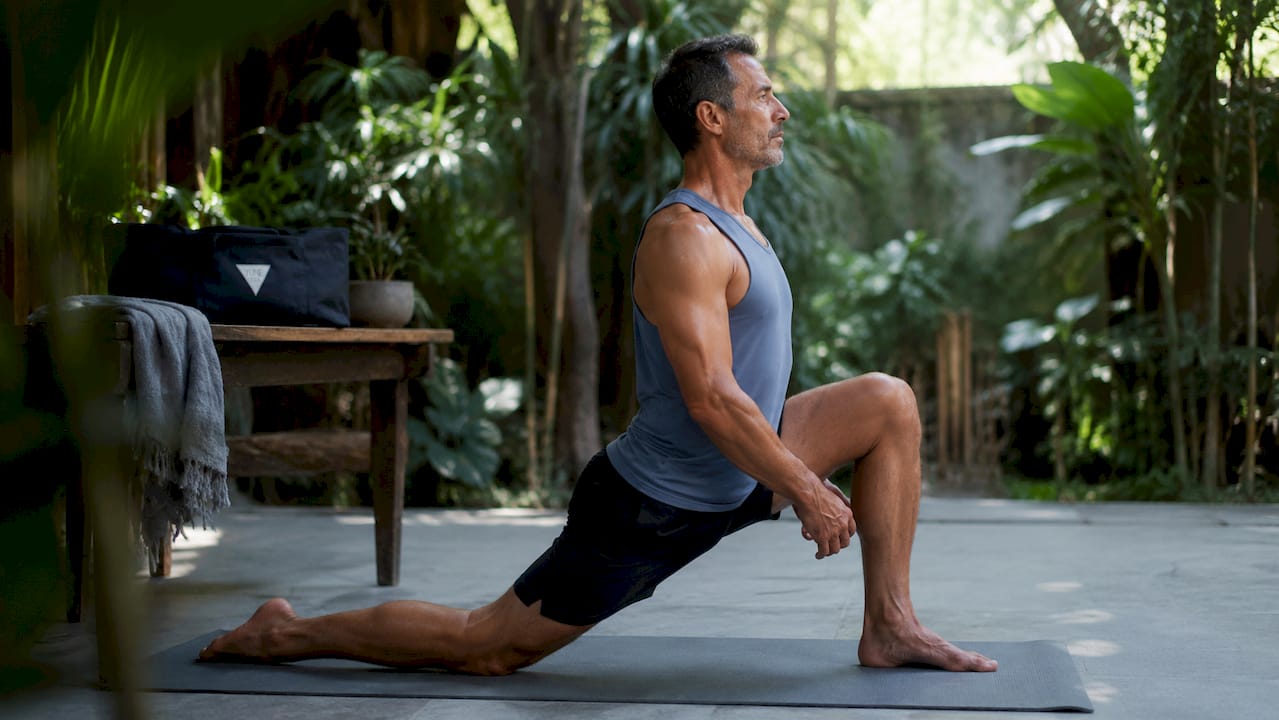
Biomechanical research on standing yoga poses shows that specific poses like Chair and Warrior 1 offer measurable loading benefits for knee health, while others can be contraindicated for certain hip conditions depending on how they are performed. The pose itself is rarely the problem. How you enter and hold it is.
Common misalignments and what they cost you:
- Knee tracking past the toes in Warrior poses: Increases shear force on the patellar tendon and anterior cruciate ligament.
- Collapsed lumbar spine in forward folds: Shifts load from the posterior chain to the lumbar discs.
- Internally rotated shoulders in Downward Dog: Reduces shoulder stability and compresses the rotator cuff.
- Hyperextended elbows in arm balances: Transfers joint stress from muscle to passive ligamentous structures.
Beyond injury prevention, correct alignment in yoga poses determines which muscles actually fire. Activating the right muscles at the right time builds functional strength and protects joints from cumulative wear that goes well beyond what class intensity alone would cause.
Statistic callout: One in five adult yoga practitioners reported acute adverse effects from yoga practice, with unsupervised self-study associated with significantly higher injury rates compared to supervised practice.
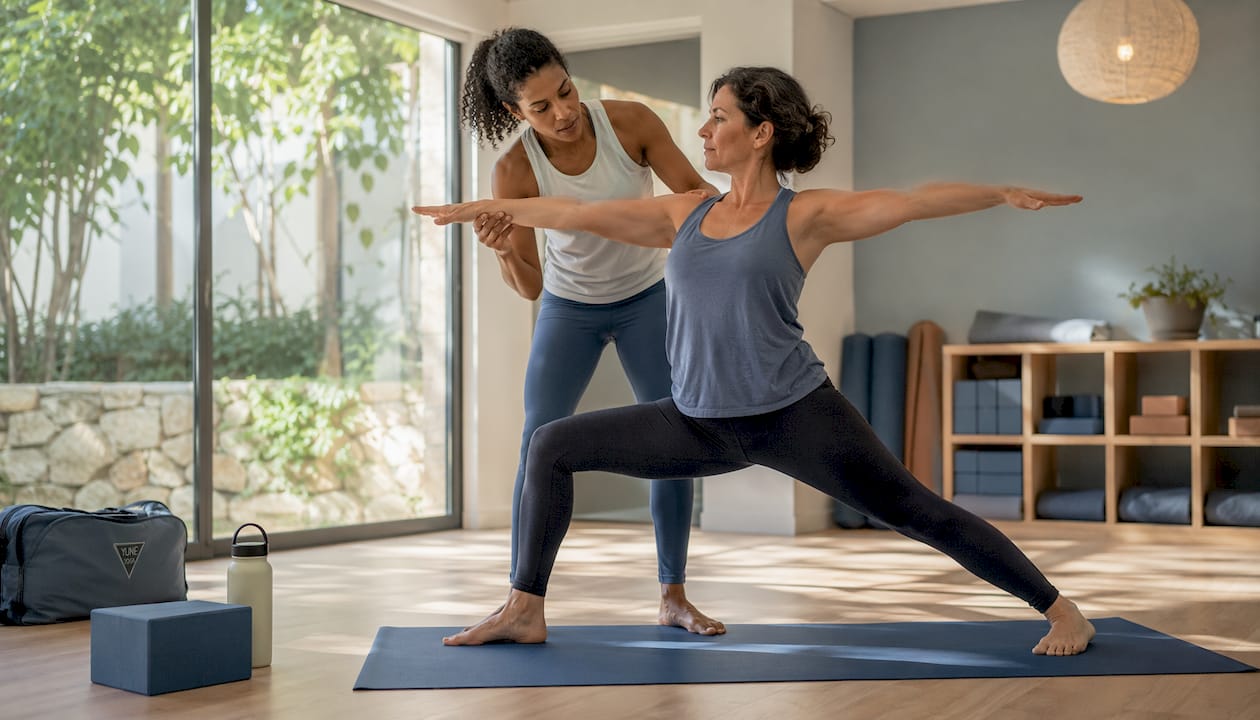
Working with a qualified instructor, especially early in your practice, is not optional caution. It is the single most effective way to catch the misalignments you cannot see yourself.
Practical techniques to improve your alignment in yoga
Improving alignment is a skill, not a talent. It develops through deliberate practice, good instruction, and honest body feedback. Here is where to focus:
- Joint stacking: In standing poses, check that your ankle, knee, and hip are vertically aligned. In arm balances, wrist, elbow, and shoulder should form a clean line of support.
- Muscle activation sequencing: Before loading a joint, engage the muscles that stabilize it. In Warrior 1, activate the glutes and core before sinking into the front knee.
- Use props without apology: Blocks under the hands in Triangle Pose, a strap in seated forward folds, or a blanket under the hips in Pigeon all allow you to access functional alignment regardless of your current flexibility. A yoga strap is one of the most underused alignment tools in any practice.
- Adapt cues to your anatomy: Wider stances, externally rotated feet, or modified arm positions are not signs of weakness. Biomechanical data shows females often need wider stances in hip-loading poses, and seniors benefit from stability aids in balance poses. Anatomy is not universal.
- Slow down transitions: Most alignment breaks happen while moving between poses, not while holding them. Treating transitions as part of the pose is one of the fastest ways to build body awareness.
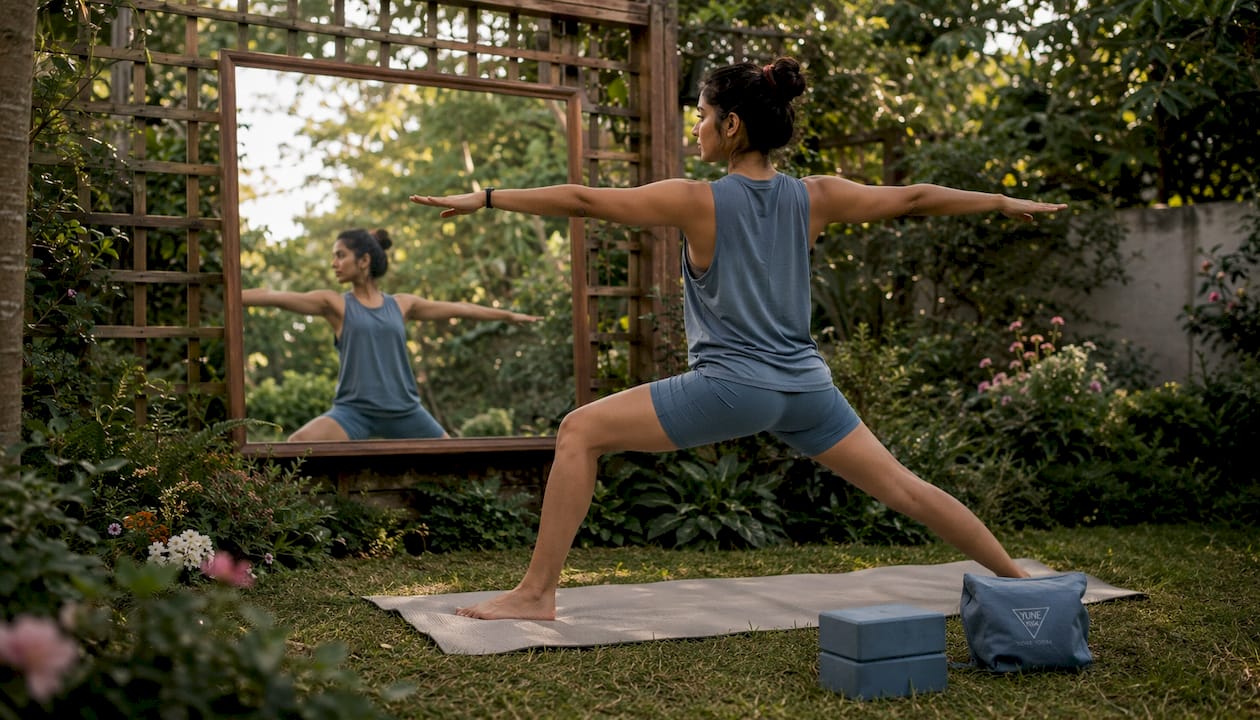
Pro Tip: Stand in front of a mirror or record yourself in a key pose like Warrior 2 or Downward Dog. Most practitioners are surprised by the gap between what they feel and what is actually happening. Video feedback closes that gap faster than any verbal cue.
Proprioception, your body’s internal GPS, declines with age and poor posture. Alignment-focused practice actively retrains it, improving balance and spatial awareness in ways that matter well beyond your yoga mat.
The broader benefits of practicing with alignment in mind
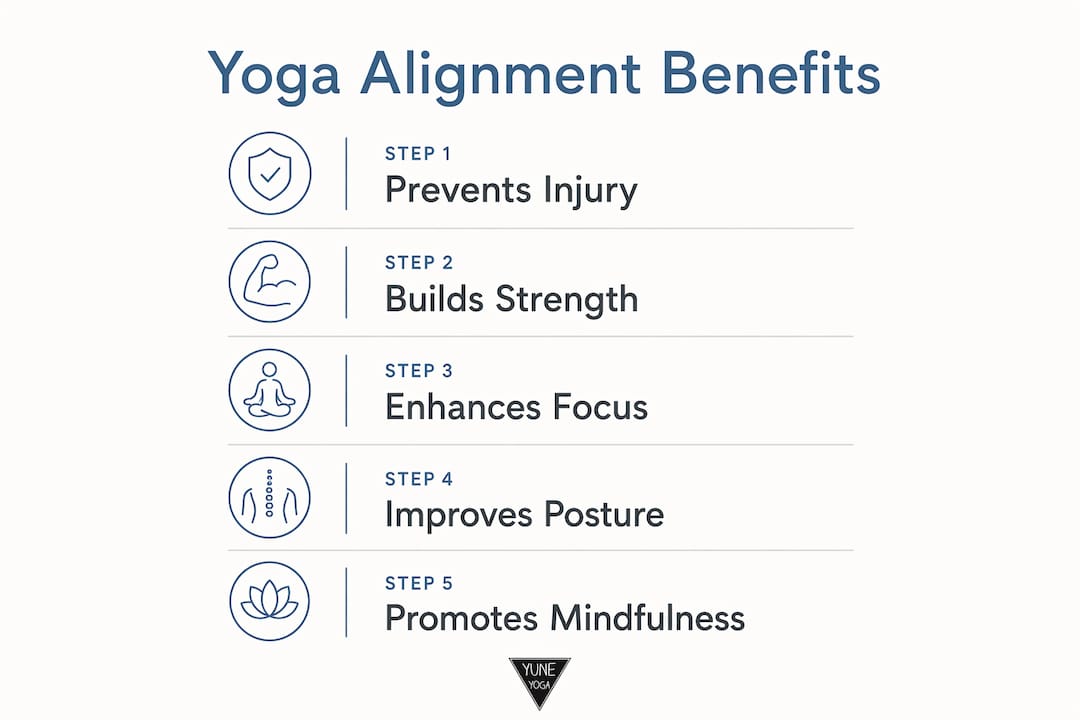
The benefits of alignment in yoga extend far past avoiding injury. When your body is arranged well, every system works better.
- Targeted strength: Aligned poses recruit muscles through their full functional range, building balanced strength rather than reinforcing existing compensations.
- Breath quality: Misalignment compresses the thoracic cavity and restricts diaphragm movement. Proper spinal length and rib positioning allow full, stable breath cycles, which directly supports nervous system regulation.
- Long-term joint health: Six months of alignment-focused yoga training produced significant reductions in trapezius and hamstring muscle stiffness, measured by shear-wave elastography, improving both flexibility and joint mobility.
- Chronic tension reduction: Misalignment creates low-grade muscle tension that accumulates into nervous system stress and inflammation. Correcting alignment patterns resets these cycles.
- Mind-body connection: Paying close attention to how your body is positioned is itself a mindfulness practice. It trains you to notice subtle sensation, which is the foundation of embodied, present-moment yoga.
For practitioners dealing with existing musculoskeletal issues, yoga for injury rehabilitation depends almost entirely on alignment precision. A pose that helps one condition can aggravate another if the joint loading is off.
What biomechanics experts say about alignment principles
The most important shift in how alignment is understood today is this: alignment is not a fixed shape. It is a dynamic process of managing the kinetic chain to support ease of breath and nervous system regulation.
Movement educators define alignment as joint continuity and the balance of effort with ease, not rigid adherence to a visual standard. Pushing a joint beyond its natural range to match an idealized pose shape triggers counterproductive muscle guarding, the body’s protective response that actually reduces stability.
Key principles from biomechanics-informed teaching:
- Right muscle, right time: Functional alignment cues train students to recruit stabilizing muscles before loading joints, building internal body wisdom that protects against cumulative wear.
- Individual anatomy first: Rigid pursuit of ideal alignment cues causes harmful compensations. Effective teaching adapts to each student’s bone structure, muscle length, and mobility range.
- Safety versus aesthetics: Confusing aesthetic alignment with safety alignment is a genuine risk. Forcing a 90-degree front knee in Warrior 2 looks correct but may be biomechanically harmful for a student whose hip anatomy does not support that load pattern.
- Supervision matters: Subtle discomfort signals the need for adjustment. Practicing without qualified guidance removes the feedback loop that catches misalignment before it becomes injury.
The research backs this up. Six-month yoga training with proper alignment focus showed measurable improvements in muscle elasticity in both the trapezius and hamstrings, suggesting that alignment-conscious practice changes tissue quality over time, not just movement patterns.
For instructors, the practical takeaway is to teach alignment as self-awareness, not shape-copying. Students who understand why a cue exists, not just what it looks like, develop the body intelligence to self-correct and carry good movement habits into daily life. That transfer is where alignment’s value really compounds.
How alignment shows up differently across yoga styles
Alignment principles stay consistent across yoga, but how they are applied shifts significantly by style.
In Iyengar yoga, alignment is the central focus. Poses are held for extended periods with precise attention to joint positioning, and props are standard tools rather than modifications. The Iyengar approach, developed by B.K.S. Iyengar and supported by organizations like IYNAUS, treats alignment as a therapeutic discipline, making it particularly well-suited for practitioners with injuries or structural limitations.
Ashtanga yoga applies alignment within a fixed sequence of poses performed at a consistent pace. The challenge here is maintaining functional alignment under the pressure of flow and breath count. Experienced Ashtanga practitioners develop strong proprioceptive awareness precisely because the sequence demands it repeatedly.
In Vinyasa and power yoga, transitions between poses carry as much alignment risk as the poses themselves. Moving quickly through Chaturanga Dandasana with a collapsed chest or flared elbows is one of the most common sources of shoulder injury in these styles. Slowing down transitions and preventing slipping on your mat both reduce the misalignment risk that speed introduces.
Restorative and Yin yoga work with passive alignment, using props to support the body in positions held for several minutes. The alignment goal here is releasing rather than engaging, but joint positioning still matters. A poorly supported hip in Yin Pigeon can create the same compressive stress as an active misalignment.
The common thread across all styles: alignment is not a style-specific concern. It is the underlying framework that makes any style of yoga sustainable over time. Whole-body wellness approaches, including mind-body regulation, consistently point to aligned, breath-supported movement as a foundation for nervous system health regardless of the specific practice.
Key Takeaways
Proper yoga alignment is the single most effective tool practitioners have for building a safe, sustainable, and genuinely effective practice.
| Point | Details |
|---|---|
| Alignment is functional, not aesthetic | Prioritize joint safety and muscle recruitment over visual pose shape. |
| Unsupervised practice raises injury risk | One in five practitioners reported acute adverse effects; qualified instruction significantly reduces this. |
| Six months of aligned practice changes tissue | Research shows measurable reductions in trapezius and hamstring stiffness with consistent, alignment-focused yoga. |
| Props are alignment tools, not shortcuts | Blocks, straps, and blankets allow functional alignment for any body type or experience level. |
| Alignment transfers off the mat | Proprioception and body awareness trained in yoga improve balance, coordination, and movement quality in daily life. |