Travel Yoga Mat Weight Explained for Yogis on the Go
Most travel yoga mats are generally light and thin to enhance portability. If you’re packing carry-on only, the practical rule is to choose mats that are light enough to easily fit your luggage. Ultralight options are very light and compact, while heavier mats work fine in checked luggage. Standard mats are significantly heavier and thicker than travel mats, which highlights the portability advantage of travel options.
The short version:
- Ultralight (under 1.5 lb / 680 g): Best for backpackers and minimalist carry-on travelers
- Practical travel (1.5–2.5 lb / 680–1,130 g): The sweet spot for most regular travelers
- Checked-bag tolerance (up to 3 lb / 1,360 g): More cushioning, less packability
Table of Contents
- How does a travel mat differ from a regular yoga mat?
- What do travel yoga mat weights actually look like in numbers?
- How does mat weight affect grip, cushioning, and durability?
- How do you choose the right travel mat weight for your trip?
- Practical ways to make a lightweight travel mat work
- Key Takeaways
- The weight obsession misses the real question
- Yuneyoga travel mats built for the weights that matter
- Sources and further reading
How does a travel mat differ from a regular yoga mat?
The difference isn’t just about shaving a few ounces. Travel mats are built from the ground up with portability as the primary constraint, and that changes almost everything about how they’re constructed.
Standard mats run 4–6 mm thick and use dense PVC or thick natural rubber to deliver cushioning. Most standard mats weigh between 4 and 7 lb, making them significantly heavier than travel mats. Travel mats compress to a very thin profile, which is roughly the thickness of a few credit cards stacked together. That thinness is what makes folding possible. A standard mat can’t fold flat without cracking or creasing permanently; a travel mat’s bonded microfiber-over-rubber or TPE construction is designed to flex without damage.
Materials do most of the heavy lifting here. Ultralight mats often use microfiber bonded to a minimal rubber or TPE base and can come in under 1.5 lb. Microfiber tops add grip when damp (they actually improve with sweat), while the thin rubber or TPE base keeps the mat from skating across hotel tile. Some mats use a single-layer TPE construction, which is lighter than rubber but slightly less grippy on polished floors.
Pack format splits into two camps: foldable and rollable. Foldable mats collapse into a rectangle that fits inside a carry-on or daypack. Rollable travel mats are thinner than standard rolls but still require a strap or sleeve. For most carry-on travelers, foldable wins on convenience. For those who prefer a traditional feel, a thin rollable mat with a good strap works just as well.
| Feature | Travel Mat | Standard Mat |
|---|---|---|
| Thickness | 1.5–2 mm | 3–6 mm |
| Weight | 0.9–2.5 lb (410–1,130 g) | 4–7 lb (—) |
| Pack format | Foldable or compact roll | Roll only |
| Primary material | Microfiber/TPE/thin rubber | PVC, thick rubber, foam |
| Cushioning | Minimal | Moderate to high |
Pros and cons at a glance:
- Pro: Fits in a carry-on or daypack without dominating the space
- Pro: Foldable formats pack flat, no awkward cylinder sticking out of your bag
- Con: REI notes that cushioning is sacrificed compared to traditional mats
- Con: Thin materials wear faster under daily use on rough surfaces
What do travel yoga mat weights actually look like in numbers?
Here’s where the spec sheets get confusing. Brands throw around “lightweight” without defining it, so concrete ranges matter.
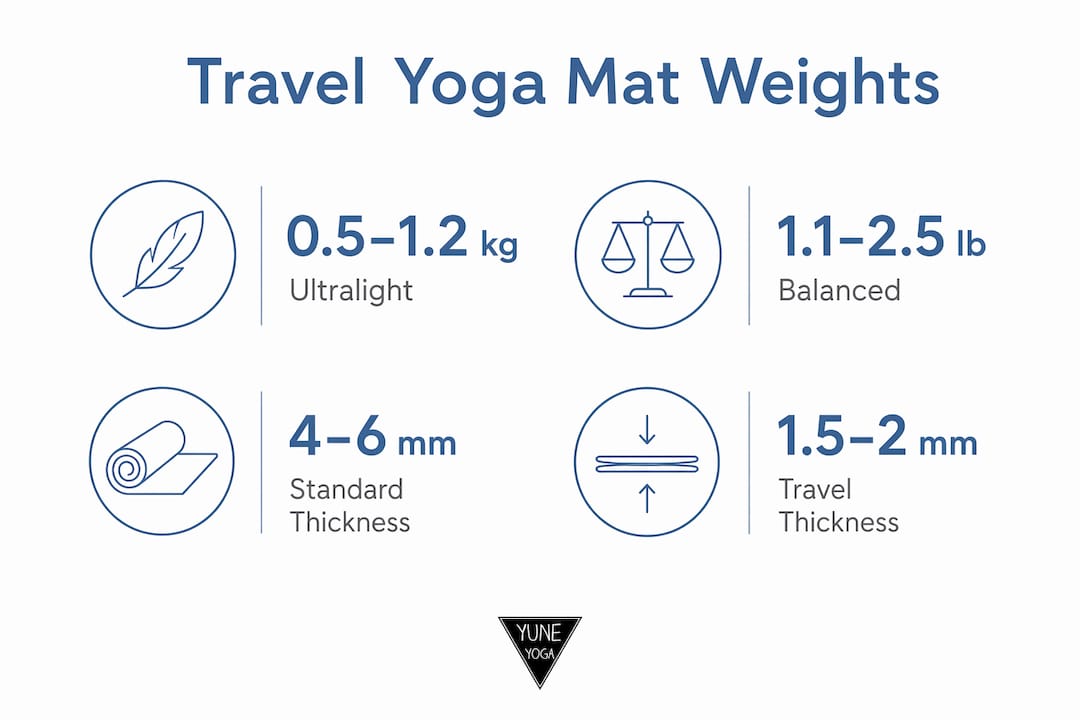
Frequent flyers who prioritize carry-on packing should target the 0.5–1.2 kg (about 1.1–2.6 lb) range. Within that band, there are three distinct tiers worth knowing:
Travel mats come in various weight and thickness ranges suited to different types of travelers and usage, with lighter and thinner mats for backpackers and carry-on travelers, and thicker, heavier mats for home or studio use.
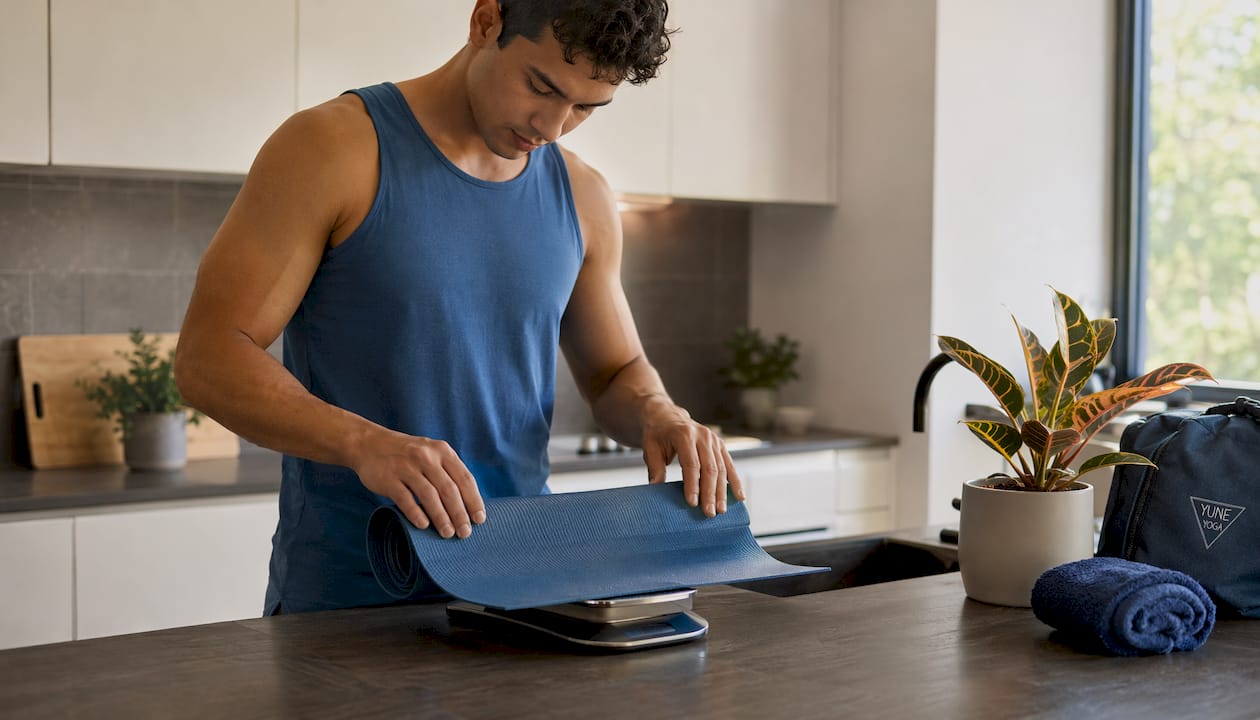
The 1.5–2.5 lb range is where most experienced travelers land after trying the extremes. An ultralight mat at 0.9 lb is genuinely impressive to carry, but the trade-offs in grip and feel push many practitioners back toward the 1.5–2.0 lb middle ground. For context, a 1.5 lb mat weighs about the same as a hardcover novel.
One number that rarely appears on spec sheets but matters: density. A mat listed at 1.8 lb in high-density TPE will feel more stable underfoot than a 1.8 lb mat in low-density foam. When two mats share the same weight, density is what separates a planted feel from a mat that shifts mid-flow.
How does mat weight affect grip, cushioning, and durability?
Weight is a proxy for material, and material determines almost everything about how a mat performs in practice.
Grip and stability are the first things to go when weight drops. A lighter mat with poor density can shift or bunch on slick hotel floors, particularly during standing sequences. High-density TPE or natural rubber provides a planted feel even in thinner profiles. If a mat doesn’t list its material or density, that’s a red flag worth taking seriously.
Cushioning is the trade-off most practitioners feel immediately. At 1.5 mm, kneeling poses like low lunge or cat-cow on a hard floor will remind you that the mat is thin. For vinyasa or flow sequences where you’re mostly standing, 1.5–2 mm is tolerable. For restorative or yin yoga, where you hold poses on your knees or hips for minutes at a time, that thinness becomes a genuine problem. Hot yoga practitioners often prefer thinner mats anyway since a microfiber top grips better when wet.
Durability scales roughly with weight. Thinner materials, especially microfiber-over-rubber constructions, show wear faster when used daily on abrasive surfaces like concrete or rough tile. A mat in the 2.0–2.5 lb range with a denser base will outlast an ultralight mat used at the same frequency. That said, most travel mats aren’t meant to replace a studio mat for daily home practice.
Odor is worth flagging, particularly with natural rubber bases. Thin rubber mats can off-gas a noticeable smell when new, and that smell can return after heavy sweating if the mat isn’t cleaned promptly. Microfiber tops trap moisture and odor if left damp, so airing the mat out after each session matters more with travel mats than with thicker PVC options.
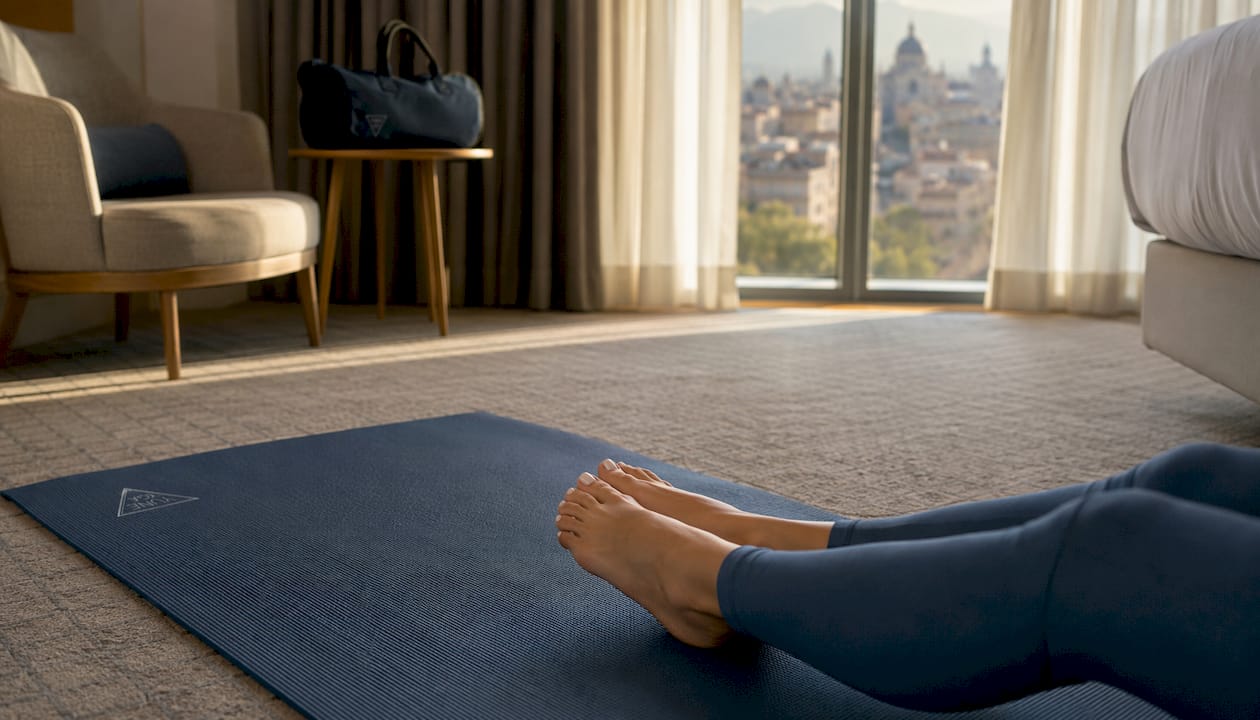
Pro Tip: For restorative or yin sessions on the road, a microfiber travel mat used over hotel carpet provides enough combined cushioning to make thin mats genuinely workable. You get the grip layer on top and the carpet’s padding underneath.
How do you choose the right travel mat weight for your trip?
Start with your joints, not your luggage scale. The right sequence is: minimum thickness for joint comfort first, then material, then weight. Reversing that order is how people end up with a beautiful ultralight mat they stop using because their knees hurt.
Decision matrix by traveler type
| Traveler Type | Weight Target | Min. Thickness | Material Notes |
|---|---|---|---|
| Carry-on flyer | ≤2 lb (—) | 1.5 mm | Microfiber/TPE; foldable format |
| Backpacker | ≤1.5 lb / 680 g | 1.5 mm | Ultralight microfiber or thin TPE |
| Commuter | 1.5–2.5 lb / 680–1,130 g | 2 mm | Dense rubber or TPE; rollable |
| Checked-bag traveler | Up to 3 lb / 1,360 g | 2–3 mm | More cushioning options available |
| Joint-sensitive practitioner | 2.0–2.5 lb (—) | 2–3 mm | Dense rubber; supplement with knee pad |
Questions to ask yourself before buying
- How am I getting there? Carry-on only means weight matters more than anything else.
- How often will I practice? Three or more sessions per week justifies a slightly heavier, more durable mat.
- What surfaces will I practice on? Hotel carpet is forgiving; tile and hardwood demand better grip.
- Do I have sensitive knees, wrists, or hips? If yes, don’t go below 2 mm without a plan for supplementing cushioning.
- What style of yoga do I practice? Vinyasa tolerates thin mats; restorative and yin do not.
Red flags in spec sheets
Watch for these when comparing options. A mat listed as “lightweight” with no weight in pounds or grams is a skip. No material disclosure means you can’t assess density or grip. “Eco-friendly foam” without specifying TPE or rubber density tells you nothing useful. And any mat claiming to be both ultralight and fully cushioned is almost certainly overstating one of those claims.
For a deeper look at how thickness affects joint protection, the trade-offs are worth understanding before you commit to a weight range.
Practical ways to make a lightweight travel mat work
The good news: a thin mat doesn’t have to mean a compromised practice. A few targeted additions cover most of the gaps.
Experts recommend adding a towel or portable knee pad for joint comfort rather than reaching for a heavier mat. A folded travel towel placed under the knees during low lunge or under the hips in seated poses adds meaningful cushioning without adding a separate item to your bag, since you’re packing a towel anyway. A compact silicone knee pad weighs almost nothing and folds flat.
Experienced travelers also use thin travel mats as hygiene toppers over hotel carpet or studio rental mats. In that setup, the carpet provides the cushioning and the travel mat provides grip and a clean surface. It’s a practical workaround that makes ultralight mats far more versatile.
Packing tips that actually reduce friction:
- Fold flat into a carry-on rather than rolling; it distributes weight better and avoids the cylinder problem
- Use a yoga strap to compress a rolled mat tightly against the outside of a bag
- Slip a foldable mat inside your luggage rather than strapping it outside to protect it from damage
- Check that foldable mat formats won’t crease permanently before buying
Cleaning on the road:
- Wipe microfiber surfaces with a damp cloth and a drop of mild soap after each session
- Never leave a rubber-base mat rolled up while damp; odor sets in quickly
- Air the mat vertically for 20–30 minutes before packing
- A small spray bottle with diluted tea tree oil handles odor control without adding significant weight
Pro Tip: Pack a thin microfiber hand towel in the same compartment as your mat. It doubles as a grip booster for hot yoga sessions and a knee pad for floor work, covering two gaps with one item.
Key Takeaways
Travel yoga mats in the 1.5–2.5 lb (680–1,130 g) range at 1.5–2 mm thick hit the best balance of portability and usability for most travelers, with carry-on flyers targeting 2 lb or under as the practical ceiling.
| Point | Details |
|---|---|
| Carry-on weight ceiling | Target 2 lb or under for stress-free carry-on packing. |
| Ultralight trade-offs | Mats under 1.5 lb sacrifice cushioning; supplement with a knee pad or folded towel. |
| Material over thickness | High-density TPE or natural rubber delivers stability even at 1.5 mm. |
| Thickness first | Choose minimum thickness for your joints before optimizing for weight. |
| Yuneyoga travel mats | Yuneyoga’s eco-friendly foldable travel mats are built to the 1.5–2 mm spec with natural rubber bases for carry-on travelers. |
The weight obsession misses the real question
There’s a tendency in travel mat buying to treat weight as the headline spec and everything else as secondary. That’s backwards. A 1.2 lb mat that shifts across hotel tile during warrior sequences, or one that leaves your knees aching after a single yin session, doesn’t serve your practice. It just serves your luggage scale.
The more useful frame is this: weight is the constraint, not the goal. You set a weight ceiling based on how you’re traveling, then find the densest, most stable mat that fits under it. Density specs, when listed, are more informative than thickness alone. A dense material delivers a more planted feel even at lower thicknesses, which is why two mats at the same weight can feel completely different underfoot.
The “are travel mats worth it?” question almost answers itself once you’ve tried lugging a 6 lb studio mat through an airport. The consistent practice benefit of having a mat you’ll actually bring outweighs the cushioning reduction. That said, worth it doesn’t mean any travel mat. It means the right one for your joints, your practice style, and your specific trip. Those three filters narrow the field faster than any spec comparison.
Yuneyoga’s approach to travel mat design, prioritizing natural rubber bases and eco-conscious materials within a packable profile, reflects exactly that priority order: stability and surface quality first, weight second.
Yuneyoga travel mats built for the weights that matter
Carrying a mat that actually fits your trip changes the consistency of your practice on the road. Yuneyoga’s foldable travel mats are built around the 1.5–2 mm thickness target with natural rubber bases, hitting the carry-on weight ceiling this guide recommends for most travelers.
| Spec | Yuneyoga Travel Mat |
|---|---|
| Thickness | 1.5–2 mm |
| Pack format | Foldable flat |
| Base material | Natural rubber / eco-friendly TPE |
| Best for | Carry-on flyers, commuters, lightweight travel |
The natural rubber base provides the density that keeps the mat planted on hotel floors without adding bulk. The foldable format means it disappears into a carry-on rather than strapping awkwardly to the outside of your bag. For joint-sensitive practitioners, pairing it with a compact knee pad covers the cushioning gap this guide describes.
Browse Yuneyoga’s travel mat collection to find the weight and format that fits your next trip.
Sources and further reading
- How to Choose a Yoga Mat | REI Expert Advice — Covers thickness comparisons, material trade-offs, and packability guidance from REI’s gear specialists.
- Travel Yoga Mat: The Complete Buyer’s Guide | Yogalith — Detailed weight ranges, material breakdowns, and practitioner recommendations for travel-first mat selection.
- Yoga Mat Weight Guide: Heavy vs Light | HTS Yoga — Metric weight targets and density guidance for frequent flyers and home practitioners.
- How Much Weight of a Yoga Mat Is Too Much for Travel? | MyYogaTips — Practical carry-on weight thresholds and portability considerations for traveling yogis.
- Best Travel Yoga Mats, Tried and Tested | The Standard — Hands-on reviews with measured weight and thickness specs across multiple travel mat formats.
- Yoga: Effectiveness and Safety | NCCIH — National Institutes of Health overview of yoga’s health applications and safety considerations.