
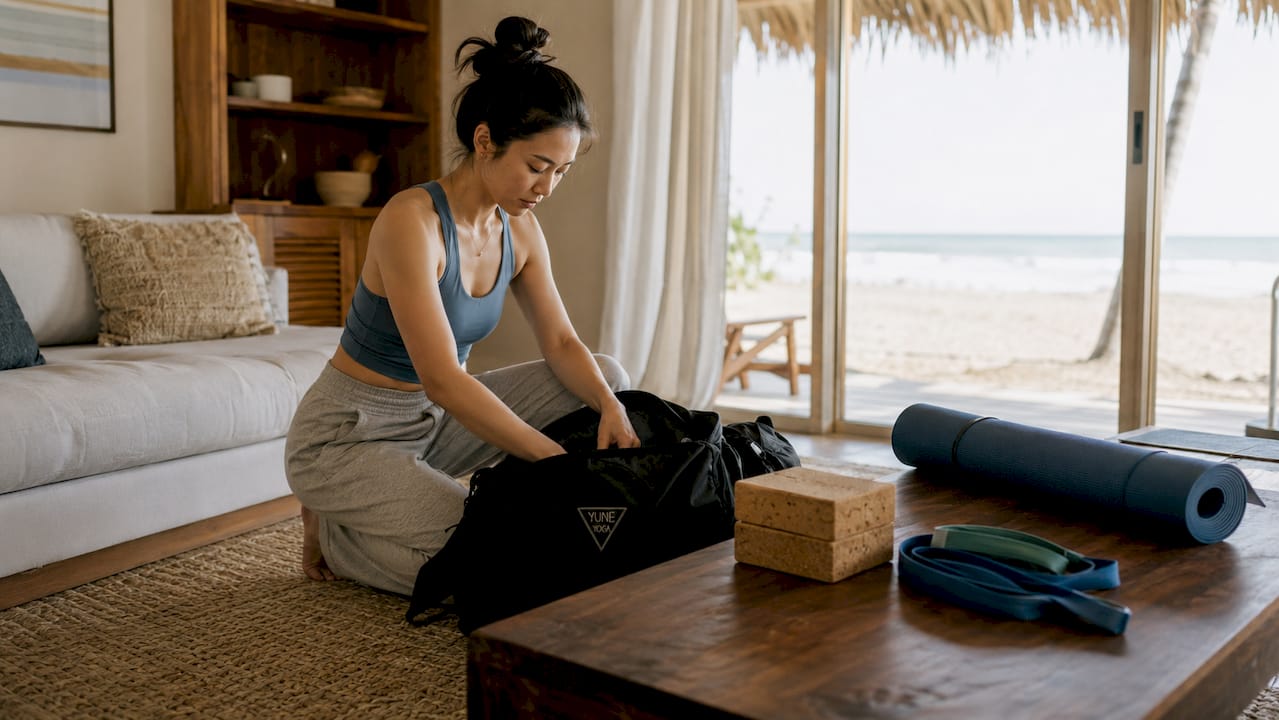
Yoga Gear International Travel Tips for Yogis on the Go
Packing yoga gear for international travel is defined by one non-negotiable constraint: everything you bring must fit airline carry-on limits, survive varied climates, and still support a real practice. The best travel yoga mat balances portability and grip without sacrificing the joint cushioning you need for daily sessions. Lightweight yoga accessories like cork blocks, collapsible straps, and resistance bands round out a complete kit without blowing your luggage allowance. This guide cuts through the noise and gives you a practical yoga packing checklist built for international trips, whether you are headed to a Bali retreat or a business trip in Berlin.
1. What are the best types of travel yoga mats?
The best travel yoga mat sits in the 1.5mm to 3mm thickness range, which balances portability with enough cushioning for joints. A 1.5mm mat folds compactly and slips inside a carry-on, while a 3mm mat adds comfort but takes up more space. The right choice depends on how much floor time you log and how sensitive your knees are.
Material matters as much as thickness. Natural rubber grips well and resists slipping even when damp, making it the top choice for vinyasa flows. TPE (thermoplastic elastomer) is lighter and more affordable, though it offers slightly less grip. PVC is durable but raises sustainability concerns, which matters to most eco-conscious travelers.
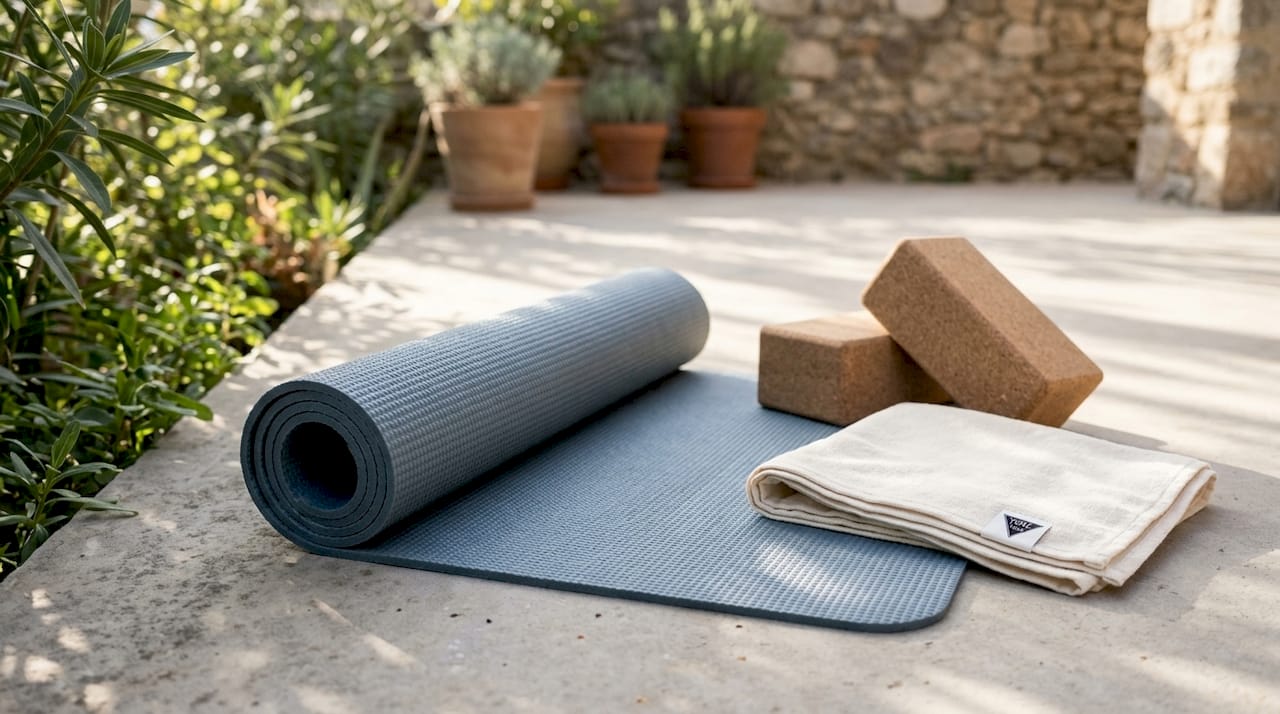
Foldable mats have a clear advantage over rolled mats for international travel. Some foldable designs prevent the practice surface from touching the floor-contact side, which keeps your mat cleaner across multiple destinations. That hygiene feature alone makes foldable mats worth the investment for frequent travelers.
Pro Tip: Wipe your mat down with a diluted tea tree oil spray after each session. It kills bacteria without degrading natural rubber or TPE surfaces.
Grip quality is the most underrated factor in mat selection. Vinyasa practitioners need non-slip surfaces, while restorative and yin practitioners can tolerate softer textures. Buying a mat based on weight alone is the most common mistake traveling yogis make. Match the mat to your practice style first, then check the weight.
2. Which lightweight yoga accessories should you pack?
Lightweight props like cork blocks, straps, and resistance bands add real practice variety without adding serious bulk. Cork blocks weigh less than foam alternatives and hold their shape under pressure. A collapsible strap folds flat and takes up almost no space in a toiletry bag.
The goal is multi-use accessories. A long yoga strap doubles as a luggage tie or a shoulder carry for your mat. A resistance band replaces heavier gym equipment and supports strength work between yoga sessions. These choices let you pack a full practice kit in a fraction of the space.
Here are the lightweight accessories worth including in your yoga packing checklist:
- Cork blocks (one is usually enough): lighter than foam, durable, and naturally antimicrobial
- Collapsible or foldable strap: supports stretching and doubles as a mat carrier
- Resistance bands: flat, weightless, and useful for warm-ups and cross-training
- Microfiber yoga towel: absorbs sweat, dries fast, and works as a mat overlay on shared surfaces
- Small spray bottle: for mat cleaning solution, refillable at any destination
Skip bulky bolsters and full-size foam blocks. Most yoga retreats and studios abroad provide larger props. Carrying your own ultra-thin overlay mat is smarter than relying on rental mats, which often have hygiene and wear concerns that undermine your practice confidence.
3. How to pack and fly with yoga gear
Most major international airlines allow yoga mats as carry-on items, provided they fit within standard carry-on limits of 22 x 14 x 9 inches. That size limit is the single most important number in your yoga packing checklist. A mat that exceeds it will get gate-checked, which adds hassle and risk of damage.
Foldable mats solve this problem directly. A mat that folds to under 18 inches in any dimension fits inside your carry-on bag alongside your clothes. That means no separate mat bag, no awkward tube strapped to your backpack, and no arguments at the gate.
Follow these steps to pack your gear without airline friction:
- Fold your mat first, then pack around it. Place the folded mat flat at the bottom of your carry-on as a rigid base layer.
- Roll soft accessories into the mat’s folds. Straps and resistance bands tuck neatly into the creases.
- Store your spray bottle in a zip-lock bag inside your toiletry kit to comply with liquid rules.
- Weigh your carry-on before leaving home. Many international carriers enforce stricter weight limits than domestic US flights.
- Check the specific airline’s policy online before every international trip. Policies vary by carrier and route.
Pro Tip: Slip your mat into a compression packing cube. It reduces the folded mat’s footprint by about 20% and keeps your bag organized.
For foldable mats that pack easily to under 18 inches per dimension, the carry-on compliance issue disappears entirely. That is the single best investment a traveling yogi can make before an international trip.
4. What travel preparations complement your gear selection?
Gear is only part of the equation. Smart international yoga travel essentials also include documentation, health prep, and financial protection. These logistics determine whether your trip goes smoothly or falls apart before you unroll your mat.
Start with your passport. Passport validity should extend at least 6 months beyond your return date, and many countries enforce this rule strictly at the border. Photocopy your passport, visa, and travel insurance documents and store digital copies in a secure cloud folder.
Health preparation follows a clear timeline. Vaccinations should be addressed at least 8 weeks before departure, consulting the CDC website or a travel clinic for destination-specific requirements. This timeline matters because some vaccines require multiple doses spread over weeks.
Key travel prep steps for international yoga trips:
- Book non-refundable flights only after the 90-day confirmation window, when retreat or event schedules are locked in
- Purchase travel insurance before any other non-refundable booking; local clinics abroad often require upfront payment and insurance covers that cost
- Pack personal medications in original labeled containers and carry a doctor’s note for any controlled substances
- Include natural wellness aids like electrolyte packets, melatonin, and arnica gel for long-haul recovery
- Research local yoga studio options at your destination as a backup if your retreat schedule shifts
Pro Tip: Set a phone reminder 90 days before your trip to check passport expiry and vaccination records. Most travel problems are preventable with a 10-minute audit.
5. How to choose gear based on your travel context
The right gear depends on where you are going and how you practice. A mat that works perfectly in a heated Bali studio may underperform on a cold stone floor in a European monastery. Matching your gear to your destination and practice style prevents frustration and injury.
Surface type is the first variable. Hard floors require more cushioning, which pushes you toward the 3mm end of the mat thickness spectrum. Carpeted hotel rooms grip almost any mat surface, so a thinner 1.5mm mat works fine. Outdoor practice on grass or sand calls for a mat with a textured, non-slip bottom.
Climate affects both mat material and clothing choices. Humid tropical destinations cause more sweating, which makes a microfiber towel overlay non-negotiable for grip. Natural rubber mats perform better in heat than TPE, which can become slippery when wet. In temperate or cool climates, a slightly thicker mat adds warmth from cold floors.
| Travel context | Recommended mat thickness | Key accessory |
|---|---|---|
| Heated studio or tropical retreat | 1.5–2mm | Microfiber towel overlay |
| Hotel room or hard floor | 3mm | Knee pad or extra folded towel |
| Outdoor practice | 2–3mm with textured base | Mat carry strap |
| Restorative or yin practice | 3mm+ | Cork block, bolster if space allows |
| Active vinyasa flow | 1.5–2mm non-slip | Grip-enhancing yoga towel |
Practice style shapes the entire kit. Active vinyasa flows demand non-slip grip and a lighter mat for transitions. Restorative and yin sessions benefit from more cushioning and a cork block for supported poses. Traveling yoga teachers emphasize matching mat features to practice style over mat weight alone. That principle holds whether you are a daily practitioner or a weekend yogi.
Key Takeaways
Packing the right yoga gear for international travel requires matching mat thickness, material, and accessories to your practice style, destination climate, and airline carry-on rules.
| Point | Details |
|---|---|
| Mat thickness range | Choose 1.5–3mm mats; thinner folds smaller, thicker cushions better on hard floors. |
| Foldable mat advantage | Foldable mats under 18 inches fit inside carry-on luggage and avoid gate-check disputes. |
| Hygiene matters | Foldable mats that keep surfaces separated and a personal overlay mat protect your health abroad. |
| Lightweight accessories | Cork blocks, collapsible straps, and resistance bands add practice variety without bulk. |
| Travel prep beyond gear | Passport validity, vaccinations 8 weeks out, and travel insurance are non-negotiable for international trips. |
What years of travel taught me about packing a yoga kit
The conventional advice says to pack light and leave your mat at home. I disagree. After years of international trips, the single biggest mistake I made early on was trusting rental mats at studios and retreats. The mats were worn, slippery, and visibly questionable. I once spent a week in Southeast Asia practicing on a mat that smelled like it had never been cleaned. That experience changed how I pack permanently.
A thin foldable mat is not a luxury. It is the difference between a grounding morning practice and skipping it entirely because the floor feels wrong. I now carry a 2mm natural rubber foldable mat on every trip, and it fits inside my carry-on with room to spare. The weight trade-off is real but worth it.
The other lesson took longer to learn: travel insurance is not optional. I had a minor injury at a retreat in Costa Rica that required a clinic visit. The clinic required cash upfront. Without insurance, that would have been a serious financial hit. The cost of a good travel policy is trivial compared to one unexpected medical bill abroad.
My last piece of advice is to resist over-packing props. One cork block and a strap are enough. Your practice adapts. You adapt. The mat is the anchor. Everything else is optional.
— Nicholas
Yuneyoga has the travel gear you need
Traveling yogis need gear that actually fits the realities of international flights, varied climates, and unpredictable practice spaces.
Yuneyoga carries a curated selection of eco-friendly foldable travel mats designed to meet carry-on size requirements and hold up across multiple destinations. The collection includes natural rubber mats, microfiber yoga towels, and durable straps built for practitioners who refuse to leave their practice at home. Every product is chosen with portability and sustainability in mind. If you want gear that travels as well as you do, Yuneyoga is the place to start.
FAQ
What thickness is best for a travel yoga mat?
Travel mats between 1.5mm and 3mm offer the best balance of portability and joint support. Thinner mats fold more compactly; thicker mats cushion better on hard floors.
Can I bring a yoga mat as a carry-on on international flights?
Most major international airlines allow yoga mats as carry-on items within standard size limits of 22 x 14 x 9 inches. Foldable mats that pack to under 18 inches per dimension fit inside luggage and avoid size disputes entirely.
What lightweight yoga accessories are worth packing?
Cork blocks, collapsible straps, resistance bands, and a microfiber towel cover most practice needs without adding significant weight. These items complement any travel mat and respect luggage space limits.
How far in advance should I prepare health documents for international yoga travel?
Vaccinations should be addressed at least 8 weeks before departure, and passport validity should extend 6 months beyond your return date. Consulting the CDC or a travel clinic gives you destination-specific guidance.
Is travel insurance necessary for yoga retreats abroad?
Travel insurance is a critical safety net for international yoga travel. Local clinics abroad often require upfront payment, and a good policy covers medical emergencies, baggage loss, and trip interruptions.


