Article: The Eight Limbs of Yoga: What Each One Means
The Eight Limbs of Yoga: What Each One Means
The eight limbs of yoga are a path laid out in the Yoga Sutras of Patanjali: yama, niyama, asana, pranayama, pratyahara, dharana, dhyana and samadhi. Posture is only the third. The rest cover how you treat others and yourself, how you breathe, and how you train attention. At Yune Yoga we make mats, towels and straps for the physical limb, and this guide shows how that limb fits into the whole path.
TL;DR
- The eight limbs are yama (restraints), niyama (observances), asana (posture), pranayama (breath), pratyahara (withdrawing the senses), dharana (concentration), dhyana (meditation) and samadhi (absorption).
- They are not eight steps to finish in order. Think of them as eight parts of one practice that support each other.
- Asana, the limb most people know, is the third. Patanjali’s text describes it as a steady, comfortable seat, not a list of poses.
- You can work with all eight in a week: one ethical focus, mindful movement, a few minutes of breath, and a short sit.
Table of Contents
- What the eight limbs are
- Where the eight limbs come from
- Limbs one and two: yama and niyama
- Limb three: asana
- Limb four: pranayama
- Limbs five to eight: the inward journey
- How the limbs connect
- Eight limbs and Ashtanga yoga
- Bringing all eight limbs into a normal week
- Gear for the physical limb, at home or on the road
- Our perspective
- FAQ
- Sources
What the eight limbs are
The Sanskrit word for eight is ashta and the word for limb or part is anga. The Centre for Yoga Studies translation of Sutra 2.29 lists them as restraints, observances, posture, extending the breath, withdrawal from the senses, concentration, meditation and integration.
Here is the whole path at a glance:
| Limb | Sanskrit | Plain meaning | Where it shows up |
|---|---|---|---|
| 1 | Yama | Restraints: how you act toward others | Daily conduct |
| 2 | Niyama | Observances: how you treat yourself | Habits and routines |
| 3 | Asana | Steady, comfortable posture | Your mat |
| 4 | Pranayama | Breath regulation | Breathing practice |
| 5 | Pratyahara | Withdrawing attention from the senses | Quiet, eyes-closed stillness |
| 6 | Dharana | Focusing on a single point | Concentration |
| 7 | Dhyana | Uninterrupted meditation | Seated meditation |
| 8 | Samadhi | Absorption | The aim of the path |
The first four limbs are often called the outer limbs because they shape behavior, body and breath. The last four turn inward. Researchers reviewing yoga’s self-regulation mechanisms group them into four tools: ethics (yama and niyama), postures, breath regulation and meditation.
Where the eight limbs come from
The Yoga Sutras were compiled by the sage Patanjali around the turn of the Common Era, according to the University of Virginia’s Mandala Collections guide. The text is one of the six classical schools of Indian philosophy. A 2024 study in the journal Religions describes it as four chapters and 195 short passages, with the eight-limb section at the center.
The same study quotes Sutra 2.28: practicing the limbs removes impurities and uncovers the light of knowledge and discernment. In the classical view, the goal is kaivalya, a state of clear discernment between the witnessing self and the changing mind. You do not need to adopt that belief system to work with the limbs, but it explains why the path has so little to do with flexibility.
Limbs one and two: yama and niyama
The first two limbs are ethical. The Internet Encyclopedia of Philosophy lists five yamas, or abstentions: non-violence, truthfulness, non-stealing, celibacy and non-possessiveness. The Sanskrit names are ahimsa, satya, asteya, brahmacharya and aparigraha.
The five niyamas are observances: cleanliness (shaucha), contentment (santosha), austerity or self-discipline (tapas), self-study (svadhyaya) and devotion to a higher principle (ishvarapranidhana).
In plain terms, yamas are about how you act in the world, and niyamas are about how you keep yourself in order. Sharath Jois, writing in a 2010 foreword quoted in a James Madison University honors thesis, describes them as conduct in a kind and aware manner, plus abiding by your own code of morality. Ashtanga teachers treat them as prerequisites for serious study.
A few ways this looks on an ordinary day:
- Ahimsa: stop forcing a pose that hurts. Pushing through pain is violence toward yourself.
- Satya: be honest about what your body can do today, not what it did last month.
- Aparigraha: buy gear you will use, and keep it for years.
- Santosha: finish practice without comparing yourself to the person on the next mat.
- Svadhyaya: keep notes on how a practice felt and what changed.
Limb three: asana
Most people meet yoga here, and it is the limb most people stop at. Patanjali defines asana in Sutra 2.46 as a posture that is steady and comfortable. The Internet Encyclopedia of Philosophy cites that sutra, and the text lists no specific poses. Originally asana meant the seat for meditation.
That definition is useful for modern practice. A good pose is one you can hold with ease and a calm mind. If your wrists, knees or lower back complain, adjust the pose, add support or shorten the hold. Balance work is part of this too, and balance training for older adults shows how steadiness can be built safely over time.
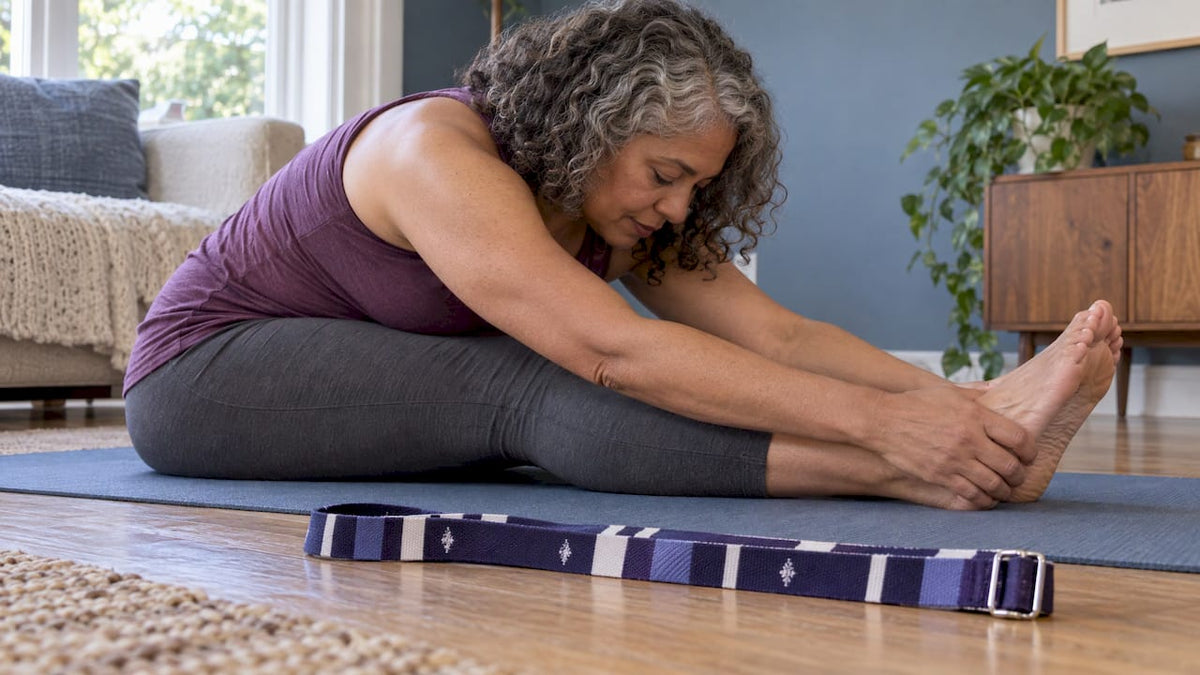
Steadiness also depends on your surroundings. A mat that grips, cushions your joints and stays put lets you stop thinking about slipping and start paying attention to your breath. A towel over the mat helps in sweaty sessions, and a strap lets you work toward a pose with good alignment instead of straining. That is asana in the spirit Patanjali described: effort without struggle.
Limb four: pranayama
Pranayama is the regulation of the incoming and outgoing breath. In the yoga tradition, breath carries prana, the life force. The 2024 Religions study explains that prana is said to flow through 72,000 channels called nadis.
In practice you do not need theory to start. Many people begin with slow, even breathing through the nose, counting the inhale and exhale to the same length. If you want a structured walk-through, our guides to yoga pranayama techniques for every level and first steps in beginner pranayama cover the basics. Breath practice also works as the bridge to the inner limbs: when the breath settles, attention follows.
Limbs five to eight: the inward journey
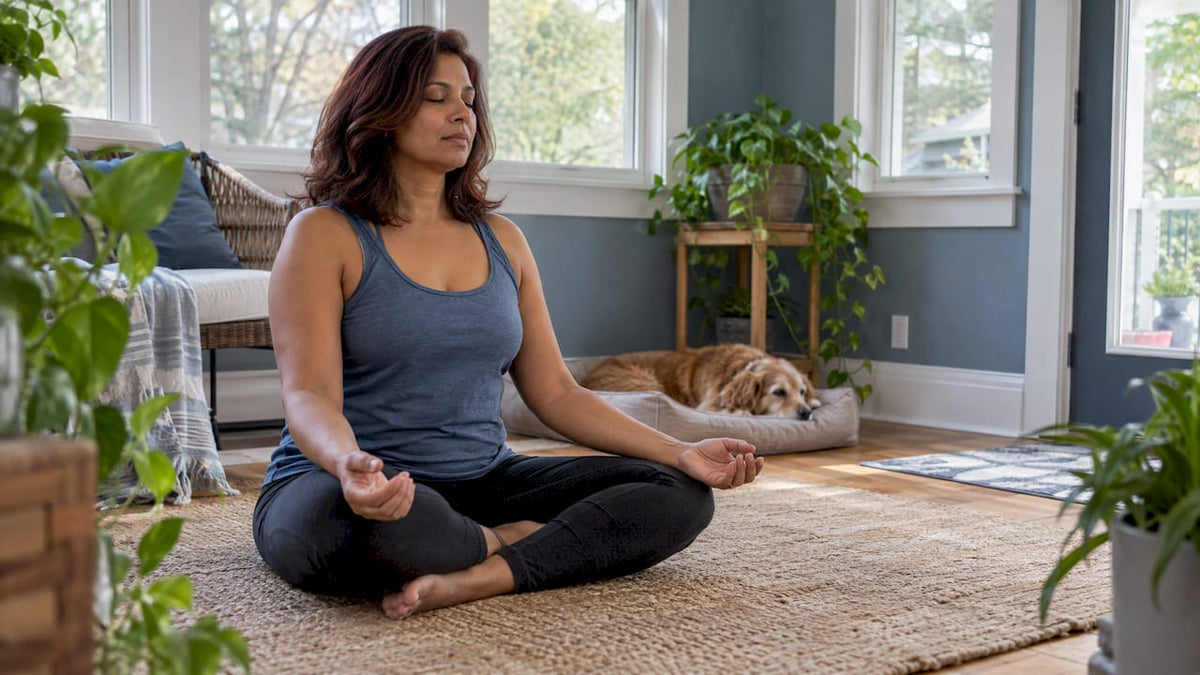
Pratyahara is withdrawing the senses, which means turning attention away from outside input. Ashtanga teacher Tim Miller, in a Yoga International Q&A, calls it the bridge between the external and internal limbs. You can practice it at the end of a session by lying still with eyes closed and noticing sounds without chasing them.
Dharana is concentration on one point: the breath at the nostrils, a mantra, a candle flame. Dhyana is meditation, when that focus becomes unbroken. Samadhi is absorption, where only the object of meditation shines and the sense of being a separate meditator falls away, as described in Sutra 3.3 in the Internet Encyclopedia of Philosophy.

The 2024 study adds that the last three limbs can be separated in theory but in practice happen as one connected series. The same Q&A quotes Pattabhi Jois as saying the first five limbs are very difficult while the last three are very easy, because they follow once the earlier work is done. For most of us, samadhi is a direction of travel, not a goal to check off.
How the limbs connect
The limbs are not rungs on a ladder where you must finish one before the next. Each supports the others. Ethical steadiness makes it easier to sit quietly. A steady breath makes a pose easier. A focused mind improves both.
There is a modern reason this matters. A 2016 study in the International Journal of Yoga surveyed 498 healthcare students and found that even experienced practitioners most often linked yoga with breathing and posture. Ethical practices and daily commitments to introspection were the least associated. The authors note that yoga in the West has shifted toward physical fitness. Seeing the full path restores the parts that are easy to miss.
Eight limbs and Ashtanga yoga
The word Ashtanga means eight-limbed, so it can refer to Patanjali’s whole path. It is also the name of the modern style taught by K. Pattabhi Jois (1915 to 2009), which the University of Virginia guide says was codified and popularized in twentieth-century India. That style uses fixed sequences of postures linked by breath and movement.
Richard Freeman, quoted in Yoga Journal, explains that the Krishnamacharya and Jois system is modeled on the eight limbs, with posture as a means of realizing all of them. Jois chose the name partly to encourage students to look more deeply into the whole practice. So if you practice a dynamic, flowing class and wonder how it relates to the philosophy, the answer is that the poses are the doorway, and the other seven limbs are the house.
Tim Miller also notes Jois was clear that practice is not meant to consume your life but to support all its other parts. That is a good rule for anyone with a job, a family and a limited morning.

Bringing all eight limbs into a normal week
You do not need a retreat. Here is a simple weekly plan, adapted from the idea that the limbs need not be mastered in sequence:
- Pick one yama or niyama for the week. Write it where you will see it. Ahimsa and santosha are easy starting points.
- Move with that value. Practice asana at an effort you could sustain, around 70 percent, and let the breath set the pace.
- Add three minutes of breath work. Even, slow breathing is enough. Stop if you feel dizzy or strained.
- Finish in stillness. Lie or sit with eyes closed and let outside sounds pass. That is pratyahara.
- Sit for five minutes. Choose one point of focus and return to it when the mind wanders. That is dharana turning into dhyana.
- Reflect once a week. Ask what the value changed. That is svadhyaya.
If you are building yoga around other training, our guides on adding yoga to your fitness routine and combining exercise and yoga in a balanced week help you fit these minutes into your schedule. People with a health condition, injury or pregnancy should check with their doctor before starting breath work or new postures.
Gear for the physical limb, at home or on the road
The eight limbs do not depend on equipment, but a consistent place to practice makes consistency easier. Yune Yoga offers natural rubber mats, eco-friendly mats, foldable travel mats, yoga towels and straps, made with sustainable materials for home and travel use. A foldable mat in your bag means your breath and stillness practice can follow you into a hotel room, and a towel and strap keep the physical limb comfortable and steady.
Browse the full range of yoga mats, towels and straps at Yune Yoga.

If you want clothing to go with them, see the yoga clothes and accessories collection.
Our perspective
We think the eight limbs are best read as a practical checklist for a whole life, not a syllabus for experts. Posture is the part you can see, so it gets the attention, but Patanjali’s definition of asana is about being steady and at ease. That is a design brief as much as a philosophy.
When we build mats, towels and straps from natural and sustainable materials, we are thinking about that third limb and the ethical ones around it. A mat that stays in place and lasts for years supports ahimsa toward your joints and aparigraha toward the planet. A foldable travel mat means pranayama and stillness do not have to wait until you are back home.
Our advice is simple: pick one limb you have neglected, give it five minutes a day for a week, and let your mat be the place where that habit starts.
Nicholas
FAQ
What are the eight limbs of yoga in order?
They are yama, niyama, asana, pranayama, pratyahara, dharana, dhyana and samadhi. In English: restraints, observances, posture, breath regulation, sense withdrawal, concentration, meditation and absorption. The order is a map of the path, though in daily practice you work with several at once.
Is Ashtanga yoga the same as the eight limbs?
Not exactly. Ashtanga means eight-limbed, and Patanjali’s path is often called by that name. The modern Ashtanga style from K. Pattabhi Jois is built around set sequences of postures with breath, and its teachers say it is designed to lead into all eight limbs.
Do I have to follow the limbs in order?
No. They support each other, and most people work on several together. A reasonable approach is to choose one ethical focus, practice mindful asana, and add short breath and stillness sessions, as in the weekly plan above.
Is the eight-limbed path a religion?
The Yoga Sutras belong to classical Indian philosophy and include devotion as one of the niyamas, so the tradition has a spiritual side. Many modern practitioners take the ethical and attention-training parts as practical guidance for daily life and approach the rest at their own pace.
Where should a beginner start?
Start with asana and pranayama, since they are the most concrete, then add one yama or niyama for the week. A comfortable mat and a short routine you can repeat matter more than an advanced pose.
Sources
- Yoga Sutra Chapter Two verse 29, Centre for Yoga Studies
- Potential self-regulatory mechanisms of yoga, Frontiers in Human Neuroscience
- Ashtanga Yoga: A Curated Guide, University of Virginia Mandala Collections
- Modern Postural Yoga, Meditation, and Spiritual Seeking, Religions (MDPI)
- Yoga Sutras of Patanjali, Internet Encyclopedia of Philosophy
- Bending and binding, James Madison University honors thesis
- Elements of yogic practice, International Journal of Yoga
- Ashtanga Yoga Q&A with Tim Miller, Yoga International
- Q&A: What Does Ashtanga Mean?, Yoga Journal