Dry a Yoga Towel Fast in 20–40 Minutes with a Time-Ranked Routine
Microfiber and performance synthetic towels dry fastest, and the quickest at-home method is a high-speed spin, either in the washer or with a portable spin press, followed by spreading the towel flat in moving air or sunlight. Skip fabric softener entirely and check the care label before you toss anything in the dryer on high heat. Do that consistently, and a towel that’s soaked through after a 90-minute hot yoga class can be workable again in well under an hour.
TL;DR:
- Microfiber and synthetic performance towels dry roughly twice as fast as cotton, thanks to their fine fibers and quick evaporation surface.
- Wringing, spinning, and spreading the towel flat in moving air or sunlight are the most effective methods to speed up drying between uses.
- Avoid fabric softeners and high heat in laundry to maintain quick-drying and moisture-wicking performance over time.
- Heavier towels with higher GSM or textured weaves hold more water and take longer to dry, requiring careful consideration based on your needs.
- Proper towel care and drying routines can significantly improve longevity and drying speed, ultimately reducing moisture and odor buildup.
Table of Contents
- What Makes a Towel Quick-Dry?
- What’s the Fastest Way to Dry a Yoga Towel?
- How Do You Wash a Yoga Towel Without Ruining It?
- How to Choose a Fast-Drying Yoga Towel
- What Yune Yoga’s Practice Has Taught Us About Drying
- The Real Skill Isn’t the Towel, It’s the Routine
- Get a Towel Built to Dry Fast From the Start
- Sources
- FAQ
What Makes a Towel Quick-Dry?
Fiber shape does most of the work. Microfiber strands are split into tiny channels, far finer than a cotton fiber, so water gets pulled into a thin film across the surface instead of soaking deep into a loop pile. That thin film evaporates fast. Editorial testing on yoga towels points to this wicking behavior as the main reason microfiber consistently outperforms cotton on drying speed, even when both towels start out equally wet.
Cotton works differently. Its loops are built to hold water inside the fiber itself, which is exactly why a cotton bath towel feels so plush and absorbent. That same structure is the problem when you need it dry again in 20 minutes: the water is trapped, not sitting on top where air can reach it.
Some performance fabrics push this further. Quick-dry synthetic blends, the kind you’ll see marketed under names like DryQ, are engineered specifically for evaporation speed. Dock & Bay’s product guidance reports these fabrics drying roughly twice as fast as standard cotton, while still holding a meaningful amount of moisture during use. Treat that as a manufacturer-stated benchmark rather than a universal law, but it lines up with what most quick-dry towels are built to do.
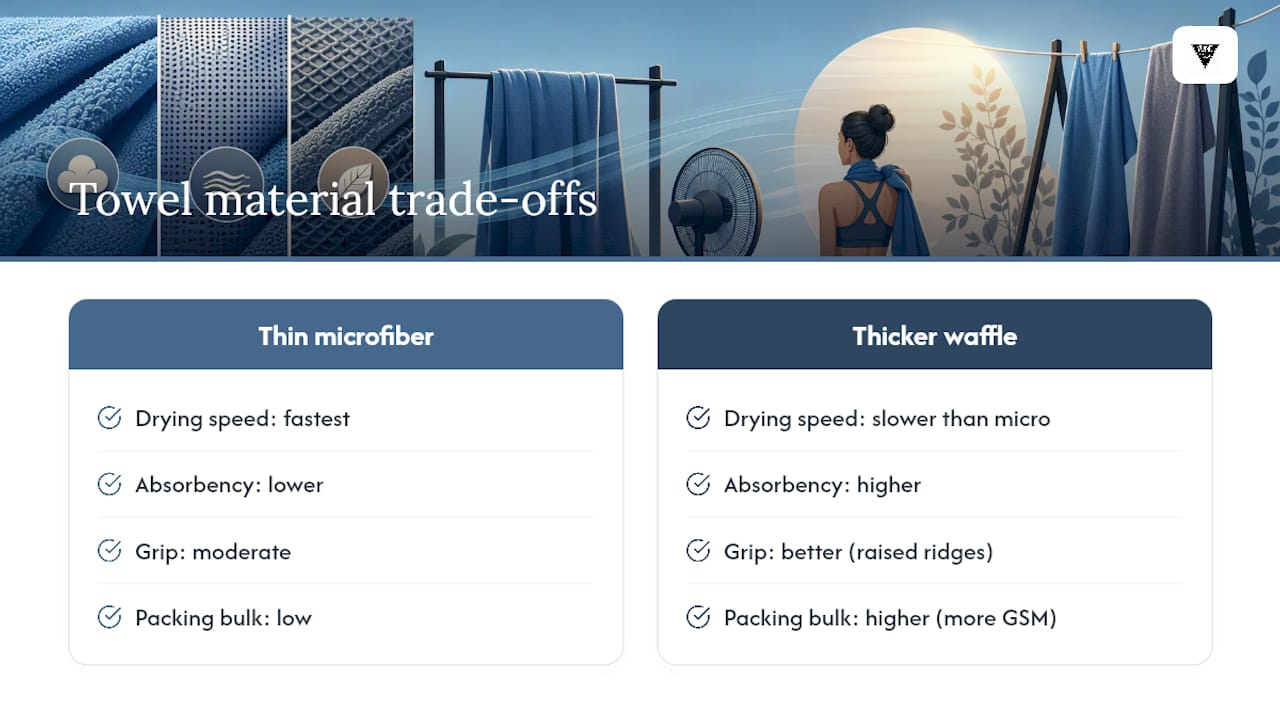
Weave matters almost as much as fiber. A waffle weave, with its raised grid texture, creates more surface area exposed to air than a flat weave does. That’s a win for evaporation, and it happens to be why waffle textures show up so often on hot yoga towels: editorial hands-on reviews cite that same texture as a grip feature, since the raised ridges give sweaty palms and feet something to catch on to.
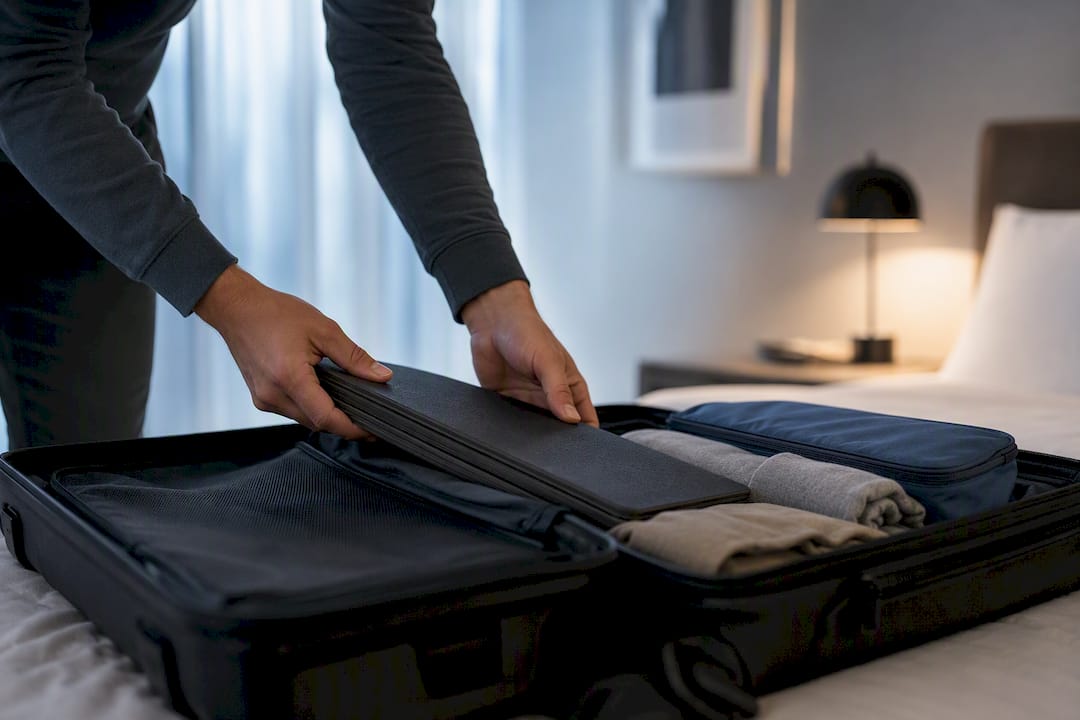
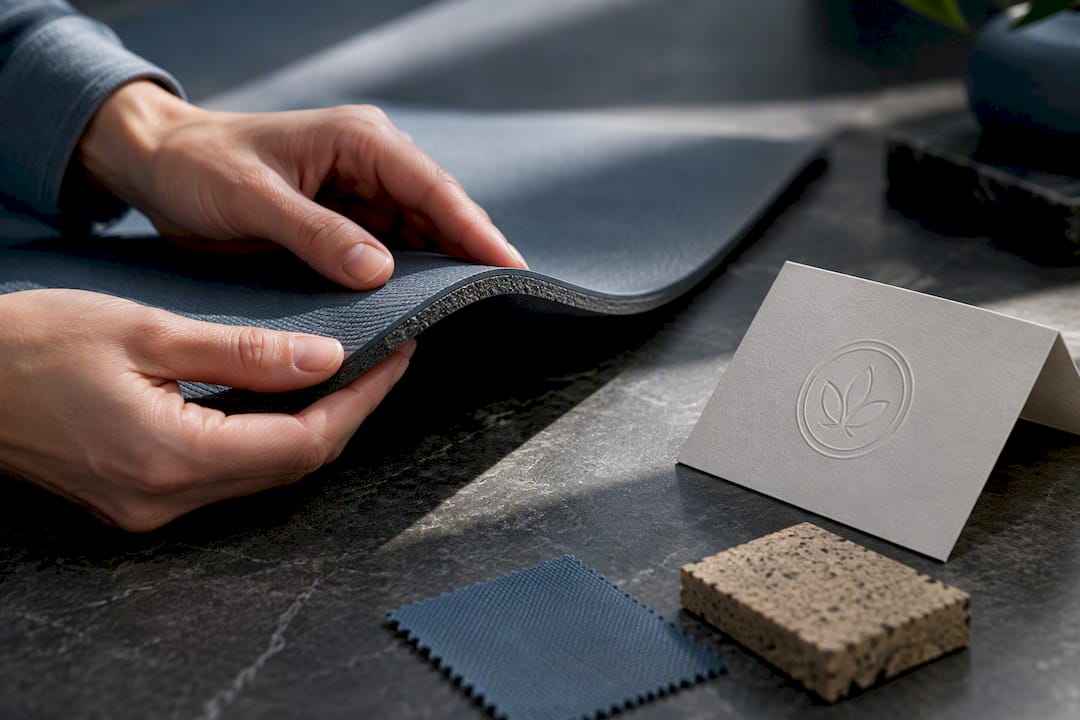
Thickness and finish round out the picture. A heavier towel (higher grams per square meter, often shortened to GSM) holds more water and generally takes longer to dry, even in the same fabric. Some yoga towels add silicone dot grip patterns or coated backing to keep them anchored on a mat; those additions don’t slow drying much on their own, but they do add bulk, which matters if you’re packing the towel for travel.
Here’s the trade-off nobody puts on the label: the fastest-drying fabric is rarely the most absorbent one, and the grippiest towel when dry isn’t always the same towel that dries fastest. A thin microfiber towel evaporates quickly but can feel like it’s just moving sweat around during a heavy sweat session. A thicker, waffle-textured towel holds more moisture and grips better, but it’s going to take longer to get bone dry between uses. Some performance towels are marketed as holding two to four times their own weight in water, which is a useful number to compare against when you’re shopping, since it tells you roughly how much moisture the fabric is designed to manage before it feels saturated. You’re picking a point on a spectrum, not chasing a single “best” fabric.
What’s the Fastest Way to Dry a Yoga Towel?
Ranked from fastest to slowest, here’s what actually gets a soaked towel back to usable condition without waiting around all afternoon.
- Wring and roll it first. Twist out as much water as you can by hand, then lay the towel flat, roll it tightly around a dry bath towel, and press down hard along the length. This towel-roll method pulls a surprising amount of water out in under two minutes and costs you nothing but a second towel.
- Run a spin cycle or use a portable spin press. A washing machine’s spin-only setting, or a compact spin press if you own one, removes far more water than wringing by hand ever will. Testing from Shape’s editorial reviews found spin-drying to be the single most effective step for cutting total drying time, taking a few minutes depending on the machine.
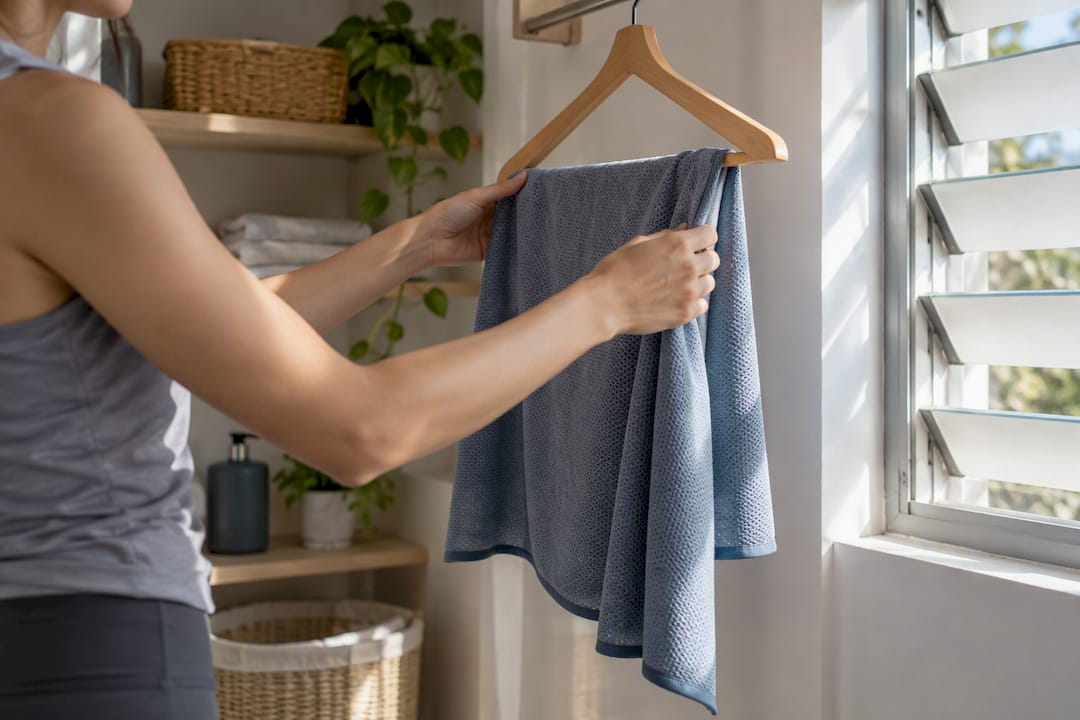
- Hang it fully spread out in moving air or sunlight. This is where most people go wrong. Folding a damp towel over a rail traps moisture between the layers and can double your wait. Spread it flat, one layer thick, somewhere air actually moves. Combined with a spin cycle first, towels can be functionally dry in 20 to 40 minutes depending on humidity and fabric.
- If you don’t have access to a spin cycle, a box fan pointed directly at a spread-out towel, or a car’s air vent on the drive home, does a reasonable job of speeding up step three on its own.
Between classes, you rarely have a washing machine handy, so the priority shifts to airflow and time. A ventilated gym bag with mesh panels beats a sealed one every time; if your bag is solid, leave the zipper partly open so air can circulate around the damp towel instead of steaming it. A small battery-powered clip fan clipped to your bag or a locker vent works better than most people expect, and it’s cheap enough to leave in your gym bag permanently. If you’re driving between a class and dinner or errands, hang the towel over the passenger headrest with a window cracked rather than shoving it into a gym bag; you’ll get a head start on drying without doing anything extra.
Pro Tip: Never leave a wet microfiber towel balled up in a hot car for hours. Heat plus trapped moisture is exactly the combination that breeds mildew smell, and once that odor sets into microfiber, it’s genuinely hard to wash back out.
One more note on heat: high dryer heat can degrade the fine fiber structure that makes microfiber wick moisture in the first place. If you must use a dryer, low heat is the ceiling, and even then, air drying wins on preserving long-term performance. The towel-roll pressing method works just as well on a yoga mat that’s picked up sweat, if you’re dealing with both at once after a hot class.
How Do You Wash a Yoga Towel Without Ruining It?
Fabric softener is the single worst thing you can add to a load of quick-dry towels, and it’s also one of the most common laundry habits people bring over from washing regular bath towels. Softener coats fibers with a waxy residue that blocks the wicking channels microfiber depends on. Dock & Bay’s own care guidance warns against it specifically, because that coating is what turns a fast-drying towel into a slow, clammy one after just a few washes.
A few habits keep quick-dry performance intact over months of hot yoga use:
- Wash in cool or warm water, never hot, since heat accelerates wear on the fine synthetic fibers.
- Use a small amount of regular liquid detergent and skip the softener slot entirely.
- Wash after every hot yoga session if the towel absorbed heavy sweat; bacteria and odor build fast in damp synthetic fibers left overnight.
- Air dry when possible; if you tumble dry, use low heat only, and pull the towel out while still slightly damp to finish air drying.
- Never store a damp towel folded in a closed bag or drawer.
If a towel’s absorbency has already started to slip, a maintenance soak can often bring some of it back. Run one wash cycle with a cup of white vinegar in place of detergent to strip built-up residue, then follow with a second wash using a small amount of baking soda dissolved in the water. Both steps target the mineral and product buildup that clogs fiber channels over time. It won’t undo years of fabric softener damage, but it noticeably helps a towel that’s just gotten a little sluggish.
Storage matters more than most people realize. A towel that’s slightly damp and tossed into a gym bag for two days will develop a mildew smell that no amount of washing fully removes on the first try. Care guidance from manufacturer resources consistently points to full ventilation between uses as the difference between a towel that stays fresh for years and one that starts smelling musty after a few months. Hang it somewhere with airflow the moment you get home, even if you’re planning to wash it later that day. For a deeper walkthrough on wash cycles and detergent choices, this guide on washing without killing grip covers the specifics.
How to Choose a Fast-Drying Yoga Towel
Not every fast-drying towel fits every situation, so run through this checklist before you buy:
- Fabric type: microfiber or performance synthetic blends for speed; cotton or heavier blends only if drying time isn’t your priority.
- Weave: waffle or textured weave for grip during sweaty poses, flat weave for the fastest possible evaporation.
- Weight and packability: lighter towels pack smaller and dry faster but hold less water before feeling saturated.
- Coverage and size: a full mat-length towel for hot yoga classes, a smaller hand towel size if you just need to blot sweat during a regular flow.
- Grip design: silicone dots or corner pockets that anchor the towel to your mat, especially important once the towel itself gets damp and slick.
- Care instructions: confirm it’s machine washable and check whether the label allows tumble drying, since some quick-dry fabrics specify air-dry only.
- Price relative to features: Wirecutter’s testing found that towels across a wide price range performed similarly on the basics, so paying more doesn’t automatically buy you faster drying or better grip.
Your priorities shift depending on how you actually use the towel. If you’re traveling constantly, packability and quick-dry speed outrank everything else, since you often need the towel dry again before you’ve even unpacked your bag. If you’re doing hot yoga in a studio several times a week, prioritize grip and durability over squeezing out the last few minutes of drying speed, since a towel that slides at the wrong moment during a heated flow matters more than a 10-minute difference in drying time. For everyday sweaty sessions that aren’t full hot yoga, a lighter, thinner microfiber towel usually covers you fine without the bulk. Reading about what actually distinguishes a hot yoga towel from a general gym towel helps clarify which category you’re actually shopping for before you commit.
What Yune Yoga’s Practice Has Taught Us About Drying
Our approach to towel selection comes down to three things: packability, drying speed, and grip that holds up once the fabric gets damp. Those three rarely max out together in a single towel, so we design and recommend around the trade-off rather than pretending it doesn’t exist.
Our Yoga Towels are built with quick-dry materials sized for full mat coverage, paired with our Yoga Mats collection for anyone assembling a complete hot yoga setup. For the fiber-level breakdown of why microfiber outperforms cotton, our microfiber deep dive walks through the mechanics in more detail. Practitioners who travel with their gear consistently tell us packability and fast turnaround between sessions matter more than any single spec on a label.
The Real Skill Isn’t the Towel, It’s the Routine
Most advice on this topic treats the towel as the whole solution, when the bigger lever is what you do with it in the first five minutes after class. A mediocre microfiber towel that gets spun and hung flat immediately will outperform a premium towel left balled up in a gym bag for three hours. That’s the gap conventional advice skips over.
The other overrated variable is price. Spending more doesn’t reliably buy faster drying, and Wirecutter’s testing confirmed that core performance holds steady across price points. Where the real difference shows up is durability, stitching quality, and how long a towel keeps its grip.
If you only fix one habit, fix your laundry routine. Skip the softener, avoid high heat, and dry the towel flat in real airflow. That single change does more for long-term drying speed than any fabric upgrade.
— Nicholas
Get a Towel Built to Dry Fast From the Start
Buying the right towel upfront beats fighting a slow-drying one for years. Yune Yoga’s Yoga Towels are built from quick-dry fabric sized for full mat coverage, so you’re not choosing between grip and drying speed the way you might with a generic gym towel.
Sizing details, bundle options, and care instructions are listed on each product page, and pairing a towel with one of our Foldable Yoga Mats gives you a travel-ready setup that packs down small without sacrificing grip. If you’re outfitting a full kit, the Yoga Clothes and Accessories collection rounds out what you need for hot yoga sessions on the road or at home. One habit to carry over from everything above: skip the fabric softener on wash day, no matter which towel you choose, and it’ll keep drying fast for years instead of months. Browse the current lineup and find the towel that matches your routine.
Sources
- The 8 Best Yoga Towels - Shape
- Essential Quick-Dry Gym & Yoga Towel | Dock & Bay
- What Separates a $70 Hot Yoga Towel From a $20 One? Not Much. | Reviews by Wirecutter
FAQ
What Kind of Towel Dries the Fastest?
Microfiber and performance synthetic towels dry fastest because their fine fiber structure wicks moisture into a thin surface layer that evaporates quickly. Editorial testing consistently ranks microfiber ahead of cotton, and some quick-dry fabrics are marketed as drying roughly twice as fast as cotton.
What Is the Best Quick-Drying Gym Towel?
The best quick-drying gym towel combines a microfiber or performance synthetic fabric with a textured weave for grip, since a flat microfiber weave dries fastest but a waffle texture adds traction when the towel gets damp. Yune Yoga’s Yoga Towels are built around that same quick-dry fabric approach for full mat coverage.
Do Quick-Dry Towels Actually Work?
Yes, quick-dry towels genuinely outperform cotton on drying speed, largely because of fiber geometry rather than marketing. Independent testing found that towels across a wide range of prices perform similarly on core functions like grip, so the quick-dry benefit comes from the fabric technology itself, not the price tag.
Can I Dry My Yoga Towel in the Dryer?
You can, but only on low heat, since high heat degrades the fine fiber structure that makes microfiber and performance synthetics dry fast in the first place. Air drying after a spin cycle, spread flat in moving airflow, gets most towels dry in 20 to 40 minutes without any heat risk at all.
How Do You Dry a Yoga Towel Fast Between Classes?
Wring out excess water by hand, then spread the towel flat somewhere with airflow rather than folding it into your bag. A small battery fan, a partly open bag zipper, or a car air vent on the drive home all speed this up when you don’t have access to a washer or spin press.