Eco Conscious Cotton Yoga Straps: 8–9 ft for Practitioners and Teachers
A cotton yoga strap is the best basic prop when you want a non-elastic, comfortable grip for stretching and alignment work. Reach for nylon instead if you want a thinner, slicker strap for quick finishing poses, and skip elastic webbing altogether since it stretches under tension. Yoga Journal builds entire vinyasa flow sequences around a strap, and some yoga blogs cover the same techniques for home practice.
TL;DR:
- Cotton yoga straps provide a fixed length that helps with alignment and passive or active stretching, unlike elastic bands that recoil unpredictably.
- Durable construction with a tight weave, reinforced stitching, and metal D-ring buckles ensures safety and longevity under repeated tension.
- A 6 to 7 foot strap suits most solo stretches, while an 8 to 9 foot strap offers more slack for restorative or partner work, with wider straps feeling more comfortable during long holds.
- Proper maintenance includes cold water washing without softener, air drying, and replacing the strap once fraying edges or damaged hardware appear.
- Prioritize wider, textured cotton straps over thinner, slicker options to ensure comfort and active engagement during longer poses and resistance work.
Table of Contents
- What is a cotton yoga strap and how does it differ from elastic bands?
- Materials and construction: what to look for
- Sizing: choosing the right length and width for your practice
- How to use a cotton yoga strap: grips, cues, and a short sequence
- Care, maintenance, and how to extend a cotton strap’s life
- Common mistakes and safety notes
- Behind this guide: practical resources from Yune Yoga
- What most strap advice gets wrong
- Where to buy a cotton yoga strap that fits your practice
- Sources
- FAQ
What is a cotton yoga strap and how does it differ from elastic bands?
A cotton yoga strap is a flat, woven length of fabric with no give. That lack of stretch is the point: when you loop it around your foot in a seated forward fold, the strap holds a fixed length so your body, not the prop, controls how far you go. An elastic resistance band works the opposite way. It recoils, which makes it useful for strength training but unpredictable for a static stretch.
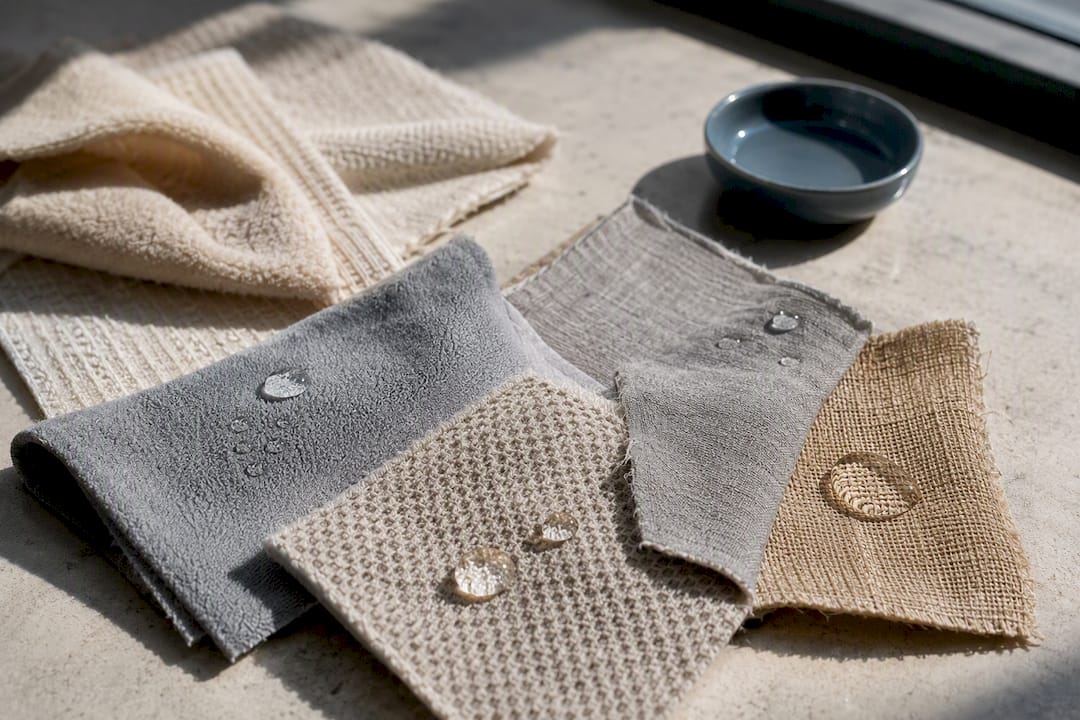
Cotton straps typically come in organic or unbleached finishes. Unbleached cotton keeps a rougher, grippier texture right out of the package, while treated or dyed versions feel softer sooner.
- Non-elastic straps hold a fixed length for reach, alignment, and passive or active assists.
- Elastic bands stretch and recoil, which suits resistance work but not steady holds.
- Unbleached cotton offers more initial grip; treated cotton feels softer from day one.
Materials and construction: what to look for
Weave and cotton type determine how a strap feels in your hands. A tighter weave resists fraying and holds up under repeated tension, while a looser weave softens faster but wears out sooner. Thicker straps take longer to break in but tend to outlast thinner ones.

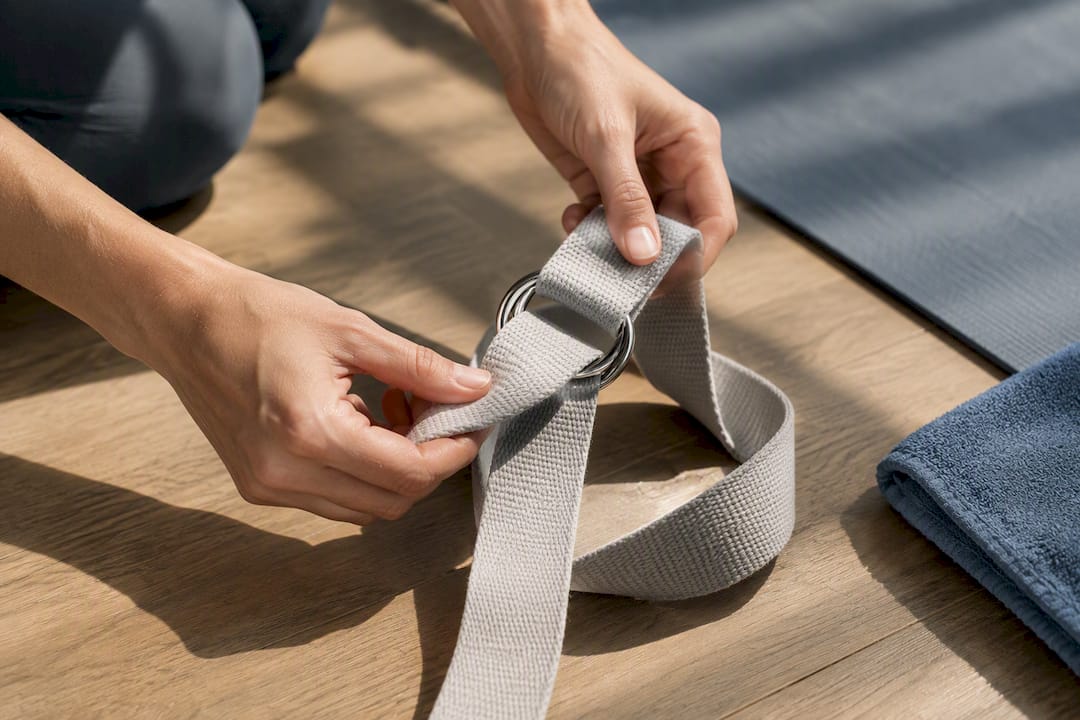
Buckle hardware matters just as much as the fabric. A D-ring buckle lets you set a loop and pull it snug for foot or arm holds, common in Iyengar-style work. A double-buckle design gives finer adjustability for changing loop size mid-pose. Metal D-rings resist wear better than plastic versions, though they add a little weight.
Before buying, check the stitching at both ends and where the buckle attaches. Loose threads or a buckle sewn onto a single line of stitching are early warning signs of failure under load.
- Tighter weaves resist fraying and hold tension better over time.
- D-ring buckles allow quick loop adjustments for foot and arm holds.
- Reinforced stitching at the buckle attachment point predicts how long the strap lasts.
Pro Tip: Run your thumb across the stitched end before buying. If you can feel loose threads through the fabric, the strap will likely fray within months of regular use.
Sizing: choosing the right length and width for your practice
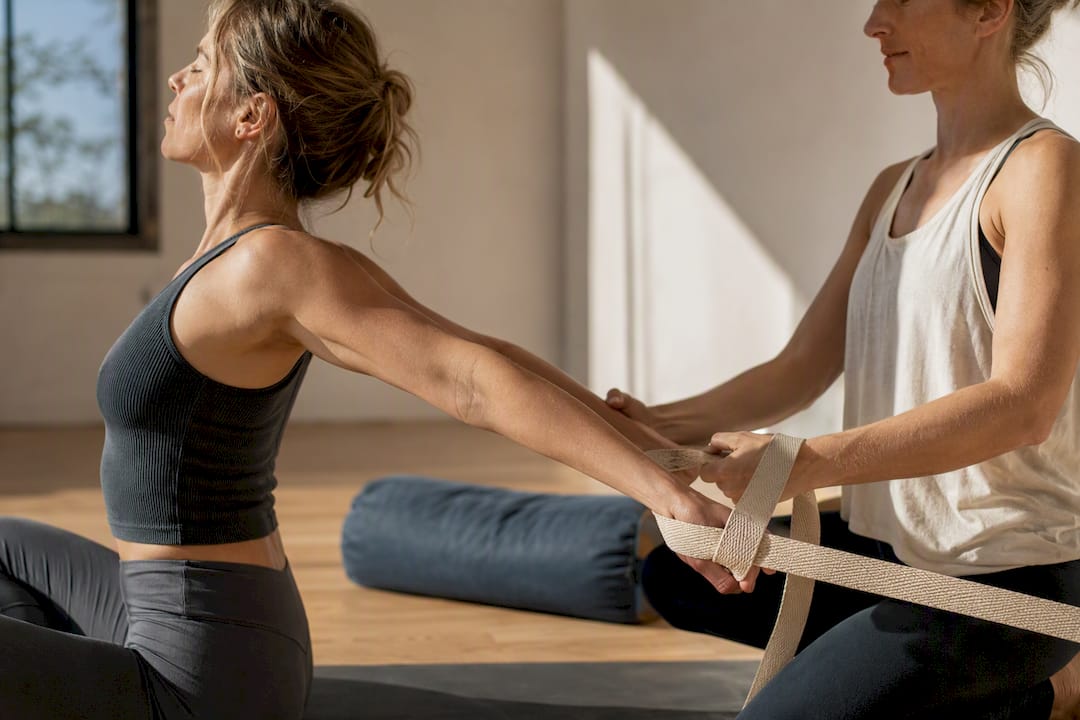
Length depends on what you’re doing with the strap. A 6 to 7 foot strap covers basic stretches, mat carrying, and most standing poses. An 8 to 9 foot strap gives you more slack for seated forward folds, restorative work, or assisting another person, which matters if you teach or practice partner stretches.
Width is a trade-off between comfort and bulk. A wider strap (around 1.5 inches) spreads pressure across your palm and foot, which feels better during longer holds. A narrower strap packs smaller for travel but can dig into skin under heavy tension.
A simple rule: measure your outstretched arm span, then add a few feet of buffer for looping and knotting. If you’re between sizes or plan to use the strap for teaching, buy the longer option.
- 6 to 7 feet suits standing stretches, mat carrying, and solo practice.
- 8 to 9 feet suits seated work, restorative poses, and assisting others.
- Wider straps feel better in long holds; narrower straps pack smaller for travel.
How to use a cotton yoga strap: grips, cues, and a short sequence
Three grips cover most of what you’ll do with a strap. Loop it around your foot for hamstring and calf stretches where you need steady length. Hold it taut overhead with both hands for spine and shoulder work. Loop it around both arms above the elbows to set shoulder-width distance in poses like downward dog, which gives faster feedback than a verbal cue alone.
Yoga Journal’s vinyasa sequence shows the strap used for active resistance, not just passive stretching. Try this shortened version:
- Start in a seated position with legs extended, strap looped around both feet.
- Hold one end in each hand and sit tall, keeping a neutral spine.
- Hinge forward from the hips, using the strap to maintain length rather than rounding your back.
- Move into a supported bridge or gentle backbend, holding the strap overhead with arms shoulder width apart.
- Press outward against the strap to engage your triceps and shoulder stabilizers instead of letting it go slack.
- Transition to standing, loop the strap around your upper arms just above the elbows.
- Move through a few rounds of downward dog, using the strap’s tension to hold consistent elbow distance.
- Finish seated, breathing through any residual tension before releasing the strap.
When you keep the strap taut and press outward rather than letting it hang loose, you turn a passive stretch into active strengthening work for your shoulders and arms. Yoga Journal’s sequence demonstrates this shift from passive assist to active resistance throughout the flow.
Keep tension controlled throughout. A sudden pull against a taut strap can strain a joint that isn’t ready for the stretch.
Care, maintenance, and how to extend a cotton strap’s life
Most cotton straps tolerate a gentle machine wash in cold water, though hand washing protects the stitching longer. Skip fabric softener, since it coats the fibers and reduces grip.
A brand-new cotton strap often feels stiff. A few wash cycles typically soften it, which is why some manufacturers prewash straps before selling them to cut down on that break-in period.
Retire a strap once you notice fraying edges, loose stitching near the buckle, or a bent metal ring that no longer sits flush. Any of these can fail under load mid-pose.
- Wash in cold water and skip fabric softener to preserve grip.
- Air dry flat rather than using a dryer, which can warp buckles.
- Store in a dry space to prevent mildew and hardware corrosion.
Common mistakes and safety notes
The most common mistake is grabbing a resistance band instead of a proper strap. A yoga strap holds a fixed length, while an elastic band stretches and can recoil unexpectedly, which makes it a poor substitute for stretches that depend on steady, non-elastic support.
Other habits to watch for: jerking the strap instead of easing into tension, over-tightening a loop until it restricts circulation, and continuing to use hardware that’s visibly bent or cracked. None of these end well mid-pose.
Sometimes a strap isn’t the right prop at all. A block offers stable height under your hand or hip, and a bolster supports your whole body in restorative poses, both better choices when you need support rather than reach.
- Resistance bands recoil unpredictably and shouldn’t replace a strap for steady stretches.
- Bent or cracked hardware should be replaced before your next practice.
- Blocks and bolsters work better than a strap when you need support, not length.
Pro Tip: If a pose calls for height or cushioning rather than reach, swap the strap for a block or bolster instead of forcing the strap to do a job it wasn’t built for.
Behind this guide: practical resources from Yune Yoga
This guide draws on teacher-vetted sequences and hands-on product experience rather than guesswork. Certain yoga blogs cover strap technique in more depth, including step-by-step exercises and alignment-first routines you can follow alongside a physical strap.
- 5 Yoga Strap Exercises to Improve Flexibility and Strengthen Your Practice walks through strap-based strength and mobility work.
- Three Benefits of Using Yoga Straps in Your Practice covers alignment, flexibility, and strength gains.
- 15 to 20 Minute Yoga Strap Stretches offers a short, alignment-first routine.
An eco-conscious approach to materials shapes which straps make it onto certain yoga sites: durable cotton construction built for repeated use rather than a single season.
What most strap advice gets wrong
Most articles treat a yoga strap as a beginner’s crutch, something you graduate away from once you’re flexible enough. That framing undersells the prop. Yoga Journal’s own sequence uses the strap for active resistance work, pressing against tension to engage the shoulders and triceps rather than just passively lengthening a muscle. Experienced practitioners use straps for exactly that reason: to add controlled resistance in poses where free-standing form alone won’t build the same strength.

The overrated piece of advice is buying the thinnest, most compact strap you can find. A slim strap packs small, but it also digs into your palms and feet under real tension, which discourages the kind of long, active hold that makes a strap useful in the first place.
Prioritize width and cotton texture over portability. A strap that’s slightly bulkier but actually comfortable to grip during a two-minute hold will get used. One that’s uncomfortable gets shoved in a bag and forgotten.
— Nicholas
Where to buy a cotton yoga strap that fits your practice
Yune Yoga’s Yoga Clothes and Accessories collection includes straps built from durable, sustainable cotton, an easy next step once you know what length and buckle type suit your practice.
If you travel often, pair a shorter strap with a foldable mat for a lighter kit. If you’re setting up a home studio or assisting others, size up and look for a double-buckle design for faster adjustments between poses. Prewashed cotton is worth seeking out since it skips the initial stiff, scratchy break-in period entirely.
Whichever option you choose, check the stitching and hardware as soon as it arrives. Catching a loose thread or a misaligned buckle before your first practice session saves a return trip later. Browse the full collection to see how straps pair with Yune Yoga’s mats and towels.
Sources
Yoga Journal’s vinyasa flow sequence and My Vinyasa Practice’s strap benefits guide informed the technique cues throughout this article, alongside Yune Yoga’s own tutorials linked above.
- Try this vinyasa flow sequence using a strap - Yoga Journal
FAQ
What to use instead of a yoga strap?
A necktie, bathrobe belt, or towel can work in a pinch for basic reach in stretches like seated forward folds. None of these match a proper strap’s consistent length or grip, so they’re best treated as a temporary substitute rather than a long-term swap.
Is a yoga strap worth it?
Yes, for most practitioners a strap makes poses like seated forward folds and shoulder openers accessible long before natural flexibility catches up. It also doubles as an active resistance tool in flows, per Yoga Journal’s sequence, so it stays useful even as your practice advances.
What is the best yoga strap?
The best strap depends on your practice: cotton suits practitioners who want grip and absorbency for sweaty or vigorous sessions, while nylon suits those who prefer a thinner, slicker feel for quick finishing stretches. Length and buckle type matter as much as material, so match those to whether you’re stretching solo or assisting someone else.
What is the difference between a yoga strap and a resistance band?
A yoga strap is non-elastic and holds a fixed length, which makes it reliable for steady stretches and alignment work. A resistance band stretches and recoils, useful for strength training but not a safe substitute for stretches that depend on consistent, non-elastic support.