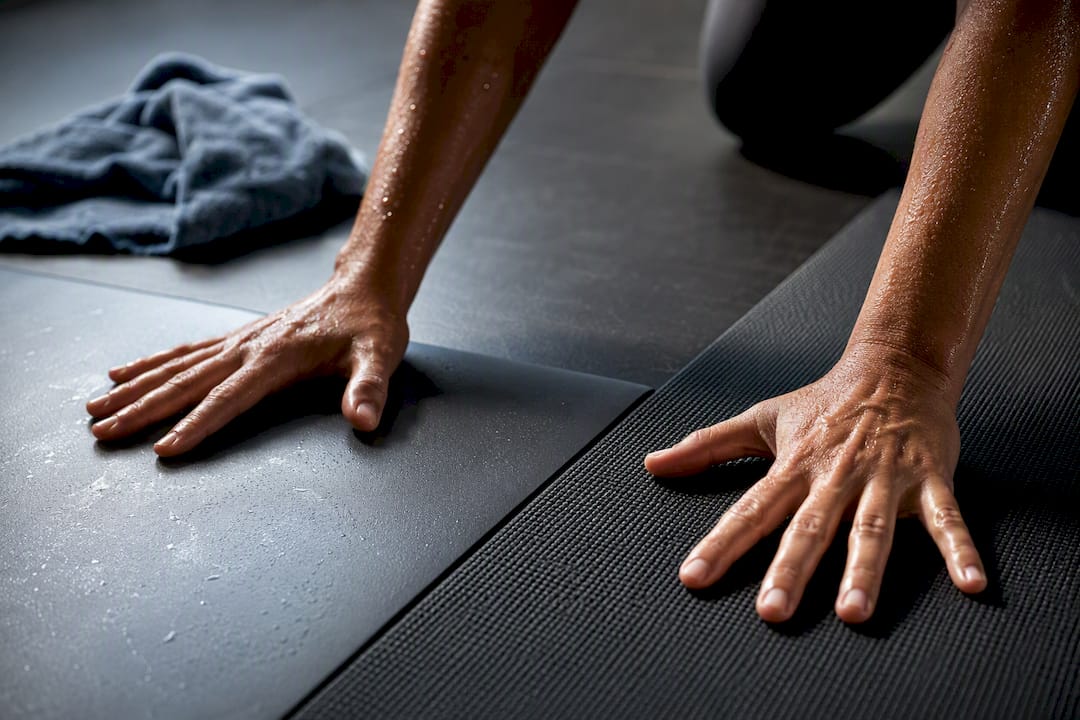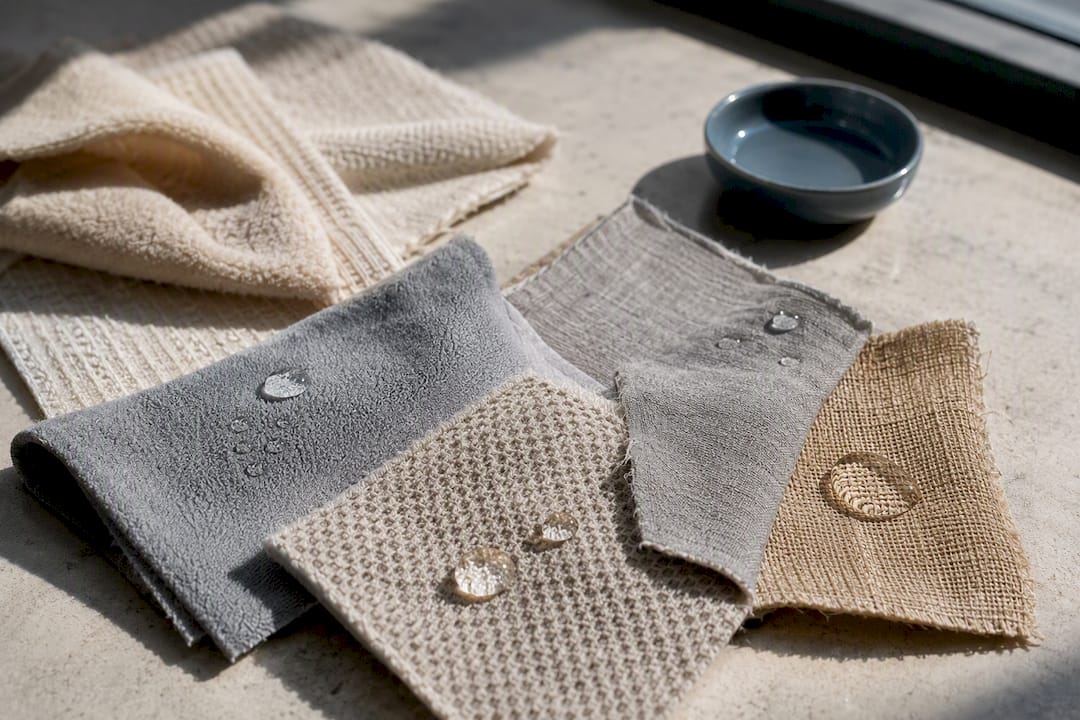
6 Tests: Best Yoga Towel Material Plus Green Claims
Split polyester microfiber is the strongest all-around choice for grip and sweat absorption, which is why it dominates hot yoga and high-intensity practice. If sustainability ranks above raw performance, recycled polyester blends and bamboo-cotton weaves offer a reasonable middle ground, while plain cotton still suits low-sweat or restorative sessions on a budget.
TL;DR:
- Split polyester microfiber offers the fastest moisture absorption and drying, making it ideal for hot yoga and high-sweat sessions.
- Cotton and bamboo-viscose blends provide softer, more natural-feeling options, but they are heavier and slower to dry when saturated.
- Towel construction details like GSM, split-fiber finish, and underside anchoring are more important indicators of performance than fiber name alone.
- Sustainability claims require scrutiny, with specific percentages and certification being key to verified eco-friendly features.
- Proper care, such as washing in cool water and avoiding fabric softeners, significantly extends a towel’s grip, absorbency, and lifespan.
Table of Contents
- Materials Compared: Microfiber, Cotton, Bamboo, and Natural Alternatives
- How to Evaluate a Yoga Towel Across Six Performance Axes
- What the Evidence and Standards Say About Drying, Fiber Science, and Green Claims
- Choosing the Right Material for Your Practice
- Care, Maintenance, and Maximizing Towel Lifespan
- Yune Yoga’s Perspective on Material Selection
- Allergy Considerations and Skin Sensitivity
- Breathability and Temperature Regulation
- Prioritize Function Over Fabric Marketing
- Finding the Right Towel in Yune Yoga’s Collection
- Sources
- FAQ
Materials Compared: Microfiber, Cotton, Bamboo, and Natural Alternatives
Every yoga towel material behaves differently once sweat hits the surface, and the difference usually comes down to fiber shape, not just fiber type. Microfiber yoga towels are typically made from split conjugate polyester and nylon (often polyamide), meaning each strand is mechanically or chemically split into finer filaments after weaving. That splitting process increases surface area and creates capillary channels that pull moisture into the fabric rather than letting it pool, which is the mechanical reason split polyester microfiber improves absorption rate compared to unsplit synthetic fibers. Finishing treatments applied afterward can boost durability but sometimes reduce total absorption capacity, so not every microfiber towel performs identically even with the same base fiber.
Cotton works on a different principle entirely. Its natural fibers absorb moisture through the fiber wall itself rather than through surface channels, which gives cotton a soft, familiar feel but leaves it heavier once wet and slower to release that moisture afterward. Bamboo-derived viscose blends split the difference: they feel closer to cotton against skin, absorb reasonably well, and dry a bit faster than pure cotton, though they rarely match split microfiber’s capillary action during heavy sweating.
A newer category of towels blends recycled PET plastic with traditional microfiber construction, aiming to keep the split-fiber performance while reducing virgin polyester content. Others add cork overlays for extra grip texture or use waffle-weave microfiber patterns to increase surface contact with the mat. These variations change texture and traction more than they change core absorbency, since the underlying fiber chemistry still drives how much moisture the towel can hold.
For a quick comparison of what each material tends to offer:
- Split microfiber (polyester/nylon): fastest capillary absorption, quick drying, strong grip when finished properly.
- Cotton: soft and absorbent by weight, but slow to dry and heavier when saturated.
- Bamboo-viscose blends: moderate absorbency with a smoother feel than cotton, though not built for heavy sweat.
- Recycled PET microfiber: performance similar to standard microfiber, with sustainability trade-offs discussed later.
- Waffle-weave or cork-topped microfiber: added surface texture for grip, with absorbency still tied to the base fiber.
How to Evaluate a Yoga Towel Across Six Performance Axes
Choosing a towel by fabric name alone misses half the story. Construction details determine whether a material lives up to its reputation on the mat.
- Grip: how well the towel stays put under palms and feet during standing or inverted poses, largely driven by underside anchoring rather than the top fabric alone.
- Absorbency: how much sweat the towel pulls in before it starts pooling or sliding, tied directly to fiber structure and weight.
- Drying time: how quickly the towel releases moisture between uses, which matters for travel and daily practice.
- Durability: how the material holds up to repeated washing and stretching without fibers breaking down or grip fading.
- Weight and packability: how much space and mass the towel adds to a gym bag or suitcase.
- Sustainability: whether the material’s environmental claims are specific enough to verify.
A few measurable proxies help translate these axes into something you can check on a product page. Grams per square meter (GSM) gives a rough sense of thickness and absorbency, with higher GSM generally meaning more moisture capacity. A split-fiber finish, listed in the fabric description, signals the capillary structure discussed earlier. Underside anchoring, commonly silicone nubs pressed into the towel’s base, keeps the towel from sliding on the mat, and some towels add antimicrobial finishes to slow odor buildup between washes.
These axes pull against each other more often than not. A heavier towel absorbs more sweat but takes longer to dry before the next session, while a lighter, more hydrophobic fiber dries fast precisely because it relies on surface structure rather than bulk to manage moisture.
Pro Tip: Check the GSM and the anchoring method together. A high-absorbency towel with weak grip still slides during downward dog.
What the Evidence and Standards Say About Drying, Fiber Science, and Green Claims
The science behind towel performance is more specific than most product descriptions suggest. Laboratory work on split polyester and nylon microfibers found that the splitting process increases surface area and capillary channels, which is what allows these fabrics to absorb moisture faster than unsplit synthetic fiber. The same research notes that finishing agents applied during manufacturing can raise durability while lowering total absorption capacity, which explains why two microfiber towels with similar fiber content can still perform differently in practice.
Separate comparative testing on drying behavior backs up what most practitioners notice anecdotally. Polyester dries faster and retains less moisture than cotton or polyester-cotton blends under controlled conditions, largely because polyester’s hydrophobic structure sheds water rather than holding it inside the fiber the way cotton does.
Polyester fabrics dry significantly faster than cotton and polyester-cotton blends under controlled tests, with the lowest moisture retention among the materials compared.
Fabric research finding: split polyester and nylon microfiber increases surface area and capillary channels, which raises absorption rate compared to standard synthetic fibers, a mechanical explanation for why technical yoga towels favor this construction.
On the sustainability side, marketing language deserves scrutiny. The FTC Green Guides require that recycled content and renewable material claims be specific and substantiated, meaning a towel labeled “made with recycled fiber” should state a percentage and clarify whether it comes from post-consumer or pre-consumer waste. An unqualified “eco-friendly” or “renewable” claim without that detail can be considered deceptive under the same guidance.

Choosing the Right Material for Your Practice
The right material depends less on personal preference and more on what your practice actually demands. A few common scenarios:
- Hot yoga or heavy sweating: split microfiber with a high-capillarity finish and silicone underside anchoring holds up best against slipping.
- Low-sweat or restorative practice: cotton or bamboo-viscose blends offer comfort without needing maximum absorption.
- Travel or daily commuting to class: lower-GSM microfiber packs smaller and dries fast enough to reuse the next day.
- Sustainability-focused buyers: recycled PET microfiber blends with clearly stated recycled percentages.
Before buying, run through these questions on the product page:
- What percentage of the fabric is recycled content, and is it stated explicitly?
- What is the towel’s GSM, and does it match the intended use?
- What anchoring system does the underside use, silicone nubs or a thinner coating?
- What washing temperature does the manufacturer recommend?
- Is there a warranty or satisfaction guarantee?
- Does the listing specify split-fiber construction or just “microfiber”?
- Is the towel machine washable, or does it require special care?
- Does the brand disclose post-consumer versus pre-consumer recycled content?
Vague claims like “eco” or “renewable” without a percentage or certification are a signal to look elsewhere or ask directly before buying.
Care, Maintenance, and Maximizing Towel Lifespan
Washing habits affect how long any towel keeps its grip and absorbency, but the details shift by material.
- Microfiber: wash in cool or warm water, skip fabric softener entirely since it coats the fibers and blocks the capillary channels responsible for absorption.
- Cotton: can handle warmer water and typical detergent, though frequent hot washes accelerate fiber breakdown over time.
- Bamboo-viscose blends: wash on a gentle cycle to protect the softer fiber structure and air dry when possible.
Antimicrobial finishes, when present, tend to fade faster with high heat or bleach, so checking the care label before the first wash protects that feature longer. A towel is due for replacement once it stops absorbing quickly, develops a persistent odor that survives washing, or shows visible thinning and fraying, all signs the fiber structure has broken down past the point of reliable performance.
Pro Tip: Skip the dryer sheet. It leaves a residue that dulls both grip and absorbency on synthetic towel surfaces.
Yune Yoga’s Perspective on Material Selection
Selecting towels for a product line built around sustainable materials has made one pattern clear: practitioners care more about how a towel performs mid-practice than about fiber names on a label. Grip and absorbency, not marketing language, decide whether a towel earns a repeat purchase.
For readers who want product-level detail, a few resources go deeper:
- 5 Best Hot Yoga Mat Towels for a Slip-Free Practice compares performance profiles across common hot-yoga towel types.
- What Is a Hot Yoga Towel? covers the basics for practitioners new to the category.
- The Best Microfiber Yoga Towel breaks down microfiber construction in more technical detail.
Allergy Considerations and Skin Sensitivity
Material choice matters for skin comfort as much as for performance. Synthetic microfiber rarely causes reactions on its own, but finishing chemicals, dyes, or antimicrobial treatments applied during manufacturing can irritate sensitive skin in some practitioners. Anyone with a known sensitivity to synthetic dyes or resin finishes should look for towels labeled free of added chemical treatments, or test a small patch of skin before extended use.
Cotton and bamboo-viscose towels tend to sit better with practitioners who have general fabric sensitivities, since natural fibers typically involve fewer processing chemicals than heavily finished technical microfiber. That said, natural fibers are not automatically hypoallergenic. Cotton grown or treated with certain finishing agents can still cause irritation in a subset of users, so sensitivity depends more on the finishing process than on the raw fiber type.
Sweat trapped against skin for extended periods, regardless of material, raises the chance of irritation or breakouts along contact points like the hands and feet. Towels with faster moisture wicking reduce that prolonged contact time, which is one more practical reason split microfiber often outperforms heavier natural fibers during sweaty sessions, independent of any allergy concern. Washing new towels before first use also removes residual manufacturing chemicals that could otherwise sit against skin.
Breathability and Temperature Regulation
Breathability affects comfort in ways that go beyond simple moisture absorption. Tightly woven synthetic microfiber tends to trap heat against the skin more than looser natural weaves, which can make a heavy microfiber towel feel warmer during an already hot session. Waffle-weave constructions and thinner microfiber finishes address this by increasing airflow through the fabric structure without sacrificing much grip.

Cotton and bamboo-viscose blends generally breathe better due to their natural fiber structure, allowing air to move through the weave more freely. That breathability comes at a cost during high-intensity practice, since the same open structure that helps regulate temperature also means these materials saturate faster and stay wet longer once soaked.
For most practitioners, the trade-off comes down to session type. A slow-paced or restorative class rarely generates enough heat for breathability to matter much, making cotton or bamboo a comfortable, natural-feeling choice. A hot yoga class generates continuous heat and sweat, where a well-finished microfiber towel’s faster moisture wicking does more for comfort than its slightly lower breathability costs.
Prioritize Function Over Fabric Marketing
After working through the fiber science and the drying data, the clearest lesson is that grip and absorption depend on construction details, split-fiber finish, GSM, anchoring type, far more than on whatever material name appears in bold on a product listing. Choose based on what a towel does under sweat, not what it claims to be.
Sustainability claims deserve the same scrutiny. The FTC Green Guides exist precisely because vague words like “eco” or “renewable” mean little without a percentage attached, so treat unspecific claims as a gap in information rather than a guarantee.
— Nicholas
Finding the Right Towel in Yune Yoga’s Collection
If the material breakdown above points you toward split microfiber with reliable underside anchoring, that profile reflects the focus of this towel selection, designed for practitioners who want grip and absorbency without guessing at fiber science.
- Towels designed with sweat-heavy sessions in mind, paired with anchoring systems that stay put through standing sequences.
- Bundles that combine a towel with complementary gear for practitioners setting up a full home or travel kit.
- A full accessory range for anyone assembling a practice setup beyond just the towel itself.
Browse the Yoga Clothes and Accessories collection to see current towel options, or visit the Yune Yoga homepage to explore mats and bundles alongside them.
Sources
- Environmental claims: summary of the Green Guides — Federal Trade Commission
- Analyzing the role of fiber composition in drying — comparative fabric drying research
- Effect of splitting and finishing on absorption/adsorption properties of split polyester microfiber fabrics — SAGE Journals
FAQ
What is the best material for yoga towels?
Split polyester microfiber is generally the strongest performer for grip and absorbency, since the splitting process creates capillary channels that speed up moisture absorption. Cotton and bamboo-viscose blends remain solid choices for lower-intensity practice where fast drying matters less.
Is a yoga towel just a microfiber towel?
Not necessarily. Many yoga towels use split microfiber for its absorption and grip properties, but others are made from cotton, bamboo-viscose blends, or recycled polyester, each with different performance trade-offs described earlier in this guide.
Can I use a regular towel as a yoga towel?
A regular cotton bath towel can work for light or restorative practice, but it typically lacks the underside grip and fast-drying structure built into dedicated yoga towels. For hot yoga or sweat-heavy sessions, the missing anchoring system usually means more sliding on the mat.
What is the best material for a gym towel?
The same split microfiber construction that works well for yoga towels also suits general gym use, since it dries faster and absorbs more efficiently than cotton. Cotton gym towels remain common for lower-intensity workouts where quick drying is less of a priority.