Flatten Yoga Mat Edge Curls in 15 Minutes for Yogis, When to Replace
Reverse-roll your mat, then flip the curl side down and weight the corners with yoga blocks for 15 minutes to overnight. That fixes most curling in minutes to a few hours. For stubborn curl from shipping or long-term storage, a flat overnight rest, sometimes stretched to 48 to 72 hours, usually flattens it for good. Skip the hair dryer. Head to the sections below for exact steps and the habits that stop the curl from coming back.
TL;DR:
- Reverse-rolling the mat in the opposite direction can effectively correct curl induced by shipping or long-term storage, especially when followed by a flat reset.
- Applying weight to curled edges with flat, heavy objects overnight helps flatten the mat, but heat and trapped moisture should be avoided, as they can worsen the problem.
- Monthly flat storage resets and proper drying after sweating are key routines to prevent recurring curl, especially for layered or TPE mats prone to compression set.
- Denser materials like rubber or cork-topped mats resist curling longer, but delamination indicates structural damage that cannot be fixed with flattening methods.
- Choosing thicker, high-density mats with sealed edges, and adopting good rolling, drying, and storage habits, significantly extend the lifespan and flatness of your yoga mat.
Table of Contents
- Quick Fixes to Flatten Curled Edges Right Now
- Why Yoga Mats Curl: Causes Explained Simply
- Prevent Curling: Storage, Rolling Habits, and Routines That Stop It Coming Back
- Which Mat Materials Curl the Most (and What to Choose Instead)
- When to Stop Trying and Replace Your Mat
- Yune Yoga Tips for Long-Term Mat Care
- A Practitioner’s Checklist for Everyday Practice
- How Yune Yoga Can Help You Stay Flat, Literally
- Sources
- FAQ
Quick Fixes to Flatten Curled Edges Right Now
Your mat curls because it has been trained to hold a shape, and the fastest way to untrain it is to work against that shape, not with heat or force. Here’s the sequence that actually works, in the order to try it.
- Reverse-roll it. If your mat has been rolled the same direction for weeks, roll it the opposite way, loosely, and let it sit for several hours to about a day. This is the single most effective first move, according to HTS Yoga’s mat-flattening guide, which points to reverse-rolling as the go-to fix for shipping-induced curl.
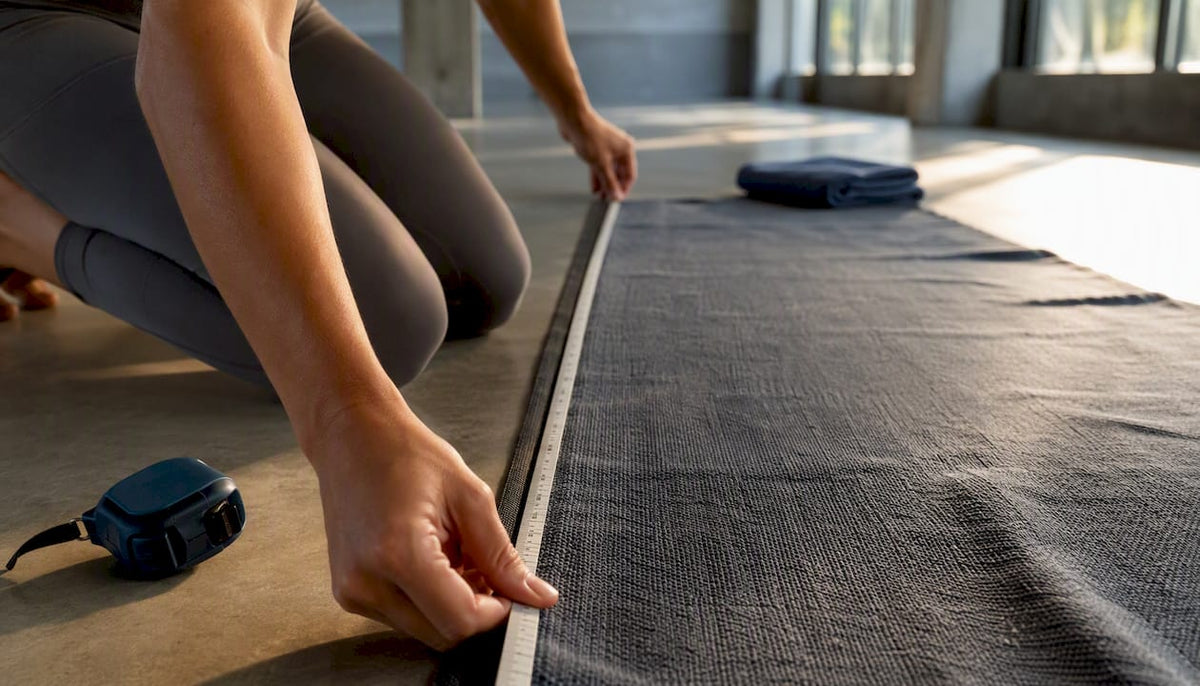
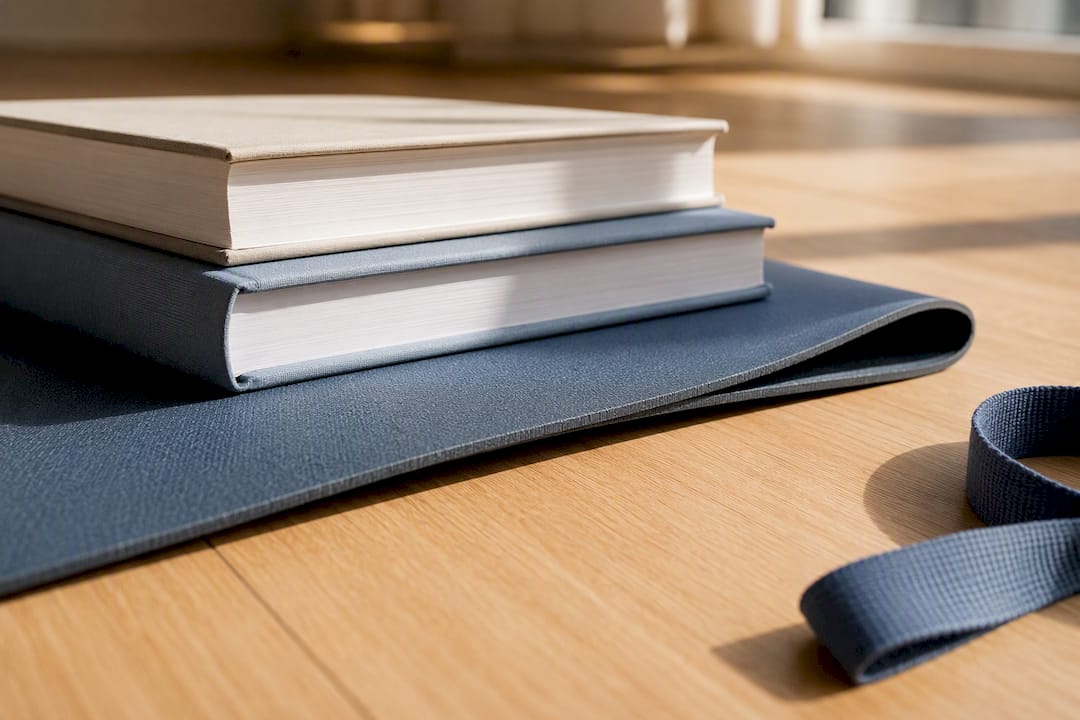
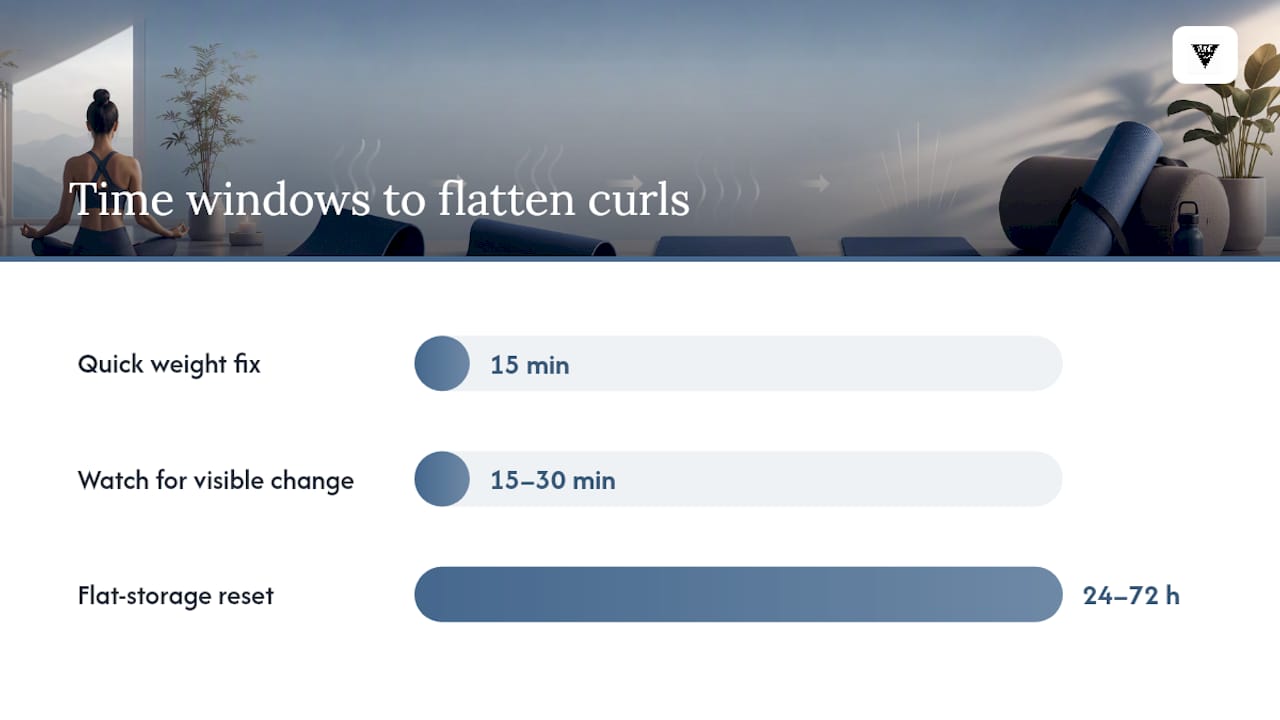
- Flip curl-side down and weight the corners. Lay the mat flat, curled edges facing the floor, and place something heavy and flat on each curling corner. Yoga blocks work well. So do stacked books or a sandbag if you have one lying around from a strength routine. Leave it for 15 minutes if the curl is mild, or overnight if it’s been rolled tight for months.
- Try a flat-storage reset for anything stubborn. Unroll the mat completely and let it lie flat on the floor, out of direct sun, for a full 24 hours. If the corners are still lifting after that, give it up to 72 hours. ExercisePick’s guide to yoga mat curling backs this same range, framing it as the realistic window for mild-to-moderate curl to fully release.
- Combine both methods for shipping curl or old creases. Reverse-roll first, then move straight into the flat reset. The two together handle almost everything short of a structural problem.
- If you need to practice today, work around it. Put the curled side down and lay a thin rug, towel, or second mat underneath the lifted corners to stop them from catching your foot mid pose. It’s not a fix, but it allows temporary relief for your session.
How do you know it’s working? Watch the corners over the first hour. A mild, recent curl should visibly relax within 15 to 30 minutes under weight. A shipping curl or a curl that’s been set for months might barely move in the first hour but should show real progress by the 24 hour mark. If there’s zero change after a full 72 hours of flat rest, you’re probably dealing with something structural, not memory.
One thing to leave alone entirely: heat. Hair dryers, space heaters, ovens, heat guns, none of it. High heat can stretch one section of the material unevenly, which permanently warps the edge instead of relaxing it. HTS Yoga’s TPE-specific guide flags this directly: heat “fixes” tend to damage bonded layers rather than release the curl. If you want a little extra push, moderate room-temperature warmth, like a spot near a sunny window for an hour, can speed up the material’s natural relaxation without the risk.
Pro Tip: Weight the corners with something flat and heavy rather than something with sharp edges. A stack of hardcover books works, but a single dumbbell resting on its end can dent the surface instead of flattening it.
Why Yoga Mats Curl: Causes Explained Simply
Curling isn’t random. It’s the mat’s material remembering the shape you kept forcing it into.
Most mats are made from polymers, TPE, PVC, or rubber compounds, that behave like a very slow-moving spring. Roll one tightly and store it that way for weeks, and the material’s internal structure shifts slightly to accommodate the curve. Engineers call this compression set. In plain terms: the edges get “trained” to curl because that’s the shape they sat in the longest. HTS Yoga’s explainer on TPE curling describes this as viscoelastic recovery behavior, which is a technical way of saying the material eventually wants to spring back to flat, but only if you give it time and stop reinforcing the curl.
A few specific habits and conditions make it worse:
- Tight rolling in the same direction, every time. Rolling the same way for months deepens the memory instead of letting it fade.
- End straps instead of center straps. A strap cinched right at the edge compresses that exact spot every single time you store the mat, which is often the real reason one end curls worse than the other.
- Heat and UV exposure. A mat left in a hot car or a sunny window for hours softens the material just enough for gravity and existing creases to set deeper.
- Trapped moisture. Rolling up a sweaty mat traps humidity against the surface, which ExercisePick’s roundup on curling causes identifies as a major accelerant, since damp material holds a curved shape more readily than dry material and can weaken adhesive bonds in layered mats over time.
Most everyday curling traces back to one or a combination of these four causes: roll memory, tight compression, heat exposure, and trapped moisture. That’s genuinely good news, because all four respond to the fixes above.
The harder question is whether you’re looking at storage memory or something structural. Storage-memory curl is uniform, it responds (even slowly) to flat rest, and the mat surface itself feels intact. A structural problem looks different: you’ll see visible bubbling between layers, a crease that stays sharp and doesn’t soften after days of flat storage, or edges that feel loose and separated from the base layer. HTS Yoga’s guide on edge lifting draws this exact line: shape memory eventually gives up flat rest, delamination doesn’t.
Prevent Curling: Storage, Rolling Habits, and Routines That Stop It Coming Back
Fixing a curl once is easy. Stopping it from returning every single week is a habit problem, not a product problem, and it comes down to four things: how you roll, how you dry, how you store, and how you travel.
- Roll top-side out, loosely, and switch direction now and then. A tight roll is the enemy. Roll with a little slack and flip which direction you roll every few weeks so the mat isn’t trained into one permanent curve.
- Move your strap to the center, not the ends. This is the fix people skip because it feels minor. An end strap presses directly on the spot that curls worst. A center strap distributes that pressure and, according to insight from HTS Yoga’s TPE care guide, stops you from reinforcing the same crease practice after practice.
- Dry it before you roll it. Every time. After a sweaty session, towel off the surface, then let it air-dry flat or hung over a rail before rolling. Yune Yoga’s guide to drying mats by material walks through the towel roll method and material-specific timing, since a foam-based mat and a rubber mat don’t dry at the same rate. Rolling up dampness is one of the fastest ways to reintroduce curl you just fixed.
- Store it flat when you can. Flat storage under a bed, on a shelf, or draped over a wide surface beats rolling every time, because it never re-teaches the curl. When flat storage isn’t practical, Yune Yoga’s storage guide covers hanging methods and breathable bag options that avoid the tight compression of a stuffed gym bag.
- Give it a reset day. Once a week, unroll it fully and leave it flat overnight, even if you’re not practicing. This single habit does more to prevent recurring curl than any product you could buy.
- Travel differently. Unroll your mat the moment you get to your destination, don’t leave it compressed in a suitcase for days. If you’re gone longer than a weekend, try to schedule at least one flat night mid-trip, and avoid cinching a travel strap tight at the very ends.
Pro Tip: If you practice daily, keep a designated flat spot, even a stretch of wall or floor space, reserved just for your mat’s reset nights. Habits that require zero extra setup are the ones that actually stick.
Which Mat Materials Curl the Most (and What to Choose Instead)
Not every material curls the same way, and knowing your mat’s material tells you how much patience a fix will take.
TPE mats are lightweight and popular for travel, but they’re also more prone to compression set from tight straps, meaning the same rough handling that barely affects a thicker rubber mat can leave a visible curl on TPE within a few uses. PVC mats hold their shape reasonably well but soften more in heat, so a PVC mat left in a hot car curls faster than most alternatives. Natural rubber mats are heavier and denser, which resists curling better overall, though HTS Yoga’s rubber-specific guide notes that rubber still carries its own time-dependent shape memory. Rubber curl often takes longer to set but also longer to release, so budget the full 48 to 72 hour window rather than expecting an overnight fix. Cork-topped mats paired with a rubber base tend to stay flatter long-term because the cork layer resists the kind of tight rolling that causes deep creases, though cork adds weight. Polyurethane (PU) surface mats grip well but can be more sensitive to moisture at the bonded seam, which is where curling and separation tend to start together.
That layered-construction point matters beyond curling. Multi-layer mats, a grippy top bonded to a cushioned base, are more prone to delamination than a single-material mat, and delamination is a different problem than curl. A curl relaxes with time and pressure. A delaminated layer doesn’t, no matter how long you leave it flat.
If you’re buying with flatness in mind, look for:
- Thickness and density that match your use. Thicker studio mats (5mm+) generally resist curling better than ultra-thin travel mats, which trade flatness for portability.
- Edge finishing. A cleanly sealed edge resists the moisture absorption that speeds up curling.
- Clear care instructions from the maker. A brand that tells you exactly how to dry and store the mat is signaling it actually thought about long-term flatness, not just first impressions.
- Realistic expectations for foldable travel mats. A folding travel mat will show crease lines that behave differently than a rolled mat’s curl, and that’s normal, not a defect.
When to Stop Trying and Replace Your Mat
Most curling responds to the fixes above. Some doesn’t, and pushing through it isn’t worth the risk to your practice.
Replace the mat, rather than keep fighting it, if you see:
- Delamination. Layers separating or bubbling apart is a bonding failure, not shape memory, and it only gets worse.
- A permanent crease that won’t soften. If a fold line stays sharp after 72 hours of flat rest with weight on it, the material has broken down at that spot rather than simply “remembering” a shape.
- Persistent waves after a full 72-hour flat reset. HTS Yoga’s guide on edge lifting treats this as the clearest line between temporary and structural curl. If time and weight genuinely haven’t worked after three full days, they’re not going to.
- Surface bubbling anywhere on the mat, not just the edges. This usually means trapped moisture broke down an internal bond.
- Edges that catch your toes or fingers during poses. This isn’t just annoying. A lifted or curled edge that snags mid-pose is a real fall risk, and no amount of “getting used to it” makes that safer.
A simple home test helps you decide: after a 24 to 72 hour flat reset with weighted corners, press down gently on the curled area and release. Storage memory will feel springy but even, and it slowly flattens more each day. A structural problem feels uneven, spongy in spots, or simply refuses to change at all.
Temporary patches, like edge tape or a small dab of flexible adhesive on a lifting corner, can buy you time on an otherwise sound mat. They’re not appropriate for delamination across a wide area or for a mat that’s catching your feet regularly. At that point, you’re managing a hazard, not extending a mat’s life.
Yune Yoga Tips for Long-Term Mat Care
Care routines work better when they match your actual mat material, and that’s where a little brand-specific know-how saves you from guessing.
- Natural rubber and studio-style mats hold up best with a loose roll, top-side out, and a full air-dry before storage. Rubber’s density means it takes longer to both develop and release a curl, so a weekly reset day matters more here than with lighter mats.
- Foldable travel mats need drying attention at the fold lines specifically, since moisture collects there fastest. Yune Yoga’s guide to drying by material breaks down timing so you’re not rolling up a mat that feels dry on top but is still damp where it folds.
- A simple three-tier schedule keeps most of this on autopilot: a quick towel-dry after every sweaty session, one flat-storage reset night per week, and a monthly check for early bubbling or edge separation before it becomes a bigger issue.
- Clean without soaking. A homemade cleaning spray applied lightly and wiped dry, rather than a heavy soak, avoids adding the exact moisture load that speeds up curling. Yune Yoga’s cleaner recipes guide has a few options that work across most materials.
- If you’re shopping for durability specifically, Certain natural rubber and eco-friendly foldable mats are built with flatness-focused construction in mind, a reasonable place to start if your current mat’s curling has become a structural problem rather than a habit problem.
A Practitioner’s Checklist for Everyday Practice
Most of this comes down to four habits, repeated consistently, rather than any single trick.
Daily: dry the mat before you roll it, do a quick loose-roll rather than a tight one, and keep your strap centered instead of cinched at the end.
Weekly: give the mat one full flat-storage night. Think of it as a reset day, the same way you’d give a muscle a rest day. It’s the single habit that prevents most recurring curl.
Traveling: unroll the moment you arrive rather than leaving it compressed in a bag, and if the trip runs longer than a few days, build in at least one flat night mid-trip. Skip the end-strap cinch on a packed suitcase.
If you remember nothing else, remember this: dry first, roll loose, press gently, and replace the mat once the structure, not just the shape, has failed. Everything above is a variation on that one idea, applied to whatever material and situation you’re dealing with.
— Nicholas
How Yune Yoga Can Help You Stay Flat, Literally
If your mat keeps curling no matter how carefully you dry and roll it, that’s usually a sign the mat itself has reached its limit, not that you’re doing something wrong. Some brands focus on natural rubber and eco-friendly foldable travel mats built with durability and flat-lay performance in mind, paired with straps and breathable bags designed to support proper center-strap storage instead of the tight end-cinching that trains curl into a mat in the first place.
If you’re evaluating whether to keep fighting your current mat or start fresh, browse Yune Yoga’s natural rubber and foldable mat collection to compare thickness, density, and care notes side by side. A mat built for long-term flatness, combined with the habits in this guide, is the most reliable way to stop dealing with curling edges for good.
Sources
For deeper detail on the causes and fixes covered here, see ExercisePick’s curling guide, HTS Yoga’s flattening walkthrough, and Yune Yoga’s mat care guide for a broader maintenance routine.
FAQ
How Do You Stop Your Yoga Mat From Curling?
Reverse-roll it against the direction it’s used to, dry it fully before storing, and give it a flat-storage reset once a week using center straps instead of end straps.
Is It Better to Have a Thicker or Thinner Yoga Mat?
Thicker mats (5mm or more) generally resist curling better than thin travel mats, though travel mats trade some flatness for portability and are designed to be reset more frequently.
What Is the Lifespan of a Yoga Mat?
Lifespan varies by material and care, but a well-maintained rubber or high-density mat with regular flat resets and proper drying will outlast one that’s stored damp and rolled tight for months.
Which Yoga Mats Don’t Curl Back?
No mat is entirely immune, but denser natural rubber and cork-topped mats with sealed edges resist curling better than thin TPE mats, especially when paired with center-strap storage and Yune Yoga’s flat-storage routine.