
Fail Two Checks? When to Replace Your Yoga Mat in 2 Minutes
Replace your yoga mat when it stops doing its actual job: reliable traction, real cushioning, a flat surface, and a clean smell. The clearest triggers are grip that won’t come back after a proper wash, permanent flattening under your hands and knees, cracking or flaking on the surface, or odor that survives deep cleaning. Before you toss it, run a quick clean and test. Often the mat isn’t dead. It’s just dirty.
TL;DR:
- Worn-out surface texture causes grip loss even after cleaning, increasing the risk of slipping during poses.
- Mat flattening or permanent dents indicate a loss of cushioning, which can harm joints and stability in practice.
- Persistent cracking, surface flaking, or rubber crumbs signal material breakdown and the need for replacement.
- Strong odors that resist cleaning suggest bacterial or mold growth deep within the material, not just surface contamination.
- Regular cleaning and proper storage extend a mat’s lifespan, but failure of grip or flatness tests means replacement is necessary.
Table of Contents
- Clear Signs It’s Time to Replace Your Yoga Mat
- How Do You Clean and Test a Mat Before Replacing It?
- How Long Do Yoga Mats Last by Material?
- How to Choose the Right Replacement Mat
- Safe Alternatives While You Replace Your Mat
- Maintenance Routine to Extend Mat Life
- The Two-Minute Replacement Checklist
- Yuneyoga’s Practical Point of View and Next Steps
- Finding Your Next Mat Without the Guesswork
- Sources
Clear Signs It’s Time to Replace Your Yoga Mat
Your mat talks to you through your practice, and the signals are usually obvious once you know what to check.
Traction that won’t return. If your hands slide in downward dog even after a full wash and dry cycle, the surface texture has worn smooth. That’s a genuine safety issue in standing and balancing poses, not a minor annoyance.
Compression that doesn’t bounce back. Press your thumb into the mat where your knees usually land. A healthy mat springs back within a second or two. A mat with permanent dents has lost the cushioning that protects your joints during kneeling or seated work.
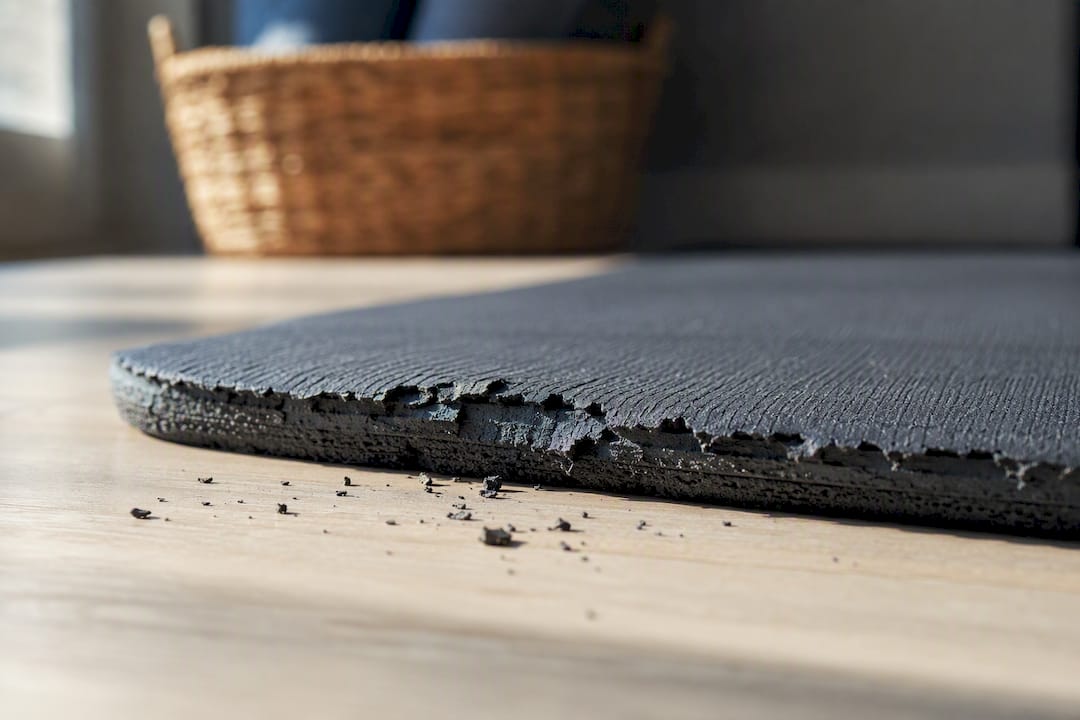
Cracking, peeling, or shedding. Surface flaking accelerates once it starts, since exposed material breaks down faster than a sealed top layer. Small rubber crumbs on your studio floor are a dead giveaway.
Odor that survives a real clean. A mat can develop persistent smells that soap and water no longer touch. That usually means bacteria or mold have worked into the material itself, not just the surface.
Curling edges or waves. A mat that won’t lie flat creates trip risk and throws off your alignment in poses that need a stable base.
- Traction gone even when dry and clean
- Permanent flat spots under knees or palms
- Visible flaking, cracking, or rubber crumbs
- Smell that returns within a day of cleaning
- Edges that curl or a surface that won’t stay flat
Pro Tip: Do the compression check on three spots, not one. Mats often break down unevenly, so the corner you never inspect is usually the worst offender.
How Do You Clean and Test a Mat Before Replacing It?
Grip loss and odor are frequently a residue problem, not a material failure. Body oils, lotion, and cleaner buildup can mimic real wear. A proper deep clean and full drying restores traction more often than people expect.
- Wipe after every practice with a damp cloth to catch sweat and oils before they set in.
- Do a weekly deeper clean with mild soap and water, avoiding vinegar on PU-topped mats since it can break down the coating. Natural rubber mats do best with a gentle, unscented soap.
- Run the grip test dry, then again slightly damp, since some mats grip fine dry but slide once you sweat.
- Run the cushion-recovery test by pressing firmly for five seconds and watching how fast it rebounds.
- Check flatness by laying the mat on a hard floor and looking for edges that lift or waves that won’t press down.
- Run the odor and cleanability test immediately after a full clean and dry. If the smell is gone, you’re fine. If it isn’t, that’s your answer.
If a mat fails one test, try reverse-rolling it for a few days or airing it outside in shade. If it fails two or more tests after a genuine clean, replacement is the right call.
Pro Tip: Always let a mat dry completely flat before rolling it. Rolling it damp is one of the fastest ways to trap odor-causing moisture permanently.
For step-by-step routines, A guide on how to properly clean and maintain your yoga mat covers material-specific dos and don’ts in more detail.
How Long Do Yoga Mats Last by Material?
Lifespan depends far more on material, sweat exposure, and how you store the mat than on a fixed number of months. That said, typical ranges by construction give you a realistic baseline.
Daily practice, hot yoga, and travel all compress these timelines. A mat used frequently in heated conditions wears out closer to the low end of its range, while occasional home practice on cool, dry days can extend a quality mat well past the typical range. Cork and natural rubber tend to hold grip longer under sweat, but they’re heavier and slower to dry, which matters if you’re rolling straight into a bag after class.

How to Choose the Right Replacement Mat
Match the new mat to the specific failure you found, not to whatever’s on sale.
- Lost your grip? Prioritize wet-grip performance over marketing claims. A 3-minute test with a light water or sweat spray tells you more than any product label. If you sweat heavily, wet grip matters more than dry grip ever will.
- Lost your cushioning? Look for a denser, firmer construction rather than a thicker one. Thickness and firmness aren’t the same thing, and a thick, soft mat can still feel unstable in balance poses.
- Fighting odor or hard-to-clean surfaces? Closed-cell materials resist moisture absorption better than open-cell foam, which makes a real difference for anyone who practices in a warm room.
- Traveling often? Weight and fold pattern matter as much as grip. A foldable travel mat that packs flat beats a heavy rolled mat you’ll leave behind after two trips.
Before you commit, record size, thickness, dry grip, wet grip, base traction on your studio or home floor, and the manufacturer’s care instructions. Run the same pass or fail protocol on any candidate mat that you’d run on your current one, and keep the return window in mind. A mat that feels great in a store often behaves differently once it’s slick with sweat.
Safe Alternatives While You Replace Your Mat
A few household substitutes can hold you over for a session or two, though none replace a proper mat for regular practice.
- A thick towel over your current mat adds grip in sweaty sessions but offers little cushioning on its own.
- A folded blanket works for seated or restorative practice, not for standing poses that need a stable base.
- A carpet or area rug can cushion knees but often lacks consistent traction, especially on smooth-backed rugs.
- Grass or sand works for a casual outdoor flow, but uneven ground raises your risk of ankle strain and skin abrasion.
Skip the substitute entirely for hot vinyasa or any sweat-heavy practice unless you have real wet-grip backup, and never practice on anything torn, bunched, or unstable underfoot.
Maintenance Routine to Extend Mat Life
A little consistency buys you real time before replacement becomes necessary. Regular wiping, full drying, and shaded storage meaningfully slow the wear that leads to early retirement.
- After every practice: wipe down and let the mat air out fully before rolling.
- Weekly: do a deeper clean, or lay a yoga towel over the mat during sweatier sessions to reduce direct wear.
- Monthly or seasonally: deep clean and run a full inspection for flat spots, cracking, or curling.
- Storage: keep it out of direct sunlight and heat, roll it loosely rather than tightly, and occasionally reverse the roll direction so it doesn’t set a permanent curl.
- Cleaner caution: skip vinegar on PU-topped surfaces and use gentle, unscented soap on natural rubber, since harsh chemicals shorten both materials’ usable life.
A mat cleaned and stored well can outlast its typical range by a year or more, while one left damp in a gym bag rarely makes it past the low end.
For a fuller breakdown of what cleaners to avoid on specific materials, a post on how to clean and maintain your yoga mat the right way is worth bookmarking.
The Two-Minute Replacement Checklist
Run this once a month, or any time your practice starts feeling off.
- Grip check: dry and slightly damp. Pass if your hands and feet stay put.
- Cushion check: press firmly for five seconds. Pass if it rebounds within a couple seconds.
- Surface check: look for flaking, cracking, or rubber crumbs. Pass if the surface is intact.
- Flatness check: lay it flat on hard flooring. Pass if there’s no curling or waving.
- Odor check: smell it right after a full clean and dry. Pass if there’s no lingering smell.
Fail two or more checks, or fail even one in a way that affects your balance or hygiene, and it’s time to replace. A retired mat still has life left as garage padding, a pet bed liner, or drawer lining. Many communities also accept foam and rubber mats through textile or rubber recycling programs, so check locally before it hits the trash.
Yuneyoga’s Practical Point of View and Next Steps
We build our approach around one idea: replace on condition, not on a calendar. A quality mat that still grips and cushions well doesn’t deserve early retirement just because a year has passed. If you want deeper care routines, some blogs cover homemade cleaner recipes and full care guides worth a look before you shop.
— Nicholas
Finding Your Next Mat Without the Guesswork
If your current mat failed the grip test or the cushion test above, you already know what to shop for, and there are lineups of eco-friendly natural rubber mats and foldable travel mats built around exactly those failure points, with towels and straps to match.

Run the same pass or fail checks on any mat you’re considering before you settle in for a full class. If a new mat doesn’t grip the way it should once you’ve broken a light sweat, most orders fall within a standard return window, so you’re not stuck with a bad fit. Browse current lineups of yoga mats and care accessories and match your pick to the specific problem your old mat couldn’t solve.


