Hot Class Ready: Open Cell Yoga Mat Buying Checklist with Eco Picks
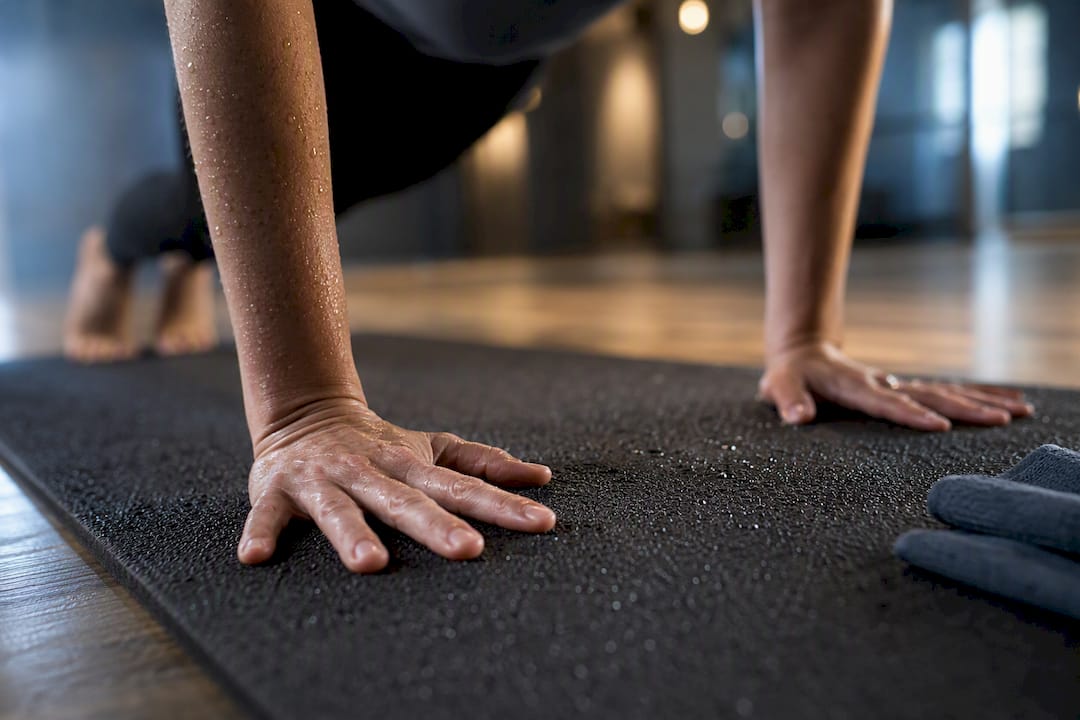
If you practice hot or sweaty yoga, an open-cell mat usually gives you the best wet grip, because the surface absorbs moisture instead of letting it pool. That grip comes at a cost: more drying time, a shorter lifespan, and cleaning that has to be done right or you’ll end up with a mat that smells worse than your gym bag. For most hot-yoga practitioners, that trade is worth it. If low maintenance matters more than grip, a closed-cell mat may suit you better, and the sections below will help you decide which one fits your practice.
TL;DR:
- Open-cell yoga mats absorb moisture into tiny pores, providing superior grip during hot yoga but requiring longer drying and more frequent cleaning.
- These mats tend to be heavier, less durable over time, and often arrive with a stronger rubber odor that needs airing out before use.
- Their water-beading test reveals open-cell mats soak in water quickly, while closed-cell mats cause water to bead and stay on the surface.
- Proper maintenance for open-cell mats includes wiping with a mild cleaner after each session and air drying to prevent mildew and odors.
- The choice depends on sweat levels and willingness to dedicate time to cleaning, with high-sweat practitioners benefiting most from open-cell designs.
Table of Contents
- What Does Open Cell Mean on a Yoga Mat?
- Why Do Open Cell Mats Grip Better When You Sweat?
- What Are the Downsides of an Open Cell Mat?
- How to Tell if a Mat Is Open- or Closed-Cell
- How Do You Clean and Care for an Open Cell Mat?
- What Should You Compare Before Buying an Open Cell Mat?
- How Yuneyoga Thinks About Matching Mats to Your Practice
- The Real Question Isn’t Grip. It’s Whether You’ll Actually Care for the Mat
- Find Your Next Mat on Yuneyoga
- Sources
- FAQ
What Does Open Cell Mean on a Yoga Mat?
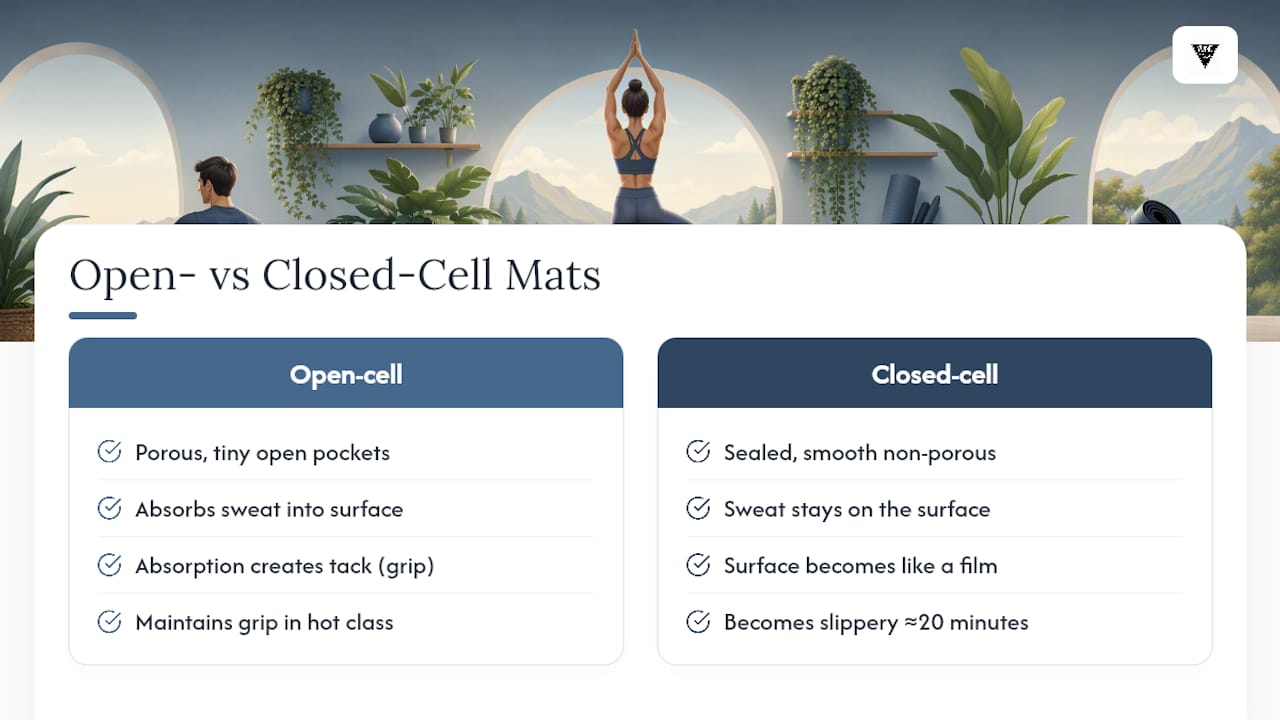
An open-cell yoga mat has a porous surface, full of tiny open pockets that let moisture pass into the material instead of sitting on top of it. A closed-cell mat is sealed. Its surface is smooth and non-porous, so sweat and water stay on the surface, where they can turn a mat into a slip hazard within twenty minutes of a hot class.
Most open-cell mats on the market use one of a few constructions. Some pair a polyurethane (PU) top layer with a natural rubber base, which is the setup you’ll see on higher-end mats built specifically for hot yoga. Others are made from natural rubber all the way through. Thermoplastic elastomer (TPE) mats sit in a gray area: some TPE blends are engineered closed-cell for easy cleanup, while others are formulated with an open, absorbent surface to mimic the grip of rubber.
The mechanism behind the grip is straightforward. Open-cell material pulls sweat into its surface texture rather than letting it float on top like a layer of oil. That absorption is what creates tack. Manduka’s own product help pages-and-closed-cell-(non-porous)-surface-188676) describe this PU-over-rubber build explicitly, and it’s the same logic behind most premium hot-yoga mats regardless of brand. Once you understand this one distinction, reading a product listing gets a lot easier: if a description mentions an absorbent top layer or “sweat-activated grip,” you’re looking at open-cell.
Why Do Open Cell Mats Grip Better When You Sweat?
Sweat is actually the ingredient that makes an open-cell mat work. Moisture soaks into the porous surface and increases surface tack rather than reducing it, which is the exact opposite of what happens on a closed-cell surface, where the same sweat becomes a lubricant. Aeromats explains this dynamic as the core reason open-cell mats get recommended for hot and Bikram-style classes.
In practice, this means fewer slips during a sequence that moves from downward dog into a sweaty plank, and more confidence holding a pose like warrior three when your palms are already dripping. Some practitioners find they no longer need a separate yoga towel over the mat, since the surface itself handles what a towel used to be there to fix. That’s a real convenience during travel or when packing light for a studio class.
The difference shows up most in three scenarios: hot yoga rooms heated above 90 degrees Fahrenheit, vigorous vinyasa flows where hands and feet are constantly repositioning, and inversion work where a slipping mat under your palms is a genuine safety issue. In a cooler, low-sweat restorative class, the wet-grip advantage barely matters, since there’s little moisture to activate it. That’s worth remembering before you pay a premium for a feature you might rarely use.
Independent testing backs this up. Outdoor Gear Lab’s mat reviews rate several open-cell mats as genuinely “hot-yoga grade” for their wet traction, a distinction that matters if you’ve ever tried to hold a pose on a mat that wasn’t built for sweat. It’s the single biggest functional difference between the two mat categories, and it’s why so many studios stock open-cell rentals specifically for their heated classes.
What Are the Downsides of an Open Cell Mat?
Grip isn’t the whole story. Every trade-off in this section is the reason some practitioners deliberately choose a closed-cell mat instead, even for warm classes.
The absorbency that creates great traction also means the mat holds onto water and sweat after class. That adds noticeable weight when you roll it up wet, and it means drying time stretches out compared to a mat you can wipe and walk away from. Manduka notes that open-cell surfaces are generally less durable over time than closed-cell mats, largely because that constant moisture cycling wears down the top layer faster.
New open-cell mats, especially natural rubber ones, often arrive with a stronger smell than closed-cell alternatives. Aeromats recommends airing mats out before first use, ideally unrolled in a ventilated room for a day or two, to let off-gassing settle before you’re breathing over it in a forward fold.
Here’s what regular sweaty use means for an open-cell mat over time:
- Heavier feel after class, since the surface has absorbed moisture rather than shedding it.
- Longer drying windows, often overnight, before the mat is ready to roll and store.
- A real risk of mildew or a sour smell if you roll it up damp and leave it in a bag.
- A shorter usable lifespan than a comparable closed-cell mat under the same practice frequency, according to Outdoor Gear Lab’s testing.
- More frequent, more careful cleaning than a simple wipe-down.
None of this makes open-cell a bad choice. It makes it a mat that asks something of you in return for better grip.
How to Tell if a Mat Is Open- or Closed-Cell
You can figure this out before you buy, or with a mat you already own, using a few quick checks.
- Read the material description. Listings that mention a PU top layer, natural rubber with an absorbent surface, or language like “sweat-wicking grip” are describing open-cell construction. TPE and PVC mats marketed as “easy wipe” or “water-resistant” are almost always closed-cell.
- Do a water-drop test. Place a few drops of water on the surface. If it beads up and sits on top, the mat is closed-cell. If it darkens the surface and soaks in within a few seconds, it’s open-cell.
- Press and check for texture. Open-cell surfaces tend to feel slightly matte or suede-like, even when dry, since the porous structure changes how light and touch interact with it. Closed-cell mats feel smoother and slicker.
- Smell the mat. A stronger rubber odor right out of the packaging usually signals natural rubber or PU, both common in open-cell mats, per Aeromats.
- Check the brand’s own care instructions. Vendors that warn against submerging the mat or advise against harsh cleaners are almost always describing an absorbent, open-cell surface.
How Do You Clean and Care for an Open Cell Mat?
Open-cell mats need surface cleaning, not submersion. Soaking the mat lets water work its way into the absorbent layer and, over time, that can loosen adhesive between layers or warp a PU-topped rubber base. Manduka’s care guidance specifically warns against this for mats built with an absorbent top layer.
The safer routine looks like this:
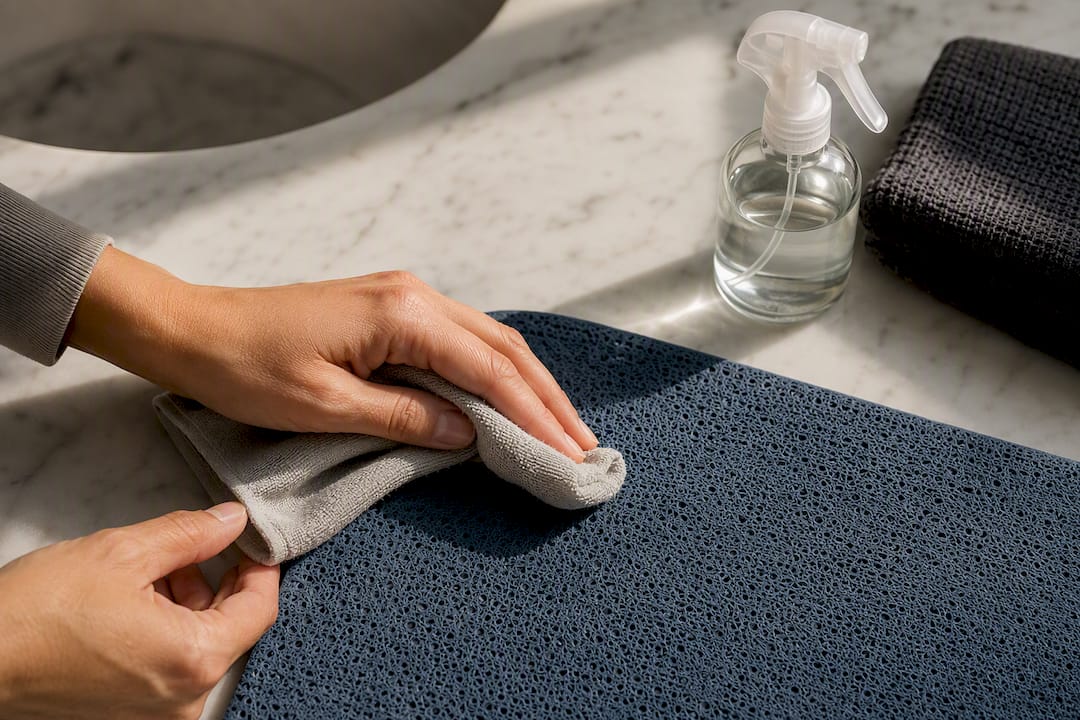
- Wipe the surface down with a damp cloth and a mild, mat-safe cleaner after every sweaty session.
- Skip household cleaners with alcohol or ammonia, since they can break down the top layer faster than normal wear would.
- Hang the mat over a rack, chair, or shower rod to air dry fully, ideally for several hours before rolling it up.
- Never store a damp mat rolled up in a bag. That’s the fastest route to mildew and a smell you won’t get out.
- Rotate practice mats if you’re doing back-to-back hot classes, so one always has time to dry completely.
Pro Tip: Keep a small spray bottle of diluted mat cleaner in your gym bag and wipe down within a few minutes of finishing class, while the mat is still warm. It lifts sweat before it has time to set into the surface, and it cuts your drying time at home.
If you want exact recipes and dilution ratios rather than guesswork, Yuneyoga’s guide on homemade yoga mat cleaner recipes walks through options that won’t strip an open-cell surface. For a longer-term care routine, the detailed cleaning and storage guide covers how often to deep clean versus spot wipe. Expect to replace an open-cell mat sooner than a closed-cell one under equally heavy use, typically once the surface starts peeling, flattening, or losing its tack even when dry.
What Should You Compare Before Buying an Open Cell Mat?
Not every open-cell mat is built the same way, and the differences matter more than the marketing copy suggests.
- Top layer material. PU-over-rubber tends to hold up better under sweat than a budget open-cell foam, and it’s usually the mark of a mat actually engineered for hot yoga rather than one labeled that way after the fact.
- Thickness. A 4 to 5 millimeter mat gives better balance and floor connection for standing sequences, while 6 millimeters and up favors joint comfort for kneeling and seated work. Thicker isn’t automatically better if stability matters more to your practice.
- Weight and portability. Natural rubber open-cell mats run heavier than TPE, and they absorb more water, which makes them a poor choice for travel unless you’re prepared for longer drying windows between uses.
- Care instructions and warranty. Look for explicit guidance on cleaning and a warranty that covers delamination, which is the most common failure point on absorbent multi-layer mats.
- Material claims. If non-toxic or eco-friendly matters to you, check for natural rubber sourcing and confirm the mat is free of PVC, since PVC-based mats carry heavier off-gassing concerns and don’t biodegrade.
For a side-by-side look at mats specifically built for wet grip, Yuneyoga’s roundup of slip-resistant, hygienic hot-yoga mats is a useful next stop once you know what to look for on the label.
How Yuneyoga Thinks About Matching Mats to Your Practice
Not every practitioner needs maximum wet grip, and Yuneyoga’s approach starts with matching the mat to the actual sweat level of your practice rather than defaulting to whatever is trending. A restorative or gentle vinyasa practitioner is often better served by a closed-cell mat that wipes clean in seconds. Someone doing daily hot yoga or Bikram needs the open-cell absorbency, full stop, because the alternative is fighting your own hands for traction.
Some retailers curate natural rubber and eco-conscious foldable mats with exactly this trade-off in mind, favoring sustainable materials over PVC wherever grip performance allows it. If you’re deciding between grip and low maintenance, the guide to finding the best mat for hot yoga breaks down which material fits which practice style, and the step-by-step cleaning guide covers the maintenance side once you’ve made your choice.
The Real Question Isn’t Grip. It’s Whether You’ll Actually Care for the Mat
Most advice on this topic treats open-cell as the obvious upgrade for anyone who sweats during practice, and on pure grip performance, that’s fair. What gets underplayed is the maintenance commitment attached to that grip. An open-cell mat rewards you every single class, but it also punishes neglect faster than a closed-cell mat does. Leave it damp in a bag twice, and you’re dealing with a smell that no amount of spray cleaner fully removes.
The honest recommendation isn’t “buy open-cell” or “buy closed-cell.” It’s to be realistic about whether you’ll actually air the mat out after every session. If you’re someone who rolls up and runs, a well-made closed-cell TPE mat will serve you better than an open-cell mat you resent maintaining. If you’re disciplined about drying and cleaning, the wet-grip advantage of open-cell is genuinely worth the extra five minutes it costs you after class. Prioritize honesty about your own habits before you prioritize the spec sheet.
— Nicholas
Find Your Next Mat on Yuneyoga
Yuneyoga is where the trade-offs in this guide turn into an actual decision, without wading through a dozen tabs of mismatched product pages. The site offers natural rubber and eco-friendly foldable mats suitable for practitioners who sweat through class, alongside towels and straps made from similar sustainable materials.

Product bundles may pair a mat with a towel or strap to assist with compatibility, and blogs often cover cleaning and care in more depth than most product listings. If wet grip and eco-conscious materials both matter to your next mat, visit Yuneyoga’s shop to browse curated options built for hot and sweaty practice, and check the care guides before your first sweaty session so the mat lasts as long as it should.
Sources
FAQ
How Can You Tell if a Yoga Mat Is Open- or Closed-Cell?
Drop water on the surface. If it beads and sits on top, the mat is closed-cell; if it soaks in and darkens the surface, it’s open-cell, per Aeromats.
What Is an Open Cell Yoga Mat?
An open-cell mat has a porous surface that absorbs sweat and moisture, which increases grip during hot or sweaty practice rather than letting liquid sit on top and cause slipping, as described by Manduka.
Is a Lululemon Yoga Mat Open-Cell?
Lululemon’s mat lines use a closed-cell, non-absorbent surface rather than an open-cell one, so they’re wiped clean rather than relied on for sweat-activated grip.
Is the Manduka GRP Open- or Closed-Cell?
The Manduka GRP uses an open-cell PU top layer over a rubber base, specifically designed so sweat increases traction during hot and heated classes, per Manduka’s own product help pages.
Do Open-Cell Mats Need More Cleaning Than Closed-Cell Mats?
Yes. Open-cell mats absorb moisture and require full air-drying and gentle surface cleaning after sweaty sessions, while closed-cell mats can usually be wiped down in seconds, per ProsourceFit.