
Waffle Weave Yoga Towels: 5 Factors That Predict Wet Grip
Waffle weave yoga towels are a smart pick for sweat-heavy practice because the raised, grid-like texture grips skin and mat surfaces better than flat terry cloth while still soaking up moisture fast. They work especially well for hot yoga, fast-flow vinyasa, and travel, where a compact towel needs to earn its space in your bag. The right choice depends on material, weave density, and backing, which the sections below break down.
TL;DR:
- A waffle weave towel with an open pattern and silicone backing offers the best grip and moisture control for sweat-heavy yoga styles.
- Cotton provides softer feel and high absorbency but dries slowly, while microfiber dries faster and feels lighter when wet.
- Towels with twill weave structures can wick sweat more efficiently than dense plain weaves, especially when saturated.
- Regular washing with mild detergent and avoiding fabric softeners prolongs the towel’s grip and absorbency over time.
- For frequent practice, choose a denser weave, a backing with grip features, and consider full-mat size for maximum coverage.
Table of Contents
- Benefits and common uses of waffle weave yoga towels
- How weave and material affect moisture management and grip
- How to choose a waffle weave yoga towel
- Washing, drying, and caring for waffle weave towels
- Using a waffle weave towel during practice
- A practitioner’s take on waffle weave towels
- Find the right waffle weave towel at Yune Yoga
- Sources
- FAQ
Benefits and common uses of waffle weave yoga towels
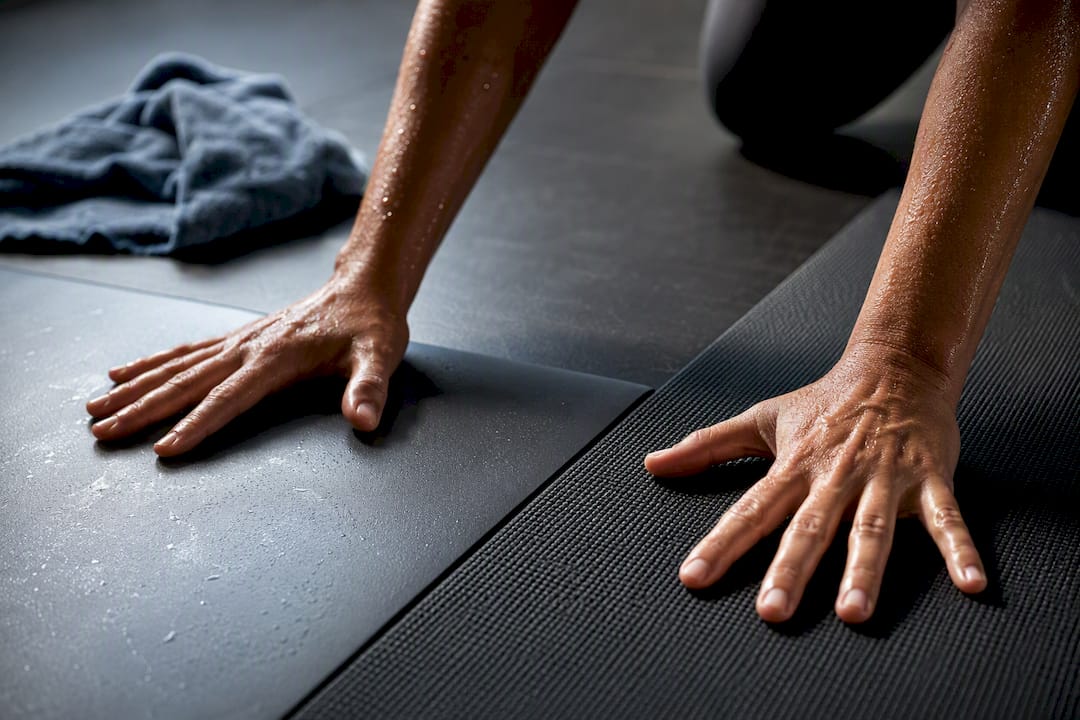
The raised squares in a waffle weave create more surface contact points than a smooth towel, which is why hands and feet tend to stay put even as sweat builds. That texture does double duty: it channels moisture away from the skin while still giving you something to grip.
Compared with thick terry towels, many waffle constructions offer a better absorbency-to-weight ratio, so you’re not hauling a soggy brick by the end of class. They also tend to dry faster between sessions, which matters if you’re washing one towel for daily practice.
- Hot yoga and Bikram classes benefit most, since sweat volume is highest and slipping is the biggest risk.
- Fast-flow or vinyasa classes benefit from the grip during quick transitions between poses.
- Studio-share and travel setups favor waffle towels for their lighter weight and smaller packed size.
Backing matters as much as the weave itself. Towels with silicone dots or a rubberized underside stay anchored to the mat far better than an unbacked towel, which can bunch or slide during dynamic sequences. For more on fighting slip during practice, see our guide on maintaining grip on a slippery mat.
How weave and material affect moisture management and grip
Textile researchers who study absorbent fabrics have found that moisture management depends on both the fiber used and how the fabric is structured, not on either factor alone, according to research on woven fabrics for absorbent applications. That’s why a cotton waffle towel and a microfiber waffle towel can behave very differently even with a similar grid pattern.
Cotton is hygroscopic, meaning the fiber itself absorbs water into its structure, which gives it a soft, familiar feel but a slower dry time. Microfiber wicks moisture along the fiber surface instead, so it tends to feel lighter when wet and dries faster, though some people find the texture less plush.

A comparison of plain and twill weave structures found that twill constructions can reach a very high one-way transport index, a measure of how efficiently moisture moves in a single direction through the fabric, according to textile research on weave structures. That means an open, twill-influenced waffle pattern can pull sweat away from your skin dramatically faster than a dense plain weave, though plain structures often hold up better over repeated washing. The practical test isn’t how a towel feels dry in the store. It’s how it performs once soaked: whether it stays flat, resists shifting, and still offers grip at full saturation.
How to choose a waffle weave yoga towel
Picking the right towel comes down to five factors, roughly in order of importance for sweat-heavy practice.
- Material: Cotton offers comfort and strong absorbency but dries slowly; microfiber is lightweight and quick-drying but can feel slicker when bone dry; blends split the difference between the two.
- Weave density: An open waffle pattern soaks up moisture fast and dries quickly between uses, while a denser waffle holds its grip longer during extended or multiple sessions.
- Backing: Silicone dots or a rubberized underside keep the towel locked to the mat during dynamic movement, which matters more on smooth rubber mats than on naturally tacky cork.
- Size: Full-mat towels cover your entire practice surface for maximum coverage, half-mat towels save weight for hand and head positions, and travel towels prioritize pack size over coverage.
- Durability and sustainability: Natural fibers like cotton or bamboo blends tend to biodegrade more readily, while synthetic microfiber usually outlasts repeated washing but sheds microplastics over its lifespan.
Pro Tip: If you practice daily, buy a slightly denser weave than you think you need. Grip tends to soften a little after the first several washes before settling into its long-term feel.
Most waffle towels reach their steady grip level within the first few wash cycles, as detergent residue and factory finishing rinse away. Price generally tracks material and backing: unbacked cotton waffle towels sit at the budget end, while microfiber towels with silicone backing cost more for the added grip hardware. For a deeper look at material trade-offs, our piece on finding the best hot yoga mat towel compares cotton, microfiber, and blended options side by side.
Washing, drying, and caring for waffle weave towels
Wash on warm or cool with a mild detergent, and skip fabric softener entirely. It coats fibers with a residue that clogs the weave’s pores and dulls both absorbency and grip over time.
- Silicone- or rubber-backed towels do best on a gentle cycle, air-dried or tumbled on low heat to protect the backing material.
- Every few weeks, run a deep clean with a hot wash plus a vinegar or baking-soda soak to strip away built-up skin oils that quietly reduce traction.
- Shake out the waffle texture before drying to keep the loft of the grid and limit pilling.
- Avoid high heat on unbacked cotton towels, since it can shrink the weave and tighten the grid pattern over time.
Using a waffle weave towel during practice
For microfiber towels, a light mist of water before class can boost grip immediately, since the fiber activates with a small amount of moisture. Cotton waffle towels usually don’t need this step since they absorb sweat naturally as you move.
Lay the towel across the full mat for hot yoga, or fold it in half under your hands and knees for extra cushion during kneeling poses. Tuck the corners under the edges of your mat to keep things anchored, or pair an unbacked towel with a naturally grippy mat surface to make up for the missing backing.
Pro Tip: Wipe the towel down with a damp cloth right after class, even before a full wash, to limit the bacteria and odor that build up in damp fabric overnight.
A practitioner’s take on waffle weave towels
Years on the mat teach you that grip problems rarely show up in a quiet studio. They show up mid-flow, in the third sun salutation, when your palms are already slick. Waffle weave towels solve that specific problem better than almost any flat towel, which is why they’ve become a practice staple rather than a niche accessory.
A curated range of yoga equipment built around an eco-conscious, functional approach is available, and the related blog covers the benefits of microfiber towels in more depth. Compare the checklist above against any product page before you buy, since weave density and backing vary even within a single towel line.
— Nicholas
Find the right waffle weave towel at Yune Yoga
The towel lineup from this provider is built around the same factors covered in this guide: material choice, weave texture, and eco-conscious construction that holds up to repeated washing without shedding grip. Rather than guessing which combination suits your practice, shoppers can browse options built specifically for sweat-heavy sessions and travel. For a full kit, there are also foldable travel mats and straps that pair naturally with a waffle weave towel for studio or on-the-go practice, alongside fitness gear like lightweight running vests built for hot weather if your sweat-heavy routine extends beyond the mat.
Browse the Yoga Clothes and Accessories collection to find a towel that matches your material and backing preferences, and check the product page for current return details before you order.

Sources
Research on fiber hygroscopicity, weave transport, and moisture-vapor permeability informed this guide, alongside consumer testing from Good Housekeeping on waffle towel drying performance.
- Performance of woven fabrics for absorbent applications - PMC
FAQ
Are waffle weave towels better than flat towels?
For sweat-heavy practice, yes: the raised grid texture gives more grip points than a flat towel and channels moisture away from skin more effectively. The trade-off depends on your weave density and backing choice rather than the waffle pattern alone.
What is the best material for yoga towels?
There’s no single best material since cotton offers comfort and strong absorbency while microfiber dries faster and weighs less when wet, according to research on absorbent woven fabrics. Choose cotton for comfort-first practice and microfiber for hot, fast-drying sessions.
What should I look for in a waffle weave towel?
Prioritize an open weave for fast moisture uptake, a silicone-dotted or rubberized backing if you practice on smooth rubber mats, and a size that matches your mat length. Material choice between cotton, microfiber, or a blend should match how often you wash and how fast you need it to dry.
How long does a waffle weave towel last?
Lifespan depends heavily on fiber and wash habits, with microfiber generally outlasting cotton through repeated machine washing when fabric softener is avoided. Grip typically stabilizes within the first several wash cycles as factory finishing rinses out.
What are people saying about waffle weave towels?
Consumer testing from Good Housekeeping found that some waffle textures dry faster and pack smaller than terry towels, though absorbency varies by construction. Reviewers generally value the grip and quick-dry feel but note that backing and weave density make a bigger difference than brand alone.