
Sustainable Yoga Practice Habits for Lasting Wellness
Sustainable yoga practice habits are defined as consistent, adaptable routines paired with environmentally conscious choices that support long-term physical health, mental balance, and a reduced ecological footprint. Most practitioners abandon their practice within the first few months, not from lack of motivation, but from rigid schedules and gear that doesn’t align with their values. The solution is a flexible, eco-aware approach that fits real life. By combining daily micro-practices, mindful equipment choices, and a supportive environment, you build a yoga lifestyle that lasts for years, not weeks.
How to build sustainable yoga practice habits that stick
Consistency in yoga does not require hour-long daily sessions. Short, frequent micro-practices lasting 5–20 minutes each day outperform occasional long sessions for habit retention. Brief daily contact keeps your nervous system engaged and prevents the burnout that kills most new routines.
The most effective scheduling strategy anchors your practice to an existing daily habit. Practicing right after your morning coffee, before your shower, or immediately after work removes the decision fatigue that derails consistency. Behavioral science calls this “habit stacking,” and it works because you eliminate the mental friction of deciding when to practice.
Flexible intensity is the other half of the equation. Switching between intense and restorative sessions based on your energy level is recognized by experienced practitioners as the key to long-term sustainability. A vigorous Vinyasa flow on a high-energy Tuesday and a gentle Yin session on a tired Thursday both count as practice.
On your lowest-energy days, a minimum viable session keeps the habit alive. Three rounds of Cat-Cow, five minutes of Savasana, or a single breathing exercise preserves the neural pathway without demanding performance. Rest is not failure. Experienced practitioners treat micro-practices on difficult days as a form of self-respect, not a compromise.
A balanced weekly structure might look like this:
- Monday: 20-minute morning flow (Vinyasa or Sun Salutations)
- Tuesday: 10-minute breathwork and seated stretches
- Wednesday: 30-minute strength-focused standing poses
- Thursday: 15-minute restorative or Yin session
- Friday: 20-minute flow of your choice
- Saturday: Longer practice or outdoor yoga (45–60 minutes)
- Sunday: Rest or 5-minute body scan meditation
Pro Tip: Track your practice in a simple notebook or a free app like Insight Timer. Seeing a streak of check marks creates a visual reward that reinforces the habit far more than willpower alone.
What makes eco-friendly yoga gear worth the investment?
Your equipment is a daily touchpoint with your values. Natural rubber and cork extend yoga mat lifespan by 5–10 years compared to synthetic PVC alternatives. That longevity means fewer mats in landfills and a lower cost per use over time.
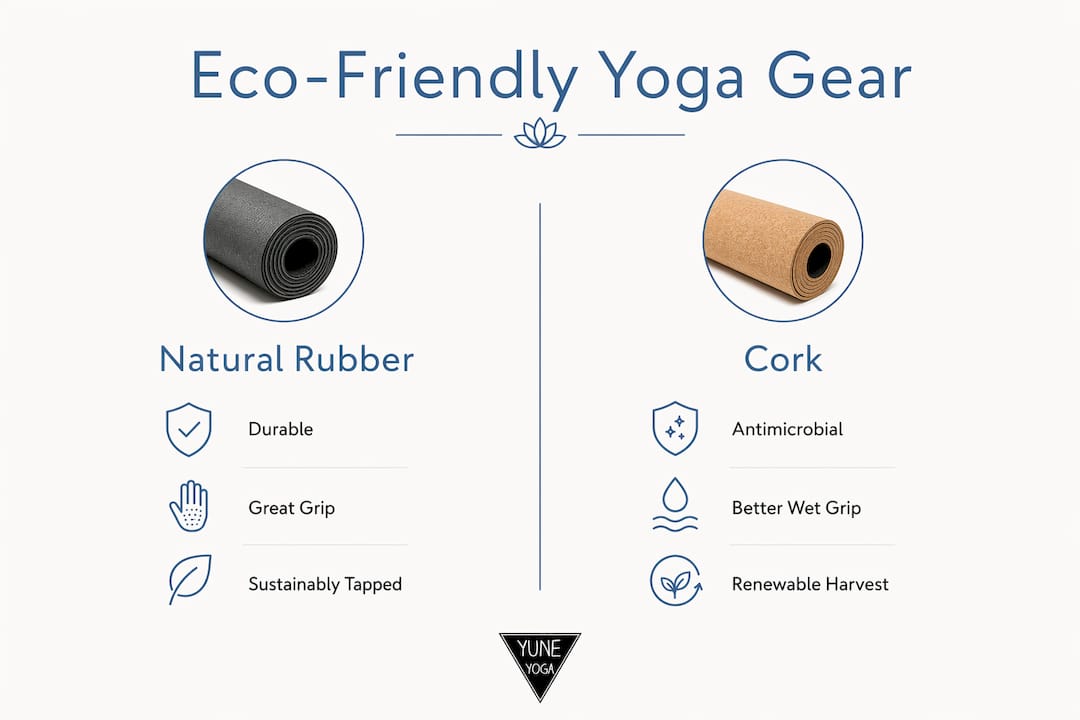
The material differences matter beyond durability. Natural rubber trees are sustainably tapped for 25–30 years, and cork bark regenerates approximately every 9 years. Both materials are biodegradable, which synthetic foam and PVC are not. Choosing either puts your purchasing power behind a genuinely renewable supply chain.
Each material has a distinct performance profile. The table below shows the key differences:
| Feature | Natural rubber | Cork |
|---|---|---|
| Grip in dry conditions | Excellent | Good |
| Grip when wet | Good | Excellent (improves with moisture) |
| Antimicrobial properties | Moderate | High (natural antimicrobial) |
| Best environment | Cool to moderate humidity | Humid or hot yoga settings |
| Allergy consideration | Not suitable for latex allergies | Safe for all skin types |
| Biodegradable | Yes | Yes |
Cork’s antimicrobial properties and enhanced grip in wet conditions make it the stronger choice for hot yoga or humid climates. Natural rubber delivers superior traction in standard conditions but requires careful care and is unsuitable for practitioners with latex allergies.
Caring for natural materials extends their life significantly. Wipe natural rubber mats with a damp cloth after each session and air dry them away from direct sunlight, which degrades the rubber. Cork mats need only a light spray and wipe. Neither material should go in a washing machine.
For a deeper look at selecting the right surface, Yuneyoga’s guide on eco-friendly mat materials covers durability and environmental trade-offs in detail.
Pro Tip: Mix equal parts water and white vinegar in a spray bottle for a natural mat cleaner. It disinfects without the synthetic chemicals found in most commercial sprays, and it costs almost nothing.
How do you set up a space that supports daily practice?
Your environment shapes your behavior more than motivation does. A dedicated, clutter-free space signals to your brain that it is time to practice. That signal lowers the activation energy required to start, which is the biggest barrier most practitioners face.
Setting up an inviting yoga space takes less effort than most people expect. Follow these steps:
- Choose a fixed spot. Pick a corner, a section of your living room, or even a cleared hallway. Consistency of location reinforces the habit.
- Leave your mat unrolled. A visible, ready mat removes the friction of setup. Seeing it throughout the day acts as a passive reminder.
- Control light and sound. Natural light improves mood and focus. If natural light is limited, a warm-toned lamp works well. Use earplugs or soft background music to manage ambient noise.
- Add one natural element. A small plant, a stone, or a bowl of water connects your practice to the natural world and reinforces your green yoga lifestyle.
- Reduce digital distractions. Place your phone face-down or in another room. Using natural lighting and minimizing electronic devices also lowers your home’s energy consumption during practice.
Mental environment matters as much as physical space. Begin each session with three slow breaths before your first pose. This brief breathwork ritual signals the transition from daily activity to practice. Self-compassion is the final piece. Judging a short or imperfect session undermines the consistency you are building.
How can yoga habits extend into a greener daily lifestyle?
Yoga sustainability practices reach their full potential when they extend beyond the mat. The yogic concept of Pratyahara, or sense withdrawal, offers a practical framework for mindful living. Applying Pratyahara during meals by eating without screens improves digestion, sleep quality, and overall wellness. That single habit change costs nothing and delivers measurable benefits within weeks.
Breathwork is another off-mat practice with direct physical returns. Five minutes of diaphragmatic breathing before bed lowers cortisol and improves sleep quality. Pairing this with your existing wind-down routine makes it automatic within days.
Extending your green yoga lifestyle into daily routines compounds the environmental impact of your practice:
- Reduce single-use plastics. Carry a reusable water bottle and a bamboo or stainless-steel straw to every class or outdoor session.
- Choose plant-based post-practice meals. Even one or two plant-based meals per week reduces your carbon footprint meaningfully.
- Buy less, buy better. Invest in one high-quality, long-lasting prop rather than several cheap ones that wear out quickly.
- Support sustainable brands. Purchasing from companies that use natural materials and ethical supply chains directs market demand toward better practices.
- Walk or cycle to class. Transportation is one of the largest personal carbon contributors. Choosing active transit for local classes adds up over a year.
Introducing one new habit at a time and holding it for 21 days before adding another prevents overload and ensures each change sticks. This 3-week rule applies equally to yoga scheduling, equipment upgrades, and lifestyle shifts. Trying to change everything at once is the fastest route to changing nothing.
Pairing your practice with music designed for movement can also support consistency during short sessions, giving low-energy days a gentle push without demanding more than you have.
Key Takeaways
Sustainable yoga practice habits require short daily sessions, flexible intensity, eco-conscious gear, and one new lifestyle change at a time to build lasting physical and environmental well-being.
| Point | Details |
|---|---|
| Micro-practices beat long sessions | Daily 5–20 minute practices maintain habit neural pathways better than occasional hour-long sessions. |
| Flexible intensity prevents burnout | Switching between vigorous and restorative sessions based on energy keeps practice guilt-free and consistent. |
| Natural materials last longer | Natural rubber and cork mats outlast synthetics by 5–10 years and biodegrade at end of life. |
| Environment lowers activation energy | A visible, ready mat in a fixed, clutter-free space removes the friction that stops most practitioners from starting. |
| The 3-week rule builds lasting change | Introduce one new eco or wellness habit at a time and hold it for 21 days before adding the next. |
Why flexibility, not perfection, is the real sustainability strategy
The most common mistake I see practitioners make is treating sustainability as an all-or-nothing standard. They buy the perfect cork mat, plan a seven-day schedule, and then miss two days and quit entirely. That pattern has nothing to do with commitment and everything to do with how the habit was structured.
What actually works is building a practice that bends without breaking. I have practiced on hotel room floors, in airport terminals, and in five-minute windows between meetings. None of those sessions were Instagram-worthy. All of them kept the habit alive. The flexible routine approach is not a compromise. It is the actual method.
The eco-friendly gear question is worth addressing directly too. Switching to a natural rubber or cork mat genuinely changes how practice feels. There is a tactile connection to natural materials that synthetic foam does not replicate. That connection reinforces why you practice in the first place, which makes consistency easier, not harder.
My honest advice: start with one change. Roll out your mat tonight and do five minutes of breathing. Buy one natural-material prop when your current one wears out. Add one plant-based meal this week. The 3-week rule is real. Hold one change for 21 days, and it stops feeling like effort. Sustainability is not a destination you arrive at. It is the sum of small, repeated choices made with patience.
— Nicholas
Yuneyoga’s gear for practitioners who practice with purpose
Yuneyoga carries a curated selection of natural rubber and cork yoga mats, towels, and straps built for practitioners who take both their practice and their environmental impact seriously.

Every product on the Yuneyoga site is chosen for durability, material integrity, and real-world performance. Whether you practice daily at home or travel frequently, the eco-conscious mat collection covers the full range of needs, from lightweight foldable travel mats to thick natural rubber surfaces for studio use. The Yuneyoga blog also publishes practical guides on building mindful yoga routines, caring for natural gear, and living a greener wellness lifestyle. Visit Yuneyoga to find gear that matches your values and your practice.
FAQ
What is a sustainable yoga practice habit?
A sustainable yoga practice habit is a consistent, adaptable routine that fits real life without causing burnout, paired with eco-conscious gear and lifestyle choices that reduce environmental impact.
How long should a daily yoga session be to stay consistent?
Daily micro-practices of 5–20 minutes maintain habit retention better than infrequent long sessions. Even five minutes of breathwork or gentle movement counts as a complete practice on low-energy days.
Are natural rubber yoga mats better than cork mats?
Neither is universally better. Natural rubber offers superior grip in dry conditions, while cork outperforms in wet or humid settings and is the safer choice for practitioners with latex allergies.
How do I make my yoga space more eco-friendly?
Use natural lighting instead of artificial lights during practice, clean your mat with a water and white vinegar solution, and add a plant to your space. These steps lower energy use and eliminate synthetic chemicals from your routine.
How long does it take to build a new yoga habit?
The 3-week rule recommends holding one new habit steadily for 21 days before introducing another. This prevents overload and gives the behavior time to become automatic rather than effortful.


