
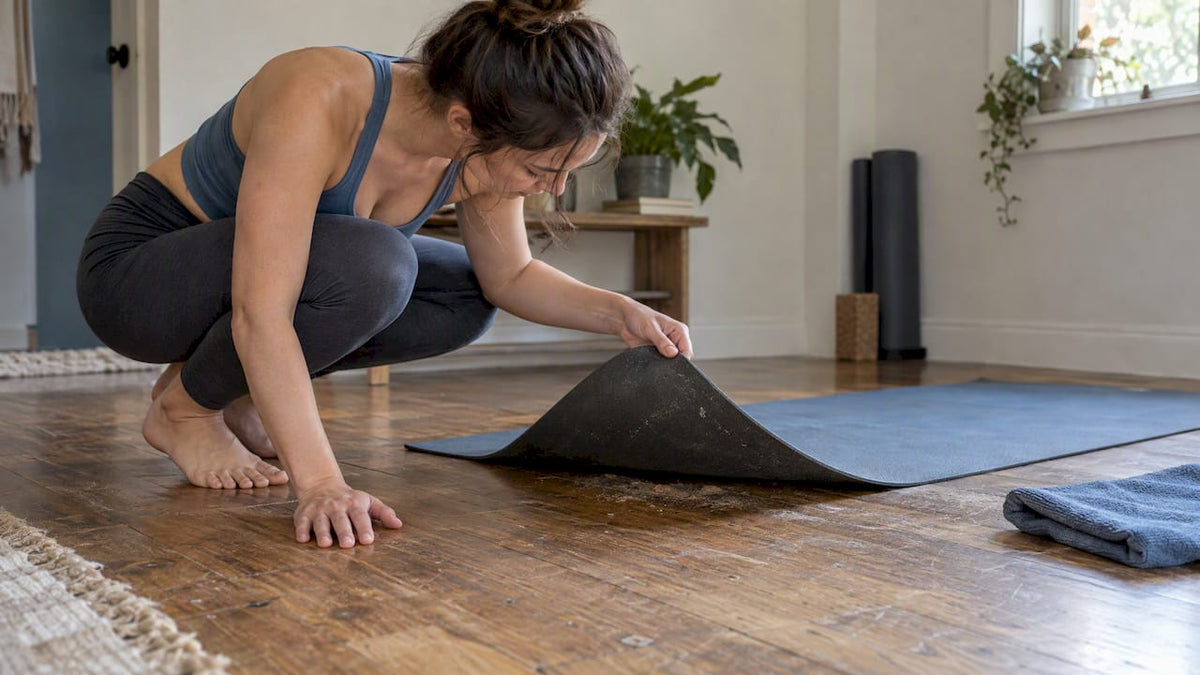
Diagnose and Stop Yoga Mat Sliding in 30 Seconds
Wash and break in a new mat with mild soap and water following Mostly Amélie’s home-living and cleaning guidance, then build up usage gradually. For sweaty practice, use a grippy yoga towel or switch to an open-cell or wet-grip mat. If the mat itself slides across the floor, clean the floor and the mat’s underside, or add a non-slip underlay. Towels and grip-focused mats are available that address these issues.
TL;DR:
- Most slipping issues stem from factory residues or manufacturing films on new mats, which require washing and gradual use to wear down.
- Mats that slide on the floor typically have dust, oils, or debris underneath, which cleaning or adding non-slip underlays can fix.
- Sweat absorption varies by material; open-cell mats retain grip when soaked, while closed-cell mats often need towels for sweat management during hot yoga.
- Regular wiping and deep cleaning with mild soap are more effective and safer than chemical cleaners or replacing the mat prematurely.
- Diagnosing whether the slip originates from the mat surface or floor prevents unnecessary replacement and ensures targeted fixes.
Table of Contents
- Why is your mat slipping? Run these quick checks first
- How to break in a new mat and clear away buildup
- Beating sweat: towels, gear, and small habit changes
- Stopping the mat from sliding on the floor
- When cleaning and towels won’t fix it: signs to replace your mat
- Choosing a replacement mat that actually grips for your practice
- A quick checklist before every session
- Why most slip advice misses the mat-to-floor problem
- What actually works, and what’s overrated
- Picking the right grip gear for your practice
- FAQ
- Sources
Why is your mat slipping? Run these quick checks first
Before you buy anything or change your routine, figure out whether the problem is your skin sliding on the mat or the mat sliding on the floor. Those two problems have completely different fixes, and treating the wrong one wastes time and money.
Run through this short checklist:
- Water droplet test: Drop a bit of water on the mat surface. If it beads up and sits there, the top layer may need washing or breaking in.
- Fingertip swipe test: Rub your palm across the mat. A greasy or waxy feel usually means factory residue or built-up oils.
- Floor slide test: Push the mat with light pressure on your floor. If it travels, the issue is mat-to-floor contact, not grip on the surface.
- Visual wear check: Look for shiny patches, thinning, or flaking, all signs the texture that once gripped your skin is gone.
A new mat often ships with a factory-release film that makes it feel slick until it wears off naturally or is washed away. An older mat that suddenly slips usually has oil, sweat, or lotion buildup instead.
How to break in a new mat and clear away buildup
A brand-new mat that feels slippery almost always has a thin manufacturing film on its surface. That film is harmless, but it blocks the texture underneath from doing its job. The fix is straightforward, though the steps differ slightly by material.
- Wipe or wash the mat with a small amount of mild soap and water, using a soft cloth rather than a stiff brush.
- Rinse completely. Leftover soap residue can make a mat slippery on its own, which defeats the purpose of cleaning it.
- Air dry fully before rolling it up or practicing, since trapped moisture encourages odor and can soften the top layer.
- Use it progressively. A few shorter sessions let the surface wear in naturally instead of forcing a single intense class on a still-slick mat.
Material matters here. Avoid sea salt scrubs or abrasive pads on natural rubber or polyurethane mats, since manufacturers warn that aggressive abrasion can permanently damage the surface. If you have a PVC mat and want to test a mild abrasive method, try it on a small corner first rather than the whole surface.
Deep cleaning depends on construction, too. Open-cell mats can often be submerged or rinsed thoroughly, following the manufacturer’s own guidance, since their porous surface is designed to handle moisture. Closed-cell foam mats should be spot-cleaned instead. Soaking a closed-cell mat for long periods risks water getting trapped inside layers that were never meant to dry out quickly.
Pro Tip: Keep a spray bottle with a few drops of mild soap diluted in water near your mat storage spot, so a quick wipe-down after practice becomes a habit instead of a chore.
Beating sweat: towels, gear, and small habit changes
Sweat is the most common reason a mat that used to grip suddenly feels like ice. The fix depends on what your mat is made of and how much you sweat during practice.
Open-cell mats, often polyurethane or natural rubber, are designed to absorb moisture and can actually maintain traction when fully soaked. Closed-cell mats, common in PVC and TPE, sit on top of moisture instead of absorbing it, which is why they often turn slick the moment sweat appears. If you own a closed-cell mat and practice hot yoga or vinyasa, a towel usually solves the problem faster and cheaper than replacing the mat.
When choosing a yoga towel, look for:
- Microfiber material that wicks moisture quickly instead of letting it pool.
- A rubberized or silicone-dot underside that grips the mat so the towel itself doesn’t slide.
- Full mat coverage, since a towel that only covers two-thirds of the surface leaves your hands or feet exposed during transitions.
A few habit changes help too. Keep a small hand towel within reach for mid-class wipe-downs, skip lotion or oil-based moisturizer before practice, and consider grip socks or gloves if your hands tend to sweat more than your feet. Our guide to hot yoga mat towels walks through sizing and backing options in more detail.
If you only practice hot yoga occasionally, a towel is the lower-cost fix. If it’s a weekly habit, an open-cell or wet-grip mat pays for itself in convenience.
Stopping the mat from sliding on the floor
This is a different problem entirely from skin slipping on the mat surface, and it has nothing to do with your mat’s top-layer material. A mat that slides across hardwood or tile usually means the floor, not the mat, is the culprit.
Start with the floor itself. A thin layer of dust acts like tiny ball bearings under the mat, so sweeping or mopping before practice often solves the problem outright. Wipe the mat’s underside too, since dust and oils collect there as well.
If cleaning alone doesn’t fix it, try an underlay:
- A thin non-slip rug pad placed under the mat adds friction without bulk.
- Shelf liner cut to size works as a cheap temporary fix.
- Double-sided carpet tape can anchor a mat for a single session, though it’s not meant as a permanent solution.
For a longer-term fix, look for a mat with a textured or ribbed rubber backing designed to grip the floor rather than relying on an add-on. Our guide on keeping a mat in place covers backing types in more depth.
Pro Tip: Practicing on carpet or an uneven outdoor surface? Check that all four corners sit flat before you start, since even a well-gripping mat will shift if one edge is lifted.

When cleaning and towels won’t fix it: signs to replace your mat
Not every slipping problem has a maintenance fix. Surface wear is permanent, and pushing a worn-out mat past its limit is a safety risk, not just an inconvenience.
Watch for these signs:
- Flaking or peeling top layer, which means the textured surface that once gripped your skin is gone for good.
- Persistent slipping even after a proper wash, a sign the material itself has worn smooth rather than just dirty.
- Visible compression or thinning, where the cushioning no longer rebounds and joints start absorbing more impact.
- Odor that returns within a day or two of cleaning, suggesting sweat and oils have worked into the material beyond what surface cleaning reaches.
How fast you reach this point depends heavily on use. A mat in daily hot yoga classes wears out far faster than one used a couple of times a week at home. When you do replace it, prioritize the attributes that caused your last mat to fail: top-layer material, how it behaves when wet, and whether the backing actually grips your floor type.
Choosing a replacement mat that actually grips for your practice
Matching the mat to your practice style prevents you from solving the same slipping problem twice. Mat material and your sweat level matter more than price or brand reputation here.
- Hot yoga or heavy sweaters: look for open-cell polyurethane or natural rubber, both tested to hold traction even when soaked.
- Moderate sweat or vinyasa flow: a mat specifically tested for wet grip can eliminate the need for a towel altogether.
- Casual or restorative practice: a textured closed-cell mat with extra cushioning is usually enough, since sweat isn’t the main concern.
Beyond material, a few other factors decide whether a mat will actually stay put:
- Backing tread: a ribbed or raised-pattern underside stops the mat from traveling on hard floors.
- Thickness trade-offs: thinner mats (around 3 to 4 millimeters) offer more stability for standing poses, while thicker mats cushion joints better for floor work.
- Cleaning convenience: open-cell mats generally need more frequent care, while closed-cell mats tolerate longer gaps between washes.
- Travel weight: foldable or thinner mats matter if you’re packing for a studio or a trip.
Before buying, run through a short checklist: how does the material behave wet, what’s the recommended cleaning method, and what warranty or durability claim backs the product. Our open-cell mat buying guide breaks down these trade-offs by practice type.
A quick checklist before every session
A reliable pre-practice routine prevents most slipping problems before they start.
- Dry your hands and feet before stepping onto the mat, since residual lotion or moisturizer undercuts grip instantly.
- Keep a hand towel nearby for mid-session sweat, especially in warmer studios.
- Skip lotion or oil-based products on palms and soles before practice.
- Glance at the floor and mat surface for dust or debris before you unroll.
- Wipe the mat down after any sweaty session, even a quick one.
- Deep-clean monthly if you own an open-cell mat, or spot-clean as needed for closed-cell foam.
- Store it rolled practice-side out and away from direct sun, which helps it lie flat and keeps the surface from degrading early.
Why most slip advice misses the mat-to-floor problem
Nicholas has spent enough time testing mats across studios and home setups to notice a pattern: most troubleshooting guides jump straight to “buy a better mat” without asking whether the mat is even the problem. A huge share of slipping complaints trace back to dust under the mat or leftover soap film, not the mat’s material at all.
Our guide to preventing mat movement and hot yoga towel breakdown both point to the same conclusion: eco-conscious natural rubber and open-cell construction solve the sweat problem at the material level, instead of layering towels and sprays on top of a mat that was never suited to the practice in the first place.
What actually works, and what’s overrated
The most overrated fix in yoga mat advice is buying a premium mat before diagnosing the actual cause. A $100 mat on a dusty floor will still slide. A brand-new mat still needs washing before its grip shows up. Spend five minutes running the checks in this guide before spending any money.

What’s underrated is plain soap and water. It handles both skin-to-mat buildup and the oils that make a mat feel greasy, and it’s safer for skin-contact surfaces than harsher cleaning chemicals. Most people reach for a specialty mat cleaner before they’ve even tried a basic wipe-down.
If you take one thing from this guide, prioritize diagnosis over products. Fix the floor if it’s the floor. Fix the sweat with a towel if a towel is cheaper than a new mat. Only replace the mat when the surface itself has worn past recovery.
— Nicholas
Picking the right grip gear for your practice
Once you’ve diagnosed the cause, the right product closes the gap faster than more troubleshooting. The mats and towels described here are designed around the specific problems covered in this guide, not generic cushioning.

- Sweaty or hot yoga practice: our yoga towels pair a moisture-wicking top with a grip-focused underside, so you’re not fighting the towel itself mid-pose.
- Wet-grip needs: our natural rubber mats are built from material that performs the way open-cell construction should, holding traction instead of pooling sweat on top.
- Floor-sliding issues: our mats use a textured backing designed to stay put on hardwood and tile without an underlay.
Match the fix to the cause you identified earlier, then browse our full lineup, including foldable travel mats and straps, at Yune Yoga. If you’re shopping specifically for towels or accessories, our yoga clothes and accessories collection is a good starting point.
FAQ
How do I make a yoga mat grippy again?
Wash it with mild soap and water, rinse thoroughly, and let it air dry completely before use, since leftover soap residue itself causes slipperiness. If the mat still feels slick afterward, the top layer may be worn past the point cleaning can fix.
Which yoga mat is best for preventing slipping?
The best choice depends on how much you sweat. Open-cell polyurethane and natural rubber mats are built to hold traction even when fully soaked, while closed-cell mats usually need a towel for sweaty sessions. Some natural rubber mats are designed around this wet-grip behavior.
How do I keep my yoga mat flat during practice?
Unroll it practice-side out and let it sit for a few minutes before you begin, since mats stored tightly rolled tend to curl at the edges. Storing the mat flat or loosely rolled between sessions, away from direct sun, also helps it lie flat faster each time.
Why do my hands slide on my yoga mat?
Sweat is the most common cause, especially on closed-cell mats that sit on top of moisture instead of absorbing it. Lotion or oil on your palms before practice, or a factory film on a brand-new mat that hasn’t been washed yet, can cause the same problem.
Sources
- The Best Yoga Mats of 2026 | Tested & Ranked
- How to clean your yoga mat | REI expert advice
- What should you do about a slippery yoga mat?


