Diagnose a Slippery Yoga Mat in 30 Seconds, Then Fix It Right
If your mat slides during class, the fix depends entirely on why. A brand-new mat needs a wash and a few sessions of break-in. Residue means a real cleaning, not a quick wipe. Sweat calls for a grippy towel or a light mist. A mat that skates across the floor usually needs a clean floor and an underlay, not a new mat at all. Test the cause before you reach for the strongest fix.
TL;DR:
- Most slippage issues stem from factory film on new mats, residues from oils or lotions, sweat buildup, or dust under the mat, and proper diagnosis is crucial.
- Breaking in a new mat involves thorough wiping with water and mild soap, air drying, and practicing on it to improve grip over several sessions, avoiding abrasives on natural surfaces.
- Deep cleaning old mats requires removing stubborn residues with diluted vinegar or soap, and wiping after every sweat session helps maintain consistent traction.
- Using a damp microfiber towel during practice significantly reduces sweat-induced slip, especially on rubber and polyurethane mats, with proper placement being key.
- Floor dirt and dust cause sliding, so sweeping or mopping the area and using non-slip underlays or corner grips can prevent floor-related slipping issues.
Table of Contents
- How To Diagnose Why Your Yoga Mat Is Slippery
- How Do You Break In a New Slippery Yoga Mat?
- How Do You Deep Clean an Old Slippery Yoga Mat?
- What’s the Best Way To Stop Sweat From Making Your Mat Slippery?
- How Do You Stop a Yoga Mat From Sliding on the Floor?
- When Should You Replace a Slippery Yoga Mat?
- Quick Pre-Class Checklist for Grip You Can Rely On
- What Yune Yoga Recommends for Mat Grip and Care
- What Actually Works: Studio Habits vs. Home Practice
- Find the Right Grip Gear for How You Actually Practice
- Sources
- FAQ
How To Diagnose Why Your Yoga Mat Is Slippery
Run a 30-second check before you do anything else. Wipe the surface with a damp cloth: if it comes away chalky or oily, you’re dealing with residue, not a bad mat. Spritz a few drops of water on the surface and press your palm down. If your hand shoots forward, the top layer itself has poor wet grip. If it grips fine dry but slides once you sweat, that’s a material limitation, not damage.
Look for these signs before you treat anything:
- Shiny, glassy surface — usually factory film on a new mat, or worn-out texture on an old one.
- Dusty or hazy residue that smears — leftover lotion, sunscreen, or old cleaner buildup.
- Fine grit or dust on the underside — the mat is fine, but it’s sliding on a dirty floor.
- Slip only when you sweat, not before — a material wet-grip issue, common on budget PVC.
- Flaking or peeling top layer — the mat is breaking down and cleaning won’t reverse it.
According to Verywell Fit, most slippery-mat complaints trace back to one of four causes: factory film on a new mat, residue from oils and lotions, sweat, or dust trapped between the mat and the floor. Get the cause right and the fix is usually simple.
How Do You Break In a New Slippery Yoga Mat?
New mats almost always ship with a thin factory coating meant to protect them in transit, not to help you balance in warrior two. That coating has to come off before the mat’s actual texture can do its job.
- Wipe the entire surface with warm water and a few drops of mild dish soap.
- Rinse thoroughly. Leftover soap film creates its own slip problem.
- Air-dry completely, flat if possible, before rolling it back up.
- If it’s a PVC mat, a light salt scrub can speed things up. Test a small corner first.
- Practice on it. Grip typically improves noticeably after several practice sessions.
Skip the salt scrub on natural rubber, cork, or polyurethane. It abrades those surfaces instead of just stripping film, and the damage doesn’t reverse. Never soak an open-cell foam mat. It absorbs water into the padding and stays damp for days, which invites mildew.
Pro Tip: Don’t judge a new mat’s grip on day one. Rubber and PU mats especially need a “settling in” period where oils from the manufacturing process fully surface and wear off with light friction. International Yoga Conference notes this break-in window is standard, not a defect.
How Do You Deep Clean an Old Slippery Yoga Mat?
Once a mat has months of practice on it, the slip is almost never about factory film anymore. It’s body oil, deodorant, lotion, and old cleaner residue layered on top of each other, and that buildup is often the real reason a mat that used to feel grippy suddenly doesn’t.
For a real deep clean:
- Mix warm water with a small amount of mild soap, or use vinegar diluted with water on rubber and PVC (skip vinegar on cork, which can dull with acid).
- Wipe the entire surface, then rinse with a separate damp cloth so no soap film is left behind.
- Air-dry fully before storing or rolling.
- Test any new cleaner on a small corner first. Some “mat cleaners” leave a filmy residue that makes the surface slicker, not less slippery.
- Wipe down after every sweaty session; save the full deep clean for roughly once a month.
Soap residue is a sneaky culprit. If your mat felt fine for months and suddenly got slippery after a cleaning, the cleaner itself may be the problem, not your technique. A Reddit thread on new-mat grip suggests a magic eraser for stubborn spots, but treat that as a last resort. Abrasive pads can scuff polyurethane and cork finishes permanently. For a full walkthrough with mixing ratios, see this step-by-step cleaning tutorial.
What’s the Best Way To Stop Sweat From Making Your Mat Slippery?
Sweat is the most common in-class slip trigger, and it’s also the easiest to solve on the spot. A microfiber yoga towel with a grippy underside sits directly on top of your mat and absorbs moisture the second it hits the surface, which keeps your palms and feet from hydroplaning through a vinyls.
- Use the towel damp, not soaked. A slightly wet microfiber towel actually grips better than a bone-dry one.
- Position it to cover the zones that take the most weight: under your hands and feet for standing and balancing poses.
- A light water mist directly on the mat can boost traction on some rubber and polyurethane surfaces, but test it first. On PVC, misting usually makes things worse.
- Grip gloves or socks with silicone dots are a solid backup for hot yoga or high-sweat sessions.
Pro Tip: Keep a small hand towel folded at the top of your mat during class. Teachers lean on this habit constantly, since a quick swipe across sweaty palms before a balance pose does more for stability than almost any product fix.
If you’re sweating through every class, a towel is a workaround, not a permanent solution. That’s when it’s worth looking at homemade cleaner recipes or, longer term, a mat material built for wet grip in the first place. Wirecutter’s testing treats wet grip and dry grip as separate performance traits, and mats that score well dry can still turn slick the moment sweat hits them.
How Do You Stop a Yoga Mat From Sliding on the Floor?
Sometimes the mat isn’t the problem. It’s what’s underneath it. Dust and grit between the mat and the floor act like tiny ball bearings, letting the whole mat drift while your feet stay planted. This is especially common on hardwood or tile.
- Sweep or mop the floor before you unroll your mat. This alone solves most floor-creep complaints.
- Add a thin non-slip rug underlay if the floor stays dusty no matter how often you clean, according to HTS Yoga.
- Silicone corner grips are a fast fix for carpet or slick tile without committing to a full underlay.
- A thicker mat with more surface contact resists sliding better than a thin travel mat, though thickness is a trade-off against portability and balance feedback.
Skip the heavy adhesive strips some forums suggest. They solve the slide but can peel finish off hardwood or laminate, which is a worse problem than a mat that scoots six inches during sun salutations.
When Should You Replace a Slippery Yoga Mat?
Cleaning and break-in fix most slip problems, but not all of them. If the top layer looks shiny, feels flaking, or stays slippery after a proper wash and several sessions, the material itself has worn out.
- Replace if: the surface is visibly glazed, peeling, or cracked, or slip persists after cleaning and break-in.
- Prioritize wet grip if you sweat heavily. Natural rubber and polyurethane top layers generally outperform basic PVC once moisture hits them, per Wirecutter’s mat testing.
- Match thickness to practice style. Thinner mats suit balance-heavy practices; thicker mats suit floor work and joint support.
- Check for latex sensitivity before buying natural rubber. Look for latex-free rubber alternatives if you have an allergy.
Quick Pre-Class Checklist for Grip You Can Rely On
A reliable mat isn’t about one big fix. It’s a handful of small habits repeated every time you practice.
- Wipe the mat surface with a dry cloth before unrolling, even if it looks clean.
- Check the floor underneath for dust or grit and sweep if needed.
- Wash your hands and feet before class. Lotion and sunscreen are common hidden causes of slip.
- Keep a small towel within reach for sweaty palms mid class.
- Wipe the mat down after class and let it air-dry fully before rolling it up.
- Store it unrolled or loosely rolled in a dry spot, away from direct heat, which speeds material breakdown.
Trapped moisture from rolling up a damp mat is one of the fastest ways to reintroduce the residue and odor problems you just cleaned away.
What Yune Yoga Recommends for Mat Grip and Care
Grip problems almost always map to one of a few root causes, and the right gear matches the problem instead of trying to solve everything at once.
- For sweat-heavy practice, a microfiber towel with a non-slip underside handles moisture better than misting or gloves alone.
- For wet-grip issues, a natural rubber mat generally holds traction better under sweat than basic PVC, especially once broken in.
- For floor creep, a thin non-slip underlay solves the problem without any risk to hardwood or tile finishes.
- For ongoing maintenance, our guide on cleaning and maintaining your mat the right way walks through frequency and technique in more depth.
- If you’re troubleshooting a mat that’s never felt right, our full breakdown on why your yoga mat is slippery covers the cause-first approach in more detail.
Getting grip right is rarely about one product. It’s about matching the fix to the actual cause.
What Actually Works: Studio Habits vs. Home Practice
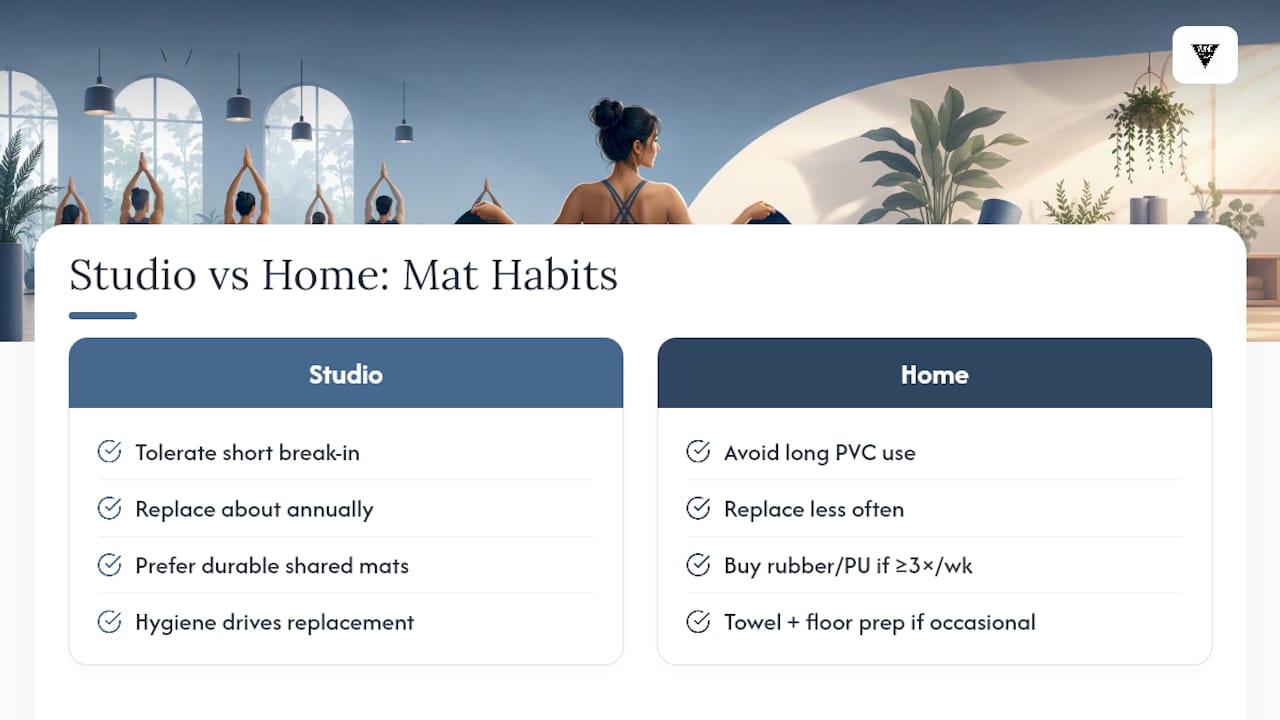
Studio teachers tolerate a new mat’s break-in period because they see hundreds of students cycle through mats every month; a few slippery weeks aren’t worth the fuss. Studios also replace mats more often than home practitioners assume, often annually, because shared surfaces wear faster and hygiene matters more.
At home, the calculation flips. If you practice three or more times a week, invest in a natural rubber or polyurethane mat now rather than fighting a budget PVC mat’s wet-grip limits for a year. If you practice occasionally, a towel and better floor prep solve almost everything.
— Nicholas
Find the Right Grip Gear for How You Actually Practice
Most slip problems trace back to a mismatch between your mat’s material and how you actually sweat, move, and practice. Once you’ve diagnosed the cause using the checks above, the fastest long-term fix is often picking gear built for that specific problem instead of layering workarounds on top of a mat that was never going to grip well wet.

Natural rubber mats are often designed with wet-grip performance in mind, which matters most if cleaning and break-in haven’t solved a sweat-related slip. If towels are your current workaround, microfiber yoga towels are sized and textured for placement over the hands-and-feet zones that take the most weight during a flow. Pair either with a non-slip underlay if floor creep has been your actual issue all along. Browse the current lineup at Yune Yoga and match your gear to the cause you just diagnosed, not the symptom.
Sources
- How to Fix a Slippery Yoga Mat — Verywell Fit
- How to Make a Yoga Mat Less Slippery — International Yoga Conference
- The 3 Best Yoga Mats of 2026 | Wirecutter
FAQ
How Do I Make a Yoga Mat More Grippy?
Wash it with mild soap and water to remove oils or factory film, let it dry fully, then break it in with several practice sessions. If sweat is the issue, use a damp microfiber towel on top for immediate traction.
How Do I Make a Rubber Mat Less Slippery?
Clean it with a diluted vinegar-water mix or mild soap, rinse thoroughly, and avoid abrasive scrubs that damage the rubber’s texture. A light water mist can sometimes boost grip on natural rubber, but test a small area first.
Why Won’t My Yoga Mat Lay Flat?
New mats often curl from being rolled tightly during shipping; unroll it and let it rest flat under light weight for a day or two. Storing it flat or loosely rolled afterward prevents the curl from coming back.
Why Do My Hands Keep Slipping in Downward Dog?
Sweat on your palms combined with a mat that has weak wet grip is the most common cause. Keep a small towel nearby to dry your hands mid-pose, or switch to a natural rubber mat, which tends to hold traction better once you’re sweating.