
How to choose the best mats for hot yoga
Key Takeaways
The best mats for hot yoga balance grip, comfort, cleanup, and portability rather than chasing one universal specification.
- Choose traction that remains dependable as sweat builds.
- Match thickness to your joints, balance, and transport needs.
- Use a towel when moisture makes the surface unreliable.
- Clean and dry your mat after every sweaty session.
- Test the mat in realistic conditions before committing.
Understand what makes hot yoga different
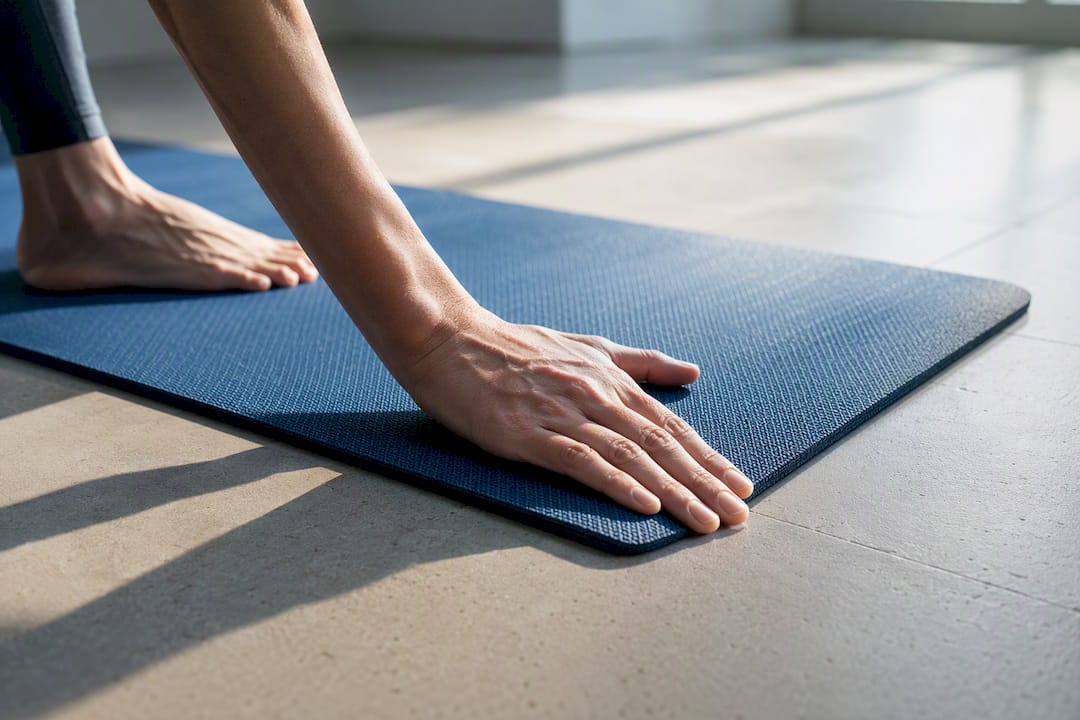
Hot yoga changes the demands placed on a mat. Heat and humidity can turn a normally comfortable surface slick, while repeated sweating adds moisture, odor, and cleaning concerns. The right choice should help you stay steady without feeling bulky or difficult to carry.
Heat, humidity, and heavy sweating
A heated room makes sweat arrive earlier and in greater volume, so a mat that feels fine during a dry practice may not behave the same way here. Look for a surface that manages moisture rather than simply feeling soft under your hands. It is also worth considering how quickly the mat can be aired out after class, especially if you travel between studios or practice in small spaces.
Why grip matters more during challenging poses
Grip matters most when your hands and feet are supporting weight, changing direction, or holding a pose for several breaths. A slippery surface can make you compensate with tense fingers or shortened movement, which is distracting even when your alignment is otherwise sound. For a useful starting point, this hot yoga mat guide explains the practical features—grip, sweat absorption, thickness, and heat resistance—that deserve attention.
How studio floors and room conditions affect mat choice
A mat can feel secure on a rubber studio floor but shift on polished wood or a dusty home surface. Check whether the underside grips the floor, and consider how much space you have around the mat for stepping safely off it. If you attend different studios, a versatile underside and a manageable weight may matter as much as the top texture.
Balancing comfort with stability
Soft cushioning feels welcoming during kneeling poses, but too much give can make standing balances feel less certain. A stable base matters when the room is hot and your attention is already divided between breath, effort, and sweat. Aim for enough padding to make floor contact comfortable without losing the grounded feel that helps you place your hands and feet confidently.
Compare hot yoga mat materials
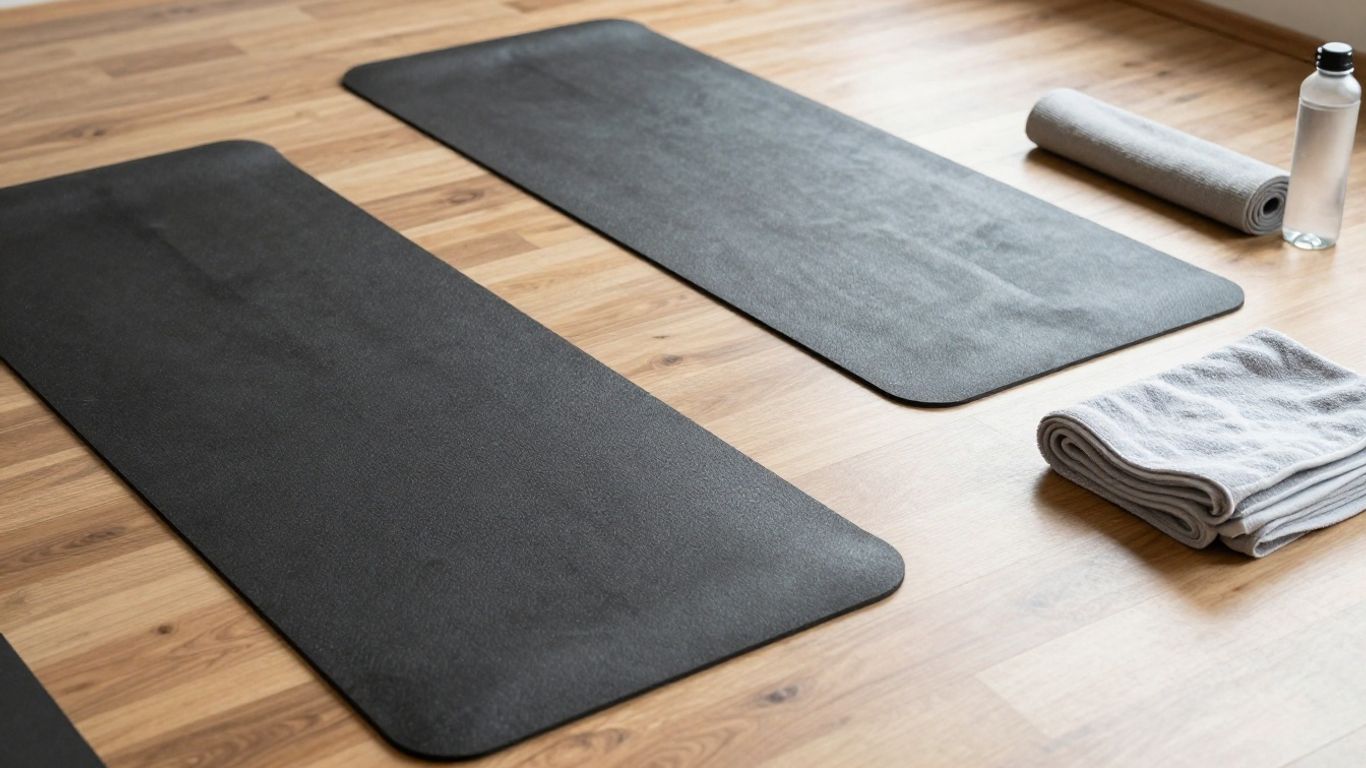
Material influences traction, cushioning, smell, weight, and how easily a mat dries. No surface wins on every measure, so think about your practice habits before treating one material as universally best. The most useful comparison is the one that connects the material to your room, sweat level, and cleanup routine.
Natural rubber for traction and cushioning
Natural rubber often provides a springy, secure feel and can be appealing when you want cushioning without a very soft top layer. Some rubber mats have a noticeable odor at first, and the material may need careful cleaning and thorough drying. Check the care instructions, particularly if you plan to leave the mat rolled in a warm car or damp bag.
PVC for durability and easy cleaning
PVC is commonly chosen for its consistent structure and straightforward wipe-down routine. It can be durable and affordable, though the surface texture varies widely, and some PVC mats become less comfortable when sweat pools on top. A towel may be useful if the particular finish does not provide enough wet traction for your practice.
Polyurethane and hybrid surfaces for strong grip
Polyurethane and layered constructions can create a smooth, grippy hand-feel, while a different material underneath adds support or floor traction. These surfaces may need more attentive cleaning because residue can change how they feel over time. Before buying, check whether the maker gives clear instructions for sweat, soap, and drying.
Eco-friendly materials and their trade-offs
Cork, natural rubber, recycled fibers, and other lower-impact materials each involve trade-offs in weight, texture, durability, or water resistance. A material being described as eco-friendly does not automatically mean it will suit a wet practice or last in every climate. Compare the full care routine and expected lifespan, not just the label on the packaging.
Choose the right thickness and texture
Thickness should support your body without disconnecting you from the floor. Texture then determines how that padding feels when your hands are damp, while size and weight affect whether the mat actually gets used. A practical choice is one you can carry easily and still trust once class becomes intense.
When a thin mat improves balance
A thinner mat can make standing poses feel more direct because your feet sit closer to the floor. It is often easier to fold, pack, and store as well, which suits commuters and travelers. Yune Yoga offers foldable travel mats designed to be thin, light, and easy to pack, making portability the central consideration for someone practicing in hotel rooms, parks, or other changing locations.
When extra cushioning protects your joints
More cushioning can make kneeling, lunges, and repeated floor transitions feel less harsh. It is especially useful if the studio floor is firm or your practice includes many poses with direct knee, wrist, or hip contact. Still, test the mat under your hands and feet: a thick, compressible surface can feel comfortable while making balance work less predictable.
How surface texture affects traction
Raised texture can give damp hands and feet something to hold, while a smoother surface may feel pleasant but become slick when wet. Moisture-activated or absorbent finishes can behave differently from dry-grip materials, so read the care information and, if possible, try one during a sweaty class. The broader hot yoga mat selection guide is useful for comparing slip resistance, hygiene, and comfort as a group rather than in isolation.
Finding the right size and weight for studio use
A longer or wider mat gives you more room for transitions, but it also takes up more space in a crowded studio and weighs more on the commute. Measure your storage area and consider whether you will carry the mat by hand, in a bag, or on public transport. For a quick comparison, portability usually improves as thickness decreases, while cushioning and weight tend to increase together.
| Feature | What it helps with | Possible trade-off |
|---|---|---|
| Thin profile | Balance and easy transport | Less padding on hard floors |
| Medium cushioning | General comfort and stability | More bulk than a travel mat |
| Textured surface | Wet-hand and foot traction | May take longer to clean |
| Wider or longer size | Extra room for transitions | More weight and studio space |
Use the table as a starting point, not a scorecard. If you practice in several locations, a moderate size and weight may be more useful than maximizing one feature.
Decide whether you need a towel or mat topper
A towel can change a mat that feels acceptable when dry into one that is more manageable when sweat builds. It also creates a washable layer between you and the mat, which is convenient for frequent studio users. Whether you need one depends on the mat’s wet grip, your sweat level, and how much extra laundry you are willing to handle.
When a yoga towel improves grip
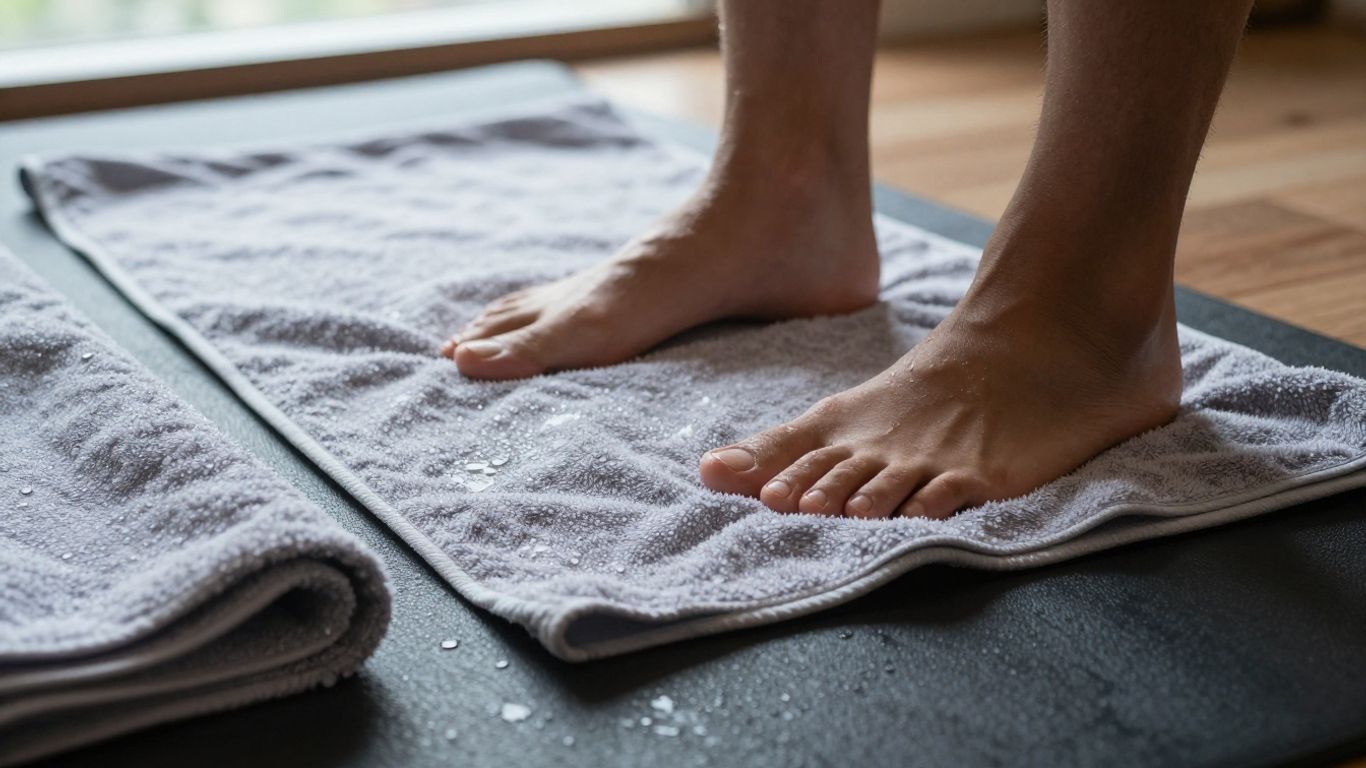
A towel is most helpful when moisture collects under your palms or makes your feet slide during transitions. It can also be a practical fallback when you already own a mat that is comfortable but not dependable in a heated room. Yune Yoga makes absorbent yoga towels, which fit the simple goal of adding a washable moisture-management layer to practice.
Full-length towels versus hand towels
A full-length towel covers the working area and is the better choice when your entire body moves across the mat. A smaller hand towel is easier to carry and can help with wiping sweat, but it will not prevent foot slippage or protect the whole surface. Choose based on where moisture causes the problem rather than buying the smallest accessory by default.
Absorbency, silicone dots, and staying in place
Absorbency affects how often you need to pause and adjust your hands, while silicone dots or another grippy underside can reduce bunching. A towel that shifts under a lunge may create a new distraction even if it absorbs sweat well. Wash it according to the care instructions and check that the backing still lies flat after repeated cycles.
How toppers change the feel of your mat
A topper adds a soft, fabric layer between you and the original surface, which can be pleasant for kneeling and helpful for hygiene. It may also make balance feel less direct and slightly raise your feet from the floor. Try the combination in a few familiar poses before relying on it for a fast, crowded class.
For readers comparing accessories as carefully as mats, this hot yoga towel guide offers a useful way to think about traction, hygiene, size, and absorbency together. Those criteria are more helpful than choosing a towel based only on color or softness.
Evaluate durability, safety, and maintenance
Sweat, heat, friction, and repeated rolling can change a mat gradually. A surface may still look fine while its grip has weakened, or its edges may begin curling after being stored damp. Build a quick inspection into your routine so small changes do not become a safety problem during a demanding class.
Checking for secure traction over time
Test the mat with dry and slightly damp hands every few weeks, using familiar positions rather than a gentle fingertip touch. Notice whether your palms slide, whether the underside moves, and whether the top layer feels uneven. A mat that worked well during its first month may need a towel or replacement once its surface has become polished.
Avoiding slipping, odors, and material breakdown
Persistent odor can point to trapped moisture, poor ventilation, or material breakdown, although some new mats naturally smell for a while. Let the mat dry fully before rolling it and avoid storing it in a sealed bag straight after class. If the surface flakes, becomes tacky, or separates from its base, stop treating the issue as cosmetic.
Cleaning mats after sweaty sessions
Follow the manufacturer’s cleaning directions rather than assuming a strong household cleaner is safe. Usually, the basics are simple: remove visible moisture, wipe the surface with an appropriate diluted cleaner, and let both sides dry completely. A clean towel, open-air drying space, and a separate carrier can make this routine easier to maintain.
Recognizing when it is time to replace your mat
Replace a mat when it repeatedly slips, has permanent compression, or shows cracks and peeling that affect the surface. You should also reconsider it if cleaning no longer removes a persistent smell or if the edges keep curling into the practice area. A cheaper mat that needs frequent replacement may cost more effort than a slightly better-made option.
For a wider maintenance perspective, this hot yoga care guide covers cleaning, storage, grip, durability, and cushioning in one place. Use those categories to review your own mat honestly rather than waiting for a dramatic failure.
Match your mat to your practice and budget
The best choice depends on how you practice, where you practice, and what you can carry comfortably. Someone attending a daily Bikram class may prioritize wet grip and easy cleaning, while a traveler may accept less cushioning for a foldable, lightweight setup. Set two or three non-negotiables before browsing so attractive extras do not decide for you.
Choosing a mat for Bikram and heated vinyasa
Bikram and heated vinyasa both call for reliable traction, but the movement pattern may differ from class to class. A towel-friendly surface can be useful for longer, sweat-heavy sessions, while a more direct texture may suit faster transitions. If you alternate between styles, choose the option that performs well in the wetter practice rather than assuming the drier one will be equally demanding.
Selecting features for beginners and advanced yogis
Beginners often benefit from a forgiving surface, moderate cushioning, and a weight they will not resent carrying. More experienced practitioners may prefer a thinner, more responsive mat that lets them feel changes in foot placement. In either case, clear cleaning instructions and dependable floor traction are practical features, not advanced extras.
Comparing premium and budget-friendly options
A higher price may reflect thicker construction, better finishing, a longer expected life, or more specialized wet grip, but price alone does not prove suitability. Budget mats can work well when their texture, size, and care requirements match your routine. Portable users may also value Yune Yoga’s durable yoga straps as a simple accessory for carrying or organizing gear, without needing to build an elaborate kit.
If you are weighing several purchases at once, even a remote investment comparison can remind you to separate upfront cost from ongoing management. For a mat, that means considering replacement frequency, cleaning supplies, towels, and transport—not just the checkout price.
Testing grip and comfort before committing
If a store allows returns, use the mat on a clean floor and test downward dog, a lunge, a seated fold, and a standing balance. Try again with slightly damp hands, since dry grip tells only part of the story. You can also use this practice-style mat guide to compare how thickness and traction fit different forms of yoga.
A short trial often reveals more than a long list of specifications. Notice whether you feel secure, whether your joints are comfortable, and whether you can imagine cleaning and carrying the mat every week.
Conclusion
Choosing among mats for hot yoga becomes simpler when you judge the whole routine: sweat, grip, cushioning, cleaning, storage, and transport. Start with the conditions that cause the most trouble in your practice, then select the lightest and easiest-to-maintain option that solves them without sacrificing stability.
Frequently Asked Questions
What makes a mat suitable for hot yoga?
A suitable mat offers dependable traction when damp, enough cushioning for your practice, and a surface that can be cleaned and dried regularly. Its underside should also stay stable on the floors where you normally practice.
Is a thicker mat better for hot yoga?
Not necessarily. Extra thickness can improve comfort on firm floors, while a thinner mat may feel more stable during balances and easier to transport. Choose based on your joints, balance, and typical studio conditions.
Do I need a towel with a hot yoga mat?
You may not need one if the mat remains secure when wet. A towel is useful when sweat pools on the surface, when you want a washable layer, or when your existing mat has good cushioning but weak wet traction.
How often should I clean my yoga mat?
Wipe it after sweaty sessions and let it dry fully before rolling it. Follow the manufacturer’s instructions for deeper cleaning, since some materials tolerate only gentle solutions.
Can I use a regular yoga mat for hot yoga?
You can, but its grip may change when exposed to heat and sweat. Test it in realistic conditions and add a towel if the surface becomes slippery; replace it if the underside or top layer no longer stays secure.
What is the best material for a hot yoga mat?
There is no single best material. Natural rubber, PVC, polyurethane, and hybrid surfaces can each work well depending on grip, cushioning, odor, durability, cleaning needs, and personal preferences about materials.
How do I know when to replace my mat?
Replace it when it repeatedly slips, curls into your practice space, develops cracks or peeling, or remains unpleasantly odorous after proper cleaning and drying. Visible wear that affects traction is a clear reason to stop using it.