

How to find the best yoga mat for price without sacrificing quality
Key Takeaways
A good-value yoga mat is not simply the cheapest option on the shelf. The right choice balances practice style, comfort, grip, durability, and how often you will actually carry it.
- Match cushioning and traction to the way you practice.
- Compare materials, dimensions, weight, and construction rather than price alone.
- Treat durability and expected years of use as part of the cost.
- Read reviews for repeated patterns, not one dramatic opinion.
- Choose the features that solve a real problem in your routine.
Define what value means in a yoga mat
Value is the relationship between what a mat costs and how well it serves your practice over time. A low price can be worthwhile for occasional use, while a more expensive mat may make sense when it replaces frequent rentals or survives daily sessions. The best yoga mat for price is therefore personal, not universal.
Match the mat to your practice style
Start with the movements and settings you use most. Gentle stretching may call for comfort and a pleasant surface, while faster flows place greater demands on grip and stability. If you alternate between styles, choose a balanced mat rather than paying for a specialized feature you rarely need.
A useful practice-style mat guide can help you compare the basic priorities for gentle, dynamic, and heated sessions. Think about where you practice, too: a mat for a studio locker has different requirements from one that goes into a suitcase or onto a hotel-room floor.
Set a realistic budget
Set a spending range before browsing so attractive extras do not quietly become the deciding factor. Include a strap, towel, cleaning supplies, or shipping if you need them. A sensible budget leaves room for the features that affect daily use, especially reliable traction and a surface that stays flat.
Price bands are only rough signposts. A budget mat can be perfectly adequate for light use, while a mid-range option may offer a better balance of comfort and longevity. Spend where your routine is demanding, not where the packaging is persuasive.
Consider frequency of use and durability
A person practicing twice a month can reasonably prioritize low upfront cost. Daily users should pay closer attention to surface wear, edge curling, compression, and whether the material remains supportive after repeated rolling. The more often you use a mat, the more quickly small inconveniences become expensive ones.
Durability also includes maintenance. A mat that is easy to wipe down and dry may remain pleasant longer than one that requires special care. Estimate the number of sessions you expect, then consider whether replacing a cheaper mat repeatedly would cost more than buying a sturdier one once.
Separate useful features from marketing claims
Words such as premium, professional, and ultra-grip are not enough to judge performance. Look for measurable information: thickness, dimensions, weight, material, care instructions, and warranty terms. If a claim does not explain how the feature helps your practice, treat it as decoration rather than evidence.
The same practical approach applies to larger purchases outside fitness. Comparing terms carefully—whether for equipment or financing property from abroad—helps separate a headline promise from the details that affect real value.
Compare yoga mat materials and construction
Material affects feel, traction, odor, weight, and how a mat ages. Construction matters just as much: a dense surface, reinforced edges, and consistent thickness can make a noticeable difference. There is no single best material, but there is a material better suited to each person’s priorities.
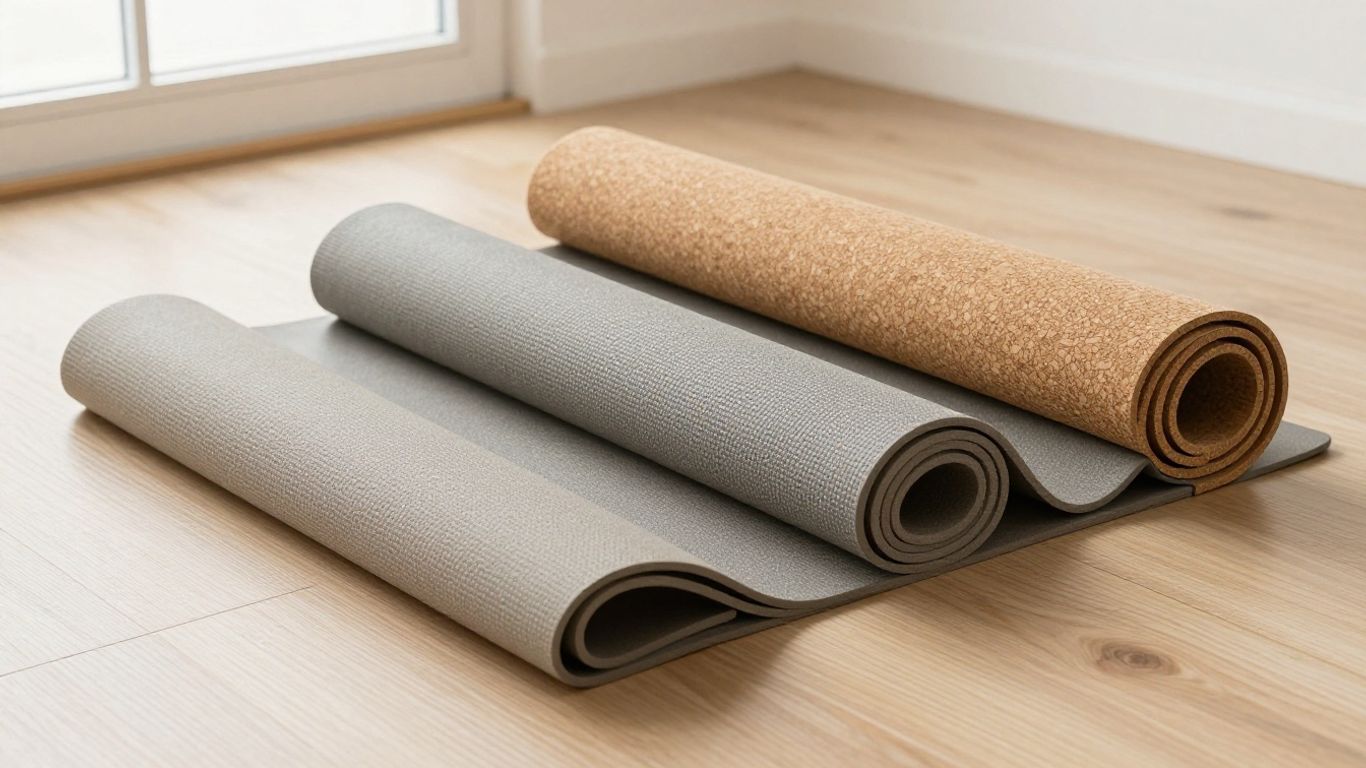
PVC, TPE, rubber, and cork explained
PVC is often affordable, easy to clean, and available in many thicknesses, though its feel and environmental profile vary by product. TPE is generally light and flexible, making it appealing for portable setups. Natural rubber can provide strong traction and a dense feel, while cork tends to offer a distinctive surface that many practitioners enjoy.
Check the full specification rather than relying on the material name alone. Blends, coatings, backing layers, and manufacturing quality can change how any material performs. If you are sensitive to latex or strong odors, confirm the manufacturer’s information before buying.
Choose the right thickness and cushioning
Thickness is a trade-off between cushioning, balance, and portability. A thicker mat can feel kinder on knees and wrists, but excessive softness may make standing poses feel less stable. A thin mat is easier to fold and carry, yet it offers less separation from a hard floor.
Consider the surfaces you encounter most often. A home practitioner on wood may value more cushioning, while someone carrying a mat through classes may prefer a lighter profile. The right answer is the one that supports your actual setup without creating a new inconvenience.
Evaluate texture, grip, and stability
Texture influences how your hands and feet interact with the surface. Some mats feel naturally tacky when dry; others rely on a textured finish or absorbent top layer. Try to distinguish grip from stickiness, since a surface can feel clingy without offering dependable stability during transitions.
For a broader comparison of performance yoga mats, pay attention to how traction is described in both dry and damp conditions. A mat should remain flat, resist bunching, and feel predictable when you shift weight. Those quiet details often matter more than a striking color or unusual pattern.
Weigh odor, sustainability, and skin sensitivity
New-material odor can vary considerably, so look for clear airing and care instructions. Sustainability claims deserve the same scrutiny as performance claims: check what part of the mat is recycled, recyclable, natural, or free from a specific substance. Skin sensitivity also makes the top coating and cleaning routine relevant.
Do not assume that a natural material automatically suits everyone. Test contact, smell, and texture when possible, and allow a new mat to air out according to its instructions. Comfort is part of value because an uncomfortable mat is less likely to be used.
Identify the features worth paying for
A worthwhile feature solves a recurring problem. It might reduce slipping, make a mat easier to transport, or keep a regular practice organized. Features that merely add visual polish can be enjoyable, but they should not displace the basics of size, grip, cushioning, and durability.
Look for reliable wet and dry traction
Traction should match your hands, your practice, and the conditions around you. If you sweat heavily, a surface that feels excellent when dry may not be enough. Absorbent accessories can also help manage moisture without requiring the mat itself to do every job.
Try to find evidence from reviews that mention both ordinary and sweaty sessions. For portable practice, Yune Yoga offers absorbent yoga towels and grippy accessories, which can be useful when managing moisture is part of the setup. The goal is predictable contact, not an exaggerated promise of being slip-proof in every situation.
Check size, weight, and portability
Measure the mat against your height, your storage space, and the bag you actually carry. Extra length can be welcome, but it also adds weight and bulk. If you move between classes, parks, beaches, and hotel rooms, portability may be more valuable than a small increase in cushioning.
Yune Yoga focuses on thin, light, foldable travel mats designed to make practicing in different locations easier. Before paying for portability, check how the mat folds, whether it lies flat afterward, and whether the packed dimensions fit your usual luggage.
Assess alignment markings and surface design
Alignment markings can offer a visual reference for hand and foot placement, but they are not essential for every practitioner. They are most useful when you enjoy visual cues and the lines remain subtle enough not to distract. A decorative pattern should never obscure wear or make the surface difficult to clean.
Look at photos from several angles and read comments about whether the design remains visible in use. If you practice in changing light or share space with others, a calm, legible surface may be more practical than a busy one.
Consider accessories and included warranties
An included strap, towel, or carrying case has real value only if you would otherwise buy it. Check the quality and dimensions of included accessories rather than counting every bundle item equally. A clear warranty can matter more than a free extra, particularly for frequent users.
A concise warranty should explain what is covered, for how long, and what care may void it. This is also where purchase channels matter: comparing affordable yoga mats can be useful, but the final decision should include return terms and delivery costs.
Evaluate mats by price-to-performance ratio
Price-to-performance is a way to compare what you receive, not a guarantee that the most expensive mat performs best. Consider the demands placed on the mat, the features you will use, and the years you expect it to last. A simple framework keeps a sale price from doing all the thinking.
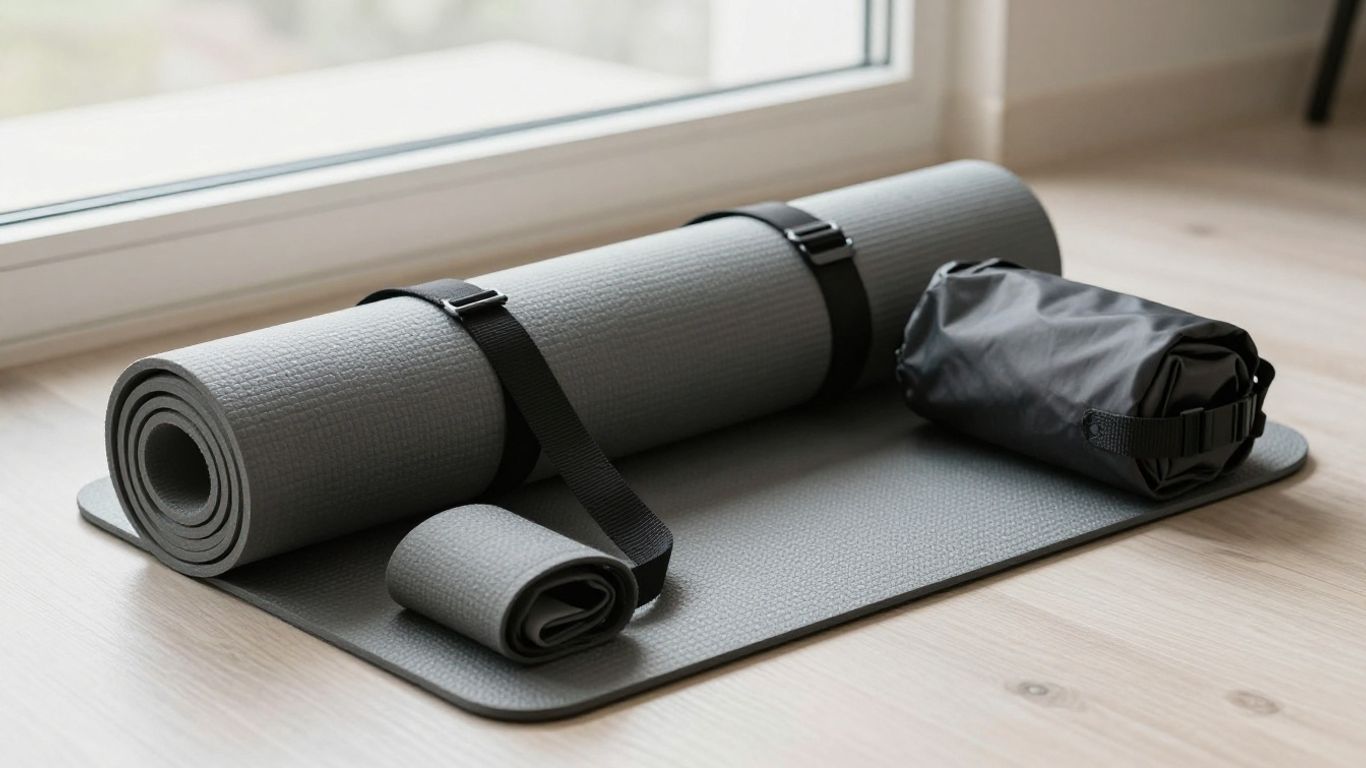
Compare budget, mid-range, and premium options
Budget mats can suit beginners, occasional users, or anyone still learning what surface feels comfortable. Mid-range mats often offer a more deliberate balance of grip, construction, and portability. Premium mats may justify their price through dense materials, specialized traction, or longer expected use—but only when those qualities match your routine.
This three-level view is more useful than assuming one category is always superior:
| Price level | Often suits | Main question to ask |
|---|---|---|
| Budget | Occasional or introductory practice | Does it provide enough grip and comfort? |
| Mid-range | Regular home or studio practice | Will the added construction last longer? |
| Premium | Frequent or demanding practice | Will I use its specialized strengths often? |
The table is a starting point, not a verdict. Compare the actual specifications within each level, because prices can overlap and promotions can make categories blurry.
Calculate cost per year of expected use
Divide the purchase price by the number of years you realistically expect to use the mat. A $30 mat used for one year costs more per year than a $75 mat that remains comfortable and intact for three years. This calculation is imperfect, but it exposes the difference between cheap today and economical over time.
You can refine it by estimating sessions, travel, and replacement accessories. Do not count years you are unlikely to use: optimistic durability assumptions can make any purchase appear like a bargain.
Read reviews for recurring strengths and weaknesses
Reviews are most useful when several people describe the same behavior. Look for repeated comments about curling edges, odor, grip after sweating, flaking, compression, and cleaning. One enthusiastic or angry review may reflect an unusual experience, while a pattern across many reviews is more informative.
Independent testing can add useful context. For example, structured mat testing considers factors such as grip, size, feel, portability, and durability. Use that information alongside your own priorities rather than treating any single ranking as universal.
Watch for discounts, bundles, and inflated list prices
A discount is valuable only if the reduced price is competitive for the product’s actual specifications. Compare the same model across sellers, check shipping, and be cautious when a bundle adds items you would not buy. Seasonal promotions can be helpful, especially when you already know the size and material you want.
Yune Yoga’s focus on portable mats and accessories makes bundle details worth checking for travelers, but the practical question remains simple: will each included item be used? A yoga mat sale can lower the cost of a good choice, but it should not turn an unsuitable mat into an appealing one.
Test a yoga mat’s quality before buying
You can learn a great deal before unrolling a mat in person. Product pages, customer feedback, and policies reveal whether the seller is being specific about construction and standing behind the item. A few minutes of careful checking can prevent a frustrating return.
Inspect product specifications and measurements
Look for exact length, width, thickness, weight, material, and care instructions. If any of those details are missing, comparisons become difficult. Check the packed dimensions as well when portability matters, because a mat’s rolled or folded size can determine whether it fits your routine.
Compare claimed measurements with photos cautiously. A mat may look substantial online but feel very different in a small room or crowded studio. Specifications are not exciting, but they are among the most reliable pieces of buying information.
Interpret customer reviews critically
Sort reviews by recent date and look for comments from people with a similar practice. A reviewer who uses a mat once a week is testing something different from someone practicing daily in heat. Give extra weight to specific descriptions of surface feel, wear, cleaning, and transport.
Be wary of reviews that discuss delivery alone or repeat vague phrases without describing use. Review patterns should help you form a question, not replace your judgment. If many buyers mention the same issue, treat it as a meaningful risk.
Check the return policy and warranty
A return policy is especially valuable when texture and odor are hard to judge online. Check whether the mat must be unused, whether return shipping is deducted, and how long you have to make a decision. A warranty may cover manufacturing defects but exclude ordinary wear, stains, or incorrect cleaning.
Save the product page and receipt after buying. Clear records make it easier to explain a problem and confirm which terms applied at the time of purchase.
Look for signs of premature wear
If you can inspect a mat in person, check whether the edges lie flat and whether the surface has inconsistent patches. Lightly press several areas to compare firmness, then look for peeling, powdery residue, or a backing that separates. These checks do not predict everything, but they can expose poor handling or construction.
During the first few uses, notice whether the mat keeps its shape and whether the surface changes quickly. Stop using it if a defect creates an obvious stability problem. Early attention is easier than trying to explain extensive wear later.
Choose the best value mat for your needs
The final choice should reflect the way the mat will be used, not a generic ranking. Start with your most frequent setting, then choose the least expensive option that meets your non-negotiable requirements. That approach leaves room for personal preference without losing sight of quality.
Pick a budget mat for occasional practice
For occasional sessions, prioritize a comfortable surface, adequate grip, and easy cleaning over specialized construction. A moderately priced basic mat may be all you need, particularly if you practice indoors on a forgiving floor. Avoid paying for extreme durability that your schedule will never test.
Check that the mat does not slide or bunch during ordinary movements. If it does the basics reliably, a simple model can be the best value for an infrequent routine.
Choose extra cushioning for sensitive joints
If your knees, wrists, or hips need more support, thickness and firmness deserve priority. Extra cushioning can make floor-based practice more comfortable, but choose a surface that still allows you to balance and transition with control. A separate towel or small pad may sometimes solve the problem more economically than replacing the entire mat.
Test the mat on the hardest surface you commonly use. Comfort in a carpeted room may not translate to a studio floor, so judge it where the mat will actually live.
Prioritize grip for hot yoga and intense flows
For heated or fast-moving practice, traction should be your first filter. Look for credible descriptions of damp performance and reviews that discuss hands and feet during transitions. A towel may help manage sweat, but it should complement—not conceal—a surface that is fundamentally unsuitable for your practice.
A useful test is to place your hands and feet in familiar positions and shift weight gradually. If the surface feels unpredictable when dry, it is unlikely to become a dependable choice when conditions get more demanding.
Select a lightweight mat for travel and classes
Travelers should consider folded dimensions, total carry weight, and how quickly the mat can be packed. Thin, foldable designs are convenient for luggage and spontaneous sessions in parks or hotel rooms. Pairing a portable mat with a towel or strap can create a compact setup without carrying a bulky bag.
Yune Yoga’s portable approach is a natural fit for people who practice in several locations, provided the mat’s cushioning and grip meet their personal minimums. Convenience increases value only when it makes practice easier to maintain.
A final check is to imagine carrying the mat on an ordinary day, cleaning it after a session, and storing it between uses. If the answer feels easy rather than merely impressive on paper, you are close to the right purchase.
Conclusion
Finding the best yoga mat for price means matching the mat to your real practice, then judging materials, grip, portability, and durability together. Choose the features you will use repeatedly, verify the specifications and policies, and let expected years of use—not a dramatic discount—guide the final decision.
Frequently Asked Questions
How much should I spend on a yoga mat?
Spend enough to get the grip, cushioning, size, and construction your practice requires. Occasional users may do well with a basic mat, while frequent practitioners can justify more if it lasts longer or solves a recurring problem.
Is a thicker yoga mat always better?
No. Thickness can improve cushioning, but too much softness may reduce balance and stability. Choose based on your joints, practice style, floor surface, and willingness to carry extra weight.
Which yoga mat material lasts the longest?
Longevity depends on material, construction, care, and frequency of use. Compare surface wear, edge construction, cleaning requirements, and warranty information rather than assuming one material always outlasts the others.
How do I know if a yoga mat has good grip?
Look for specific comments about traction during both dry and sweaty practice. If possible, test familiar hand and foot positions and notice whether the surface stays stable during gradual weight shifts.
Are expensive yoga mats worth the money?
They can be worthwhile when their durability, grip, cushioning, or portability matches your routine. An expensive feature that you rarely use is not automatically good value.
What should I look for in a travel yoga mat?
Check folded or rolled dimensions, total weight, ease of packing, surface grip, and enough cushioning for the places where you practice. A convenient mat is one you will actually bring with you.
How can I make a yoga mat last longer?
Follow the care instructions, clean it with suitable products, let it dry fully, and store it away from excessive heat and direct sunlight. Avoid folding or rolling it in ways the manufacturer does not recommend.


