

How much do yoga mats cost? A complete guide to prices, features, and value
Key Takeaways
Yoga mats cost anywhere from less than $30 to well over $100, depending on materials, construction, grip, cushioning, and intended use.
- Budget mats can work well for beginners and occasional practice.
- Mid-range mats often offer the best balance of comfort, grip, and durability.
- Premium pricing makes more sense for frequent practice or specialized needs.
- Travel mats trade thick cushioning for lighter weight and easier packing.
- Accessories, cleaning, shipping, and replacement costs affect the real value.
Yoga mat cost by price range
The question “how much do yoga mats cost?” has no single answer because mats serve very different purposes. A simple foam mat may be enough for a few weekly sessions, while a dense, highly grippy mat can justify a much higher price for someone who practices daily. The useful comparison is not just the checkout total, but what that price buys over time.
Budget yoga mats under $30
Budget yoga mats commonly use basic PVC, foam, or synthetic materials and usually provide a practical starting point. They may be thinner, less durable, or less resistant to sweat than costlier options, but that does not make them automatically unsuitable. For light stretching, beginner classes, and occasional home practice, an inexpensive mat can be a sensible first purchase.
Pay attention to the surface and edges rather than assuming a low price means poor performance. A mat that stays flat, feels stable, and is easy to clean may serve you well while you learn what you actually want from your equipment.
Mid-range yoga mats from $30 to $80
The $30-to-$80 range is where many shoppers find a comfortable middle ground. Mats in this bracket often offer improved density, more reliable traction, better construction, or a more useful balance between cushioning and stability. They can also feel less disposable if you practice several times each week.
This is a useful range for someone who wants a dependable everyday mat without paying for every available feature. A yoga mat brands guide can help you compare materials and features before narrowing the search.
Premium yoga mats over $80
Premium mats usually cost more because of denser construction, specialized grip, larger dimensions, sustainability considerations, or longer expected service. Some are designed for demanding practice, heavy sweating, or frequent studio use. Others charge more for carefully selected materials and refined finishing rather than a dramatic difference in basic function.
A higher price is easiest to justify when the mat solves a specific recurring problem. If your current mat slips, wears out quickly, or leaves your joints uncomfortable, paying more may be cheaper than replacing several disappointing mats.
How price affects durability and performance
Price can correlate with durability and performance, but it is not a guarantee. A costly mat may still be a poor match if it is too heavy, too firm, or difficult to maintain. The strongest value comes from matching construction to your routine, then dividing the purchase price by the number of months you expect to use it.
The web guide on yoga mat price factors offers another way to think about the relationship between cost, materials, grip, and support. The best value is personal: it is the mat that performs reliably for the practice you actually do.
What determines yoga mats cost
Several design choices shape the price of a yoga mat. Material is only the starting point; density, surface finish, dimensions, and manufacturing quality all affect what you pay. Before comparing colors or brand names, identify the features that will matter most during your sessions.
A useful yoga mat materials guide can make unfamiliar terms easier to interpret, especially when product descriptions use similar language for very different surfaces.
Materials and construction
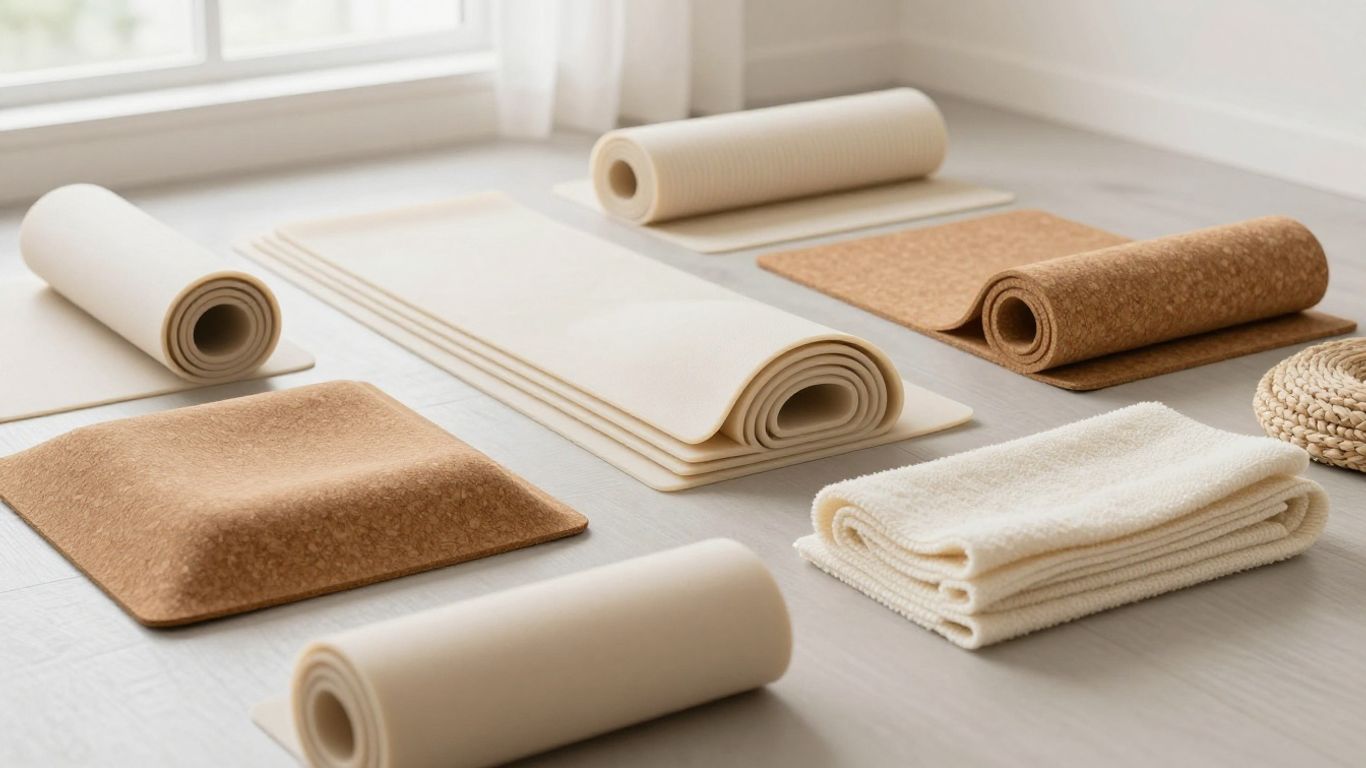
PVC and standard foam mats are often inexpensive because they are widely produced and relatively straightforward to manufacture. Natural rubber, cork, cotton, and other lower-impact materials may cost more, particularly when they require specialized processing or layered construction. Material also affects odor, weight, texture, cleaning needs, and how the mat changes with use.
Look beyond labels such as “eco-friendly” or “premium.” Ask what the mat is made from, how its layers are joined, and whether the care instructions fit your routine. Construction details can matter more than a broad marketing category.
Thickness, cushioning, and support
Thickness influences both comfort and stability. A thicker mat may feel kinder under knees and wrists, while a thinner one can make standing poses feel more connected to the floor. Density matters too: two mats with the same stated thickness may feel noticeably different.
If you practice on hard floors or spend time in kneeling positions, cushioning may deserve a larger share of your budget. If balance and portability are more important, a thinner design may be the better trade-off.
Grip, texture, and moisture resistance
Grip is one of the most practical reasons to spend more. A textured surface can help with steady foot placement, while a moisture-resistant or absorbent design may be more comfortable during sweaty sessions. No surface feels identical to every person, so reviews and, when possible, an in-person trial are useful.
A mat that feels grippy when dry may behave differently after repeated use or exposure to moisture. Consider your practice conditions, not only how the mat feels during a quick showroom test.
Size, weight, and portability
Longer or wider mats require more material and may cost more, but extra space can be valuable if you are tall or move through broad poses. Weight also affects the price and the likelihood that you will carry the mat regularly. For people who practice in parks, hotel rooms, or different studios, portability can matter more than maximum thickness.
The right dimensions are a practical decision. Measure your usual practice area and consider whether the mat needs to fit in a closet, car, suitcase, or daily tote.
Choosing a yoga mat for your practice
The best mat depends on where and how you practice, not on a universal ranking. A gentle home routine has different requirements from hot yoga, outdoor workouts, or travel. Start with the conditions you can describe clearly: sweat level, floor type, frequency, storage, and the amount of weight you are willing to carry.
For a broader comparison of yoga mats for different styles, focus on the features that match your own sessions rather than copying a recommendation made for another practice.
Mats for beginners and occasional use
Beginners and occasional practitioners generally need a stable, easy-to-clean surface with enough cushioning for comfortable floor work. There is no need to pay for specialized features before you know whether you prefer a firm or soft feel. A modestly priced mat can leave room in the budget for classes or other accessories.
A beginner-focused yoga mat buying guide is useful for sorting through thickness, grip, material, and size without turning the purchase into a technical project.
Mats for hot yoga and heavy sweating
Hot yoga and vigorous sessions place greater demands on traction and moisture management. Look for a surface that remains dependable when damp, and consider whether a towel layer would make cleaning and grip easier. A mat that is excellent for a dry practice may feel frustrating in a heated room.
Do not judge sweat performance from price alone. Read reviews from people who practice under similar conditions, and check the recommended cleaning method before committing.
Mats for travel and outdoor workouts
Travel mats prioritize thinness, low weight, and easy packing. Yune Yoga offers foldable travel mats designed for convenience and portability, making this category especially relevant for hotel rooms, beaches, parks, and other changing practice locations. The trade-off is usually less cushioning than a thick home mat.
When choosing a travel mat, consider what surface will sit underneath it. A thin mat may work well on carpet or a clean studio floor but feel less forgiving on rough pavement or hard flooring.
Mats for joint-sensitive practices
If your practice includes extended kneeling, seated poses, or floor transitions, cushioning deserves careful attention. A thicker or denser mat can feel more comfortable, though too much softness may reduce stability in standing poses. Some people solve the compromise with a moderate mat plus a small cushion or folded towel.
Try to evaluate comfort across several positions rather than judging the mat from one standing pose. Your knees, wrists, and hips may need different kinds of support.
Comparing popular yoga mat types
Different mat types create different trade-offs in price, feel, care, and environmental profile. There is no universally superior material; the better choice depends on grip, cushioning, odor tolerance, weight, and how much maintenance you will actually do. Comparing categories first can make individual products easier to assess.
PVC and standard foam mats
PVC and standard foam mats are common entry points because they are often affordable, widely available, and offered in many thicknesses. They can be suitable for home practice and occasional use, although quality varies considerably. Some become brittle, compressed, or less attractive after extended use.
Check the surface texture, density, and return policy rather than relying on the material name alone. A well-made basic mat can outperform a poorly constructed specialty mat for a particular user.
Natural rubber mats
Natural rubber mats are often valued for traction and a substantial feel. They may be heavier and can have a noticeable initial odor, and people with latex sensitivities need to check the product information carefully. Their price commonly reflects material choice and construction rather than size alone.
Natural rubber can be a strong fit for people who want a stable, grippy surface and do not mind carrying a heavier mat. It may be less appealing for frequent air travel or long walks to class.
Cork and cotton mats
Cork surfaces can feel warm and distinctive, with grip that may change as moisture increases. Cotton mats are often lightweight and flexible, but they may provide less built-in cushioning than thick foam or rubber designs. These materials suit shoppers who value a particular texture and are comfortable with their care requirements.
Before buying, check whether the mat is intended to be used alone or layered over another surface. That detail can change the effective cost and portability of the setup.
Eco-friendly and biodegradable options
Eco-friendly and biodegradable options vary widely, so the label deserves a closer look. Some use natural materials, recycled content, or reduced packaging, while others focus on manufacturing or end-of-life considerations. These choices may increase the price, but they can align with personal priorities when the performance remains suitable.
Avoid assuming that a sustainability claim answers every question. Compare durability, cleaning instructions, shipping distance, and expected lifespan alongside the material story.
Extra costs to consider
The price on the product page is only part of the ownership cost. Accessories can improve portability and maintenance, while shipping, tax, and replacement timing can change the final calculation. A realistic budget includes the way you will store, carry, clean, and use the mat.
Yoga mat bags and carrying straps
A bag or strap may be unnecessary for a mat that stays at home, but it becomes useful when you walk, cycle, or commute to practice. A dedicated carrier can protect the mat from dirt and make it easier to keep your gear together. Lightweight travel mats may fit into ordinary luggage, while thicker mats often need more room.
Choose the carrier after checking the rolled or folded dimensions. Buying an accessory that cannot comfortably hold the mat is an avoidable extra expense.
Cleaning sprays and maintenance supplies
Regular cleaning can extend the useful life of a mat and make shared or outdoor practice more pleasant. You may spend on a ready-made spray, a washable towel, or simple supplies recommended by the manufacturer. Avoid harsh products unless the care instructions explicitly allow them, since some surfaces can dry out or become slippery.
Yune Yoga also offers absorbent yoga towels, which can be useful when managing moisture or creating a more comfortable layer during practice. The right maintenance item should solve a real problem rather than become clutter in your gear bag.
Replacement frequency and long-term value
A cheap mat replaced every few months may cost more over several years than a durable mat bought once. Estimate how often you practice, how the mat is stored, and how much wear it receives from outdoor surfaces or daily transport. A simple cost-per-month comparison often makes the decision clearer.
Keep your expectations realistic. No mat lasts forever, especially when exposed to heat, sunlight, sweat, and rough ground, but proper care can delay replacement.
Shipping, sales tax, and subscription studio fees
Shipping and sales tax can move a seemingly attractive price beyond your planned budget. Studio memberships, class packs, or recurring online subscriptions are separate costs, but they belong in the same equipment decision if your practice depends on them. Some retailers also offer discounts at certain order values, which can affect whether adding an accessory makes sense.
Before checkout, review the complete total and return conditions. For comparison, a local yoga mat shopping guide can help you think through in-person trials, nearby retailers, and the practical value of avoiding shipping.
How to find the best value yoga mat
Finding value is less about locating the lowest price and more about avoiding features you will not use. Write down your practice conditions, set a comfortable spending limit, and compare a few mats on the same criteria. This keeps attractive packaging or vague performance language from doing all the persuasive work.
Setting a realistic budget
Begin with how often you practice and where the mat will live. Occasional home users may be satisfied with a basic option, while daily practitioners or frequent travelers may benefit from investing in durability or portability. Leave a small amount for a carrier, towel, or cleaning supplies if those items will make the mat easier to use.
Yune Yoga also offers durable yoga straps, so shoppers who value a compact, portable setup can consider whether an accessory will add genuine usefulness to their routine. The budget should support consistent use, not simply a more impressive specification list.
Comparing warranties and return policies
A warranty can provide useful reassurance about manufacturing defects, but it does not usually cover ordinary wear, stains, or misuse. Return policies matter just as much when you are unsure about texture, firmness, or size. Read the exclusions, time limits, and return shipping terms before treating either policy as a major benefit.
A fair policy reduces the risk of choosing by description alone. It is especially helpful for online purchases where you cannot test the surface beforehand.
Evaluating reviews and product claims
Reviews are most helpful when they describe the reviewer’s conditions. Look for comments about sweating, odor, edge curling, cleaning, weight, and long-term wear rather than relying on a star average. Separate consistent patterns from one-off complaints, and be cautious when every review repeats identical promotional language.
The same habit applies to other purchasing research, including a public speaking coach guide, where fit and individual circumstances matter more than a generic top ranking. For yoga mats, the relevant question is whether the reviewer practices in conditions close to yours.
Knowing when a premium mat is worth the cost
A premium mat may be worth the cost when you practice frequently, need dependable grip, require unusual dimensions, or have already replaced several cheaper mats. It may also make sense when a lighter foldable design helps you practice more often in different locations. If the extra features do not change your routine, the added price may not improve your experience.
Use a simple test: name the specific problem the premium mat solves, then estimate how often you will benefit from that solution. If you cannot name one, a mid-range option is probably the more sensible value.
| Practice pattern | Features to prioritize | Likely value range |
|---|---|---|
| Occasional home practice | Basic grip, easy cleaning, moderate cushioning | Budget |
| Several sessions each week | Durability, balanced cushioning, reliable traction | Mid-range |
| Hot or vigorous practice | Moisture management, secure grip, easy maintenance | Mid-range to premium |
| Frequent travel | Low weight, foldability, compact storage | Varies by construction |
This comparison is a starting point, not a strict spending rule. Match the feature column to your real routine, then check whether the expected lifespan makes the purchase worthwhile.
Conclusion
Yoga mats cost different amounts because they solve different practical problems. A budget mat can be perfectly adequate for occasional practice, while a more expensive option may earn its price through better durability, grip, cushioning, or portability. Choose the mat that fits your space, schedule, sweat level, and travel habits, and include accessories and maintenance in the total value calculation.
Frequently Asked Questions
How much should a beginner spend on a yoga mat?
A beginner can usually start with a budget or mid-range mat, depending on how often they expect to practice. Prioritize stable grip, suitable cushioning, and a size that fits the practice area rather than paying for specialized features immediately.
Are expensive yoga mats worth it?
They can be worth it for frequent practitioners who need better durability, grip, cushioning, or specialized portability. A premium price is less useful when the additional features do not address a problem in your routine.
What is the best yoga mat thickness?
The best thickness depends on the balance you prefer between cushioning and stability. Thicker mats can feel more comfortable for floor work, while thinner mats may provide steadier contact during standing poses and pack more easily.
Do natural rubber yoga mats cost more?
Natural rubber mats often cost more than basic foam or PVC mats because of their material and construction. They may also be heavier and require attention to odor, care instructions, and latex sensitivities.
How often should a yoga mat be replaced?
Replacement timing depends on practice frequency, storage, cleaning, sunlight, sweat, and surface wear. Replace a mat when it becomes slippery, flakes, loses structure, or no longer provides the comfort and stability you need.
Do I need a yoga mat bag?
You may not need one if the mat stays at home, but a bag or strap can be useful for commuting, outdoor practice, and keeping the mat clean. Check the mat’s rolled or folded dimensions before buying a carrier.
Can a travel yoga mat replace a regular mat?
A travel mat can replace a regular mat when low weight and compact storage matter most. Because travel designs are often thinner, some people use one over carpet, a towel, or another surface when they want additional cushioning.


