Yoga Etiquette: Studio and Home Practice Essentials
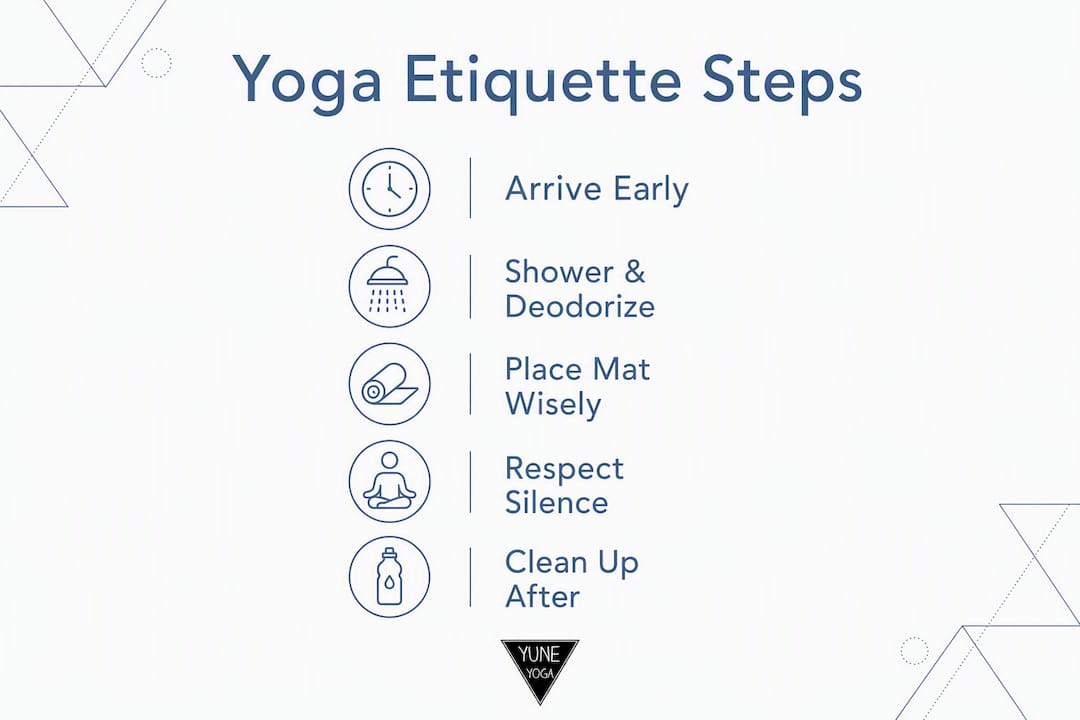
Good yoga etiquette comes down to six habits: shower before class, arrive early, silence your phone, ask about hands-on adjustments, stay through Savasana, and wipe down your mat and any props when you’re done. That’s the whole framework. Everything else is detail.
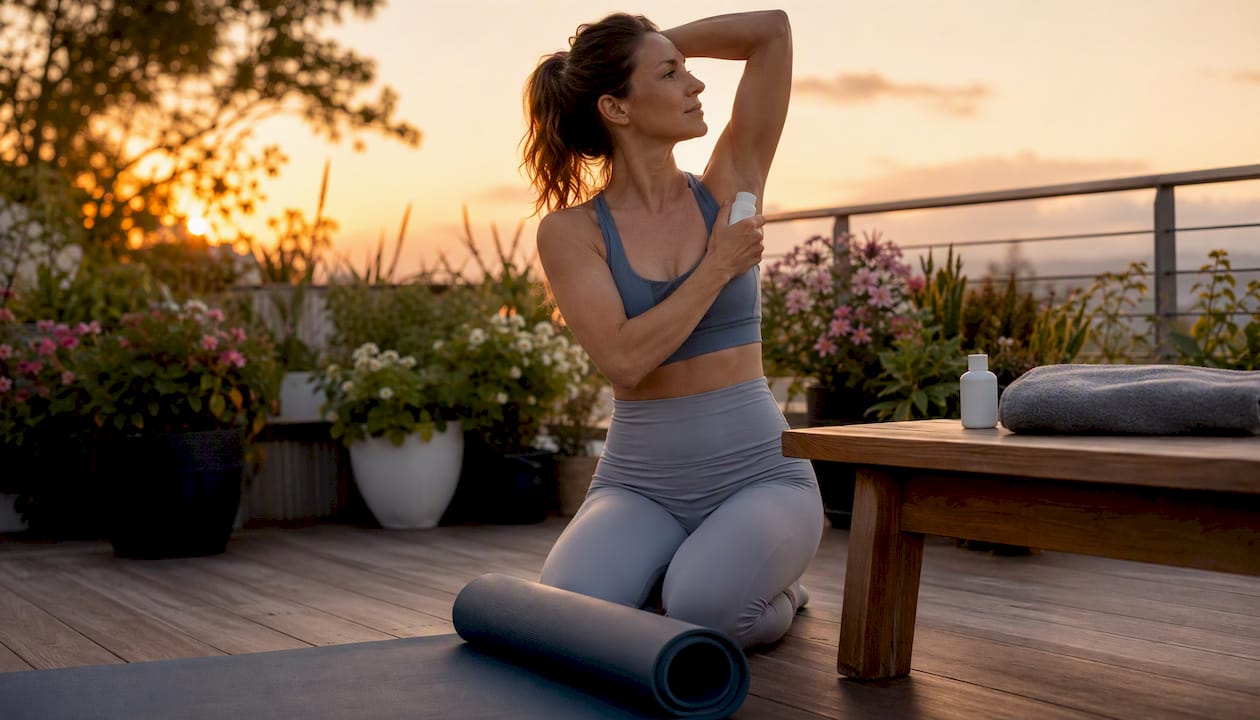
- Shower or at minimum rinse before class; use deodorant and skip heavy fragrance
- Arrive early enough to settle in before class (beginners often earlier, regulars can arrive closer to start time)
- Silence your phone completely before entering the practice room
- Ask the teacher about hands-on adjustments before class starts
- Stay for Savasana; if you must leave early, tell the teacher beforehand
- Wipe your mat and any borrowed props after every session
- Return blocks, straps, and bolsters to their designated spots
- Bring a reusable water bottle; skip single-use plastic
Pro Tip: Wiping your natural-rubber mat after every class does more than keep the studio clean. Sweat and oils break down rubber over time, so a quick wipe extends your mat’s life by months and keeps it grippy. That’s sustainability in the most literal sense.
Table of Contents
- What does good yoga etiquette look like before class?
- How should you behave during class?
- Why does Savasana matter, and what if you need to leave early?
- What should you do right after class ends?
- How do you care for eco-friendly mats and gear?
- How do you respect shared spaces outside the practice room?
- Why do fragrances matter in a shared practice space?
- Key Takeaways
- Etiquette and gear are two sides of the same practice
- Gear that supports your practice and the studio around you
What does good yoga etiquette look like before class?
The pre-class window sets the tone for everyone in the room, including you. Shower before class, apply deodorant, and skip the perfume or scented lotion. Scent sensitivity is real, and a crowded heated room amplifies everything.
Timing matters more than most people realize. Beginners should arrive 10 minutes early to fill out paperwork, introduce themselves to the teacher, and get settled without rushing. Regulars can cut it closer, but Yoga Journal recommends no more than five minutes late as an absolute ceiling. Some studios lock the door at start time.
| Studio / Source | Recommended Arrival | Late Entry Policy |
|---|---|---|
| Modo Yoga San Diego | 10 minutes early | No late entry permitted |
| Yoga Journal | On time; max 5 min late | Disrupts class flow |
| Yoga.com (beginners) | 10 minutes early | Check with teacher first |
What to bring into the room:
- Your own mat (or a rented one wiped clean)
- A personal towel, especially for heated classes
- A reusable water bottle
- Minimal personal items; leave bags, shoes, and coats outside
Place your mat with awareness. Stagger rows so no one blocks another person’s sightline, leave roughly a foot of space for the teacher to circulate, and shift over if the room fills up. Eat lightly and give yourself at least two hours after a full meal before class; a full stomach during twists and inversions is uncomfortable for you and distracting for everyone nearby.
How should you behave during class?
The short version: silence your devices, follow the teacher’s cues even when you modify, and respect the space around you. That covers 90% of in-class etiquette.
- Turn your phone fully off or to airplane mode before entering the room
- Avoid side conversations once class begins; a quiet hello before or after is fine
- Follow the sequence as taught; going completely off-script distracts the teacher and neighboring students
- Keep belongings tidy and away from neighboring mats
- Skip heavy perfume and scented lotion (covered in the hygiene section, but worth repeating here)
- If you need to modify a pose, do so quietly without drawing attention
Hands-on adjustments deserve their own note. Many studios use consent cards placed at the top of the mat to signal whether a student welcomes physical assists. When cards aren’t available, a brief word to the teacher before class is the standard. Either way, your preference is always valid and any good teacher will honor it without question.
Pro Tip: Traveling? Pack a compact, non-shedding travel mat and a thin personal towel. You reduce reliance on studio-supplied props, avoid cross-contamination, and leave no debris behind. A foldable natural-rubber travel mat rolls tight enough to fit in a carry-on without stressing the material.
Why does Savasana matter, and what if you need to leave early?
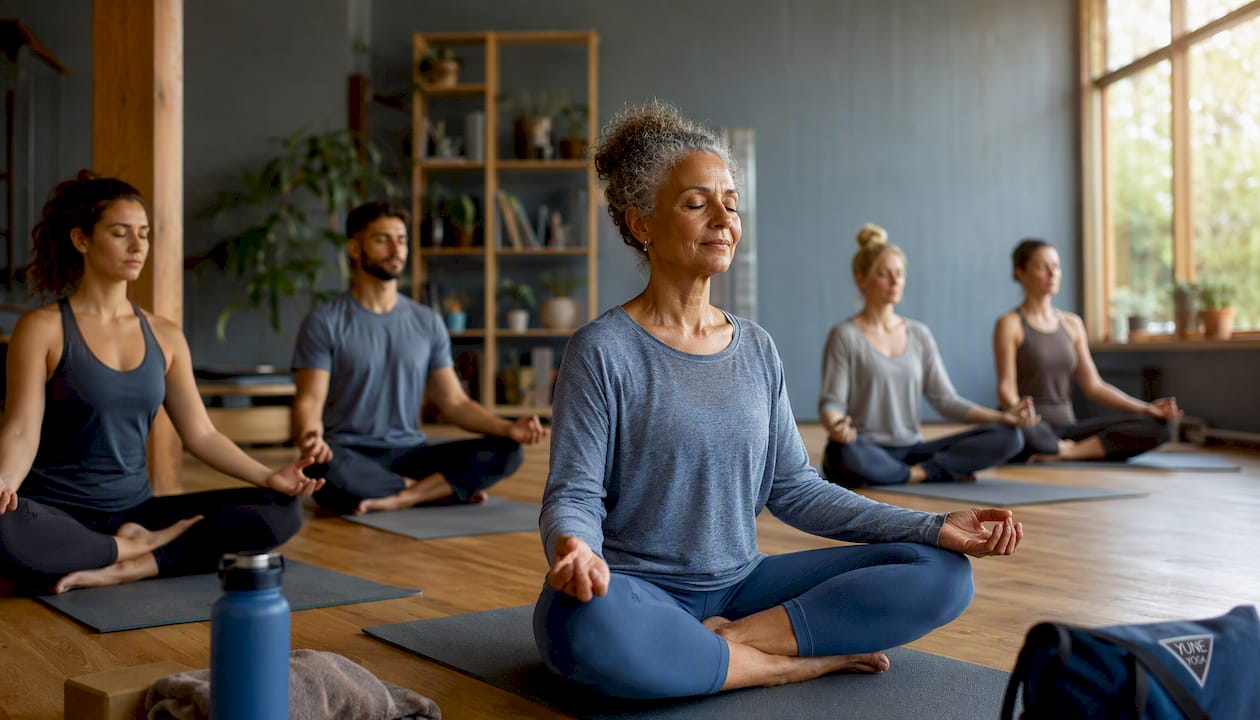
Savasana is not the cool-down you skip. Instructors widely regard it as the most essential part of class, as it’s where the physical work integrates, the nervous system settles, and the collective quiet deepens. Leaving during it disrupts that for everyone still on their mats.
If an early exit is unavoidable, the protocol is straightforward:
- Tell the teacher before class starts, not after it begins
- Position your mat near the exit so you can slip out without crossing the room
- Leave quietly before the guided Savasana begins, not during it
- CorePower Yoga’s guidance specifically recommends coordinating with the teacher so they can advise the least disruptive moment to exit
“Savasana is widely considered the most essential part of practice — leaving early denies integration and is discouraged.” — Midtown Yoga Studios
The goal isn’t perfection. As Midtown Yoga’s studio code puts it, etiquette is about showing up for each other, not rigid rule-following. Staying for Savasana is one of the simplest ways to honor that.
What should you do right after class ends?
Post-class cleanup is where a lot of practitioners cut corners, and studios feel it immediately.
- Wipe your mat with the studio’s spray or your own cleaner; get both sides if it was a sweaty session
- Mop up any sweat puddles on the floor around your mat
- Return blocks, straps, and bolsters to their designated spots, stacked neatly
- Drop used studio towels in the laundry hamper, not on the shelf
- Collect all personal items; studios expect students to take everything with them and leave the space ready for the next class
For a deeper clean at home, Yuneyoga’s blog covers step-by-step mat cleaning and homemade cleaner recipes that work well on natural-rubber surfaces without degrading the material.
After class, keep the social energy low-key. Loud conversations in the practice room or hallway pull people out of the post-Savasana state they just worked to reach. Save the catch-up for the lobby or outside.
How do you care for eco-friendly mats and gear?
A non-shedding, durable mat is better for studios and better for the planet. Shedding mats leave debris that staff have to clean up between classes, and low-quality materials wear out faster, creating more waste. Choosing natural rubber or premium blended materials is both a performance decision and a community one.
Common trouble spots to watch for:
- Shedding: Usually a sign of a low-quality surface layer or a mat stored folded too tightly. Natural-rubber mats should be rolled, not folded, for storage.
- Mold and mildew: Almost always caused by storing a damp mat. Air-dry fully before rolling up, every single time.
- Disposable waste: Single-use wipes and plastic water bottles add up. A reusable spray bottle with a diluted cleaner and a cloth towel handles post-class wipe-downs cleanly.
Care checklist for natural-rubber and eco-friendly mats:
- Wipe after every class with a gentle, non-oil-based cleaner
- Deep clean monthly or whenever grip noticeably decreases
- Air-dry flat or hung over a rack, never in direct sunlight
- Store rolled, not folded, to prevent creasing and surface stress
- Avoid harsh chemicals like bleach, which break down rubber
Pro Tip: When packing a travel mat, roll it loosely rather than folding it flat. Tight folds stress the rubber at the crease points and eventually cause cracking. A mesh carry bag lets the mat breathe during transit.
How do you respect shared spaces outside the practice room?
The studio extends beyond the four walls of the practice room. Hallways, changing rooms, and common areas are part of the shared experience, and the same consideration applies there.
Keep your voice low in hallways, especially between classes when some students are still in Savasana or transitioning out. In changing rooms, move efficiently: take what you need, leave space for others, and avoid monopolizing mirrors or benches. Modo Yoga San Diego’s guidelines note that showers and changing rooms are available for 30 minutes after class, which is a reasonable window that keeps things moving for everyone.
Shoes belong in the designated area near the entrance, not scattered in the hallway. Personal items left in common areas create clutter and signal to staff and other students that the space isn’t being respected.
Why do fragrances matter in a shared practice space?
Scent is one of the most overlooked dimensions of studio etiquette, and it cuts both ways. Wearing heavy perfume, scented lotion, or strongly fragranced hair products into a heated room is genuinely uncomfortable for people with sensitivities or allergies. The same logic applies to studio-side choices: overpowering essential oil diffusers or scented candles can trigger headaches or respiratory reactions in sensitive practitioners.
The eco-conscious angle matters here too. Many synthetic fragrances contain compounds that are hard on indoor air quality. Studios that opt for unscented or lightly scented natural cleaning products, and practitioners who skip the perfume, create a cleaner environment in every sense of the word. If you want to freshen your mat, a simple diluted tea tree or lavender spray applied sparingly at home is far less intrusive than anything applied right before class.
Key Takeaways
Good yoga etiquette protects the focus, safety, and collective energy of every practitioner in the room, and pairing it with sustainable gear choices makes that commitment last.
| Point | Details |
|---|---|
| Arrive prepared and early | Shower, skip heavy scent, and get to class at least 10 minutes before it starts if you’re a beginner, or on time if you’re a regular. |
| Silence devices completely | Phones go off or to airplane mode before you enter the practice room, no exceptions. |
| Communicate about adjustments | Use a consent card or tell the teacher your preference before class begins. |
| Stay for Savasana | If an early exit is unavoidable, inform the teacher beforehand and leave before Savasana starts. |
| Clean up every time | Wipe your mat, return props neatly, and leave the space ready for the next class. |
| Yuneyoga sustainable gear | Natural-rubber mats and reusable accessories from Yuneyoga reduce debris, last longer, and support a low-waste practice. |
Etiquette and gear are two sides of the same practice
Most etiquette guides treat the rules as social niceties. They’re not. They’re the infrastructure that makes a shared practice space actually work, especially for people who show up regularly and care about what they’re building. The practitioners who wipe their mats, arrive on time, and stay for Savasana aren’t just being polite. They’re protecting something.
The gear side of this is underappreciated. A mat that sheds, a towel that smells because it was stored damp, a single-use plastic bottle rolling around during class: these are etiquette failures as much as behavioral ones. Choosing durable, non-shedding, sustainably made equipment is a form of respect for the studio and everyone in it. Yuneyoga’s commitment to natural-rubber mats and eco-conscious accessories fits directly into that logic. It’s not about buying premium for its own sake. It’s about choosing gear that holds up, stays clean, and doesn’t create extra work for anyone else.
Gear that supports your practice and the studio around you
Yuneyoga offers natural-rubber mats, foldable travel mats, and yoga towels built for practitioners who take both their practice and their environmental footprint seriously. These aren’t mats that shed on studio floors or towels that need replacing every few months. They’re made to last, clean easily, and travel without hassle.
If the etiquette guidance above resonated, the next practical step is making sure your gear matches your intentions. Browse Yuneyoga’s full collection at yuneyoga.com and find the mat or travel kit that fits how and where you practice.