

Yoga mat holder strap: how to choose, use, and care for the right carrier
Key Takeaways
A yoga mat holder strap can make a short commute or a weekend practice much easier, provided it fits your mat and sits comfortably.
- Match the carrier to your mat’s rolled size and weight.
- Look for strong webbing, secure loops, and reliable adjustment hardware.
- Tighten the strap evenly so the mat cannot unroll or slide.
- Choose a lightweight design for commuting and extra support for thick mats.
- Clean, inspect, and store the carrier before small problems become failures.
What a yoga mat holder strap does
A yoga mat holder strap keeps a rolled mat together while leaving your hands mostly free. It is a simple alternative to carrying the mat under one arm, especially when you are walking to class, moving through an airport, or practicing outdoors. The best choice feels secure without adding much bulk.
The design is usually made from webbing with loops, rings, or buckles that tighten around the mat. Some straps can also be used during practice, but their primary job is transport. A yoga mat straps and slings collection is useful background when comparing simple carriers with more built-up travel gear.
How the strap supports your mat
The strap holds the two ends of a rolled mat in place, reducing the chance that it will loosen as you walk. It does not replace careful rolling: a mat that is loose from the start can still shift inside a well-made carrier. Roll with the practice surface facing outward or inward according to the mat maker’s guidance, then center the loops before lifting.
A good carrier distributes tension across the roll rather than pulling sharply at one edge. That matters when the mat is soft, thick, or slightly uneven. Even tension matters more than an elaborate design because it keeps the roll stable without crushing it.
Differences between holder straps, slings, and bags
A holder strap is the most open and minimal option. A sling generally uses a longer strap or a similar loop system, while a bag surrounds the mat and may provide pockets or protection from weather and dirt. The right format depends on what else you carry and how much access you want during the day.
| Carrier type | Best for | Main trade-off |
|---|---|---|
| Holder strap | Quick trips and light carry | Little protection from rain or dust |
| Sling | Shoulder or cross-body transport | Can shift if it is not adjusted evenly |
| Yoga mat bag | Mat protection and extra essentials | More weight, bulk, and packing time |
This comparison is less about which style is universally better and more about your routine. A strap is often enough for a clean studio commute, while a bag may be preferable when the mat will share space with clothing, food, or other gear.
When a strap is more convenient than a yoga mat bag
A strap takes up very little room when it is not wrapped around the mat. That makes it handy for people who already carry a backpack or tote and do not want another large compartment. It also lets you remove the mat quickly when you arrive.
For a particularly portable setup, the Horatio Yoga Strap by Yune Yoga functions as both a mat carrier and a stretching tool, with an 8-foot organic cotton strap and metal D-ring buckles for adjustment. That dual use can make sense when you want one accessory to serve before, during, and after practice.
Who benefits most from using a mat carrier
A carrier is especially useful for commuters, students, instructors, and anyone who moves between home, studio, park, and travel lodging. It can also help when your hands are occupied with keys, a water bottle, or a small bag. People with thick mats should pay closer attention to comfort and hardware because the extra weight becomes noticeable over distance.
If you walk only a few steps from a shelf to a practice space, a strap may not add much value. For everyone else, it is a small piece of equipment that can remove a surprisingly annoying part of the routine.
How to choose the right yoga mat holder strap
Choosing a yoga mat holder strap is mostly a matter of matching construction to use. Consider how far you carry the mat, whether you need to wear it across your body, and how often it will be adjusted. A carrier that looks attractive but slips or digs into your shoulder will quickly be left at home.
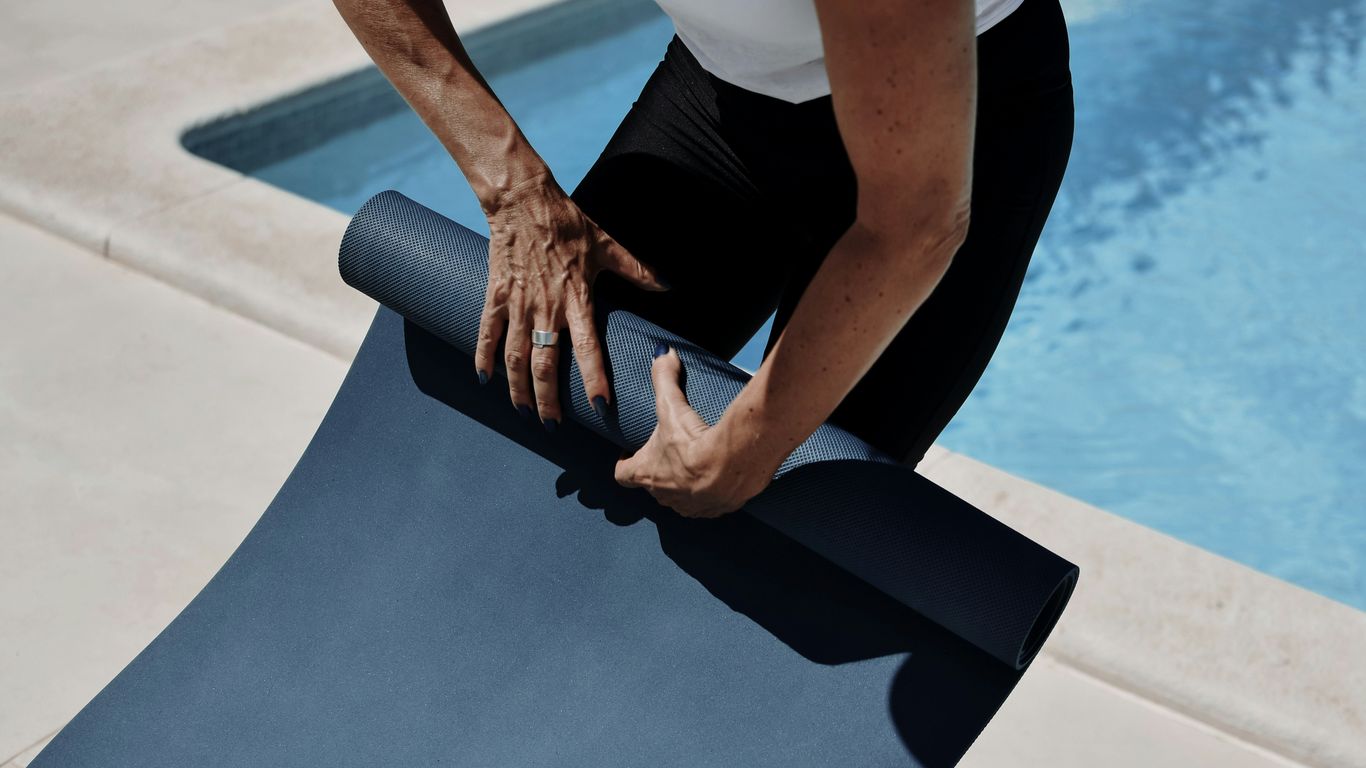
Measure the rolled mat if possible, especially if it is extra wide or unusually thick. Then inspect the strap’s material and adjustment points rather than focusing only on color or pattern.
Material, stitching, and overall durability
Cotton webbing can feel soft and comfortable, while synthetic webbing often dries quickly and tolerates rougher handling. Neither choice is automatically right for every person. Look for clean edges, even stitching, and attachment points that do not show fraying after a few uses.
The Gemini Yoga Strap by Yune Yoga is documented as a dual-purpose mat carrier and stretching aid made from GOTS-certified organic cotton, with metal D-ring buckles for adjustment. Those details illustrate the kind of construction information worth checking before you buy, whether you need the stretching function or only the carrying function.
Adjustable length and comfortable fit
Adjustment should be quick enough that you will actually use it each time. A strap that is too loose allows the mat to wobble; one that is too tight can compress the roll and create pressure on your shoulder. Try to find a length that leaves enough room for a natural shoulder position without a long tail hanging near your feet.
For cross-body carry, check that the adjustment point will not sit directly on your neck. A little repositioning can make a bigger difference than adding padding, particularly on shorter walks.
Buckle, loop, and fastening designs
Simple loop carriers are easy to understand and have fewer moving parts. Buckles and D-rings offer more control, but they need to be threaded correctly and checked for wear. Fasteners should close firmly without requiring excessive force.
Before committing to a design, practice tightening it around your rolled mat. You should be able to release it without a struggle, even if your hands are cold or you are in a hurry. A clear fastening system is often the most practical choice for daily use.
Weight capacity and compatibility with your mat
Check the carrier’s stated compatibility when it is provided, then compare it with your mat’s width, thickness, and rolled diameter. A standard thin mat places less strain on the loops than a dense, cushioned model. If no capacity is listed, treat that as a reason to inspect the stitching carefully and avoid assuming the strap can carry every mat.
The mat itself also affects comfort. For example, the Bondi 6mm Non-Slip Yoga Mat from Yune Yoga is described as a durable, easy-to-carry mat for studio commutes and outdoor sessions; a mat with that sort of thickness still deserves a carrier that fits its actual roll rather than a generic one-size assumption.
How to use a yoga mat holder strap correctly
A carrier works best when it is fitted before you start walking, not adjusted after the mat has begun to slip. Set the mat on a stable surface, place the loops around the rolled ends, and test the tension with a gentle lift. This takes less than a minute and prevents most avoidable problems.
The strap should support the mat without twisting it. If the roll looks pinched or the loops sit at different angles, put it down and reset the carrier.
Securing the mat without letting it unroll
Roll the mat as evenly as you can, then position one loop near each end while keeping both loops perpendicular to the roll. Tighten gradually, alternating between ends. Lift the mat a few inches and give it a small shake; if the roll opens or the loops travel, adjust it again before leaving.
Do not rely on friction alone when the mat is slick. A securely threaded buckle or properly tensioned loop is safer than simply pulling the strap tight at one end.
Positioning the strap for balanced carrying
The two loops should sit at roughly equal distances from the mat’s ends. If one is much closer to the center, the mat may tilt and pull against your shoulder. Center the connecting section along the top of the roll before lifting it.
Once the mat is on your shoulder, walk a few steps and notice whether one end bounces. Small corrections now are easier than managing a shifting load halfway to class.
Wearing the mat across your shoulder or body
For a short trip, placing the strap over one shoulder may be simplest. A cross-body position can feel steadier when you are carrying other items, but the strap should cross the torso comfortably rather than pressing into the neck. Keep the roll behind or beside you where it will not catch on doorways.
Try both positions while standing still. The better option is the one that lets you keep your shoulders relaxed and your arm movement natural.
Avoiding loose ends and shifting during travel
Loose tails can catch on handles, seats, or branches. After tightening, thread excess webbing through its keeper if one is provided, or fold it neatly against the strap. Recheck the loops after entering a crowded space or placing the mat down.
A simple pre-departure check helps build a reliable habit:
- Confirm both loops are near the mat’s ends.
- Pull the adjustment hardware snug.
- Lift the mat briefly to test its balance.
- Tuck or secure any excess strap.
These steps are quick, but they turn a loose carrier into a predictable one. If the strap still shifts after this check, its size or fastening style may not suit the mat.
Choosing a strap for different lifestyles
The best carrier depends on where your practice happens. Someone walking from a bedroom to a living room has different needs from someone carrying a mat across a park or packing it into a suitcase. Think about distance, weather, storage, and how often the strap will be removed.
Portability is especially valuable when practice moves between locations. A compact carrier can complement a thin or foldable mat without turning a simple outing into a full packing exercise.
Lightweight straps for commuting and daily classes
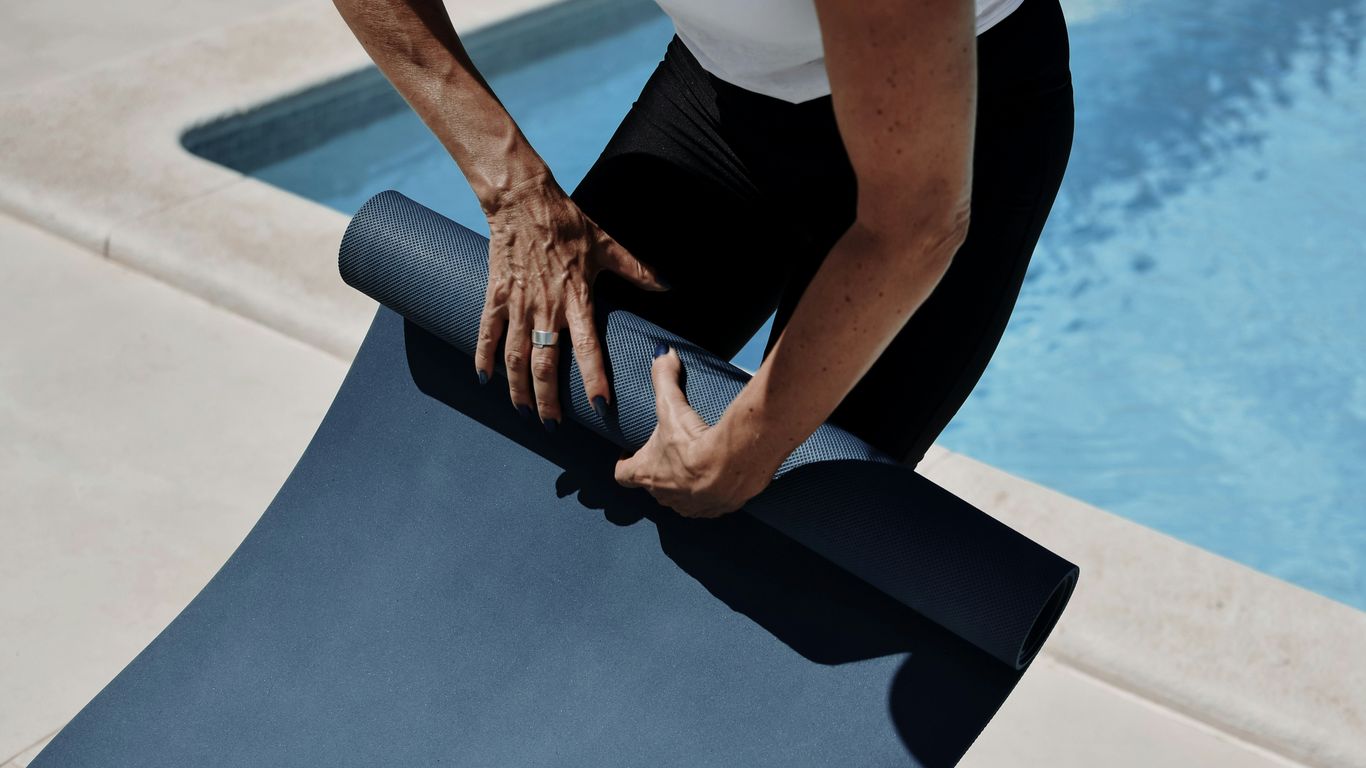
For regular classes, choose a carrier that is light, quick to adjust, and comfortable against ordinary clothing. A narrow strap may be enough for a short walk, while wider webbing can distribute pressure more pleasantly over longer routes. Keep the design simple if you will use it several times a week.
A small tote can hold the rest of your essentials; a Yune Yoga tote bag is described as having room for a rolled mat, towel, water bottle, and more. Pairing a carrier with a separate everyday bag can be more flexible than choosing one oversized yoga bag.
Durable options for outdoor yoga and hiking
Outdoor use exposes a strap to grass, grit, damp surfaces, and more frequent handling. Prioritize strong stitching, hardware that does not feel flimsy, and fabric that can be cleaned without special treatment. You may also prefer a wider strap if the walk includes uneven ground.
Avoid dragging the carrier or leaving it on wet soil. Even durable materials last longer when they are allowed to dry before being packed away.
Compact designs for air travel and storage
For flights or small hotel rooms, a slim carrier earns its place by disappearing when not in use. Look for a design that can be rolled or folded into a small pouch of your luggage. Avoid bulky padding unless you genuinely need it for comfort.
A compact strap also works well for shared storage because it does not take up much space around the mat. Keep the hardware tucked in so it does not scratch nearby equipment.
Extra-support options for thick or heavy mats
A thick mat may need wider webbing, stronger attachment points, and more generous adjustment. Padding at the shoulder can help on longer walks, but it should not hide weak stitching or a poor fit. Test the loaded mat at home before taking it on a long route.
When comparing products, focus on documented dimensions and materials rather than assuming a fashionable strap will support a heavier roll. Comfort comes from both construction and correct positioning.
Common problems with yoga mat holder straps
Most carrier problems are fitting problems rather than mysterious failures. The loops may be too close together, the buckle may be threaded incorrectly, or the strap may simply be too long for the mat. A few minutes of inspection usually reveals where the movement begins.
Treat repeated slipping as useful information. It may mean the carrier is incompatible with the mat, not that you need to tighten it harder.
Why the mat slips out of the loops
Slipping often occurs when the loops are placed on tapered or uneven ends of the roll. It can also happen when the strap is not tightened evenly or when the mat’s surface is especially smooth. Re-roll the mat firmly, place the loops on straight sections, and lift-test the carrier before walking.
If the loops continue to migrate, compare their size with the rolled diameter. Oversized loops may need a different carrier, while undersized loops can place unnecessary strain on the fabric.
How to prevent shoulder discomfort
Shoulder discomfort usually comes from a narrow strap, an uneven load, or a position that presses on the neck. Move the strap slightly outward, switch shoulders occasionally, or use a cross-body position if it feels more stable. Shorten the walking distance between practice stops when the load is heavy.
Comfort should never require the mat to hang so low that it bumps your legs. A balanced carrier lets you walk normally and keeps the roll close enough to control.
What causes straps to loosen over time
Repeated adjustment can soften webbing and wear the edges around buckles or loops. Dirt can also reduce friction at the fastening point, while storing the strap wet may weaken fabric or create an unpleasant odor. Clean the carrier according to its care guidance and inspect it before relying on it for travel.
When tightening becomes difficult or the strap releases under a light load, stop using it until you have identified the cause. A carrier is inexpensive compared with replacing a damaged mat or managing a fall.
When a strap is too short or too long
A short strap may not wrap comfortably around a thick mat or leave enough length for shoulder carry. A long strap can dangle, twist, and catch on nearby objects. Measure both the mat and your preferred wearing position instead of choosing by appearance alone.
If the length is only slightly excessive, a keeper or careful fold may solve the problem. If adjustment leaves a large amount of loose webbing, a different size will be safer and less irritating.
How to maintain and store your yoga mat holder strap
A carrier needs very little care, but small habits keep it dependable. Let it dry after outdoor use, clean marks before they set, and avoid leaving it compressed under heavy equipment. Maintenance is also a good opportunity to check whether the carrier still fits your current mat.
Keep the strap separate from sharp objects and rough fasteners in a crowded gear closet. This protects the webbing and makes it easier to find before class.
Cleaning fabric and adjustable components
Follow the manufacturer’s washing instructions, especially if the strap contains metal hardware or printed fabric. In general, spot-cleaning with mild soap and water is a sensible first step; rinse away residue and air-dry fully. Do not store cotton webbing while it is damp.
Wipe buckles or rings with a soft cloth and check that no grit remains in the adjustment path. Harsh cleaners can discolor fabric or affect its feel.
Checking buckles, seams, and loops for wear
Run your fingers along the seams and inspect the points where the loops meet the main strap. Look for fraying, stretched stitching, bent hardware, or cracks. These signs matter more than superficial fading because they can affect how the mat is held.
Make the inspection routine brief enough to repeat. Checking before a trip is easier than discovering a weakened loop on the way to the studio.
Storing the strap with your yoga mat
Once clean and dry, loosen the carrier before storing it around the mat. Excessive tension can leave the webbing creased and may compress the mat unnecessarily. Coil or fold the remaining strap neatly, keeping buckles from pressing into the mat’s surface.
If you store the mat flat, place the carrier beside it rather than under a heavy stack. This keeps the strap visible and reduces accidental bending of its hardware.
Knowing when to replace the carrier
Replace the carrier when stitching is separating, webbing is badly frayed, a loop no longer holds its shape, or the fastening hardware opens unexpectedly. Temporary knots and improvised repairs may help in an emergency, but they are not a dependable long-term solution.
Online research can involve unrelated practical details too, such as reading a privacy and data protection policy, a Barcelona home-buying guide, patient inquiry management, or a Medellín chocolate-making guide. Those subjects have nothing to do with carrier strength, but the same habit applies: check the original information before acting on an assumption.
Conclusion
The right yoga mat holder strap is light enough to carry, strong enough for your rolled mat, and simple enough to adjust without thought. Choose it by fit and construction, use it with even tension, and give it occasional care; that is usually all it takes to make moving between home, class, travel, and outdoor practice feel easier.
Frequently Asked Questions
Is a yoga mat holder strap better than a bag?
Neither is universally better. A strap is lighter and more open, while a bag offers more protection and may carry extra items, so choose according to your route and storage needs.
Will a holder strap fit every yoga mat?
Not necessarily. Check the mat’s rolled diameter, width, and thickness against the carrier’s adjustment range before buying.
Can I wear a yoga mat strap cross-body?
Many adjustable designs can be worn cross-body, but the strap should sit comfortably and keep the mat balanced. Test the position before walking a longer distance.
How tight should the loops be?
They should be snug enough to stop the roll from opening or shifting, but not so tight that they deform the mat. Tighten both ends evenly.
Can a yoga mat holder strap be washed?
Some can be washed, while others should only be spot-cleaned. Follow the care instructions and let the strap dry completely before storing it.
Why does my mat keep slipping from the carrier?
The loops may be incorrectly positioned, unevenly tightened, or too large for the rolled mat. Re-center them and test the fit before replacing the carrier.
How often should I replace a mat carrier?
There is no fixed schedule. Replace it when the webbing, seams, loops, or hardware show wear that could allow the mat to fall or unroll.

