

How to choose the best bag with yoga mat holder for your practice
Key Takeaways
The best bag with yoga mat holder is the one that matches both your mat and the way you move through the day. Look beyond appearance: fit, comfort, access, and easy care matter just as much.
- Measure your rolled mat before choosing a bag.
- Match the carrying style to your commute and practice location.
- Look for pockets that separate clean and damp items.
- Check strap comfort, stitching, closures, and fabric quality.
- Choose only the capacity you will realistically carry.
Understand how a bag with yoga mat holder works
A bag with yoga mat holder keeps the mat secured while leaving space for clothing, towels, water, or small personal items. The holder may be built into the body of the bag or attached as a pair of straps. Either arrangement can work well, but the details affect how quickly you can load the mat and how comfortably the bag sits against you.
The right choice depends less on having the most features and more on having features that suit your routine. A simple carrier may be ideal for a short walk, while a larger duffel or backpack can make a full studio commute easier. Think about what you carry on an ordinary practice day, not an imaginary one.
Integrated holders versus external straps
Integrated holders usually keep the mat close to the main bag, which can make the whole load feel tidier. External straps are often more flexible and may let you carry a rolled mat without placing it inside a compartment. Look closely at how the straps adjust, whether buckles are easy to use, and whether the attachment points look strong enough for repeated loading.
A holder should grip the roll without crushing it or allowing it to slip sideways. If you often change mats, adjustable straps offer useful flexibility. For a single everyday mat, a fitted sleeve can feel neater and provide a little more protection from surrounding items.
How the holder affects balance and accessibility
The mat’s position changes the bag’s center of weight. A roll placed high and close to your back may feel more stable than one hanging far from your body, while a side-mounted mat can make the bag easier to open but slightly wider in crowded spaces. Try to picture the bag on stairs, in a doorway, or beside a packed train seat.
Access matters too. If you need your mat first, the holder should not block the main zipper. If the mat is stored inside, a wide opening helps you remove it without unpacking everything else. A balanced carry feels effortless because the load stays close and does not swing with each step.
Common bag styles and their intended uses
Slim sleeves and strap carriers suit people who bring little more than a mat. Tote-style bags are more forgiving when you want room for a towel and a change of clothes, while backpacks distribute weight across both shoulders. A duffel can be practical for studio days when shoes, toiletries, and extra layers come along.
For a portable setup, a foldable mat can change the size of bag you need. The Calacatta Foldable Travel Yoga Mat, for example, is described as an ultra-thin 2mm mat that folds for compact storage and carry-on travel. That documented design may pair naturally with a smaller travel bag, although the mat’s folded dimensions should still be checked before buying.
Weight, capacity, and portability considerations
An empty bag is part of the load, so heavy hardware and thick padding are not automatically advantages. Compare the bag’s weight with the items you normally carry, then consider how far you walk and whether you will need to store it under a desk or seat.
A useful rule is to choose the smallest bag that holds your essentials without forcing them into a tight bundle. More room can be helpful, but excess fabric tends to collapse, shift, and encourage overpacking.
Match the bag to your yoga routine
A bag that works for a ten-minute studio walk may be awkward for cycling, air travel, or outdoor practice. Start with the route and the setting: will the bag stay in a car, move through public transit, or be carried across grass and sand? Your answer will narrow the choices quickly.
Portability is especially useful when practice happens in different places. A lightweight mat, a compact towel, and a carrier with sensible storage can keep preparation simple without turning every session into a packing project.
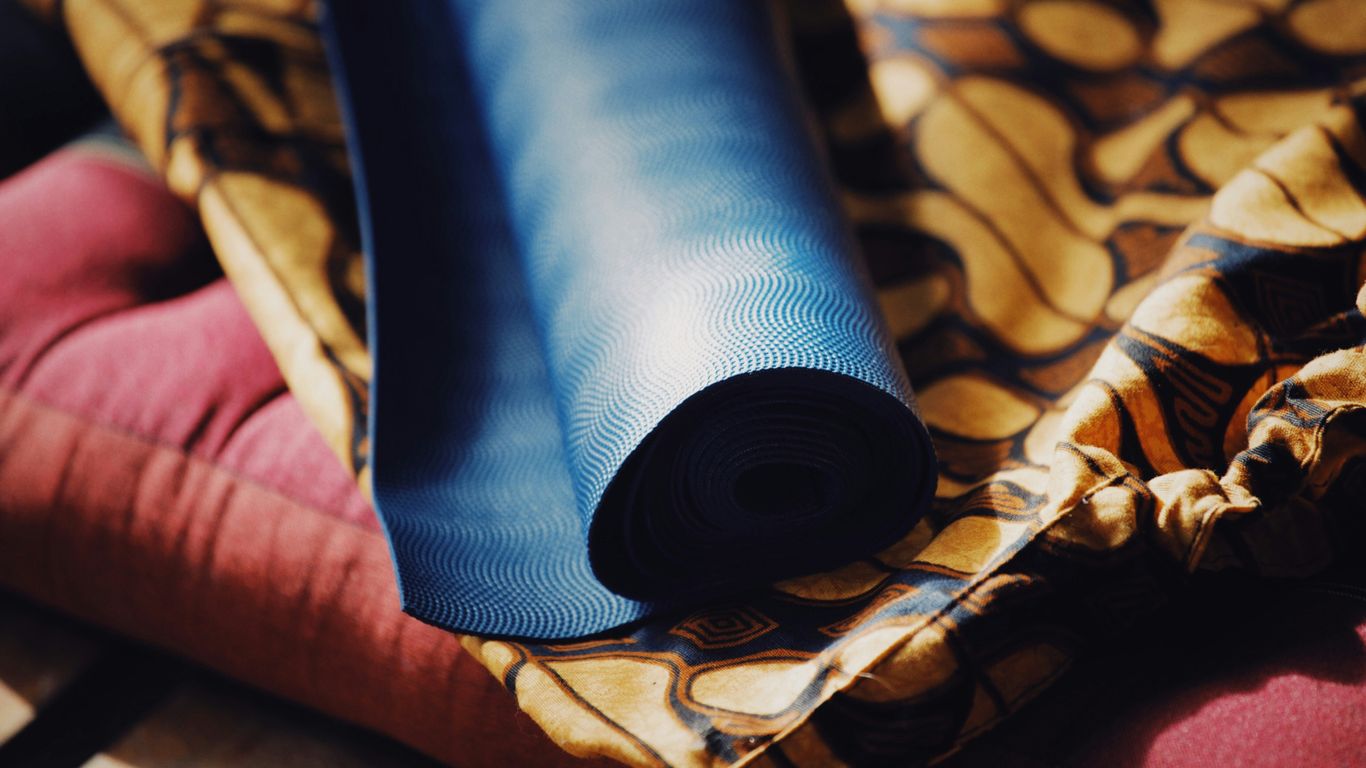
Options for studio-based practices
For a regular studio visit, prioritize easy access and enough room for the basics. A dedicated shoe pocket, a bottle sleeve, and a small valuables compartment may be more useful than a very large central cavity. If you arrive already dressed for class, a slim holder and one extra pocket could be all you need.
A tote can work well when you prefer to see and reach your belongings quickly. For longer walks, a crossbody or backpack may keep your hands free, provided the mat does not bump against door frames or other people.
Features for commuting by bike, car, or public transit
Cyclists need a secure holder, a strap that stays put, and a profile that does not catch easily on handlebars or passing objects. Drivers may care more about a bag that stands upright and fits neatly on the floor. Public-transit commuters often benefit from a close-fitting shape, quiet hardware, and quick access to keys or a pass.
The Yune Yoga Tote Bag is described as an organic canvas mat carrier that can also fit a towel, water bottle, and other everyday items. Its tote format may suit a short commute or a studio-to-errands routine, while the right choice still depends on how much support you want on your shoulder.
Designs for outdoor yoga and travel
Outdoor practice calls for materials that are simple to wipe and a closure that keeps dust away from the inside. Travel adds another concern: the bag should fit beside luggage, in a car trunk, or under a hotel-room desk without taking over the available space.
A thinner travel mat can reduce bulk. The Juliet Trekk Travel Mat is documented as a lightweight 2.5-pound, 24-by-72-inch, 5mm mat with a double-sided design, so its measurements are useful when estimating the holder’s required length and width. Always compare those measurements with the bag’s stated capacity rather than relying on a broad “travel” label.
Choosing a bag for frequent versus occasional use
Frequent practitioners will notice small irritations: a strap that twists, a zipper that catches, or a pocket that is just too shallow. Those details deserve more weight than a seasonal color or a decorative panel. Occasional users may reasonably choose a lighter, simpler bag if it stores easily and protects the mat during infrequent trips.
Before paying more, list the features you will use every week. If the answer is only mat storage and one small pocket, extra compartments may add cost without adding convenience.
Evaluate storage and organization features
Organization is what separates a mat carrier from a bag that merely holds a rolled object. The best layout gives each commonly carried item a clear place, so you are not digging past clothing to find your keys or putting a damp towel against a clean shirt.
Pockets should be easy to reach without making the bag bulky. Consider whether you pack before leaving home or often need to retrieve items during the commute; those habits determine whether exterior access or internal separation matters more.
Compartments for clothing, towels, and personal items
A main compartment should hold a change of clothes without swallowing smaller belongings. A zippered pocket can keep a phone and wallet secure, while an open sleeve is convenient for a towel or light layer. Avoid pockets that are so narrow they become decorative rather than useful.
The Pandora Trekk Travel Mat is documented as a lightweight 24-by-72-inch, 5mm travel mat weighing 2.5 pounds. If you carry a similarly sized mat, leave enough length in the main design for the roll and enough surrounding room for clothing to sit without pressing against it.
Dedicated spaces for water bottles and accessories
A bottle sleeve prevents a round bottle from rolling through the main compartment. Small accessory pockets are useful for straps, hair ties, grips, or a class pass, especially when they sit near an opening rather than at the very bottom of the bag.
The pocket should be deep enough to hold its contents during movement. Elastic edging can help, but a secure zip is preferable for small items that would be difficult to replace.
Separate storage for shoes and damp gear
Shoes and used towels deserve separation from clean clothing. A ventilated shoe pocket or wipeable lower compartment can make post-practice packing less unpleasant, particularly after a warm class or an outdoor session. If the bag has no dedicated space, pack damp gear in a washable pouch rather than sealing it loose against fabric.
The material around this compartment should be easy to clean and should not rely on delicate lining that snags on shoe soles. A little separation here often improves the bag’s usefulness more than another interior pocket.
Interior layouts that prevent items from shifting
A bag can have many compartments and still feel disorganized if the interior is too loose. Look for a broad base, a structured opening, or modest internal dividers that keep heavier objects from sliding into the mat area. The goal is gentle control, not a rigid suitcase.
A practical packing order helps as well: place flatter items against the back or base, keep small essentials in a closed pocket, and put the towel where it can be removed first. That simple sequence makes a flexible bag feel more orderly.
Compare materials, construction, and comfort
Material choice affects how the bag feels on the first commute and how it looks after months of use. Fabric should suit the conditions you encounter, but comfort also comes from the strap shape, handle placement, and the way seams carry weight.
Do not judge quality by thickness alone. A lighter fabric with clean stitching and sensible reinforcement may be more pleasant than a heavy bag with stiff, unnecessary panels.
Durable fabrics that resist daily wear
Canvas, nylon, and other tightly woven fabrics can all be practical, depending on their construction. Examine the base and the points where the holder joins the bag, since those areas receive repeated stress. A reinforced bottom is helpful if the bag is often placed on studio floors or pavement.
Color and texture also affect visible wear. Darker fabric may hide marks, while a lighter tote can show dirt sooner but make it easier to spot spills and clean them promptly.
Water-resistant finishes and easy-clean interiors
Water resistance is useful for a brief walk through light rain, but it is not the same as waterproofing. Check whether the finish applies to the exterior only and whether the seams or zipper are protected. An easy-clean lining is valuable when a bottle leaks or a towel comes home damp.
For a practice that includes hot or outdoor sessions, plan for airflow after use. Do not leave a damp mat or towel sealed in the bag for longer than necessary, even when the fabric is water resistant.
Padded straps, handles, and breathable panels
A strap should sit comfortably without cutting into the neck or shoulder. Padding can help with a heavier load, while a breathable section may reduce heat when the bag rests against your back. Handles should be long enough to grip naturally but not so long that the bag swings around your knees.
Test adjustment points before buying if possible. A strap that slips gradually can undo the benefit of good padding, and a holder that pulls unevenly can make a light bag feel awkward.
Zippers, stitching, and hardware worth inspecting
Run a zipper from end to end and check that it does not catch at corners. Look for even stitching, securely finished thread, and hardware that feels smooth rather than flimsy. The holder’s attachment points deserve particular attention because they carry the mat’s weight separately from the main compartment.
A little maintenance prevents small faults from becoming inconvenient failures. Keep grit away from zippers, avoid overfilling pockets, and do not yank a closure around a bulging load.
Choose the right size and yoga mat fit
Size is where many otherwise attractive bags fail. A holder can be well made and still be wrong if the opening is too narrow, the body is too short, or the roll leaves no room for anything else.
Measure the mat you actually own, including its rolled diameter. Product descriptions often use phrases such as standard or large, but those labels vary, so the numbers are more dependable.
Measuring your mat before buying
Roll the mat as tightly as you normally would, then measure its length and the widest part of the roll. If you use a strap, measure with the strap removed so it does not distort the result. Compare those figures with the bag’s usable dimensions rather than its outside measurements.
Leave a little tolerance for quick packing. A bag that fits only when the mat is rolled perfectly can become frustrating after a rushed class.
Accommodating thick, wide, or extra-long mats
Thicker mats create a larger roll, and wide or extra-long mats need more internal length even when their weight is modest. Check both the holder and the opening: a long body does not help if the entrance cannot accommodate the roll’s diameter.
If your mat is an unusual size, a strap-based carrier may offer more flexibility than a fitted sleeve. The Airstream Mt. Hood Yoga Mat is described as a 6mm mat, a useful reminder that thickness should be part of your fit calculation rather than an afterthought.
Leaving room for blocks, straps, and towels
Decide which accessories travel every time. Blocks take more volume than straps, and a thick towel can occupy more space than expected once folded. Add those items to your trial packing list before choosing a compact bag.
A carrier that holds the mat perfectly but forces accessories into the holder is not truly convenient. Look for a little spare capacity, while keeping the load controlled enough that items do not slide around.
Avoiding oversized bags that become difficult to carry
Large bags can feel appealing in a shop because they accommodate almost anything. Once filled, though, they may pull on one shoulder, bump against furniture, or become difficult to store. A bag should have enough capacity for your routine without inviting you to carry every possible extra.
If you frequently travel light, the Jerome Turquoise Foldable Travel Yoga Mat is documented as an ultra-thin 2mm mat weighing under one pound and folding for storage and transport. A compact mat like that may let you choose a smaller carrier, provided your other essentials are equally minimal.
Balance price, style, and long-term value
Price should reflect how often you will use the bag and how demanding your routine is. A basic carrier may be perfectly adequate for occasional studio visits, while daily commuters often benefit from stronger attachment points and more comfortable carrying details.
Style matters because you are more likely to use something that fits your taste. Still, appearance should support the practical decision, not replace checking dimensions, pockets, and construction.
What to expect from budget yoga mat bags
Budget options commonly focus on a lightweight body, a simple closure, and an adjustable holder. That can be enough when you carry only a standard mat. Inspect the strap connection and opening carefully, since those are the places where a low-cost design may feel least refined.
For a straightforward option, an Economy Yoga Mat Bag is described as a lightweight nylon carrier with an adjustable shoulder strap and drawstring closure for standard mats up to 26 inches wide and 4mm thick. Those stated limits make it easier to judge whether the price suits your actual mat.
When premium materials and features are worthwhile
Paying more can make sense when you practice often, carry a heavier mat, or need a bag to move between work and class. Better padding, smoother closures, and reinforced stress points can reduce daily annoyance. Premium features are worthwhile when they solve a problem you regularly experience.
Do not pay for capacity you will not use. A well-fitting, modestly featured bag may outlast a larger one that is constantly overloaded.
Comparing minimalist, athletic, and fashion-forward designs
Minimalist designs keep weight and visual clutter low. Athletic styles often emphasize ventilation, secure straps, and practical compartments, while fashion-forward bags may transition more easily into everyday errands. None is automatically better; the useful question is whether the design supports your route and packing habits.
For broader browsing, yoga mat bags and holders can help you compare carrying formats, colors, and general storage approaches. Keep your own measurements beside you while browsing so style does not distract from fit.
Care practices that extend the bag’s lifespan
Empty the bag after each practice and let damp items dry separately. Spot-clean marks according to the care instructions, avoid storing the bag compressed for long periods, and check the holder attachments from time to time. These small habits protect fabric, lining, and closures.
If you are planning a retreat or a longer trip, make a simple packing list before leaving. That list might include a mat, towel, strap, water bottle, and one change of clothes; it can also prevent the kind of rushed overpacking that strains seams. For travel planning beyond gear, even practical resources such as Travel FX may appear during holiday preparation, though it has no connection to yoga equipment.
A final check at home is worth more than a quick glance in a shop. Load the bag, walk with it for a few minutes, and notice whether the mat shifts, the strap twists, or the pockets remain usable when the main compartment is full. If you are also organizing a move or a new routine, unrelated planning resources such as buying a house in Barcelona, plastic surgery clinic planning, or a chocolate-making workshop are separate topics and should not influence your yoga-bag decision.
Conclusion
Choosing a bag with yoga mat holder becomes simpler when you begin with your own mat, route, and packing habits. Measure the roll, test the carrying position, check the storage layout, and choose materials that suit the conditions you face; the best bag is the one that makes practice easier without adding unnecessary bulk.
Frequently Asked Questions
What is a bag with yoga mat holder?
It is a carry bag that secures a rolled yoga mat with an integrated sleeve, external straps, or another dedicated holder while providing space for selected practice essentials.
Should the yoga mat go inside or outside the bag?
An internal sleeve offers a tidier, more protected arrangement, while external straps can be lighter and more flexible. Choose based on access, weather exposure, and how securely the mat stays in place.
How do I know what size yoga mat bag to buy?
Measure the mat’s rolled length and diameter, then compare both numbers with the bag’s usable dimensions. Allow extra room if you carry towels, blocks, or clothing.
Are backpack-style yoga mat bags more comfortable?
They can distribute weight across both shoulders, but comfort depends on strap design, mat placement, and total load. A well-adjusted shoulder or crossbody bag may work just as well for lighter packing.
What should I carry in a yoga mat bag?
Most people need a mat, towel, water bottle, keys, phone, and perhaps a change of clothes. Add shoes or blocks only if your routine regularly requires them.
How should I clean a yoga mat bag?
Follow the care label, remove damp gear promptly, and spot-clean spills before they set. Air the bag fully rather than storing it while wet or tightly compressed.
Is a more expensive yoga mat bag worth it?
It can be worthwhile for frequent use, heavier mats, longer commutes, or demanding weather. For occasional practice, a simple carrier with a secure holder and suitable dimensions may be sufficient.

