Upcycle Yoga Mat Ideas: 15 Grip or Cushion Projects, Start with One Cut Wins
Yes, you can upcycle an old yoga mat, and in most cases you should. Clean it, let it dry completely, then check what’s left of its grip and cushioning before you pick a project. A mat with intact rubber but dead stickiness is a different candidate than one that’s flaking apart, and only truly delaminated mats belong in the trash or a specialty recycling bin.
TL;DR:
- Most yoga mats can be upcycled if they retain their grip or cushioning, but severely moldy or delaminated ones should be discarded or recycled.
- Cleaning and drying the mat thoroughly before cutting or gluing is essential to avoid trapping bacteria, odors, or moisture in the new project.
- Projects should match the properties that survived: grip for non-slip items, cushioning for pads or protectors, and structural pieces for cut-down, simple items.
- Light projects like jar openers or coasters are easiest for beginners, requiring only scissors and minimal tools, making initial testing simple.
- Always test the finished item for stability and odor before regular use, and avoid upcycling mats with persistent smells or mold to ensure safety and durability.
Table of Contents
- Upcycle Yoga Mat Ideas Start With Cleaning and a Real Inspection
- How to Choose Projects by Grip or Cushioning
- Fifteen Practical Yoga Mat Upcycle Projects Worth Trying
- Making the Finished Piece Actually Hold Up
- Donation and Recycling: What’s Realistic
- Handling Adhesives and Materials Safely
- Outdoor and Garden Projects That Put Old Mats to Work
- Why Upcycling Beats Tossing an Old Mat
- Yuneyoga’s Take on Getting More Life Out of Your Gear
- When It’s Time to Replace Instead of Repurpose
- Sources
- FAQ
Upcycle Yoga Mat Ideas Start With Cleaning and a Real Inspection
Skip this step and every project after it inherits the mat’s old sweat, dust, and bacteria. A gentle wash or thorough wipe down followed by a full air dry gets the surface ready to cut, glue, or stitch without trapping odor inside the new item. Avoid harsh solvents. They can degrade the very grip texture you might want to preserve for certain projects, and cleaning and drying the mat completely before cutting is the step most guides agree on before anything else.
Once it’s dry, run your hands over the whole surface and look for these issues:
- Holes or tears that limit which sections you can use for large pieces like liners.
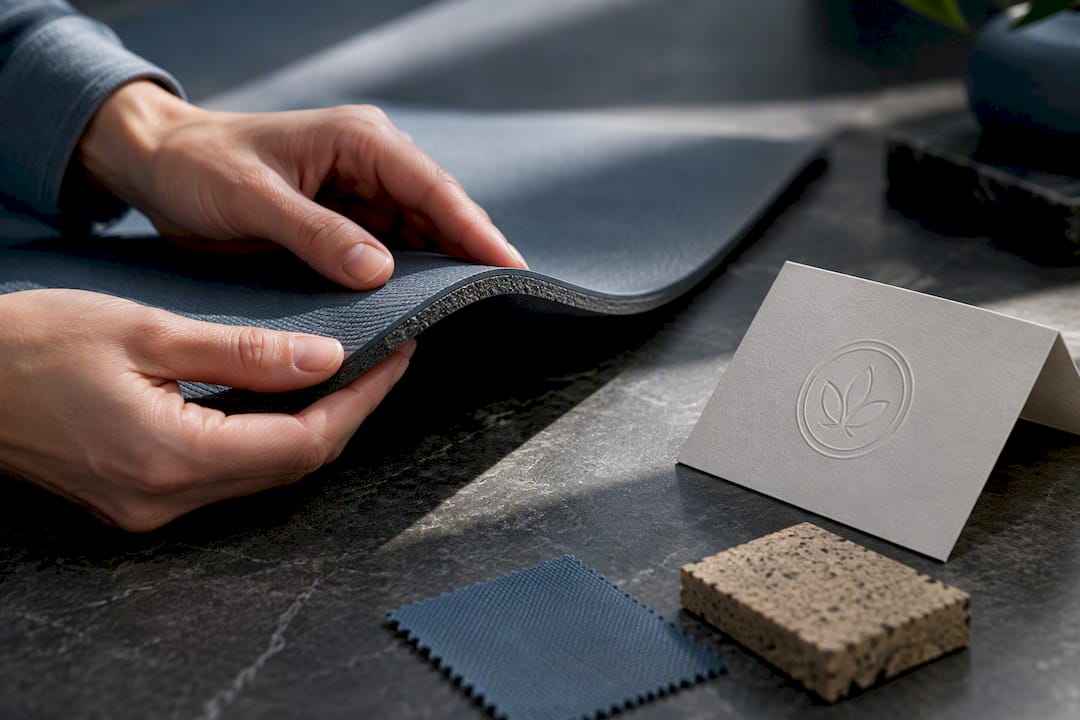
- Thin spots where the material has stretched or worn through the top layer.
- Delamination, meaning the layers are separating or peeling apart in sheets.
- Permanent odor that survives a wash, which usually means the foam core absorbed sweat over years of use.
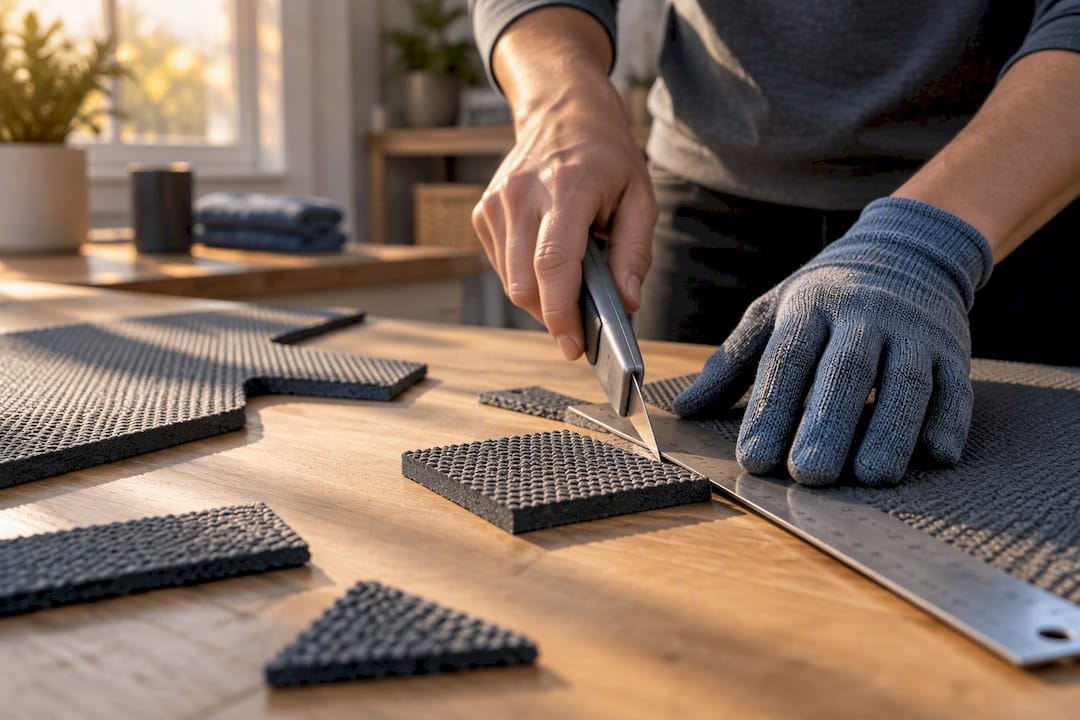
For tools, keep it simple: a sharp utility knife or heavy fabric shears, a straightedge or ruler for clean lines, contact cement or a hot glue gun for bonding, heavyweight thread and a leather needle if you’re stitching a strap or edge, and fine sandpaper for smoothing rough cuts. None of this requires a workshop. A kitchen table and good lighting will do.
How to Choose Projects by Grip or Cushioning
Grip usually fails long before cushioning does. A mat can go dead flat and slick on the surface while the foam underneath still bounces back fine, and that gap between lost grip and remaining padding is the single most useful thing to know before you cut anything. Match the project to whichever property survived.
- If the surface still grips, use it for anything that needs to stay put: jar openers, drawer liners, or a non-slip layer under a rug.
- If the surface is slick but the foam still springs back, use it for cushioning jobs: knee pads, pet beds, or a laptop sleeve.
- If both are gone but the material is intact, cut around the dead zones and use smaller, structurally simple pieces like coasters or can koozies.
Before committing to a full build, cut a small test swatch and try it in the real setting. Set a sample jar opener piece on a stubborn lid, or lay a knee pad scrap on the ground and press your weight into it.
Pro Tip: Mat density and thickness determine how well a piece performs as cushioning versus grip, so a thin travel mat and a thick studio mat should not be assigned to the same project just because they’re both “yoga mats.”
Fifteen Practical Yoga Mat Upcycle Projects Worth Trying
Old yoga mats split cleanly into five categories of projects, depending on how much cutting, layering, and patience you’re willing to invest. Start with a one-cut win if this is your first repurposing attempt.
Quick one-cut wins need almost no tools beyond scissors and five minutes:
- A jar opener: cut a 6-inch square, done.
- Coasters: trace a glass, cut circles, sand the edges.
- Furniture leg pads: small squares glued or taped under chair and table legs to stop floor scratches.
- Wine bottle stoppers: roll a strip, wedge it in.
- A reusable coffee sleeve: cut a rectangle, wrap and glue or stitch the seam.
Household fixes put worn mat material to work solving small annoyances around the house:
- Drawer or shelf liners cut to size, no adhesive needed since gravity does the job.
- Rug underlay to stop a runner or area rug from sliding on hardwood.
- A doormat, especially from a thicker mat, cut to size and layered if you want more heft.
- A dashboard protector cut to fit your car’s dash, cheap insurance against sun glare and cracking.
Comfort and gear projects lean on whatever cushioning survived:
- A gardening knee pad, ideally two layers of scrap glued together with contact cement for extra thickness.
- A pet feeding mat under bowls to catch spills and stop sliding.
- A camping or picnic pad, cut to a seat size for cold ground or damp benches.
- Laptop sleeve padding, inserted as an inner layer inside a fabric sleeve you already own.
Crafts and decor projects trade function for looks, using the mat as a base material:
- A puzzle mat for keeping puzzle pieces contained and portable between sessions.
- Framed cutout art or decorative letters, cut with a utility knife and mounted like foam board.
Durable builds ask more of your tools and time but produce something that lasts:
- Layered chair seat cushions, two or three mat layers stacked and glued, then wrapped in fabric.
- Insulated can or cup koozies, a strip wrapped and glued into a tube, sized to fit standard cans.
For every project, cut first, layer if you need more thickness, then glue with contact cement for permanent bonds or hot glue for quick fixes that see less wear; check out Mostly Amélie for practical upcycling project ideas and tutorials to inspire your creations. Basic construction across most of these ideas boils down to cut, layer, and glue or stitch, which is why beginners can start with a jar opener and work up to a chair cushion in the same afternoon.
Pro Tip: Before you finish any comfort item, sit or kneel on it for a full minute. If it compresses flat and stays flat, add another layer before calling it done.

Making the Finished Piece Actually Hold Up
A raw cut edge will fray at the corners and catch on fabric, so smooth it with fine sandpaper or run a low heat source lightly over the edge to soften and round it. Wrapping an edge in fabric binding works too, especially on items like doormats or seat cushions that get handled often.
Adhesive choice depends on the mat material. Contact cement bonds most PVC and rubber mats reliably, while hot glue works fine for lighter TPE mats but can peel under repeated flexing. Stitching makes sense for anything that folds or bends regularly, like a strap or a rolled koozie, since glue alone tends to crack at fold lines over time.
Before you put anything into regular use, run these three checks:
- Slip test: set the finished piece on tile and hardwood, then press and twist to see if it holds position.
- Load test: for cushions and pads, sit or kneel with full weight for several minutes and check for flattening or seam separation.
- Soak and smell check: dampen a corner, let it dry, and smell it. Lingering odor means the mat wasn’t clean enough and should get another wash before you trust it near food or pets.
If odor persists after a second cleaning, that piece is better suited for outdoor or garage use than kitchen or bedroom duty.
Donation and Recycling: What’s Realistic
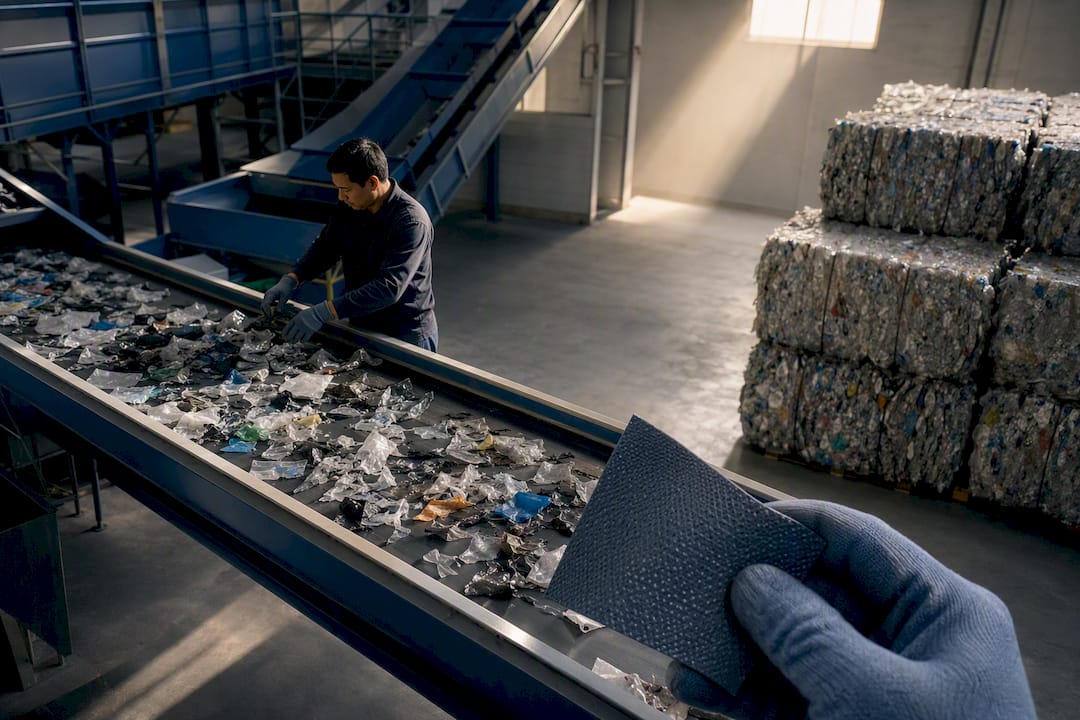
Most yoga mats are made from PVC or similar synthetic rubber that standard curbside recycling programs don’t accept. Call your local recycling center before you assume a mat belongs in the blue bin. It almost certainly doesn’t.
Donation works, but only under the right conditions:
- Community centers, shelters, and schools sometimes take gently used mats for group fitness programs.
- Check condition requirements first. A mat with holes or heavy odor is not a fair donation, even with good intentions.
- If the mat wouldn’t serve a stranger well as-is, upcycling it into something durable is usually the better outcome than passing along a worn-out item.
Paid options exist too. Programs like TerraCycle’s Sporting Goods Zero Waste Box accept mats by mail for a fee, and some manufacturers run occasional take-back programs worth checking before you commit to buying a box. Yuneyoga’s guide to recycling a yoga mat walks through how to search for current drop-off and mail-in options in the United States.
Handling Adhesives and Materials Safely
Contact cement and similar solvent-based adhesives produce fumes that build up fast in small, closed rooms. Work near an open window or a fan, and skip the temptation to speed-dry a bond with a hair dryer indoors, since that concentrates the fumes rather than clearing them.
PVC and TPE mats respond differently to heat and solvents. A PVC mat can handle contact cement without much trouble, but pushing a heat gun too close to smooth an edge risks warping the material or releasing an unpleasant odor. TPE, a softer and more flexible material, tends to bond less reliably with some adhesives, so test a small glued patch and let it cure fully, ideally overnight, before trusting it in a finished piece.
Skip any mat with visible mold, since sanding or cutting it can release spores into the air. Wear gloves when working with contact cement, since it bonds skin almost as well as it bonds rubber, and keep kids and pets away from any project until the adhesive has fully cured and lost its smell. If a piece is headed for a kitchen surface or a pet’s food area, run the soak and smell check described earlier one more time before it goes into daily use. A mat that still smells faintly of solvent after 24 hours needs more curing time, not a shortcut.
Outdoor and Garden Projects That Put Old Mats to Work
A yoga mat’s water resistance and cushioning make it genuinely useful outside, where it doesn’t need to look pretty, just perform.
Cut a scrap into a gardening knee pad and you’ll notice the difference on the first weeding session, since even a thin layer beats bare knees on gravel or mulch. Larger sections make a solid liner for raised garden beds, laid under soil to slow moisture loss and add a barrier against burrowing pests. A mat strip wrapped around a tool handle adds grip and comfort for hours of digging or pruning.

For patio and porch use, a cut-to-size piece works as a doormat insert that holds up to repeated wet shoes far better than fabric alternatives, and scraps glued under planter feet stop pots from scratching a deck or staining concrete with water rings. Campers and picnic-goers can cut a seat pad for damp benches or cold ground, something that takes two minutes and outlasts a folded towel.
None of these outdoor uses need fancy finishing. Weather exposure is exactly the kind of wear yoga mat material was built to handle in the first place, so a rough cut edge and a basic glue job go further outside than they would on an indoor item you touch daily.
Why Upcycling Beats Tossing an Old Mat
A mat sent to a landfill sits there for decades, since PVC and TPE break down at a glacial pace under normal landfill conditions. Every project in this guide keeps that material in active use instead, which delays or entirely avoids that outcome for one more mat.
The math is straightforward even without hard figures: one old mat, cut and repurposed, can become four or five smaller functional items, meaning you’re not buying replacement jar openers, coasters, or knee pads made from fresh materials. That’s a real reduction in new manufacturing demand, even if it’s a small one per household.
Disposal isn’t always avoidable. A mat that’s moldy, falling apart in layers, or carrying an odor that survives repeated washing has genuinely reached the end of its useful life, and forcing it into a craft project just delays the inevitable trip to the trash. But for the mat that’s simply lost its grip or looks tired, upcycling turns waste into material value rather than shipping it off to sit in the ground for the next fifty years.
Yuneyoga’s Take on Getting More Life Out of Your Gear
Eco-conscious gear should stay useful long after the return policy expires. That’s the thinking behind Yuneyoga’s focus on durable, sustainably made mats in the first place, and it’s why we think the smartest move with an old mat is to try one small project before deciding its fate. Cut a jar opener or a coaster, test it, see how it holds up, then scale to a bigger build if it works.
If you want the full cleaning process before you cut anything, our guide to washing your yoga mat safely covers it step by step, and our maintenance tips help you get more years out of your next mat before it ever reaches upcycle territory.
— Nicholas
When It’s Time to Replace Instead of Repurpose
Some mats aren’t worth saving, no matter how creative the project. Severe delamination, an odor that survives multiple washes, or visible mold means it’s time to retire the mat entirely rather than force it into a knee pad or coaster. Persistent hygiene concerns, in particular, aren’t worth the risk once an item touches food, pets, or a kitchen counter.
When that’s your situation, Yuneyoga’s full lineup of mats and accessories is built around exactly the sustainability values driving this whole upcycling exercise. Our natural rubber and eco mat lines are made for practitioners who want gear that performs well now and holds up over years, not months, which means fewer mats headed for the landfill in the first place. Foldable travel mats solve the durability problem for people who roll and unroll their mat constantly, since that’s usually where wear starts. If you’re also restocking straps, towels, or other accessories while you’re at it, the yoga clothes and accessories collection offers additional gear made from sustainable materials. Browse the current lineup and pick the mat that’s built to outlast the one you just upcycled.
Sources
- 10 Yoga Mat Hacks (HGTV)
- What to do with an old yoga mat (Yoga Journal)
- Recycling mystery: yoga mats (Earth911)
- 20 ways to give your old yoga mat new life (RecycleCoach)
FAQ
Can you really upcycle any old yoga mat?
Most mats can be repurposed in some form, even with holes or worn grip, since smaller craft projects can be cut around damaged sections. A mat that’s moldy or fully delaminated is the exception and should go toward disposal or a paid recycling program instead.
What’s the easiest first upcycle project for beginners?
A jar opener or a set of coasters is the simplest starting point, requiring only scissors and a few minutes. Both use small, flat scraps and let you test your cutting skills before attempting a layered project like a knee pad or seat cushion.
Do I need to clean my yoga mat before cutting it up?
Yes, always. Cleaning and fully drying the mat first removes sweat and bacteria that would otherwise get sealed into whatever new item you build, and it also makes cutting and gluing easier since the surface isn’t damp or slippery.
Can I recycle a yoga mat instead of upcycling it?
Curbside recycling almost never accepts yoga mats because of the PVC or TPE material, but paid mail-in programs and occasional manufacturer take-backs exist. Yuneyoga’s guide to recycling a yoga mat explains how to search for current options in the United States.
How do I know if my mat is better for grip or cushioning projects?
Press the surface first. If it still feels sticky and textured, it’s suited for grip-dependent projects like jar openers or non-slip liners. If the surface is smooth and slick but the foam still bounces back under pressure, that remaining cushioning works better for knee pads or pet beds.