
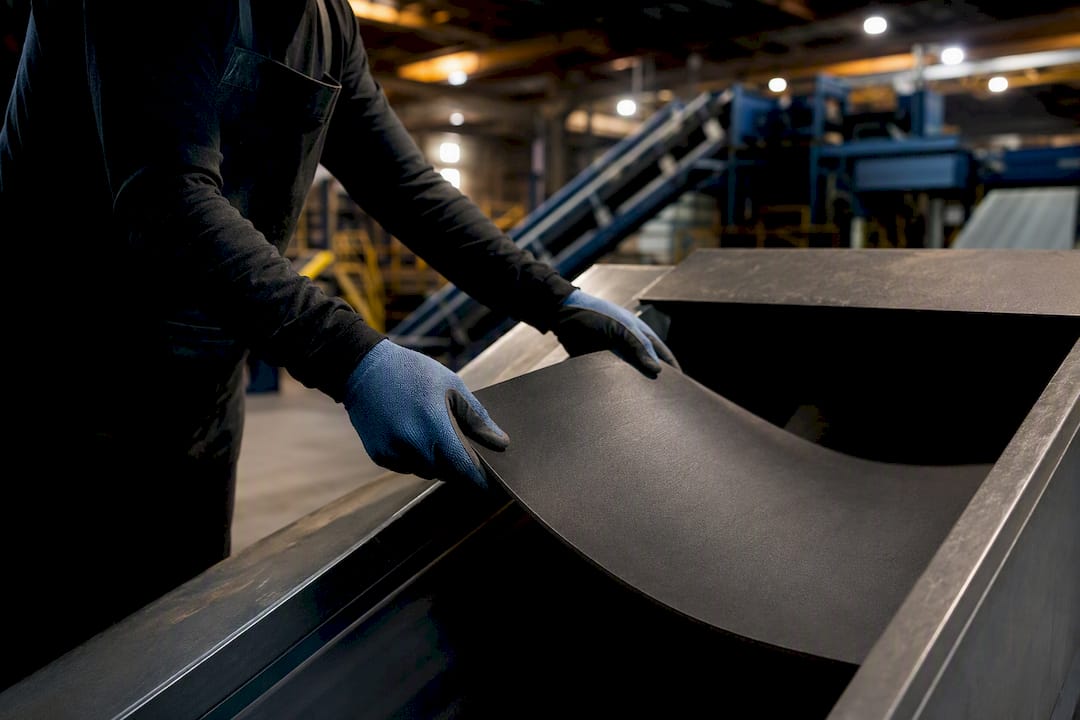
Recycle Your Yoga Mat in the U.S.: Search, Ship, Donate in 15 Minutes
Send your old mat to a specialist take-back or mail-in recycling program, donate it if it’s still clean and intact, or repurpose it around the house. Most curbside bins reject yoga mats outright because of their layered plastic construction, so skip the blue bin and check materials before you decide which route fits your mat.
TL;DR:
- Most yoga mats made from layered plastics cannot be processed by curbside recycling and require specialized disposal programs.
- Mail-in services, community donation projects, and brand take-back programs offer the most viable options for recycling or reusing old mats.
- Materials like PVC are difficult to recycle and pose health risks if burned, making natural rubber or TPE better eco-friendly choices.
- Proper preparation, including cleaning and packaging, is essential for donation or recycling, and condition significantly affects acceptance.
- Buying single-material or natural rubber mats reduces disposal challenges and supports more sustainable end-of-life management.
Table of Contents
- How to Recycle Your Yoga Mat: Programs, Take-Backs, and Drop-Off Options
- Why Your Curbside Bin Won’t Take a Yoga Mat
- Donating Your Yoga Mat: Who Takes Them and in What Condition
- Preparing and Shipping a Mat for Donation or Recycling
- PVC, TPE, EVA, and Natural Rubber: What Your Mat’s Material Means for Disposal
- Creative Ways to Reuse an Old Mat Before You Toss It
- Choosing a More Recyclable Mat Next Time You Buy
- What Most Advice Gets Wrong About Yoga Mat Disposal
- Shop Eco-Conscious Mats That Skip the PVC Disposal Problem
- Where to Start Recycling or Donating Your Mat Today
- Sources
How to Recycle Your Yoga Mat: Programs, Take-Backs, and Drop-Off Options
Skip the curbside bin and go straight to a program built for mats. A few nonprofit and commercial options actually process this material stream, and most work the same basic way: you pay a small fee or find a free drop point, package your mat, and send it off.
- Mail-in collection services. TerraCycle’s Zero Waste Boxes accept yoga mats along with other sporting goods. You buy a box, fill it with old gear, and ship it to their facility for processing. Expect to pay for the box itself, since this isn’t a free curbside swap.
- Community collection projects. Groups like ContinuOM Collective run donate-and-recycle initiatives that take mats from any brand, rehoming the usable ones and recycling the worn-out ones.
- Brand take-back programs. Some manufacturers now partner with textile-circularity platforms to break mats into raw components. Manduka’s partnership with SuperCircle is one of the first end-of-life programs built specifically for yoga mats, though coverage depends on the brand you own.
Before you commit to any option, confirm the program accepts your mat’s material, clean off dirt and sweat, and check whether the service charges a fee or offers a coupon toward your next purchase.
Why Your Curbside Bin Won’t Take a Yoga Mat
Most municipal recycling trucks drive right past your old mat, and there’s a real reason for that. Standard mats are made from PVC or layered composites that municipal sorting equipment can’t easily separate into single, sellable material streams. Recycling facilities are built around plastics that have an established resale market, like clear PET bottles or HDPE jugs, and a yoga mat simply doesn’t fit that profile.
Earth911’s research on yoga mat recycling confirms that most mats end up rejected by standard residential programs. Call your local recycling center to rule out any local exception, but plan on a specialist take-back program or a reuse option as your viable path forward.
Donating Your Yoga Mat: Who Takes Them and in What Condition
A mat with plenty of life left deserves a second owner, not a trash bag. Community centers, homeless shelters, and studios running gear drives often welcome used mats, but call ahead before you show up. Yoga Journal’s donation guidance points out that many organizations have limited storage or specific hygiene standards, so a quick phone call saves everyone a wasted trip.
Run through this checklist before you donate:
- No visible tears, peeling, or delamination on the surface.
- No lingering odor after a thorough clean and full dry.
- Enough grip and cushioning left for regular practice.
- Free of mold spots, especially near the edges or corners.
Some regional programs, like LovEarth’s pre-loved mat collection, charge a modest handling fee to cover postage and rehoming costs. Treat that fee as normal, not a red flag.
Preparing and Shipping a Mat for Donation or Recycling
Getting your mat ready takes fifteen minutes, tops.
- Clean it. Wipe the surface with mild soap and water, or a diluted vinegar solution for a deeper clean, then let it dry completely before packing.
- Photograph and describe it. Take a clear photo showing the surface texture and any wear spots, and note the material if it’s printed on the mat’s tag or edge.
- Pack it right. Roll the mat rather than folding it to avoid creasing, and remove any straps, clips, or non-textile hardware first.
- Reach out before shipping. Send a short note like: “I have a gently used [material] yoga mat, roughly [X] years old, in good condition. Do you currently accept mat donations, and if so, what’s your preferred drop-off or shipping method?”
Pro Tip: Take your donation photo in natural light against a plain background. Charities and recyclers process faster when they can judge condition at a glance instead of asking follow-up questions.
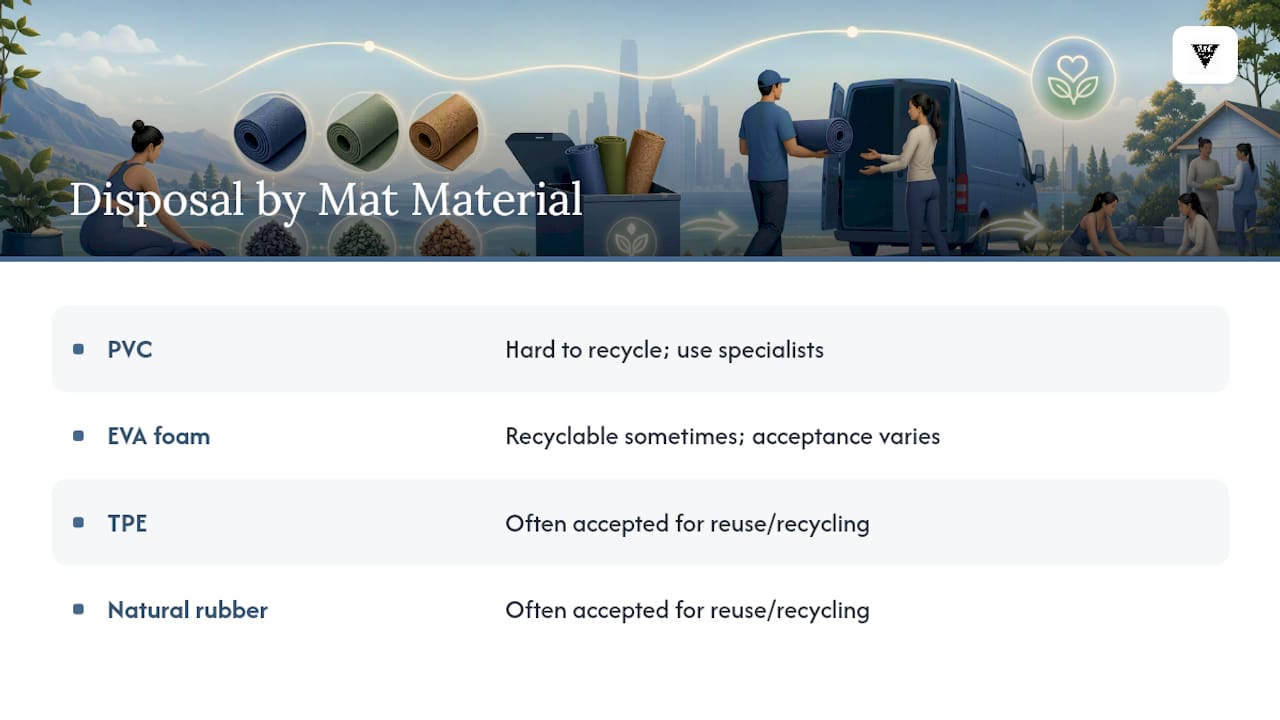
PVC, TPE, EVA, and Natural Rubber: What Your Mat’s Material Means for Disposal
The material stamped on your mat’s tag decides most of your disposal options. PVC mats are the hardest case: they’re durable and grippy, but nearly impossible for standard recycling systems to process, and burning or degrading PVC can release dioxins and other chlorinated compounds linked to health risks. That’s a strong argument for routing PVC mats to a specialist program rather than the trash.
TPE and natural rubber mats fare better. Both materials show up more often in reuse and componentry recycling programs, since they break down into cleaner, more useful material streams. EVA foam mats sit in the middle: recyclable in theory, but acceptance varies by program.
No label on your mat? Check the manufacturer’s product page or Yuneyoga’s guide to yoga mat materials for identifying details, since material composition drives every decision from here.
Creative Ways to Reuse an Old Mat Before You Toss It
Recycling isn’t always available, but your mat still has plenty of working life left in it.
- Anti-slip padding. Cut a piece to fit under a rug, a yoga block, or a laundry machine that vibrates across the floor.
- Pet space. A worn mat makes solid, washable padding under a food bowl or inside a crate.
- Workshop and garden use. Kneeling pads for weeding, a cushioned mat under a tool bench, or knee support for tile work all get real mileage out of old foam.
- Craft projects. Coasters, drawer liners, or grip patches for tool handles work well, though Bamboo Garden Yoga’s reuse list recommends cutting outdoors or in a ventilated space, since some foam dust can irritate airways.
Rehoming and repurposing tend to keep a mat useful longer than waiting on an uncertain recycling pickup, and if storage rather than disposal is your real issue, Yuneyoga’s storage guide covers that ground too.
Choosing a More Recyclable Mat Next Time You Buy
Preventing the disposal headache starts at checkout, not at the end of a mat’s life. Single-material mats made from natural rubber, or those carrying organic certifications, tend to simplify end-of-life handling because there’s no layered plastic to separate.
- Natural rubber grips well on most floors and breaks down more predictably than PVC once it wears out.
- TPE splits the difference: lighter than rubber, still easier to recycle than PVC in programs that accept it.
- PVC remains the toughest and often cheapest option, but it’s the hardest material to responsibly dispose of later.
Yuneyoga’s guide to rubber yoga mats breaks down the grip and durability trade-offs in more detail, and the eco-friendly mat overview is worth a read before your next purchase.
What Most Advice Gets Wrong About Yoga Mat Disposal
Most guidance on this topic treats recycling like a single button you press: drop the mat somewhere, and it disappears responsibly. That’s not how it works. Recycling a mat usually means researching a specific program, packaging your item, and sometimes paying a small fee. It’s a task with steps, not a solved problem.
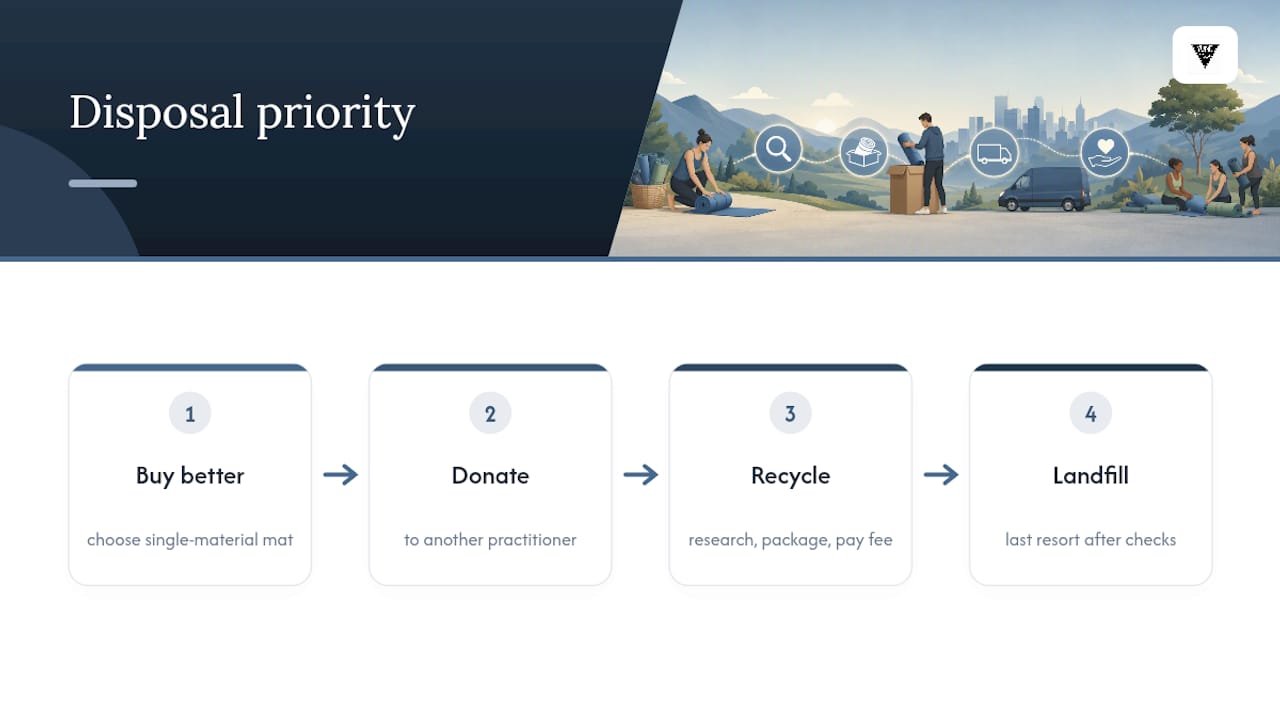
The bigger gap in conventional advice is the order of operations. Too many guides list donation, recycling, and reuse as interchangeable options, when they’re really a priority sequence. A mat with life left belongs with another practitioner first. Recycling should be the fallback for mats that are worn out but still made of a processable material. Landfill is the last resort, reserved for what’s left after you’ve ruled out the first two.
If you take one thing from this guide, let it be this: the biggest lever isn’t better disposal, it’s better buying. A single-material mat you can actually recycle or compost later saves you this entire research project next time around.
— Nicholas
Shop Eco-Conscious Mats That Skip the PVC Disposal Problem
Every mat you just read about routing to a specialist program shares one root cause: PVC construction that’s hard to process at end of life. Some companies sidestep that problem at the source, with lineups built around natural rubber and other materials chosen for cleaner end-of-life outcomes, not just performance on the floor.

Some collections include eco-friendly foldable travel mats, natural rubber styles, and matching towels and straps made from durable, sustainable materials, so your next mat purchase doesn’t set you up for the same disposal puzzle down the road. If you’re ready to retire a PVC mat for good, browse the current lineup at Yuneyoga and pick a style built to last well past your first few years of practice.
Where to Start Recycling or Donating Your Mat Today
- Earth911’s yoga mat guide: explains why curbside programs reject mats.
- ContinuOM Collective: community-run collection, reuse, and recycling.
- TerraCycle’s mat collection programs: paid mail-in recycling boxes.
- SnagMate on community sharing: background on reuse-first waste reduction.
Sources
- Recycling mystery: yoga mats — Earth911
- ContinuOM Collective | Collect - Reuse - Recycling of Yoga Mats
- yoga mat - Recycling solutions — TerraCycle
- Dioxins and their effects on human health — WHO


