

How to use a yoga stretch strap: A beginner-friendly guide to deeper, safer stretches
Key Takeaways
A yoga stretch strap can make familiar poses more accessible without turning flexibility into a contest.
- Choose a strap that suits your height, grip, and preferred way to practice.
- Adjust tension gradually and keep your joints aligned.
- Use the strap to support lower-body, shoulder, and spinal mobility.
- Hold gentle stretches long enough to notice steady, comfortable release.
- Inspect, clean, and replace your strap when its fabric or hardware wears out.
Choose the right yoga stretch strap
The best strap is the one you can adjust easily and hold with confidence. Material, length, and hardware all affect how natural the prop feels in your hands. A simple design is often enough for a beginner, while frequent travelers may prefer something that packs neatly and serves more than one purpose.
Strap materials, widths, and durability
Cotton straps tend to feel soft and familiar, while a slightly wider strap can distribute pressure across your hands. Look for tightly woven fabric and stitching that stays flat rather than rubbing your skin. A strap should feel dependable without being stiff, especially when you use it for slow, supported stretches.
For a portable option, the Bear Creek Yoga Strap uses 100% GOTS-certified organic cotton, measures 8 feet long and 1.5 inches wide, and has metal D-ring buckles. Its product information also describes it as machine washable and suitable for home, studio, travel, and rehabilitation use.
Loop, buckle, and D-ring designs
A continuous loop is quick to place around a foot or leg, but its size may limit how precisely you adjust the position. Buckles and D-rings let you form a smaller or larger loop as needed. They are particularly useful when two people of different heights share one strap, or when you want to change a pose without removing the strap entirely.
The Horatio Yoga Strap is described as an 8-foot organic cotton strap with metal D-ring buckles. It is also designed to function as a yoga mat carrier, which can be convenient when your practice moves between a home, studio, or travel setting.
Choosing the right length for your height and practice
A longer strap gives you more room to reach the foot in reclined poses or connect your hands behind your back. Shorter straps can feel less cumbersome, but they may force you to bend or grip too tightly. If you are unsure, choose enough length to create a comfortable loop around your foot while keeping both hands relaxed.
Think about where you practice as well as what you practice. A strap that works beside a full-size mat should still be easy to fold into a travel bag. For broader gear-planning ideas, the step-by-step approach in this Tesla accessory guide is a useful reminder to choose equipment around real routines rather than impulse purchases.
What to look for in grip and adjustability
The strap should stay in your hands without requiring a hard squeeze. Check that the fabric does not slide excessively when you pull with moderate pressure, and make sure the buckle releases smoothly. Easy adjustment matters because a strap that takes too much effort can distract you from breathing and alignment.
A practical checklist before buying includes the following:
- A length that allows a relaxed grip in your most common poses.
- Hardware that closes securely and opens without catching.
- Fabric that feels comfortable against your hands and feet.
- Care instructions that fit your usual practice and travel habits.
After trying those points, notice whether the strap helps you stay patient. The right prop should offer support, not create another task to manage.
Set up your strap safely
A strap works best as a quiet aid, not as a tool for pulling yourself into a pose. Set it up before you begin, then test the tension with small movements. Keep your breathing smooth and let your body decide how far the stretch goes.
Even a well-made strap cannot correct rushed movement. Start with enough slack to change position, and only shorten it after your joints and spine feel organized.
How to adjust tension without overstretching
Begin with a loose loop and take up only the amount of slack you need. You should be able to release the strap quickly rather than feeling trapped in the position. If the stretch becomes sharp, numb, or unstable, loosen the strap and return to a smaller range.
Maintaining alignment and steady breathing
Keep the knee, ankle, shoulder, or wrist in a position that feels structurally sound rather than chasing a deeper angle. In a hamstring stretch, for example, the leg can remain slightly bent if that lets your back stay long. Breathe slowly enough that you can notice whether the body is relaxing or bracing.
When to use a loop versus a single-length strap
Use a loop when you want a consistent connection around a foot, thigh, or pair of hands. A single-length strap is more flexible for shoulder work, seated stretches, and poses where the distance changes gradually. If you are practicing in a small hotel room or outdoors, a single strap also takes up very little space.
The Bowie Yoga Strap is described as both a stretching aid and a yoga mat carrier, with D-ring buckles for adjustment. That combination can suit a practice where the same accessory needs to move easily from storage to the mat.
Common safety mistakes to avoid
Most strap problems come from using too much force or failing to check the setup. Avoid jerking the strap, wrapping it around the neck, or locking a joint simply to gain more reach. Do not use a strap as an anchor against an unstable chair or other furniture unless a qualified instructor has shown you how to do so safely.
Use a yoga stretch strap for lower-body flexibility
Lower-body stretches are often where a strap feels most immediately useful. It can extend your reach while allowing the spine and shoulders to remain calmer. Move slowly, especially if your legs feel stiff after sitting, traveling, or a workout.
A strap does not need to pull you farther than your body is ready to go. Its job is to give your hands a reliable connection so the rest of the pose can stay controlled.
Hamstring stretches for tight legs
Lie on your back with one knee bent and place the strap around the ball of the other foot. Slowly extend that leg toward the ceiling while holding the strap with both hands. Keep the pelvis heavy and let the raised leg remain slightly bent if straightening it causes your back to arch.
You can also sit with one leg extended and loop the strap around the foot. Keep your chest open as you hinge forward from the hips, using the strap to maintain reach rather than pulling your torso down. Switch sides and compare sensations without trying to make them identical.
Quad and hip flexor stretches
For a supported quad stretch, lie on your side and loop the strap around the top of the foot before gently guiding the heel toward the seat. Keep the knees close together and avoid twisting the pelvis. A wall or folded blanket can make the position more comfortable if balance is difficult.
For a low lunge, place the strap around the back foot and hold it over the shoulder if that feels accessible. Keep the front knee tracking toward the toes and lift the chest only as far as you can breathe comfortably. The strap can shorten the distance between your hands and foot without asking you to force the hip forward.
Calf and ankle mobility exercises
Sit with both legs extended or keep one knee softly bent. Loop the strap around the ball of one foot and gently draw the toes toward you, then ease away from the pull. Move between the two positions slowly so the ankle, calf, and back of the leg all have time to respond.
A strap can also help you explore small ankle circles while you keep the leg supported. Keep the movement modest and avoid tugging on the toes. These simple variations are useful before a longer practice or after time spent seated.
Modifications for beginners and limited flexibility
Start with a bent knee, a shorter hold, and plenty of space in the strap. A folded towel under the hips or head may make the setup more comfortable, but the support should not push you into a stronger stretch. If the strap cannot reach your foot, use a longer strap or practice the same movement with the knee closer to the chest.
A gentle sequence may look like this:
- One minute of ankle movements on each side.
- Two slow hamstring stretches per leg.
- A supported quad stretch with the pelvis steady.
- One low lunge per side, staying well short of strain.
This order moves from smaller joints to larger positions and gives you a chance to notice how the body feels before adding range.
Improve upper-body and spinal mobility
A strap can provide distance between the hands when the shoulders are not ready to meet. It can also give you a stable reference point during side bends and gentle rotations. Keep the neck relaxed and avoid turning a mobility exercise into a tug-of-war.
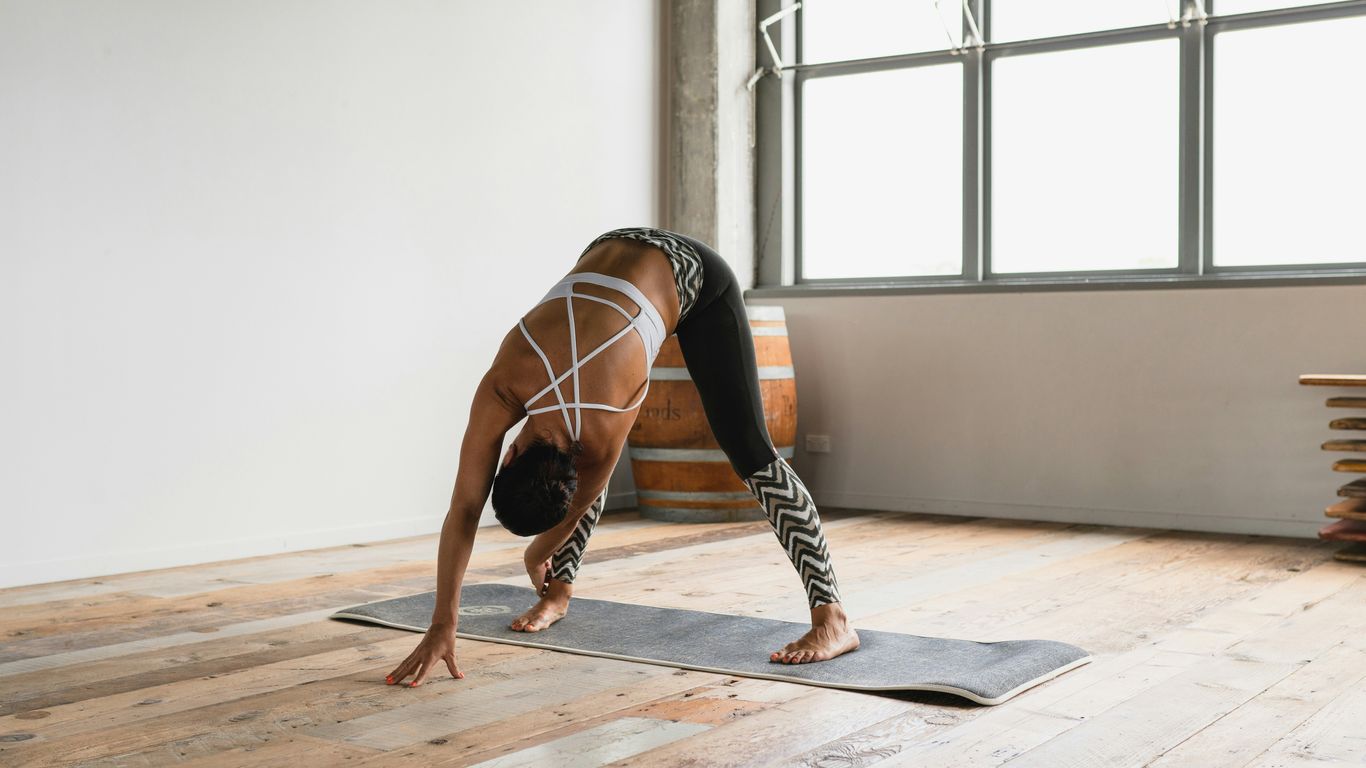
Upper-body work often benefits from less effort than you expect. Let the strap create a connection while your ribs, shoulders, and spine continue to move naturally.
Shoulder-opening stretches with a strap
Hold the strap wider than shoulder distance and slowly move it overhead, then behind you only as far as the shoulders allow. Keep the elbows soft and avoid flaring the ribs. If the hands need to be very wide, leave them there; narrowing the grip can come later.
You can also hold the strap behind your back with one hand above and one below. Rather than pulling the hands together, use the strap to maintain a light connection and gradually explore the shoulder position. Change sides so one shoulder does not always do the stronger work.
Chest and upper-back stretches
For a chest opener, hold the strap behind your back and gently draw the hands apart while keeping the breastbone easy and the shoulders away from the ears. For upper-back mobility, bring the strap in front of you and press the hands outward as you round the upper spine slightly.
The goal is a broad, comfortable movement across the shoulder blades, not a dramatic bend. If your wrists tire, widen the grip or lower the strap to chest height.
Overhead mobility exercises
Stand with feet comfortably apart and hold the strap with a wide grip. Raise it overhead while keeping your gaze level, then return it to the front without leaning backward. Move slowly enough to notice whether one shoulder travels differently from the other.
A seated version can be easier to control. Keep the pelvis grounded and make the arc smaller if the strap catches or the ribs lift. Repetition should make the path feel clearer, not increasingly forced.
Supporting gentle twists and side bends
Hold the strap in front of the chest with both hands and use it as a visual guide as you rotate the torso. The hips can stay mostly still while the ribs turn gradually. For a side bend, keep both sitting bones grounded and reach one end of the strap toward the floor as the other arm lengthens overhead.
Do not pull yourself deeper with the strap. Let it remind you to lengthen before you rotate or bend, and return to center if the breath becomes restricted.
Build an effective yoga stretch strap routine
A useful routine does not need to be long or complicated. A few familiar movements, repeated consistently, can help you learn how much support you actually need. Match the sequence to the moment: warm up before stronger movement, and settle into longer holds afterward.
If you practice while traveling, keep the plan compact enough to use beside a bed, in a park, or on a small mat. The best routine is one you can repeat without much setup.
A five-minute warm-up sequence
Begin with easy shoulder circles and ankle movements, then add a few supported motions rather than deep holds. Keep the strap loose and use it to rehearse the pathways your body will use later. This approach raises awareness without demanding a full flexibility session before you are warm.
A simple five-minute plan is:
- One minute of shoulder circles with the strap held in front.
- One minute of alternating ankle flexes with the strap around each foot.
- One minute of gentle overhead passes with a wide grip.
- One minute of supported standing side bends.
- One minute of relaxed breathing and easy forward folding.
After the sequence, you should feel more prepared, not depleted. If a movement feels pinchy or awkward, skip it and spend the time on a smaller range.
A post-workout flexibility routine
After exercise, use the strap to support calm, unhurried positions for the hamstrings, quads, calves, shoulders, and chest. Avoid bouncing or trying to match the deepest position you have ever reached. The muscles may feel warm, but that does not mean every joint is ready for maximum range.
Move from the area that worked hardest to a few balancing stretches. Keep the strap close enough to release immediately, and allow the breath to become quieter before changing sides.
A beginner routine for full-body mobility
A full-body routine can begin lying down, move to seated work, and finish standing. That progression reduces the need to balance while you are still learning how to use the strap. It also makes it easier to compare the left and right sides without rushing.
Try one supported hamstring stretch, one calf movement, one seated shoulder opener, one gentle twist, and one standing overhead pass. Hold each position comfortably, then repeat only the movements that feel clear. Consistency matters more than collecting a long list of poses.
How long to hold each stretch
For a beginner, start with roughly 15 to 30 seconds of easy breathing, then release and reassess. A shorter hold is appropriate when you are testing a new position or practicing before movement. Longer holds can be comfortable later, but they should never require you to ignore discomfort.
The quality of the hold matters more than the number on a timer. If your grip tightens, breathing becomes shallow, or alignment changes, come out of the stretch even if the planned time has not passed.
How to progress without forcing range of motion
Progress by changing one variable at a time. You might hold the same position for a few more breaths, reduce the bend in a knee, or move your hands slightly closer together. Do not shorten the strap, increase the hold, and add intensity all at once.
A steady practice often produces small signs of change: less gripping, smoother transitions, or easier breathing. Those are useful markers even when the visual shape of the pose looks nearly the same.
Maintain your strap and adapt your practice
Care keeps a strap pleasant to use and makes wear easier to spot. Check it before demanding positions, especially if it has been stored in a damp bag or used outdoors. A clean, dry strap is also more comfortable against the hands and feet.
Your practice may need to change from day to day. Fatigue, soreness, pregnancy, injury, and medical conditions can all affect which positions are appropriate, so treat the strap as an adjustable aid rather than a reason to follow a fixed range.
Cleaning and storing the strap
Follow the care instructions supplied with your particular strap. Many cotton straps can be wiped clean, while some are machine washable; allow the fabric to dry completely before rolling or storing it. Keep it away from prolonged dampness, sharp edges, and direct heat.
Store the strap loosely coiled rather than tightly knotted. If it doubles as a mat carrier, check that the folded strap is not rubbing against rough flooring or a zipper in your bag.
Replacing worn or damaged hardware
Look closely at the stitching, fabric edges, buckles, and D-rings. Fraying, bent metal, cracked hardware, or a buckle that slips under light pressure are reasons to stop using the strap for loaded stretches. Cosmetic fading is different from structural damage, but uncertainty is a good reason to replace it.
Never repair a weight-bearing strap with tape or a knot and assume it is secure. A replacement is usually simpler than trying to predict when a weakened connection might fail.
Adjustments for injuries and physical limitations
Use less tension, more support, and a smaller range when a joint is sensitive. A chair, wall, folded blanket, or another stable prop may help, but do not use furniture as an anchor unless you know it is appropriate and secure. You can also practice the movement without the strap to learn which part of the pose is comfortable.
If a position causes sharp pain, tingling, numbness, unusual weakness, or lingering symptoms, stop. A strap should make movement more manageable, never mask a warning from your body.
When to consult a qualified professional
Speak with a qualified health professional or experienced yoga teacher when you are returning after an injury, managing a diagnosed condition, or unsure whether a movement is suitable. Ask for specific guidance on setup, range, and alternatives rather than simply pushing through uncertainty.
A professional can also help you distinguish ordinary stretching sensation from a symptom that needs attention. Bring the strap to a session if you want feedback on its length, loop, or placement.
Conclusion
A yoga stretch strap is a small, portable way to make stretching more controlled and approachable. Choose a comfortable design, adjust it gradually, and let steady breathing guide the depth of every pose. With regular care and sensible modifications, the strap can support a practical routine at home, in a studio, or wherever you unroll your mat.
Frequently Asked Questions
What is a yoga stretch strap used for?
It helps extend your reach, support alignment, and maintain a controlled connection in stretching and mobility exercises. It should assist a pose rather than pull you forcefully into it.
How long should a beginner hold a strap stretch?
Start with about 15 to 30 seconds of comfortable breathing, then release and reassess. Shorter holds are fine when learning a new movement or warming up.
Should my knee be straight during a strap stretch?
Not necessarily. A slightly bent knee may help you keep the spine and pelvis better aligned, especially during hamstring stretches. Straighten only as far as you can without strain.
Can I use a strap if I am not flexible?
Yes. Begin with a longer strap, a wider grip, or a bent knee so the position feels manageable. The strap is meant to reduce the need to reach, not to measure how flexible you are.
How do I know if I am pulling too hard?
Sharp pain, numbness, tingling, restricted breathing, or a feeling of joint instability are signs to reduce tension or stop. A gentle stretch should remain controllable throughout.
How should I clean a yoga stretch strap?
Follow the product's care instructions. Wipe it clean when appropriate, wash it only as directed, and let it dry fully before storing it loosely coiled.
When should I replace my strap?
Replace it when the fabric is frayed, stitching is separating, or buckles and rings are bent, cracked, or slipping. Do not rely on a strap with damaged weight-bearing parts.

