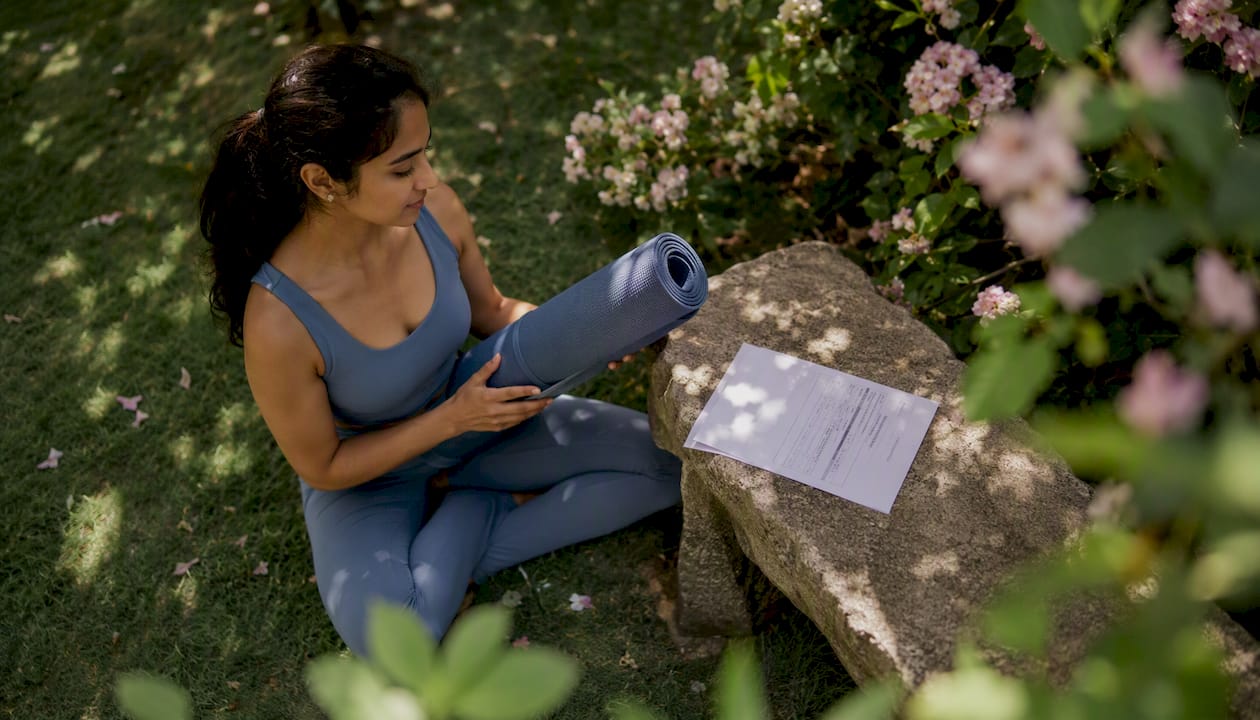

Yoga mat good grip: how to choose the best non-slip mat for your practice
Key Takeaways
A good yoga mat should feel stable in the poses you actually practice, not merely sticky when you touch it in a store.
- Match the mat’s grip to your sweat level and practice style.
- Check both hand traction and the mat’s contact with the floor.
- Balance grip with cushioning, weight, portability, and comfort.
- Choose materials and cleaning methods that preserve traction.
- Consider allergies, odors, and where you will practice before buying.
What makes a yoga mat have good grip
A yoga mat has good grip when your hands and feet stay planted without forcing you to tense your fingers or toes. The best choice depends on moisture, movement, texture, and the floor beneath the mat. A surface that feels secure during a dry, slow session may behave differently during a hot flow. For a closer look at what separates dependable traction from marketing language, this non-slip yoga mat guide offers a useful comparison point.
Surface texture and traction
Texture gives your palms and soles something to hold against. Some mats have a visibly raised pattern, while others use a smoother top layer that creates friction through the material itself. Run your hand across a sample if you can: it should feel controlled rather than glassy, gummy, or rough enough to irritate your skin. A steady, predictable grip is more useful than an extreme first impression.
Traction should also remain consistent as you shift from downward dog to plank, lunge, or standing balance. If your hands stick while your feet slide, or the reverse, the mat may not suit your movement pattern. Look for a surface that supports transitions without making it difficult to reposition deliberately.
The difference between dry grip and wet grip
Dry grip describes how secure the mat feels when your hands and feet are clean and relatively dry. Wet grip concerns what happens after sweat, humidity, or a damp palm enters the picture. Some surfaces become more secure with moisture, while others develop a slick film and require a towel.
Think about the conditions you meet most often rather than choosing based on a single showroom test. If you regularly practice hot yoga, an absorbent towel or a surface designed for sweaty sessions may matter as much as the mat itself. A dry-grip mat can still be excellent, but it needs to match your routine.
How material affects stability
Materials influence how a mat feels under pressure, how quickly it responds to movement, and whether it stays flat on the floor. A dense surface often feels more grounded, while a soft or very flexible mat may shift as you step forward. Neither quality is automatically better; the right balance depends on your practice and your carrying needs.
The floor matters too. Tile, wood, carpet, and outdoor ground each create different conditions. A mat with a grippy underside can help prevent creeping, but dust and uneven flooring can still affect stability. Test the complete setup whenever possible, not just the top surface.
Grip, cushioning, and comfort trade-offs
Extra thickness can make kneeling and floor-based poses more comfortable, but too much softness may make balancing feel less precise. A thinner mat can give you a clearer connection to the floor, although it may feel less forgiving at the knees or wrists. Consider how long you hold poses and how often you practice standing balance.
The aim is not maximum grip at any cost. It is a surface that lets you move confidently while still feeling comfortable enough to use regularly. If a mat is unpleasant to carry or uncomfortable to kneel on, its impressive traction may not matter for long.
How to choose the right mat for your practice
Start with the situations your mat will actually face: heat, sweat, slow holds, quick transitions, or frequent travel. A portable setup may need a different compromise than a mat that stays beside your home practice space. Yune Yoga’s DY66 Yoga Mat is described as a 6mm non-slip mat with practice-proven grip, joint-friendly cushioning, and a lay-flat surface that is light enough for commutes. Those are practical criteria to compare, whether or not that particular format is right for you.
Mats for hot yoga and sweaty sessions
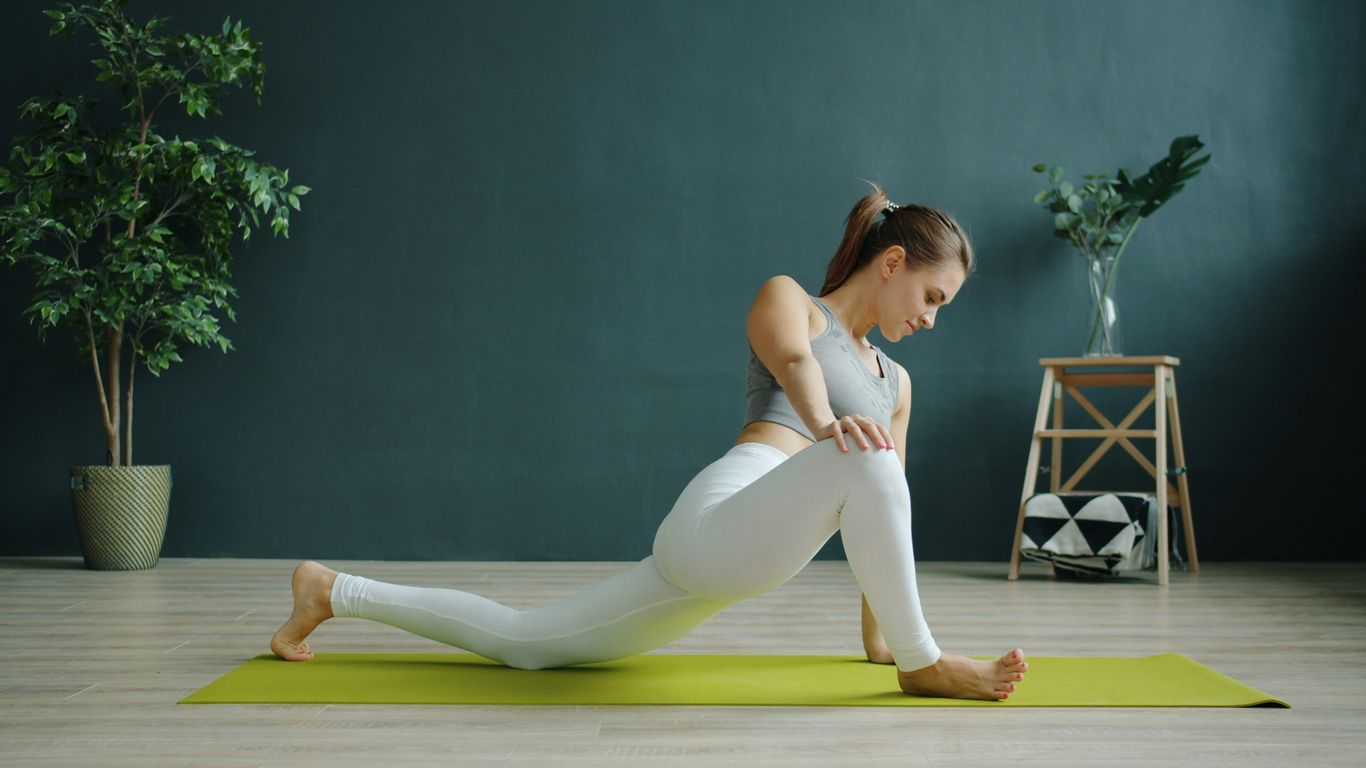
For hot or humid classes, focus on what happens when moisture builds up. An absorbent top layer, a moisture-resistant surface that stays manageable, or a separate yoga towel can all be useful depending on the mat. Test whether your hands slide during plank and whether your feet shift during a standing sequence, since sweat can expose weaknesses quickly.
Do not assume a highly textured surface is automatically best for heat. Texture may help with dry traction but can feel less secure once damp. Read care instructions as well, because residue from heavy cleaners or body oils can change the surface over time.
Mats for slower styles and floor-based poses
Slower practices usually place more emphasis on comfort, pressure support, and a calm, stable base than on rapid transitions. A moderate thickness can make kneeling, seated work, and reclined poses easier without feeling excessively spongy. The surface should still prevent small shifts when you move between positions.
For this type of practice, a mat such as the Nakata Yoga Mat is described as 6mm thick, latex-free, moisture-resistant, and designed with cushioning and a non-slip texture. Those documented features illustrate the sort of checklist that may suit a slower home or studio session: enough padding, manageable cleaning, and dependable contact with the floor.
Mats for dynamic flows and balance work
Fast flows and balance poses reward a mat that stays put during repeated weight transfers. Pay attention to lateral movement when stepping from lunge to lunge, and to whether the surface allows controlled adjustments in tree pose or warrior variations. A mat that grabs too aggressively can interrupt a transition, while one that feels slick can make you hesitate.
Look for an even feel from edge to edge and enough length for your usual stance. If you practice outside the studio, also consider whether the mat rolls or folds neatly between sessions. Portability is useful only when it does not undermine the stability you need once the mat is open.
Choosing a mat for home, studio, or travel
A home mat can prioritize density, size, and cushioning because it may rarely move. A studio mat needs a practical carrying weight and a surface that is easy to wipe down after shared-space use. A travel mat should pack simply, lie flat, and give you enough traction on unfamiliar floors.
Use this quick comparison as a starting point, then adjust it to your own priorities.
| Practice setting | Grip priority | Other useful qualities |
|---|---|---|
| Home | Consistent traction on one floor | Comfort and generous size |
| Studio | Reliable grip after frequent use | Easy cleaning and manageable weight |
| Travel | Stable contact on varied floors | Thin, light, or foldable design |
The most suitable mat is the one you will bring out without friction in your routine. For broader buying context, a performance yoga mat collection can help you compare portability, cushioning, and traction as separate features rather than treating them as one promise.
Which yoga mat materials provide the best grip
There is no single material that wins for every practitioner. Natural rubber, rubber-top constructions, PVC, thermoplastic elastomer, cork, and microfiber can all provide useful traction when designed and maintained well. The feel may change with sweat, temperature, cleaning, and age. Material labels are a starting point, not a substitute for testing.
Natural rubber mats
Natural rubber often has a naturally grippy feel and can provide a grounded base for dynamic movement. It may also have a noticeable odor when new, and people with latex sensitivities should check the product information carefully. Weight can be another consideration if you carry the mat to class or travel with it.
A rubber mat may suit someone who values strong floor contact and does not mind a heavier roll. Before buying, confirm whether the top and bottom use the same material and whether the manufacturer gives specific cleaning guidance.
Polyurethane and rubber-top mats
Polyurethane and rubber-top surfaces are often chosen for a smooth, high-traction feel. They can work well when you want your palms to stay secure during flowing sequences, though the finish and wet performance vary by construction. Some smooth surfaces need regular cleaning to avoid a buildup of oils and dust.
Try to judge the entire surface rather than the word “grip” on the label. A top layer can feel very secure in dry conditions but require a towel in a hot class. Your preferred sensation matters, but so does what happens after twenty minutes of movement.
PVC and thermoplastic elastomer mats
PVC can offer a durable, consistent surface and is available in many thicknesses and textures. Thermoplastic elastomer mats are often valued for being light and flexible, though their traction varies considerably between products. Check for phthalates, latex, and other material information if those details affect your purchase.
The CR24 Yoga Mat is described as a 6mm PVC mat with a textured, non-slip surface, moisture resistance, and latex- and phthalate-free construction. Those are specific product details, but they also show the questions worth asking of any PVC mat: how thick is it, how is the texture described, and what does the care information say?
Cork and microfiber surfaces
Cork can feel firm and natural underfoot, with traction that may change as moisture reaches the surface. Microfiber can provide a soft, absorbent feel and is sometimes paired with a rubber underside. These materials are especially worth testing in the conditions where you practice, because the dry and damp sensations can be quite different.
A microfiber surface may feel comfortable for floor work but require more attention to washing and drying. Cork may appeal to practitioners who prefer a less synthetic feel, although it may not provide the same sensation as a smooth rubber-top mat. Choose based on the complete experience, including texture, odor, and care.
How to test a yoga mat’s grip before buying
A few minutes of deliberate testing can tell you more than a product photograph. If you are shopping in person, bring clean hands and try several familiar positions. Online, look for reviews that describe actual use over time rather than repeating the product description. A useful yoga mat review comparison can help you see which details reviewers tend to evaluate.
Checking traction in common poses
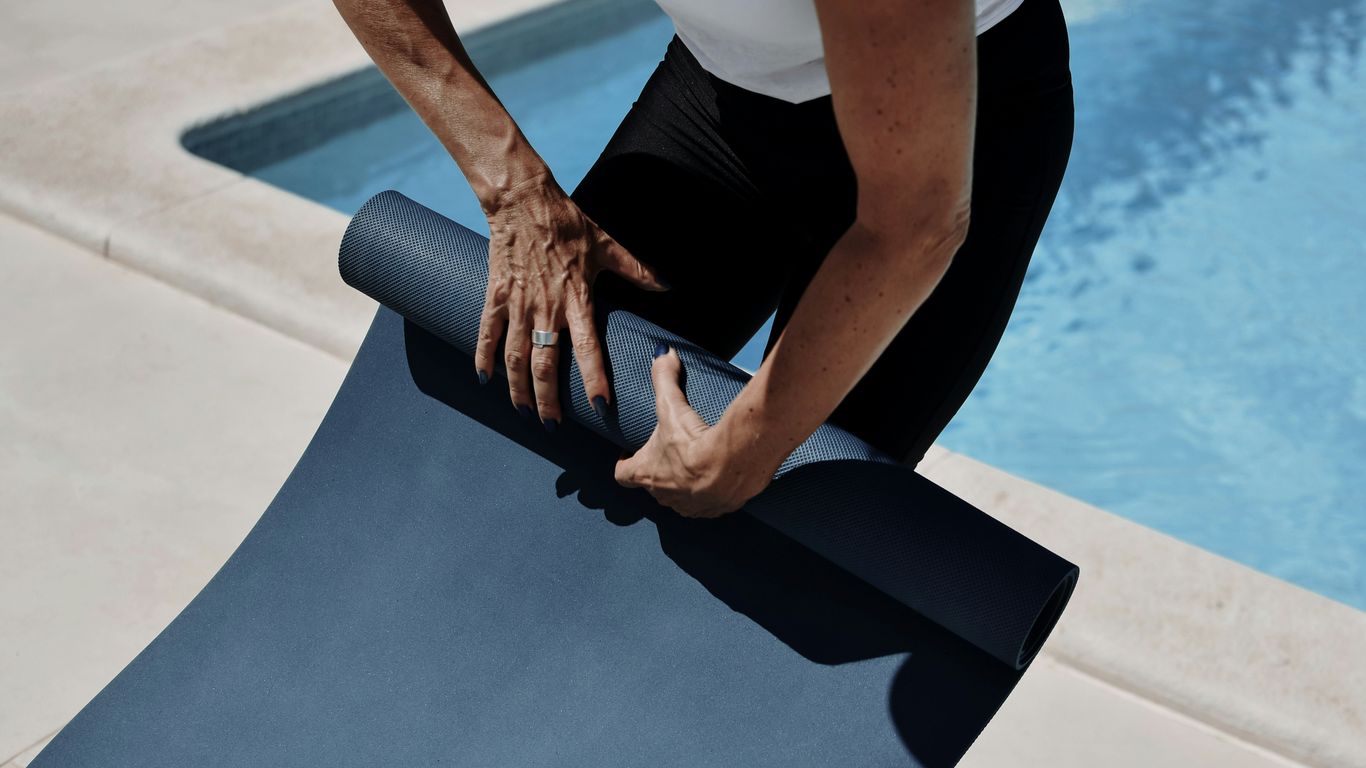
Use poses that recreate the pressure and direction of your practice. Try downward dog for hand and foot traction, plank for palm stability, a forward lunge for stepping control, and a standing balance for subtle shifts. Press gradually rather than testing with a sudden jump, since controlled pressure better reflects normal movement.
Notice whether your fingers claw into the mat to stay secure. Also check whether your feet remain aligned when you transition. A mat can feel sticky under still hands but fail to support the small adjustments that make movement feel natural.
Evaluating grip with dry and sweaty hands
Test once with dry hands and again after adding a little moisture, if the store permits it. You are looking for a predictable change, not necessarily identical performance in both conditions. If sweat makes the surface dramatically slick, plan for a towel or choose another construction.
Do not rely only on pressing your palm down. Spread your fingers, shift your weight forward, and mimic the way your hand loads during practice. This reveals whether the mat supports traction across a movement rather than only at one contact point.
Looking for slipping between the mat and floor
The underside should remain stable when you step, turn, and move laterally. Place the mat on the type of floor you use most, then push gently with one foot while keeping the other planted. Curling edges, sliding corners, or a loose center can distract you even when the top surface grips well.
At home, remove dust before testing. Fine particles can create a false impression of poor grip, especially on smooth floors. If you practice outdoors or in hotel rooms, consider how easily you can clean the mat before putting it away.
Reading reviews for long-term performance
Reviews are most useful when they mention weeks or months of use, changes in texture, odor, cleaning, and the behavior of the mat under sweat. Look for repeated patterns rather than a single dramatic opinion. A review that explains the writer’s practice style is more helpful than a short rating without context.
Some online pages mix unrelated buying advice with product claims. For example, you may encounter links about Meta targeting, a Travel Fx privacy policy, buying a house in Barcelona, acne patient communication, or bean-to-bar chocolate while browsing a large content library. Those topics do not tell you anything about yoga mat traction, so return to reviews that discuss grip, floor stability, and durability directly.
After reading, compare the review evidence with your own priorities. The goal is not to find the mat with the loudest promise, but the one whose reported behavior fits your hands, floor, sweat level, and carrying routine.
How to maintain a yoga mat’s good grip
Even a well-designed mat can become slippery when covered with body oils, dust, or cleaning residue. Maintenance does not need to be complicated, but it does need to be consistent. Wipe the surface after sweaty sessions and give it enough time to dry before rolling it up. This preserves the feel you liked when you first tested it.
Cleaning products that preserve traction
Start with the manufacturer’s care instructions. In general, a mild cleaner and a soft cloth are safer choices than harsh solvents, abrasive brushes, or heavily perfumed products. Spray the cloth rather than saturating the mat, and remove any residue with clean water if the instructions allow it.
Strong formulas can alter the finish, especially on absorbent or textured surfaces. If you try a new cleaner, test a small, inconspicuous area first. A mat that looks clean but feels coated is not truly maintained.
How sweat, oils, and dust reduce grip
Sweat can leave salts behind as it dries, while skin oils create a thin film that changes friction. Dust settles into texture and can make the mat feel both dirty and less secure. These problems are easy to overlook because the surface may still look fine from a distance.
Pay extra attention to the places your hands and feet contact most often. A quick wipe after practice prevents buildup from becoming a deeper cleaning project. It also makes it easier to notice when the material itself, rather than surface residue, is beginning to wear.
Drying and storing the mat correctly
Let the mat air-dry fully before rolling or folding it. Keep it away from prolonged direct heat, and avoid storing it while damp in a closed bag. Roll it according to the product’s instructions so the surface is not creased or compressed unnecessarily.
For portable practice, storage is part of the purchase decision. A lightweight, foldable mat is convenient, but it still needs airflow after a sweaty session. Carrying a small cloth and a suitable cleaner can make regular care much easier on the road.
When to deep-clean or replace a mat
Deep-clean when ordinary wiping no longer removes odor, visible residue, or a persistent slick feeling. Follow the care instructions closely, since soaking or machine washing may damage some materials. Replace the mat when it has lost structural support, developed areas that stay slippery, or begun to curl and slide despite proper care.
Wear is not always uniform. Inspect the center, corners, and the areas under your hands and feet. If the mat no longer gives you confidence in familiar poses, that practical loss of trust is a good reason to start looking for a replacement.
Common mistakes when choosing a non-slip yoga mat
Shopping for grip can become confusing because labels often use similar words for different sensations. A mat may feel sticky in the hand but move under the foot, or offer plenty of cushioning while making balance feel unstable. Slow down and compare the features against your actual practice. The strongest choice is usually the one that solves your particular slipping problem without creating a new one.
Confusing stickiness with reliable traction
Stickiness is one sensation; traction during movement is a broader test. A sticky surface may hold your palm in place but make transitions awkward, or it may lose its effect when sweat appears. Test pushing, shifting, and stepping rather than judging the mat by touch alone.
Reliable grip should feel repeatable. If you need to change your hand position constantly or tense your toes to stay put, the surface is not supporting you as well as it should.
Prioritizing thickness over stability
A thick mat can feel inviting, especially if your knees or wrists prefer more padding. But excessive softness may reduce floor feedback and make standing balances less steady. Thickness should support your practice, not determine the purchase by itself.
Compare cushioning with density and surface traction. The Zeus Yoga Mat is described as a 6mm non-slip mat with cushioned comfort, reliable traction, lay-flat construction, and a balance between joint support and floor feel. Those documented features illustrate why thickness is only one part of the stability question.
Ignoring the practice surface
A mat that works on wood may behave differently on carpet, tile, concrete, or a dusty outdoor surface. Floor texture, moisture, and debris all affect how the underside performs. If you practice in more than one location, test or research the mat in those settings.
At home, clean the floor beneath the mat as well as the mat itself. For travel, choose a design that is easy to wipe and simple to position. A portable mat is only helpful if it settles securely wherever you unfold it.
Choosing a mat without considering allergies or odors
Material sensitivity and new-product odor deserve attention before purchase. Check whether the mat contains latex, phthalates, or other substances you avoid, and give it time to air out if the care instructions recommend it. A mat that causes discomfort or remains unpleasant to use will not become a good long-term practice companion.
Read the material description, care notes, and return policy together. That small amount of preparation can prevent an attractive texture or color from overshadowing a basic mismatch with your needs.
Conclusion
Choosing a yoga mat with good grip comes down to matching traction, cushioning, material, maintenance, and portability to the way you practice. Test both the top and underside, think honestly about sweat and flooring, and choose a mat you will feel comfortable carrying and caring for. The best non-slip mat is not simply the stickiest option; it is the one that stays dependable through your real sessions.
Frequently Asked Questions
What makes a yoga mat have good grip?
Good grip combines dependable hand and foot traction with an underside that stays stable on the floor. It should remain reasonably consistent during still poses, transitions, and the moisture levels typical of your practice.
Is a sticky yoga mat always non-slip?
No. Stickiness can describe how the surface feels to the touch, but it does not guarantee stability during movement or sweaty sessions. Test weight shifts and transitions rather than relying on touch alone.
What type of yoga mat is best for sweaty hands?
Look for a mat whose surface remains secure with moisture, and consider using a compatible yoga towel if you sweat heavily. Reviews that describe hot or humid practice are more useful than general claims about grip.
Is a thicker yoga mat better for joint comfort?
A thicker mat may provide more padding, but too much softness can affect balance and floor connection. Choose thickness alongside density, stability, and the poses you practice most often.
How often should I clean my yoga mat?
Wipe the mat after sweaty sessions and clean it more thoroughly when residue, odor, or a slick feeling develops. Always follow the product’s care instructions before soaking or using a new cleaning product.
Can a yoga mat lose its grip over time?
Yes. Oils, sweat, dust, cleaning residue, and material wear can all change traction. Proper cleaning and drying may restore the feel temporarily, but a worn or persistently slippery mat may need replacing.
How can I test a yoga mat before buying it?
Try familiar poses such as downward dog, plank, lunges, and a standing balance. Test with dry hands and, where permitted, slightly damp hands; also check whether the mat shifts on the floor beneath you.