
Yoga and Your Immune System: What the Evidence Shows
Yes, regular yoga practice can support immune function. Systematic reviews of randomized controlled trials show a consistent pattern of reduced pro-inflammatory markers, including IL-1β and cortisol, in people who practice yoga regularly compared with controls. The practical takeaway: aim for 20–30 minutes of integrated yoga (postures, breathwork, and a short relaxation) three times this week, and plan to sustain it for a sufficient period before expecting measurable changes.
Key Takeaways
Yoga’s most reliable immune benefit is stress buffering: consistent practice over 8–12 weeks reduces cortisol rises and supports markers like IFN-γ and secretory IgA, making it a meaningful complement to standard immune health habits.
| Point | Details |
|---|---|
| Evidence direction | Systematic reviews of 15+ RCTs show reduced pro-inflammatory markers (IL-1β, IL-6, TNF-α) with regular yoga. |
| Core mechanism | Yoga lowers HPA-axis overactivation and raises parasympathetic tone, reducing cortisol-driven immune suppression. |
| Recommended dose | 20–30 min sessions, 3–5 times per week, sustained for at least 8 weeks for measurable biomarker shifts. |
| Realistic timeline | Stress reduction appears in 2–3 weeks; immune marker changes (IgA, IFN-γ) typically require 8–12 weeks of consistency. |
| Yuneyoga | A natural rubber mat and strap from Yuneyoga reduce setup friction, supporting the consistent practice the evidence requires. |
Table of Contents
- What does the research say about yoga immune system benefits?
- How does yoga actually change your immune response?
- Which immune markers change, and why do they matter?
- Which yoga practices work, and how much do you need?
- A 25-minute immune-support yoga routine you can do today
- Who should check with a clinician before starting?
- What the evidence doesn’t yet tell us
- An editorial perspective on what the science actually means for your practice
- The right gear makes a consistent practice easier
- Sources
What does the research say about yoga immune system benefits?
The clearest signal in the literature comes from a 2018 systematic review of 15 RCTs that found a general pattern of yoga downregulating pro-inflammatory markers, with qualitative reductions reported for IL-1β and indications of reductions in IL-6 and TNF-α. The review flagged heterogeneity across trial designs, which matters for interpreting how strong those effects really are.
A later descriptive review covering 11 RCTs from 2017 to 2020 reached a similar cautious conclusion: yoga may produce favorable reductions in inflammatory markers, but trial quality ranged from unclear to high risk of bias. Supportive, not definitive.
One of the more controlled examples is a 12-week RCT in medical students that found integrated yoga attenuated exam-related cortisol rises and buffered declines in cellular immunity (IFN-γ) compared with a control group. Students practiced 35 minutes daily. That stress-buffering effect is one of the most consistent findings across trials.
A 10-week exploratory study among medical students reported a statistically significant increase in secretory IgA (p < 0.001) after yoga, pointing to mucosal immunity gains with sustained practice. A small pilot study also reported increases in immune cell populations (CD4+, CD8+, CD19+) after a 15-day immersive intervention, though its single-arm design limits causal claims.
The honest read: the direction of effects is encouraging and consistent. The evidence quality is moderate at best. Small samples and variable protocols mean you should treat yoga as a meaningful complement to immune health, not a clinically proven treatment.
| Evidence type | What it found | Limitation |
|---|---|---|
| 2018 systematic review (15 RCTs) | Reduced IL-1β, indications for IL-6 and TNF-α reductions | Heterogeneous designs |
| 2017–2020 review (11 RCTs) | Favorable inflammatory marker changes | Variable risk of bias |
| 12-week RCT (medical students) | Buffered cortisol rise, less IFN-γ decline | Preliminary, small sample |
| 10-week exploratory study | IgA increased significantly (p < 0.001) | Small sample, no control group |
How does yoga actually change your immune response?
The core mechanism runs through stress. Chronic stress activates the hypothalamic-pituitary-adrenal (HPA) axis, which drives up cortisol. Sustained high cortisol suppresses immune function by reducing the activity of lymphocytes and natural killer cells. Yoga interrupts that chain by reducing anxiety and lowering perceived stress, which dials back HPA-axis overactivation.
Autonomic balance is the second lever. Yoga, particularly slow breathing and restorative postures, shifts the nervous system toward parasympathetic dominance. Higher vagal tone is associated with lower systemic inflammation. A review of mind-body practices specifically links improved autonomic balance and reduced HPA overactivation to the immune changes observed in yoga trials.
Movement also matters for lymphatic circulation. Unlike the cardiovascular system, the lymphatic system has no pump. Asana sequences that involve inversions, twists, and rhythmic breathing create pressure gradients that help move lymph fluid through the body, supporting the transport of immune cells.
Finally, the behavioral pathway: people who practice yoga regularly tend to sleep better, make more consistent food choices, and manage stress more actively. These downstream effects on sleep quality and nutrition indirectly support immune resilience.
- Chronic stress raises cortisol, which suppresses lymphocyte activity.
- Yoga activates the parasympathetic nervous system, reducing inflammatory signaling.
- Physical movement and breath create lymphatic flow without a dedicated pump.
- Stress reduction improves sleep and nutrition habits, which support immune function indirectly.
Pro Tip: Sequence your practice to target mechanisms in order: start with 5 minutes of slow diaphragmatic breathing to shift the nervous system, then move through postures for lymphatic stimulation, and close with a 5-minute Savasana to consolidate the parasympathetic response.
Which immune markers change, and why do they matter?
The biomarkers most commonly reported in yoga trials are not abstract. Each one maps to a real immune process.
| Marker | What it measures | Reported direction | Practical implication |
|---|---|---|---|
| IL-1β | Pro-inflammatory cytokine; signals tissue damage | Decreased | Lower chronic inflammation burden |
| IL-6 | Acute-phase inflammatory signal | Decreased (indicated) | Reduced systemic inflammatory load |
| TNF-α | Promotes inflammation and immune cell recruitment | Decreased (indicated) | May lower risk of chronic inflammatory conditions |
| Cortisol | Stress hormone; suppresses immune cell activity | Attenuated rise | Better immune resilience during stress |
| IFN-γ | Activates cellular immunity against viruses | Preserved/less decline | Maintained antiviral defense under stress |
| Secretory IgA | Mucosal antibody; first-line defense at mucous membranes | Increased | Stronger barrier immunity in airways and gut |
IL-1β and TNF-α are the markers most consistently reduced across the 2018 systematic review. Secretory IgA is particularly interesting because it protects mucosal surfaces, the first place most pathogens enter the body.
Which yoga practices work, and how much do you need?
Trials that show the clearest immune effects almost always combine three elements: physical postures (asana), controlled breathing (pranayama), and a relaxation or meditation component. Asana alone appears less effective than integrated programs. Breathwork and stress-reduction practices show up in the most consistently positive studies.
Dose ranges from the trials cluster around 20–60 minutes per session, three to six times per week, sustained for 8–12 weeks. The 10-week IgA study and the 12-week cortisol RCT both support the idea that consistency over weeks matters more than session intensity. Short, one-off interventions rarely produce measurable biomarker shifts.
For beginners, a 20-minute session three times per week is a realistic and evidence-adjacent starting point. More experienced practitioners can extend to 45–60 minutes and add sessions as recovery allows.
A 25-minute immune-support yoga routine you can do today
This sequence targets the three main mechanisms: stress-hormone regulation, lymphatic circulation, and parasympathetic activation. You need a mat and, optionally, a strap for the seated poses.
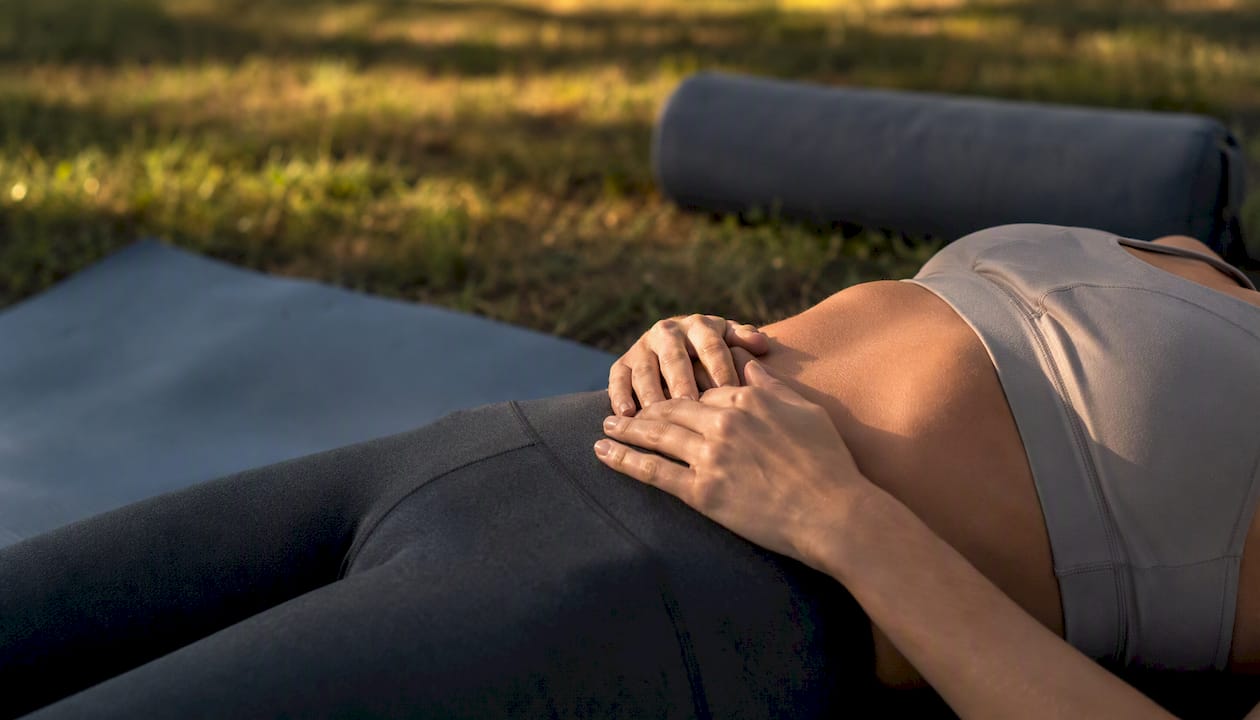
- Diaphragmatic breathing (5 min): Lie on your back, one hand on your belly. Inhale for 4 counts, exhale for 6. This activates the parasympathetic nervous system before you move.
- Cat-Cow (2 min): On hands and knees, alternate spinal flexion and extension with your breath. Warms the spine and begins gentle lymphatic movement through the torso.
- Standing Forward Fold / Uttanasana (2 min): Mild inversion that encourages lymph drainage from the lower body. Bend your knees if hamstrings are tight.
- Warrior II / Virabhadrasana II (3 min, each side): Builds circulation in the legs and engages the large muscle groups, which helps pump lymph fluid.
- Supine Twist / Supta Matsyendrasana (2 min each side): Compresses and releases abdominal organs, supporting lymphatic and digestive circulation.
- Legs-Up-the-Wall / Viparita Karani (4 min): Passive inversion that drains lymph from the legs and strongly activates the parasympathetic system.
- Alternate Nostril Breathing / Nadi Shodhana (3 min): Balances autonomic tone. Inhale left, exhale right, inhale right, exhale left. This is the pranayama component most associated with HPA-axis calming.
- Savasana (4 min): Non-negotiable. This is where the parasympathetic consolidation happens.
Beginner modification: replace Warrior II with a chair-supported version and shorten each pose by 30 seconds.
Weekly scaling: start at two sessions per week for the first two weeks, add a third in week three, and target four to five sessions by week eight. Expect noticeable stress reduction within two to three weeks; measurable immune marker shifts, if they occur, typically require eight weeks or more of consistent practice.
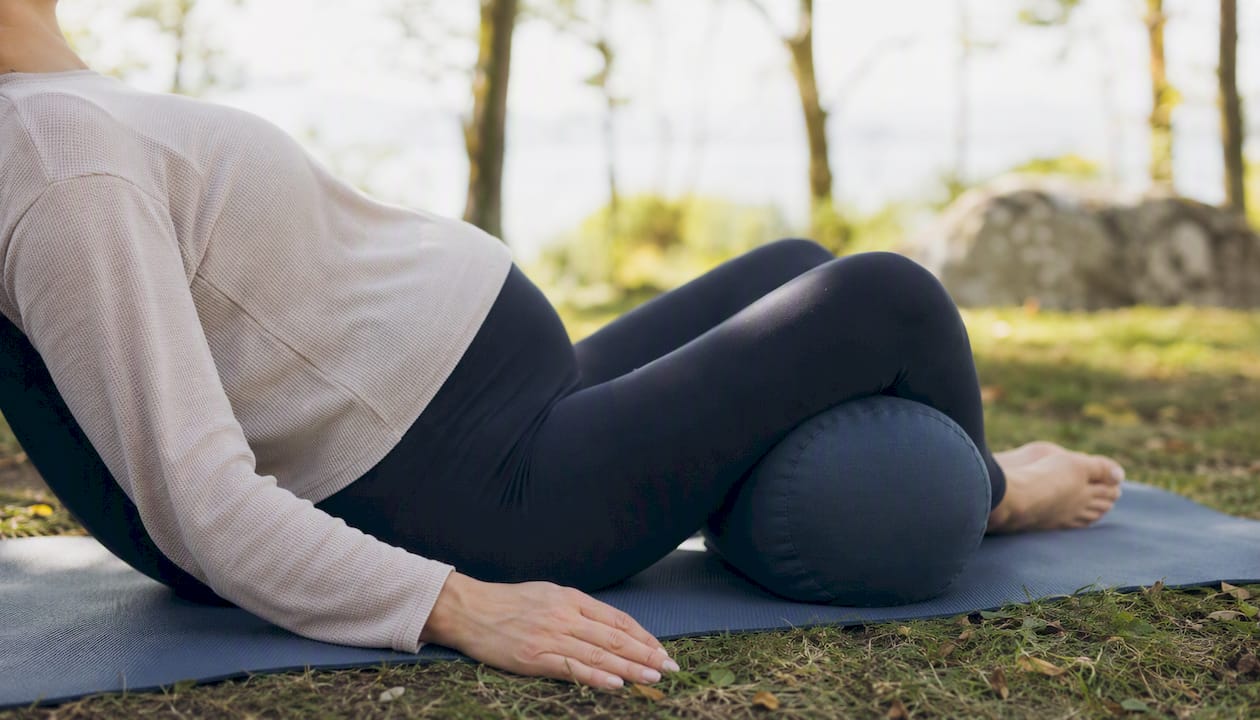
For restorative options that support this kind of gentle, recovery-focused work, the benefits of bolster yoga are worth reading before you build out your weekly plan.
Who should check with a clinician before starting?
Most healthy adults can begin a gentle yoga practice without medical clearance. Several groups should talk to a clinician first.
People with autoimmune conditions (lupus, rheumatoid arthritis, multiple sclerosis) should confirm that increased physical activity and breath retention practices are appropriate for their current disease state. Immunocompromised individuals, including those undergoing chemotherapy or on immunosuppressive medications, need personalized guidance on intensity and class environment.
Pregnancy changes the safe range of postures significantly: deep twists, prone poses, and strong breath retention are generally avoided after the first trimester. Anyone recovering from recent surgery should follow their surgeon’s activity restrictions before adding inversions or weight-bearing poses.
For anyone with a history of injury, yoga for injury rehabilitation offers practical modifications that keep practice safe without sacrificing the stress-reduction benefits.
Common precautions regardless of health status: avoid breath retention (kumbhaka) if you have uncontrolled hypertension, and skip heated classes during acute illness or fever.
What the evidence doesn’t yet tell us
The research on yoga and immunity is genuinely promising, but several gaps are worth naming clearly.
- Most trials use small samples (often under 50 participants), which limits how confidently results generalize.
- Protocol heterogeneity is significant: “yoga” in one trial means a 15-day retreat; in another, it means 20 minutes of gentle stretching three times a week. Comparing outcomes across those designs is difficult.
- Short follow-up periods are common. Many studies measure markers immediately after an 8–12 week program with no long-term tracking, so whether effects persist is largely unknown.
- The stress-buffering effect (attenuated cortisol rise during an acute stressor) is the most reproducible finding. Changes in circulating inflammatory markers like IL-6 are less consistent and may require longer, more sustained practice.
- Yoga is complementary care. No current evidence supports replacing medical treatment with yoga for immune-related conditions.
The WHO’s documentation of links between chronic stress, depression, and immune dysregulation provides useful context: yoga’s value may lie partly in addressing a root cause (chronic stress) rather than directly targeting immune cells.
An editorial perspective on what the science actually means for your practice
The evidence points somewhere specific, and it’s worth saying plainly: yoga’s most reliable immune effect is stress buffering, not direct immune enhancement. That distinction matters because it changes how you should think about your practice.
If you approach yoga as a way to manage chronic stress, you are working with the mechanism the research actually supports. The cortisol data, the IFN-γ preservation, the IgA gains in sustained programs — these all trace back to reduced physiological stress load. A consistent 25-minute practice three times a week does more for your immune resilience than an occasional 90-minute class when you feel run down.
The mistake most people make is treating yoga as an acute intervention, something to add when they feel a cold coming on. The trials that show real biomarker changes are built on weeks of regular practice. Consistency is the active ingredient.
The right gear makes a consistent practice easier
A practice you can sustain is a practice that actually delivers results. One thing that derails consistency more than motivation is friction: a mat that slides, a strap that won’t hold, a setup that takes five minutes to assemble before you even begin.
For the routine above, a natural rubber mat with at least 4mm of cushioning gives you the grip needed for standing poses and the padding for Savasana and supine work. A yoga strap is genuinely useful for Supine Twist and seated forward folds, especially if flexibility is still developing.

Yuneyoga carries natural rubber mats, eco-friendly travel options, and durable straps built for exactly this kind of daily practice. Browse the full collection at Yuneyoga and find the setup that removes the friction between you and a consistent routine.
Sources
- Yoga and immune system functioning: a systematic review of randomized controlled trials
- Systematic review of randomized controlled trials on the immunological effects of yoga (2017–2020)
- Effect of integrated yoga practices on immune responses in examination stress – A preliminary study
- Yoga and immune system functioning: a systematic review of randomized controlled trials
This article is general information, not a substitute for advice from a qualified doctor. Consult a qualified healthcare professional about your own circumstances before acting on anything here.


