

Yoga for Poses: A Beginner’s Guide to Essential Asanas
Key Takeaways
A beginner’s yoga practice can be simple: choose a few poses, move with care, and let your body guide the pace.
- Learn the basic shape and purpose of each asana before trying to deepen it.
- Choose poses according to your comfort, goals, and physical needs.
- Use steady footing, easy breathing, and props to make poses more manageable.
- Combine standing, seated, balance, and floor poses in a short sequence.
- Stop or adjust when a pose causes sharp pain, numbness, or strain.
Understand the basics of yoga poses
Yoga poses are not a test of flexibility or a set of shapes you have to master. They offer ways to move, pause, and notice how your body feels in the moment. If you’re new to yoga for poses, start with a few familiar positions and let comfort—not appearance—set the pace.
What an asana is and how poses fit into a practice
An asana is a yoga posture, whether it’s a steady standing pose, a seated position, or a gentle stretch on the floor. A practice can include one asana or several, arranged to suit the time and energy you have. Knowing the name of a pose is less important than understanding its basic shape and noticing what happens as you move into it.
How breath and alignment support each pose
Breath can help you move without rushing. Let your inhale create a little space and use your exhale to settle into a position, while keeping your joints comfortable rather than forcing them into a picture-perfect line. Comfortable alignment gives you room to breathe and adjust as the pose changes.
A simple sequence can make the connection between breath and movement easier to feel. For example, a beginner-friendly flowing sequence links postures at an approachable pace, while a pose dictionary can help you look up an unfamiliar asana. Treat either as a reference, then make the movement your own.
Why flexibility is not a requirement for getting started
You don’t need to touch your toes or sit flat on the floor to begin. Yoga poses can be adjusted by bending the knees, using support, or choosing a smaller range of motion. A position that feels steady and gives you room to breathe is a useful starting point, even if it looks different from what you’ve seen in a photo.
Choose poses that match your needs
There is no single beginner routine that suits every body or every day. A few questions can help you choose: How much time do you have? Would you like to move, balance, or settle down? Is there anything that feels tender or restricted today? Let the answers shape a small, flexible practice rather than trying to follow a rigid checklist.
If you practice away from home, portability can make setup easier. Yune Yoga foldable travel mats are thin, light, and easy to pack, which can suit a short session in a hotel room or another small space. For a getaway, you might also be planning around a Hayesville wellness retreat or comparing vacation rental stays; either way, a short routine can fit more easily than a long list of poses.
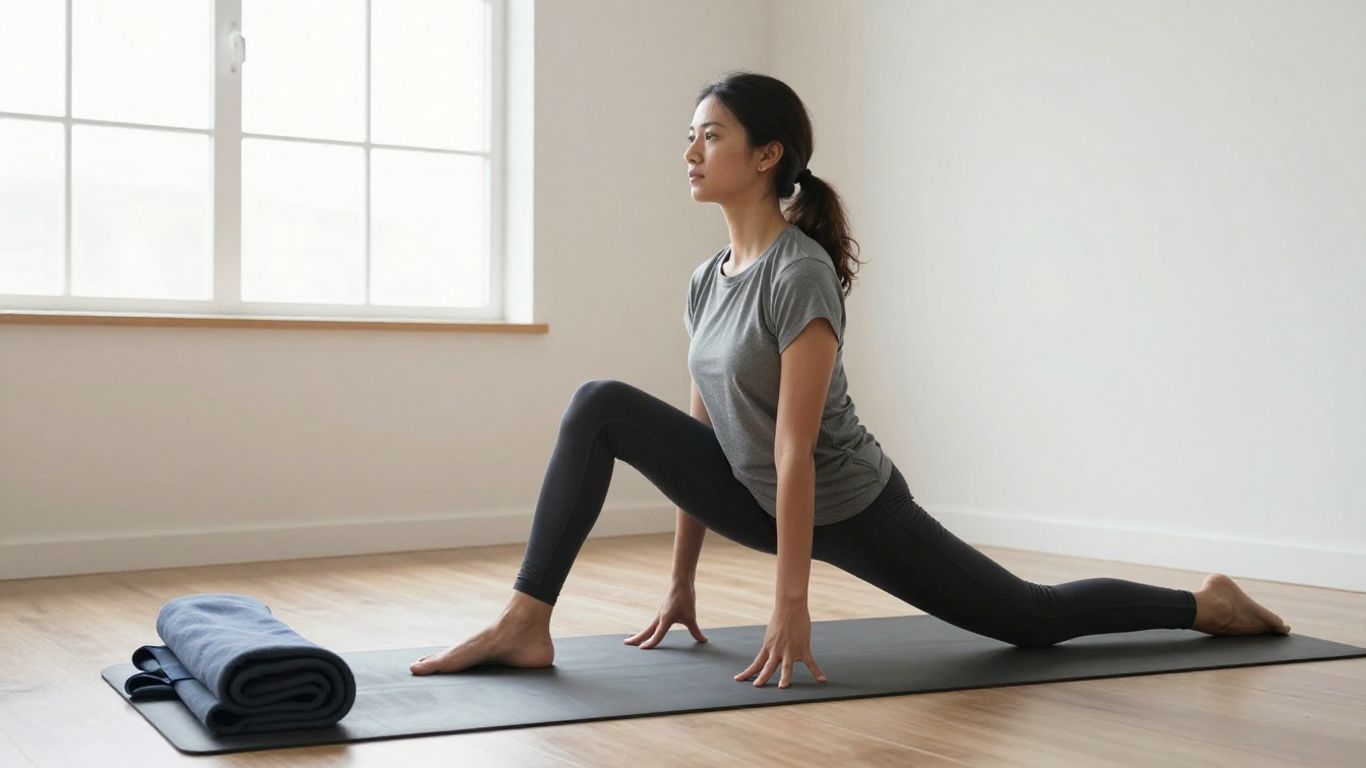
Pick a starting level that feels manageable
A manageable starting level is one where you can breathe steadily and leave a pose without scrambling. Try a small number of familiar postures, holding each only as long as it feels comfortable. If you want ideas for a first session, you could explore basic poses for beginners, then choose just a few rather than attempting every pose at once.
Consider your goals, such as mobility, balance, or relaxation
Your goal can guide which poses you choose, but it doesn’t have to dictate your whole practice. For a little movement, you might choose cat-cow; for balance, try tree pose near a wall; for a quieter finish, settle into child’s pose. On days when you have more room to move, a calming morning routine offers another way to think about how poses can fit together.
Adapt your choices to injuries and physical limitations
If you have an injury, persistent pain, or a health concern, ask a qualified health professional what movements are appropriate before beginning. During practice, avoid pushing into pain and use support to reduce the range of motion. Choices about movement are personal; the same steady approach people use when planning first-home costs or considering long-term financial strategies can be a useful reminder to take your time, though those topics are separate from yoga.
Learn foundational standing poses
Standing poses offer a chance to feel your feet on the ground and notice how your weight shifts. You can practice them one at a time, with enough space to step out comfortably. A wall or chair nearby can provide a little reassurance as you learn the shapes.
Build stability with mountain and chair pose
Mountain pose begins with standing upright, feet grounded and arms relaxed by your sides. Let your shoulders soften and notice whether your weight feels balanced across both feet. In chair pose, bend your knees and shift your hips back as if reaching for a seat; keep the bend small enough that you can still breathe easily.
The two poses make a simple contrast: one is quiet and tall, the other adds a little effort through the legs. Take a moment between them to stand normally and notice how your body feels. That pause counts as part of the practice, too.
Explore warrior poses for strength and balance
Warrior poses use a wide stance and bent knees to explore strength and balance. In a beginner version of warrior II, turn one foot outward, bend the front knee only as far as comfortable, and extend your arms without lifting your shoulders toward your ears. Keep the back leg steady and let your gaze remain soft.
It’s fine to shorten your stance or rest your hands on your hips while you learn. You can also browse common flowing yoga poses for examples of how standing postures may appear in a sequence. Try a few calm breaths, then step your feet together before switching sides.
Use triangle pose to practice reaching with control
Triangle pose invites you to lengthen through the sides of your body while keeping your legs steady. From a wide stance, turn one foot outward and reach in that direction, then rest your lower hand on your shin, a block, or your thigh. The top arm can remain at your waist if lifting it feels awkward.
Think of reaching forward and down only as far as you can maintain a long, comfortable spine. The aim is not to touch the floor. Come out slowly, take a breath, and repeat on the other side if it feels good.
Try seated and floor poses
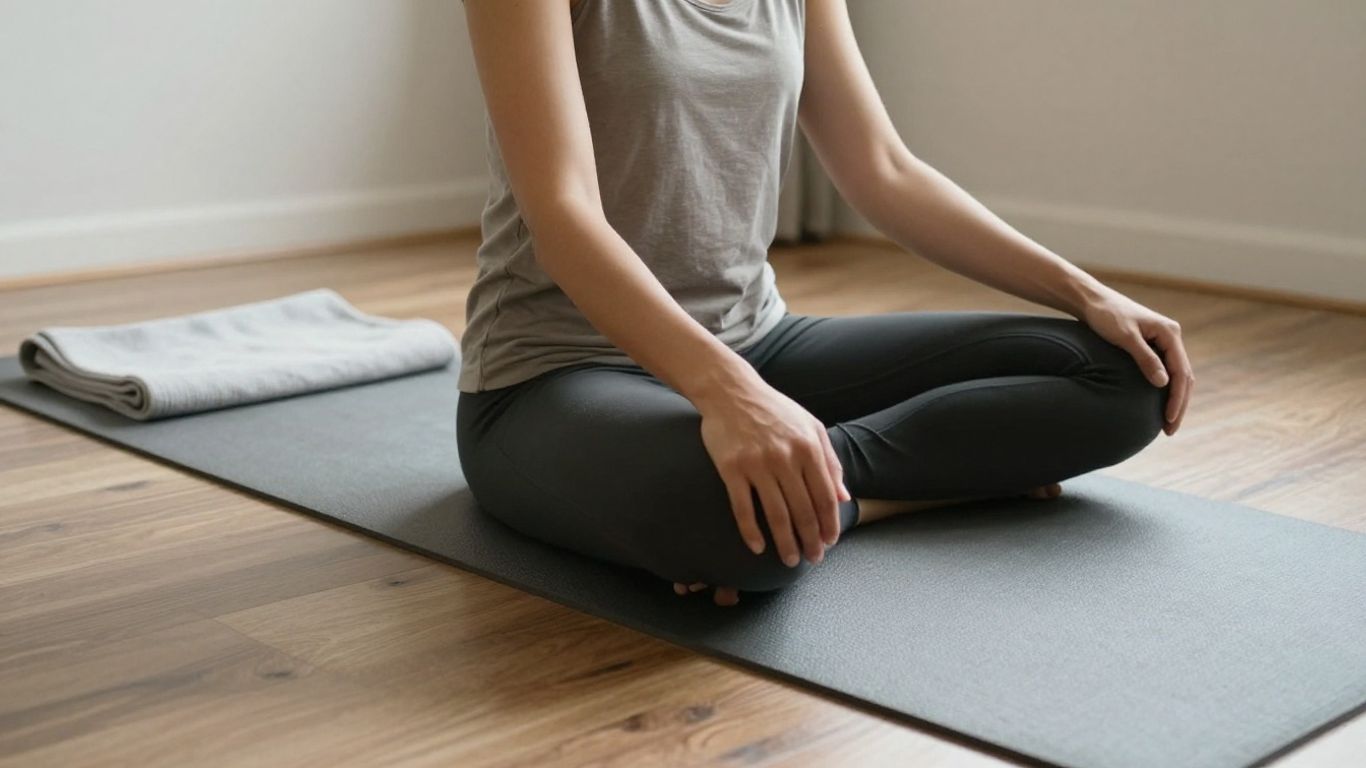
Seated poses and gentle floor movements let you slow down and explore a smaller range of motion. Use a mat or another comfortable surface, and add a folded blanket if sitting on the floor feels difficult. Move at an unhurried pace; there’s no need to make a pose more intense to make the practice worthwhile.
Use easy pose and staff pose to find a steady seat
Easy pose is a comfortable cross-legged seat, not a requirement to sit in a particular way. If your hips or knees feel strained, sit on a folded blanket or extend your legs instead. Staff pose offers that alternative: sit with your legs reaching forward, knees softly bent if needed, and hands resting beside you.
The point of either position is to find a seat you can maintain without bracing. A chair is also a reasonable choice if getting down to the floor or back up is uncomfortable. Let the support make the pose easier to settle into.
Practice cat-cow and child’s pose for gentle movement
Cat-cow pairs two easy spinal movements, usually from hands and knees. As you inhale, let your chest move gently forward; as you exhale, round your back only as much as feels comfortable. In child’s pose, send your hips toward your heels and rest your forehead on a cushion or your hands if the floor is too far away.
You can make this short sequence your own by moving through it at a pace that allows you to breathe. If hands-and-knees is uncomfortable, skip it or try a smaller movement while seated. A gentle back-pain routine may offer additional ideas, but persistent or severe pain calls for professional guidance.
Add a seated forward fold without forcing the stretch
A seated forward fold can be as modest as hinging slightly from the hips while seated, with your knees bent. Rest your hands on your legs and stop well before you feel a sharp pull. You can use a strap around your feet without pulling on it, or simply leave your hands where they are.
The purpose is to explore a comfortable position, not to reach your toes. If you notice yourself holding your breath or rounding heavily to get lower, ease back upright. A smaller fold is still a forward fold.
Develop balance and backbend poses
Balance and backbend poses can feel unfamiliar at first, so it helps to approach them with support and patience. You don’t need to hold a pose for long; a few steady breaths may be plenty. Choose a version that lets you leave the pose smoothly if you want to stop.
Start with tree pose near a wall for support
In tree pose, stand on one foot and place the other foot against your ankle or lower leg—avoid pressing it into the knee joint. Keep one hand on a wall or chair if that helps you feel steady. You can also leave the lifted toes on the floor like a kickstand.
Balance naturally shifts from moment to moment. Fixing your gaze on one unmoving point may help, but wobbling is not a failure; it’s a cue to adjust your stance or use more support. Change sides, taking a pause between attempts.
Explore bridge pose as an accessible backbend
Bridge pose begins lying on your back with knees bent and feet resting on the floor. Press gently through your feet and lift your hips only a little, or keep your body on the mat and practice the setup. Let your neck stay relaxed, and avoid turning your head while your hips are raised.
This pose doesn’t need a high lift to count. Lower slowly and rest before deciding whether to repeat. If the position pinches or feels wrong, come down and choose a more comfortable shape instead.
Recognize when to modify or skip a pose
A pose may need a change when you can’t breathe normally, feel sharp pain, or notice numbness or tingling. Try reducing the range, adding support, or coming out of the posture. Some days, the most useful choice is to skip a pose entirely.
Use your own experience as information rather than a reason to push harder. A stable, smaller version gives you a way to keep practicing while respecting your limits. There’s no penalty for changing your plan.
Put poses together into a simple practice
A short practice can include a quiet start, a little movement, and a calm finish. Choose a few poses you already know, and leave enough time to get in and out of them without rushing. You can practice at home, outdoors, or while traveling, as long as the surface and surroundings feel safe.
Arrange poses to warm up, build intensity, and cool down
Begin with a comfortable seat or mountain pose, then move into a gentle warm-up such as cat-cow. Add one or two standing poses if you feel ready, and finish with an easy seated or floor position. This sequence moves from settling in to more active movement and back toward rest.
A brief practice might include the following, with a pause between each stage:
- Start with a few slow breaths in a comfortable seat.
- Warm up with gentle cat-cow or shoulder movements.
- Practice mountain pose, then a supported standing pose.
- Finish with child’s pose or another comfortable resting position.
Keep the sequence loose rather than treating it as a test to complete. If you have just a few minutes, shorten it; if a pose doesn’t suit you today, leave it out. For ideas on creating a beginner-friendly home practice, consider how your space and schedule shape the routine.
Use props and modifications to suit your body
Props can bring the floor closer or make a seated position more comfortable. A folded blanket can raise your hips, a block can support your hand in triangle pose, and a strap can help you keep a gentle hold without reaching too far. Yune Yoga absorbent yoga towels offer an absorbent option for practice surfaces, while Yune Yoga durable yoga straps are among the accessories available for a portable setup.
Choose support that feels stable and easy to use, and keep it within reach before you begin. A prop is not a shortcut; it’s a practical way to adapt a pose to your body and the space you have. You might also explore using yoga straps for general ideas on modifications.
Notice signs of strain and adjust your practice
Pay attention to the signals you can observe: breath that becomes strained, a joint that feels pinched, or muscles working so hard that you can’t settle. Ease out of the pose, rest, or switch to a gentler version. If discomfort continues after you stop, seek appropriate professional advice.
With practice, you may get better at recognizing what feels steady and what does not. Keep your routine flexible, and let the day’s energy influence how much you do. A few comfortable poses are enough to make a practice feel complete.
Conclusion
Learning yoga poses is less about achieving a perfect shape than finding a comfortable way to move and pause. Start with a few familiar asanas, use support when it helps, and adjust or stop whenever your body asks you to. Over time, those small, considered choices can help you build a practice that fits your life.
Frequently Asked Questions
How many yoga poses should a beginner learn first?
Start with a small group of poses you can remember and practice comfortably. A few standing, seated, and floor poses are enough to create a simple routine.
How long should I hold a yoga pose?
There is no required length. Stay only while you can breathe comfortably and maintain a steady position, then come out slowly.
Do I need to be flexible to start yoga?
No. You can begin with limited flexibility by bending your knees, using props, and choosing a smaller range of motion.
What should I wear for a beginner yoga practice?
Wear clothes that let you move comfortably without needing constant adjustment. Choose a clear, stable surface and keep any props nearby.
Can I practice yoga at home as a beginner?
Yes. Choose a quiet area with enough room to move, begin with familiar poses, and avoid attempting movements that feel unsafe or unfamiliar without guidance.
What should I do if a yoga pose hurts?
Stop or ease out of the pose rather than pushing through sharp pain, numbness, or tingling. If pain persists or you have a health concern, seek advice from a qualified professional.
How can I make a short yoga routine?
Choose a gentle warm-up, one or two poses that match your energy, and a comfortable position to finish. Keep the sequence simple enough to practice without rushing.

