Yoga for Cyclists: Boost Performance and Recovery
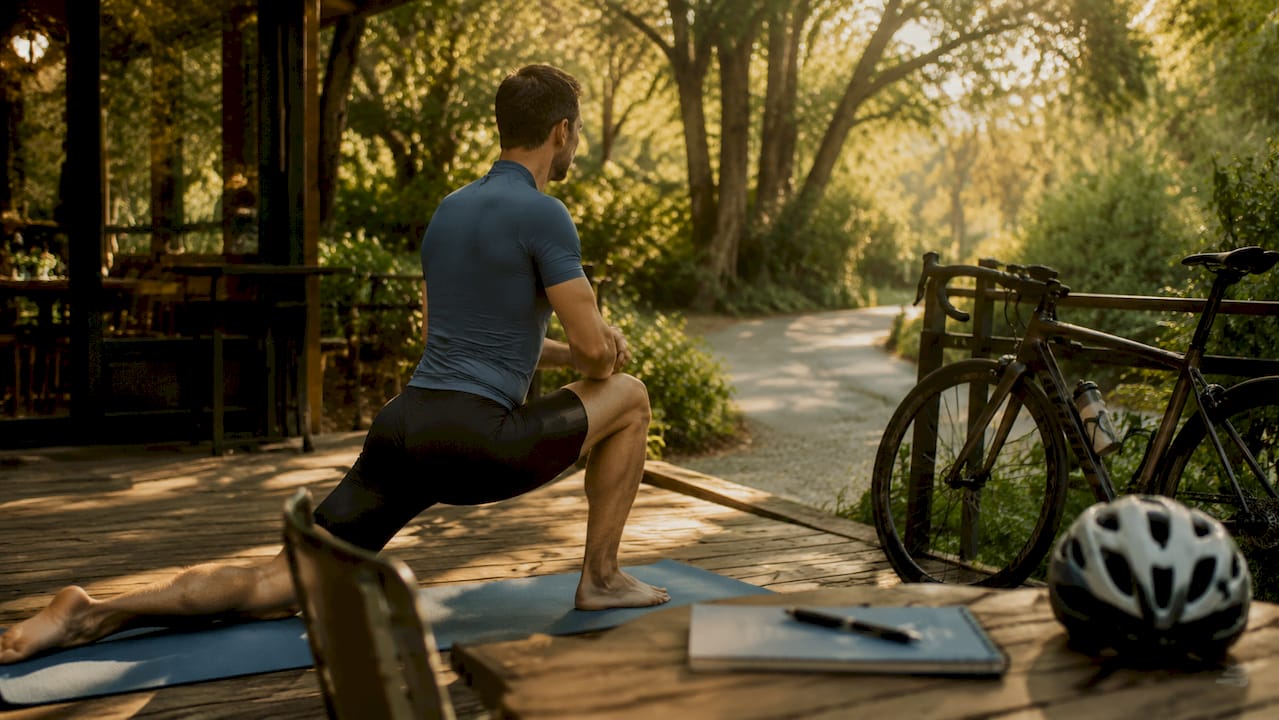
Yoga for cyclists is a targeted practice that addresses the specific muscular and postural demands of riding: tight hip flexors, a locked thoracic spine, and a compressed core. Unlike general yoga classes, cycling-specific yoga focuses on the exact joints and muscle groups that suffer most from hours in the saddle. Fitness experts recommend cyclists practice dedicated mobility or yoga routines at least 3 times per week, with sessions running 10–15 minutes each. That frequency is enough to produce measurable changes in hip mobility, spinal rotation, and recovery quality.
What is yoga for cyclists, and why does it matter?
Yoga for cyclists is defined as a structured mobility and strength practice built around the physiological demands of cycling. The standard industry term for this approach is “sport-specific yoga,” and it differs from general yoga in one key way: every pose targets a pattern that cycling either overloads or neglects.
Cycling locks you into a forward-flexed position for extended periods. That posture shortens the hip flexors, rounds the upper back, and compresses the chest. Over time, these adaptations reduce power output, limit breathing capacity, and increase injury risk. Yoga directly reverses each of those patterns by restoring range of motion, building stability, and retraining how your nervous system responds to physical stress.
The three primary physiological targets for cyclists are hip mobility, thoracic spine rotation, and core strength. Each one connects directly to how efficiently and comfortably you ride.
What are the key physiological benefits of yoga for cyclists?
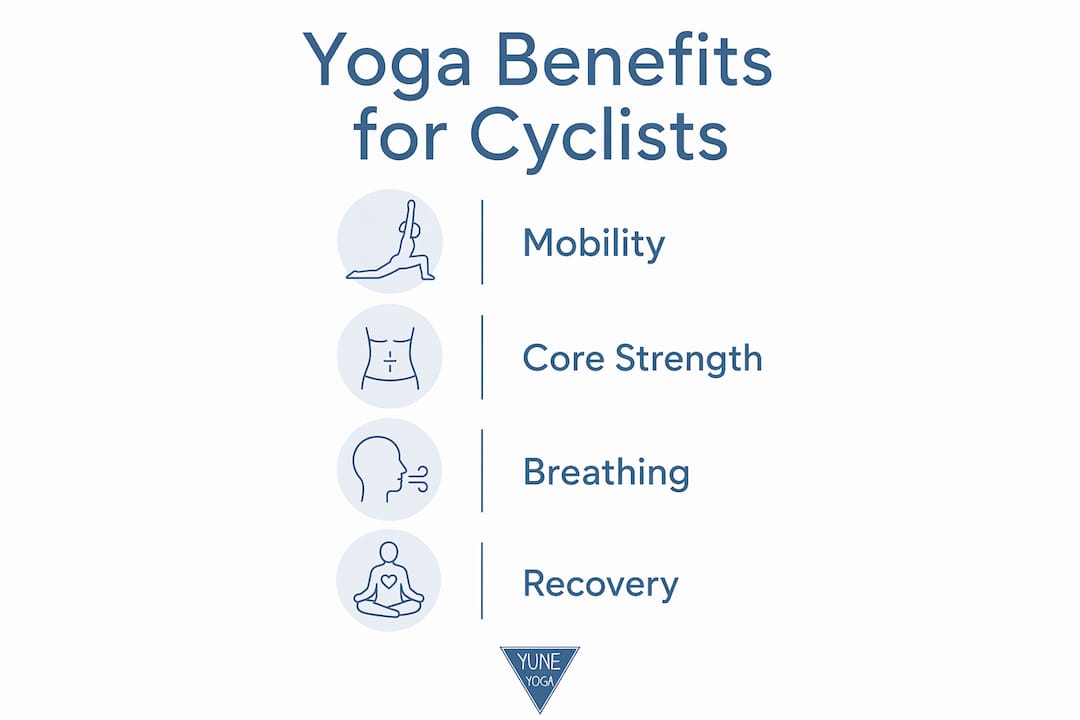
Yoga improves cycling performance through four distinct physiological pathways: mobility, core strength, breathing, and nervous system recovery.
Hip flexor mobility and power output. Tight hip flexors prevent full glute activation at the bottom of the pedal stroke. Improving hip flexor mobility allows maximal glute recruitment during that phase, which directly increases power output. Poses like Low Lunge and Pigeon Pose restore this range of motion without requiring long sessions.
Thoracic spine rotation and breathing. Thoracic spine mobility is critical for comfort in an aero position and for efficient breathing. A rigid upper back forces the lungs to work harder and limits how low you can comfortably ride. Yoga poses that target thoracic rotation, such as Thread the Needle, produce faster improvements in aero comfort than hamstring stretching alone.
Core strength and bike stability. A strong core keeps you stable on the bike, reduces energy leakage through the hips, and protects the lower back. Yoga builds this stability through poses that demand controlled engagement rather than brute force. Bridge Pose and Downward Dog both train the posterior chain while reinforcing spinal alignment.
Nervous system recovery. Restorative yoga shifts the nervous system from a sympathetic (stress) state to a parasympathetic (recovery) state. This is the physiological mechanism behind the mental calm you feel after a yoga session. For cyclists training hard, that shift accelerates recovery between sessions.
- Hip mobility: unlocks glute power during the pedal stroke
- Thoracic rotation: improves aero comfort and lung capacity
- Core stability: reduces energy waste and lower back strain
- Breathing: pranayama (yogic breathwork) trains diaphragmatic breathing, improving oxygen efficiency and lowering perceived effort
- Mental recovery: restorative holds reduce training stress and improve sleep quality
Pro Tip: Add 30–60 seconds of light active movement between yoga sets. Active rest between sets helps regulate the nervous system and moves your body into recovery mode faster than lying still.
Which yoga poses work best for cyclists?
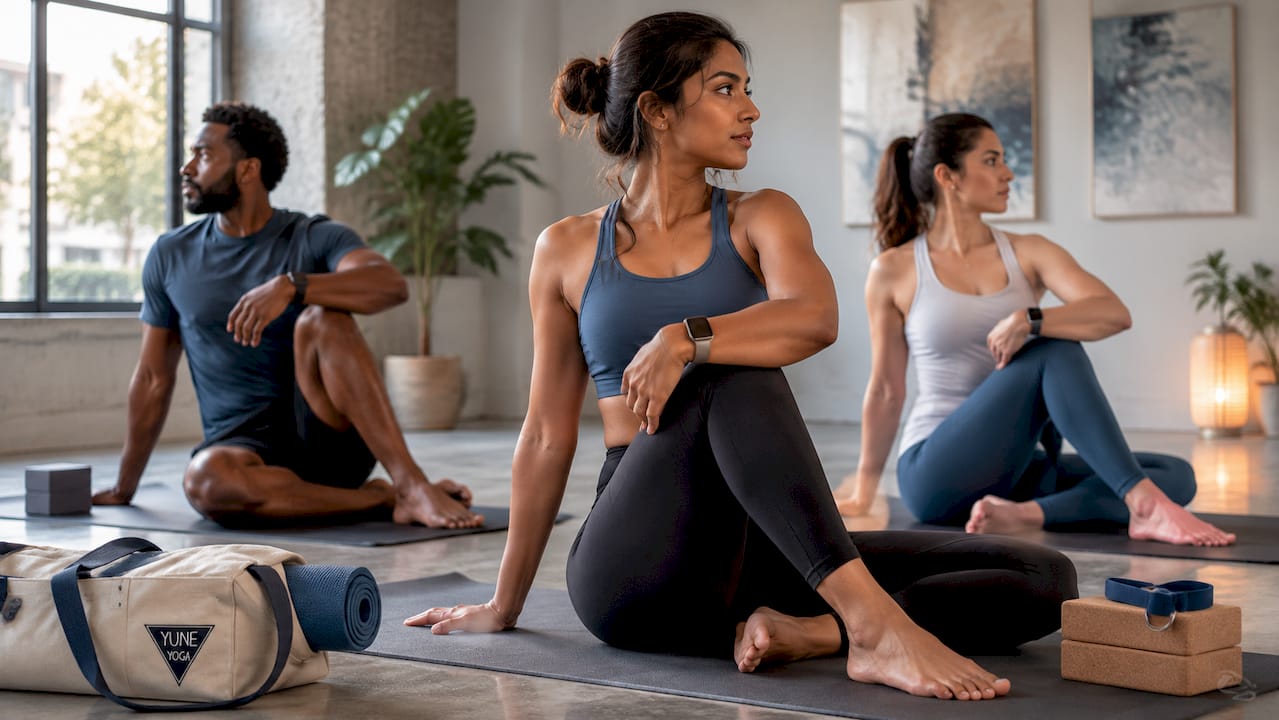
The most effective cycling yoga programs center on eight poses that directly address the patterns cycling creates. Key poses include Low Lunge, Pigeon Pose, Thread the Needle, Reclined Figure Four, Supine Spinal Twist, Downward Dog, Bridge, and Chest Opener. Each targets a specific area that cycling either tightens or weakens.
| Pose | Target area | Primary benefit |
|---|---|---|
| Low Lunge | Hip flexors, psoas | Restores hip extension for stronger pedal stroke |
| Pigeon Pose | Glutes, external rotators | Releases deep hip compression from saddle time |
| Thread the Needle | Thoracic spine, shoulders | Improves rotation and aero position comfort |
| Reclined Figure Four | Piriformis, IT band | Reduces knee and hip pain from repetitive motion |
| Supine Spinal Twist | Lumbar spine, obliques | Decompresses the lower back after long rides |
| Downward Dog | Hamstrings, calves, spine | Full posterior chain lengthening and spinal traction |
| Bridge Pose | Glutes, hip flexors | Activates glutes and counteracts hip flexor dominance |
| Chest Opener | Pectorals, anterior shoulders | Reverses forward-rounded posture from the handlebar position |
Session structure matters as much as pose selection. Cycling-specific yoga sessions should use short dynamic sequences before rides for activation and longer restorative holds after rides or on rest days for recovery. A pre-ride session of 10–15 minutes focuses on dynamic movement through Low Lunge and Downward Dog. A post-ride session of 20–30 minutes uses longer holds in Pigeon, Supine Spinal Twist, and Chest Opener.
Expert consensus places effective session lengths between 15 and 30 minutes. That range is accessible even during heavy training weeks. You do not need a 60-minute class to see results.
What are common misconceptions about yoga for cyclists?
The biggest misconception cyclists carry into yoga is that more flexibility is always better. Excessive flexibility can impede power transfer and destabilize joints. Cycling demands a specific range of motion with control, not the maximum range a gymnast might pursue. Chasing extreme flexibility in the hips or hamstrings can actually reduce your ability to generate force on the bike.
A second common error is treating yoga as a substitute for strength training. Yoga builds muscular endurance and body control, but it does not develop the force production that strength training provides. Squats, deadlifts, and single-leg exercises remain necessary for cycling-specific power. Yoga and strength training serve different functions and work best together.
Cyclists also tend to fixate on hamstring flexibility while ignoring the thoracic spine and shoulder girdle. Tight hamstrings are visible and easy to feel. A stiff upper back is subtler but causes more problems in an aero position. Thoracic and shoulder mobility are often overlooked yet critical for both efficiency and comfort on the bike.
- Flexibility without stability reduces power and increases injury risk
- Yoga does not replace strength training for force production
- Hamstring focus alone misses the thoracic spine, which limits aero positioning more
- Passive stretching is less effective than active mobility work that trains end-range control
Pro Tip: Use props like blocks and blankets during yoga sessions. Props maintain spinal alignment and let you access deeper ranges of motion safely, without forcing joints past their stable limit.
Active mobility, which involves controlled strength at end ranges of motion, retrains the nervous system and reduces injury risk more effectively than passive stretching alone. This distinction matters for cyclists because the goal is functional range of motion, not flexibility for its own sake.
How to incorporate yoga into a cycling training plan
Integrating yoga into a training schedule works best when you treat it as a structured component, not an afterthought. Here is a practical weekly framework based on current expert recommendations.
- Schedule yoga three times per week. Fitness experts recommend 3 sessions per week of 10–15 minutes each as the minimum effective dose. You can extend sessions to 30 minutes on rest days without compromising cycling training.
- Use dynamic yoga before rides. A 10-minute pre-ride sequence of Low Lunge, Downward Dog, and hip circles activates the glutes and primes the thoracic spine. This is not a warm-up stretch. It is neuromuscular activation that improves power from the first pedal stroke.
- Use restorative yoga after rides. Post-ride sessions focus on longer holds in Pigeon, Supine Spinal Twist, and Chest Opener. These holds decompress the spine, release hip compression, and shift the nervous system toward recovery. A morning yoga routine on rest days serves the same recovery function.
- Keep yoga and strength training on separate days when possible. Combining a heavy strength session with a long yoga session in the same day increases fatigue without adding proportional benefit. If you must combine them, do yoga after strength work, not before.
- Progress gradually. Start with 10-minute sessions using three to four poses. Add poses and duration over four to six weeks as your body adapts. Cyclists new to yoga often try to do too much too soon and end up sore or discouraged.
- Adapt to your schedule. A 10-minute session done consistently beats a 45-minute session done once a month. Consistency drives adaptation. If time is tight, prioritize hip flexor and thoracic spine work above all else. If you want a structured progression, a 30-day yoga challenge builds the habit systematically.
Yoga also supports injury recovery when cycling-related overuse issues arise. Incorporating gentle mobility work during recovery periods maintains range of motion without loading damaged tissue.
Key Takeaways
Yoga for cyclists delivers the greatest benefit when it targets hip mobility, thoracic rotation, and core stability at a consistent frequency of three sessions per week.
| Point | Details |
|---|---|
| Frequency matters | Practice yoga at least 3 times per week, 10–15 minutes per session, for measurable results. |
| Match session type to ride timing | Use dynamic yoga before rides for activation; use restorative holds after rides for recovery. |
| Flexibility has limits | Excessive flexibility reduces power transfer; prioritize stable, controlled range of motion. |
| Yoga complements strength training | Yoga improves mobility and endurance but does not replace strength work for force production. |
| Thoracic spine is the priority | Upper back rotation and extension improve aero comfort and breathing faster than hamstring work alone. |
Why I think most cyclists underestimate yoga’s real value
Most cyclists I have seen try yoga approach it as a flexibility fix for tight hamstrings. They do a few forward folds, feel a stretch, and call it done. That misses the point entirely.
The real value of yoga for cyclists sits in two places most riders never think about: the thoracic spine and the nervous system. A stiff upper back limits how low and comfortably you can ride, and no amount of hamstring stretching fixes that. Thread the Needle and Chest Opener do more for your riding position in four weeks than six months of touching your toes.
The nervous system piece is even more underrated. After a hard training block, your body stays in a stress state longer than you realize. Restorative yoga is one of the fastest ways to shift out of that state and actually absorb the training you just did. Cyclists who skip this end up overtrained, not undertrained.
The cyclists I have seen make the biggest gains from yoga are not the most flexible ones. They are the ones who show up consistently, use props without ego, and treat yoga as a skill to develop rather than a box to check. Start with three short sessions a week. Focus on the thoracic spine and hips. Give it six weeks before you judge it.
— Nicholas
Yuneyoga’s resources for cyclists who want to ride better
Cyclists who want structured guidance do not have to build their yoga practice from scratch. Yuneyoga offers a library of yoga content designed for active practitioners, including routines that address the exact mobility and recovery needs that cycling creates.

Whether you need a quick pre-ride activation sequence or a full rest-day recovery session, Yuneyoga’s blog covers both. The content pairs well with any training plan and scales from beginners to experienced riders. Explore yoga mats and gear built for consistent practice, or browse the blog for routines you can start using this week. The right mat and a clear routine remove the two biggest barriers cyclists face when adding yoga to their schedule.
FAQ
What is yoga for cyclists, exactly?
Yoga for cyclists is a sport-specific practice targeting the hip flexors, thoracic spine, and core to address the postural and muscular demands of cycling. It differs from general yoga by prioritizing cycling-relevant mobility and stability over broad flexibility.
How often should cyclists do yoga?
Fitness experts recommend 3 sessions per week of 10–15 minutes each as the minimum effective dose for cyclists. Longer sessions of 20–30 minutes on rest days accelerate recovery further.
Can yoga replace strength training for cyclists?
Yoga cannot replace strength training. Yoga builds endurance and mobility, while strength training develops the force production needed for climbing and sprinting. Both practices serve different roles and work best together.
Which yoga poses help cyclists the most?
Low Lunge, Pigeon Pose, Thread the Needle, and Bridge Pose are the four highest-priority poses for cyclists. They target hip flexors, external rotators, thoracic rotation, and glute activation directly.
Is yoga good for cycling injury recovery?
Yoga supports recovery from cycling-related overuse injuries by maintaining range of motion and reducing muscular tension without loading damaged tissue. Gentle mobility work during recovery periods keeps joints functional while the body heals.


