The ideal thickness of yoga mat: How to choose the right one for your practice
Key Takeaways
The ideal mat is the one that gives you enough comfort without disconnecting you from the floor. A few simple checks can make the choice much easier.
- Thin mats are light and often feel steady for balance-focused practice.
- Medium thickness is usually the most versatile choice for everyday yoga.
- Thicker mats can make kneeling and longer floor poses more comfortable.
- Surface, material, density, and grip matter alongside millimeter ratings.
- Testing a mat in familiar poses is more useful than choosing by number alone.
Understanding yoga mat thickness measurements
The thickness of yoga mat options is usually listed in millimeters, or mm. That number describes the depth of the mat, but it does not tell you exactly how soft, firm, grippy, or durable it will feel. Two mats with the same rating can behave quite differently under your hands and feet.
What millimeter ratings mean
A millimeter rating gives you a useful starting point for estimating cushioning. A 2 mm mat generally places you closer to the floor than a 6 mm mat, while an 8 mm mat creates more separation and may feel softer under pressure. The actual experience also depends on how readily the material compresses.
Think of the rating as depth rather than a complete comfort score. If your knees touch down often, depth may matter more than it does in a standing-only sequence. If you practice balance poses, the way that depth compresses can matter just as much.
Common thickness options from 1 mm to 8 mm
Yoga mats commonly range from very thin travel designs to generously cushioned mats. The best point on that range depends on your routine, the surface beneath you, and how much space you have to carry or store your equipment. This yoga mat thickness guide offers another useful comparison of portability, cushioning, and practice style.
| Approximate thickness | Typical feel | Often suits |
|---|---|---|
| 1–2 mm | Very close to the floor | Travel and balance work |
| 3–5 mm | Moderately cushioned | General everyday practice |
| 6–8 mm | Plush and protective | Restorative or gentle sessions |
| 8 mm and above | Extra padded | Floor-based fitness and special comfort needs |
The ranges overlap, so treat them as broad categories rather than rules. A firm 5 mm mat may feel more stable than a soft 3 mm mat, and a compact travel mat may be useful as a layer over a studio mat.
How thickness affects cushioning and stability
More material can soften contact at the knees, hips, wrists, and spine during floor poses. It can also reduce the sensation of a hard floor beneath you when you hold a low lunge or settle into a seated position. That added comfort is helpful when a session includes a lot of kneeling or lying down.
The trade-off appears when the mat compresses beneath a hand or foot. A soft, thick surface can make small balance adjustments feel less predictable, especially in Tree Pose or a standing transition. A stable ground connection matters when you want your feet to feel planted.
Why thickness is only one part of mat design
Material, density, surface texture, and construction all change how a mat performs. A dense mat may feel firm at the same thickness as a softer one, while a textured surface may provide more traction during movement. Size also matters: a mat that is too short or narrow can be uncomfortable regardless of its cushioning.
For a broader look at choosing a mat, this mat material and grip guide is a natural companion to the millimeter discussion. Use thickness to narrow your options, then check the features that affect how the mat actually behaves.
Choosing the right thickness for your yoga style
Your practice style gives you a practical way to begin. Dynamic sequences tend to reward a close, dependable connection with the floor, while slower sessions may benefit from more padding. There is no single ideal thickness for every class or every day.
Thin mats for balance-focused practices
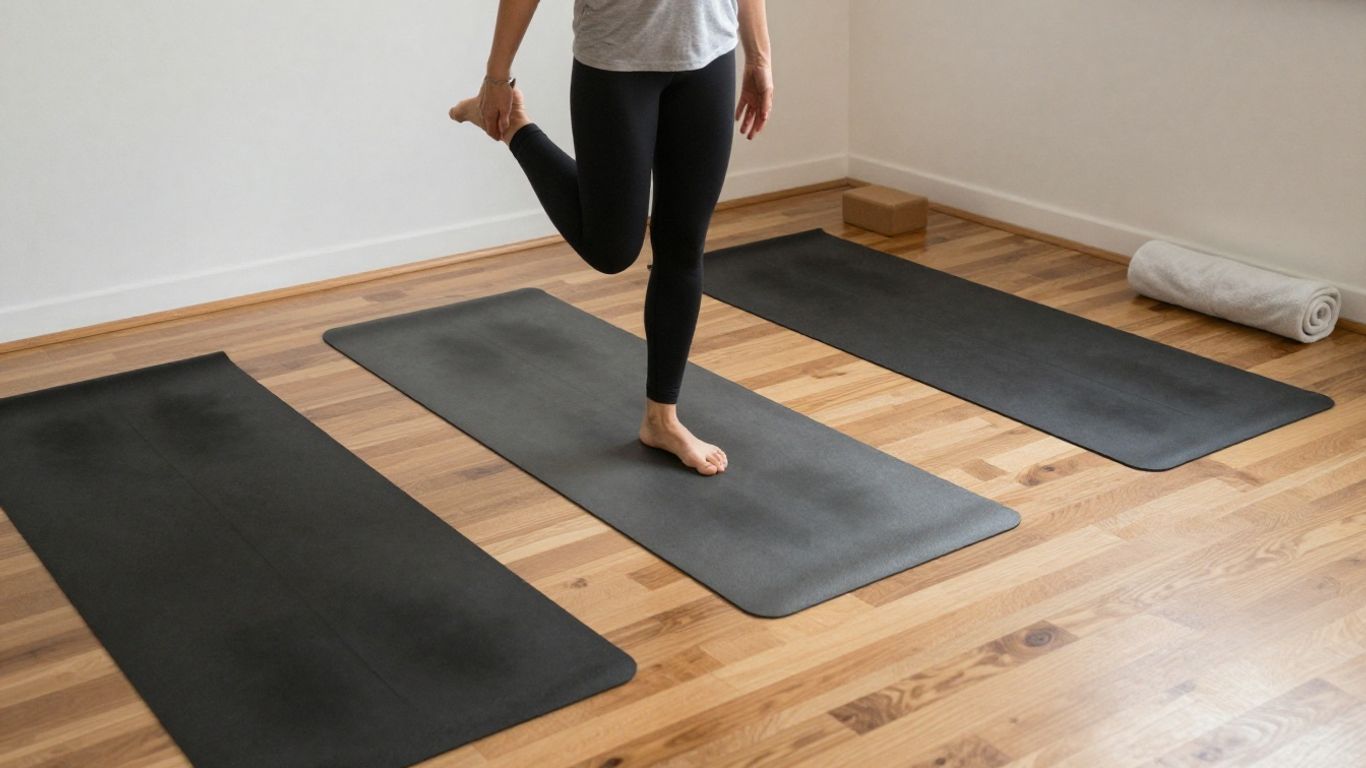
Thin mats, often around 1–3 mm, can feel firm and responsive beneath standing poses. They are convenient for travel and easy to roll or fold, which makes them appealing if your practice moves between studios, parks, and hotel rooms. The reduced cushioning may be less comfortable for long kneeling sequences.
They can also work well when you already practice on a carpet or another forgiving surface. If your hands or knees need more support, consider placing a small pad beneath those areas rather than replacing the entire mat with a very soft one.
Medium mats for all-purpose yoga
A medium mat in the 3–5 mm range is a sensible starting point for many people. It offers some protection for floor poses without creating as much movement underfoot as a very plush option. This range suits mixed sessions that move between standing, seated, and reclining work.
If you attend different kinds of classes, medium thickness can keep your equipment simple. The all-purpose mat thickness overview also explains why this middle range is often chosen when versatility matters more than a specialized feel.
Thick mats for restorative and gentle sessions
A 6–8 mm mat can make a slower practice feel more inviting, particularly when you spend considerable time on your knees, hips, or back. The extra depth may soften pressure from a hard floor and provide a little insulation from a cool surface. It can be especially appealing for restorative, gentle, and meditation-focused sessions.
The goal is not maximum softness at any cost. Look for a mat that remains supportive when you shift position, since excessive compression can make simple adjustments feel awkward.
Extra cushioning for fitness-based yoga workouts
Yoga-inspired fitness sessions may include repeated kneeling, floor exercises, or movements that place pressure on several contact points. In that setting, extra cushioning can be useful, particularly on tile, concrete, or other hard flooring. A thicker mat may also make short floor intervals more comfortable.
Choose carefully if the workout includes quick standing changes. A padded surface that feels pleasant during core work may feel less secure during fast footwork, so test both parts of the routine before committing.
Matching mat thickness to your body and comfort needs
A mat should respond to your own pressure points rather than to a generic recommendation. Height, weight, flexibility, previous sensitivity, and the poses you repeat most often all shape the decision. Notice where discomfort begins during practice and choose thickness to address that specific experience.
Supporting sensitive knees, wrists, and hips
If your knees, wrists, or hips feel the floor quickly, a thicker or denser mat may offer a more comfortable base. You can also use a folded towel or separate pad under a particular joint, which avoids making the entire surface overly soft. Small adjustments are often enough to improve a familiar sequence.
Comfort should not be confused with medical treatment. Persistent or worsening pain deserves attention from a qualified healthcare professional, rather than simply adding more padding.
Accounting for flexibility and joint mobility
Limited flexibility can cause more weight to settle into knees, hips, or hands while you find a position. A little extra cushioning may make it easier to stay present and move slowly, but it should not force you into a deeper range. Props and sensible modifications can be just as useful as a thicker mat.
If you already move comfortably through floor poses, a medium or thinner mat may give you clearer feedback from the ground. The right choice lets you work within your range without fighting the equipment.
Considering body weight and pressure distribution
Body weight is only one factor, but it affects how much a mat compresses under concentrated pressure. Someone whose weight is distributed across the whole body may experience a mat differently from someone placing most pressure through one knee or wrist. Dense construction can feel more supportive than a softer mat with the same thickness.
Try to judge the mat in the positions you actually use. A comfortable Savasana does not guarantee that the mat will feel stable under a single supporting hand.
When a thicker mat may reduce stability
Extra depth can be counterproductive if your feet or hands sink noticeably into the surface. That sinking changes balance feedback and may require constant small corrections. It is most noticeable in one-legged standing poses, plank variations, and transitions where you need to shift weight quickly.
If a thick mat feels unstable, test a firmer medium option before abandoning cushioning altogether. You can also reserve the thick mat for floor work and use a thinner one for standing practice.
Comparing mat thickness for different surfaces
The floor beneath your mat changes the experience as much as the mat itself. Hard flooring transmits pressure directly, while carpet can already provide some softness. Outdoor surfaces introduce texture, moisture, and unevenness, so the most comfortable thickness indoors may not be the most practical choice outside.
Using a yoga mat on hard floors
Tile, wood, and concrete tend to make pressure points more noticeable. A medium-to-thick mat can soften the contact, but firmness still matters if you want reliable support in standing poses. Check that the underside stays in place and that the mat does not fold or bunch as you move.
On a very hard floor, a separate pad beneath a thinner mat may provide targeted comfort without making every pose feel springy. This arrangement can also be easier to adapt from one room to another.
Practicing on carpet or soft flooring
Carpet already absorbs some pressure, so a very thick mat may not be necessary. A thinner or medium mat can preserve more stability, especially if the carpet has a dense, even pile. Thick carpet may make a soft mat feel wobbly because both layers compress.
Before class, kneel and stand in a few familiar positions. That quick test reveals whether the combined surface feels supportive or whether your feet are sinking too far.
Choosing thickness for outdoor sessions
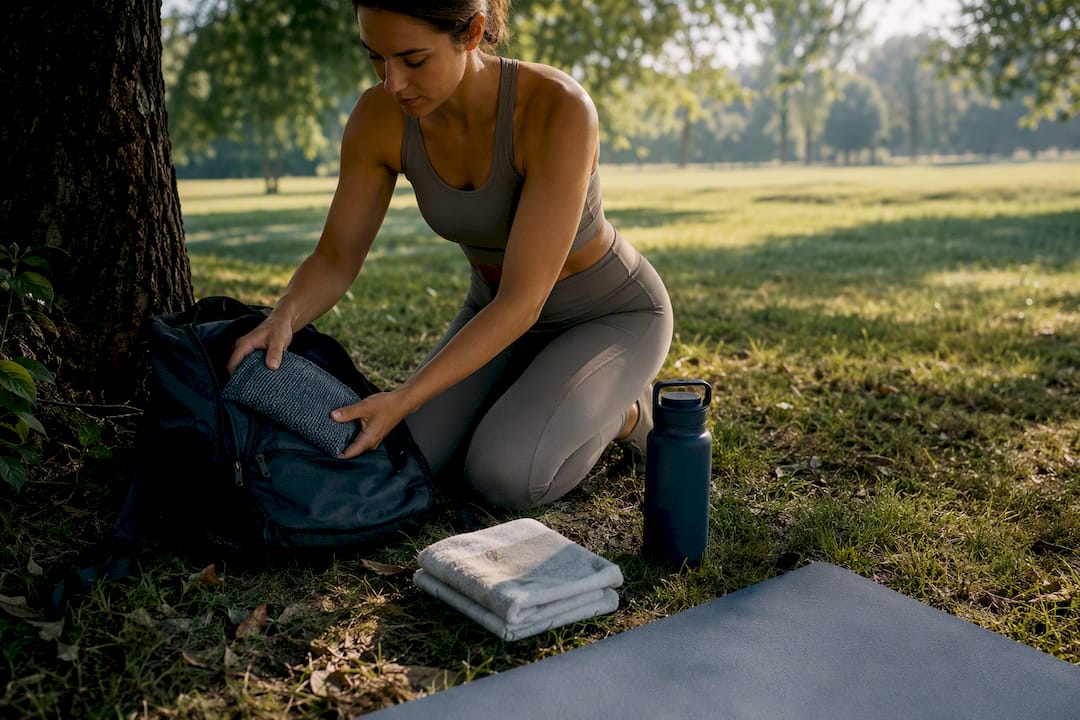
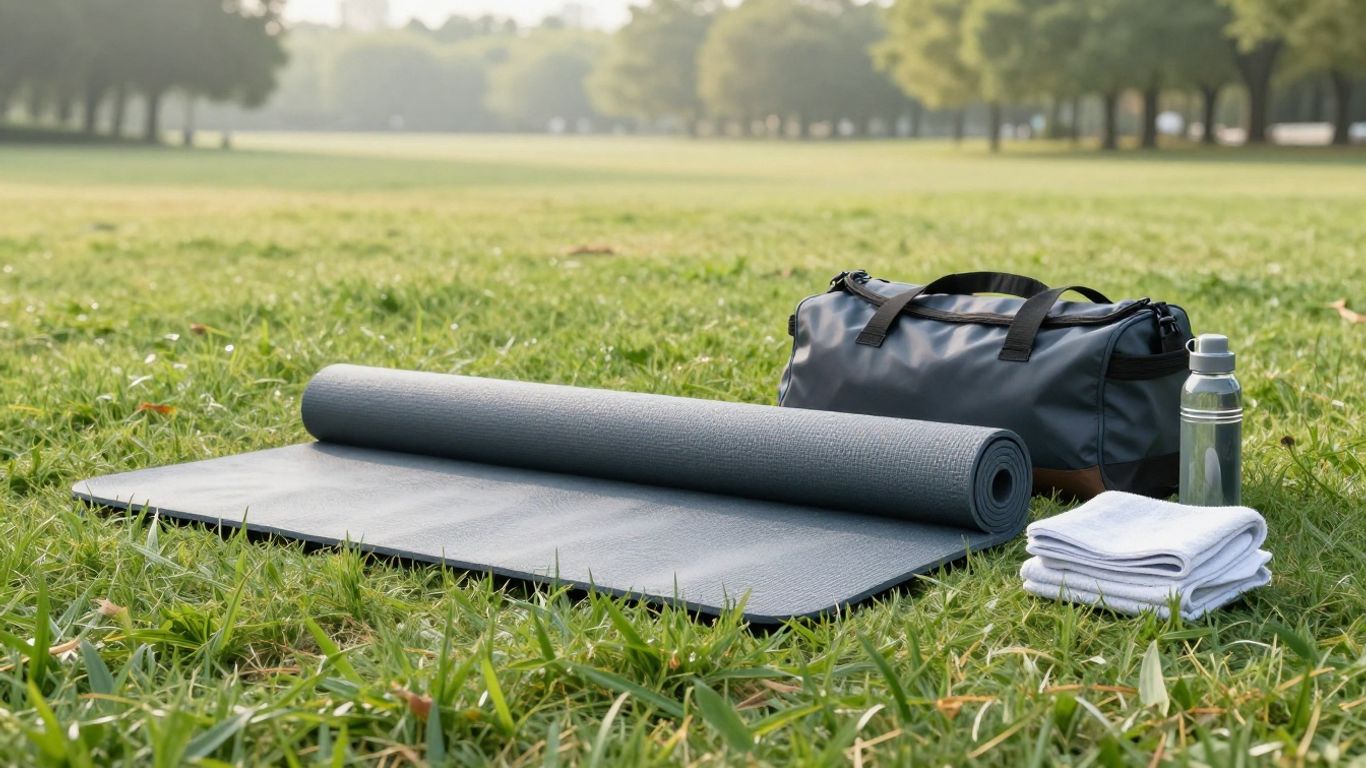
Parks, beaches, and patios can be less predictable than indoor floors. A mat used outside needs enough depth to soften small irregularities, but it also needs a surface that is easy to clean and a construction that will tolerate regular transport. Wind and damp ground are practical concerns too.
For people who practice in changing locations, Yune Yoga foldable travel mats fit the brand’s documented focus on mats that are thin, light, foldable, and easy to pack. Pair any travel mat with a quick surface check before you begin, especially outdoors.
Adjusting for travel and uneven surfaces
Travel changes the balance between comfort and convenience. A compact mat may be the one you actually bring, while a heavier, thicker mat may stay at home. If a thin travel mat feels too spare on a hard hotel floor, place it over carpet or add a separate pad where your knees need support.
Packability is part of the decision, not an afterthought. A mat that fits easily into your luggage is more useful than an ideal thickness that remains behind.
Balancing cushioning with grip and stability
Thickness cannot compensate for a slippery or poorly suited surface. Grip comes from the interaction between your hands, feet, the mat’s texture, and the conditions of the room. A comfortable mat should also let you make controlled transitions without feeling as though the surface is shifting beneath you.
How thick mats affect balance poses
A thick mat is not automatically unstable, but softness and compression can make balance feel less direct. Your supporting foot may sink slightly, changing how you sense the floor. For balance-heavy practice, many people prefer a thinner or firmer surface that gives immediate feedback.
Try the mat barefoot in a pose you know well. If you spend more attention managing the surface than managing your breath and alignment, the cushioning may be more than you need.
The relationship between compression and support
Compression is the amount the material gives under pressure. Some compression can protect sensitive areas, while too much can create a shallow pocket beneath a hand or knee. Density, foam structure, and the floor underneath all influence that response.
A useful mat feels supportive rather than simply soft. Press your palm down, then shift into a lunge and notice whether the surface springs back evenly or collapses in one spot.
Why texture and material influence traction
Texture can help your hands and feet stay connected during transitions, while material affects both feel and maintenance. A slightly raised surface may offer dependable traction, but a surface that grips too aggressively can make moving between poses uncomfortable. Sweat and humidity may change the result.
For hot or especially active sessions, Yune Yoga absorbent yoga towels are consistent with the brand’s documented range of absorbent accessories. A towel can manage moisture without requiring you to choose an unusually thick mat for grip alone.
When to layer a yoga mat with a separate pad
Layering makes sense when you need cushioning only in certain situations. A thinner mat can preserve standing stability, while a pad under the knees or hips can soften floor poses. This approach is also handy when the same mat travels between a carpeted room and a hard studio floor.
Keep the layers flat and secure. If the pad slides or creates an edge, the added comfort is not worth the distraction or instability.
Selecting a practical yoga mat for your routine
The best mat is one that suits the way you practice in real life. Consider where it will live, how often you will carry it, and whether you need one surface for every session. Price matters, but daily convenience often determines whether a mat becomes part of your routine.
Choosing between home, studio, and travel use
A home mat can prioritize comfort and size, while a studio mat may need to fit in a locker or remain easy to carry. Travel practice puts portability first, especially when you are working with limited luggage or a small hotel room. You may prefer one versatile mat, or two mats with different jobs.
A practical choice usually follows the location you use most. If you practice in several places, write down those surfaces and sessions before shopping rather than choosing from thickness alone.
Considering mat weight and portability
Thickness often adds weight, though the relationship varies by material and construction. A mat that is comfortable on the floor may be tiring to carry across town. Foldable designs can be easier to pack than mats that only roll, especially when luggage space is tight.
Yune Yoga durable yoga straps also fit the brand’s documented accessory range for practical, portable yoga equipment. Keep the whole setup manageable: a mat, towel, and strap should make practice easier, not turn the commute into another workout.
Evaluating durability and long-term compression
A mat can feel perfect when new and become noticeably flatter in the places you use most. Watch for permanent dents, peeling, loss of traction, or edges that no longer lie flat. Cleaning it according to the material’s instructions can help preserve its surface, but no mat stays unchanged forever.
Consider frequency as well as thickness. A lightly used thick mat may last longer in practice than a thin mat carried and unfolded several times a day, while a dense design may retain its support more consistently.
Finding the right balance between price and performance
A higher price does not guarantee the right feel for your body or practice. Compare the features that affect your actual use: firmness, traction, dimensions, weight, and how easily the mat can be cleaned and stored. This mat selection checklist is useful when you want to compare those factors without reducing the decision to a single number.
When researching unrelated household or financial topics online, you may also encounter pages such as Atlas Pro ONTV, $250,000 mortgage repayments, credit utilization ratio, Artiflex, or Managed IT Services in Seattle. They are separate subjects, so keep your yoga purchase research focused on the features that affect your practice.
How to test whether a yoga mat is the right thickness
A short trial can tell you more than a product label. Use several poses that reflect your routine, and give yourself enough time to notice pressure, sinking, sliding, and fatigue. If possible, borrow or rent different thicknesses before buying; a comparison on the same floor is especially revealing.
Checking wrist and knee comfort
Start with a low lunge, tabletop, and a seated pose. Notice whether your knees and wrists feel protected after a minute or two, rather than judging only the first touch. If discomfort appears, try changing hand position or adding a small pad to see whether you need more overall thickness or just targeted support.
Comfort should remain consistent as you move. A mat that feels soft for one pose but bottoms out in another may not be providing the support you expected.
Testing stability in standing poses
Try Mountain Pose, a forward fold, and a balance pose such as Tree Pose. Pay attention to whether the mat stays flat and whether your feet feel planted rather than cushioned by a springy layer. Repeat the test after a few transitions, when small wrinkles or movement may become more obvious.
A thinner mat is not always better, but excessive softness can make standing work less predictable. Choose the surface that allows calm, controlled adjustments.
Evaluating grip during transitions
Move slowly from downward-facing dog into a lunge, then from kneeling toward standing. Your hands and feet should stay connected without forcing you to drag or peel them off the surface. Test again with slightly damp hands if your routine includes heat or heavy sweating.
Grip and thickness work together. A firm, textured medium mat may feel more secure than a thicker mat with a slick surface, even when both offer similar cushioning on paper.
Knowing when to replace an overly thin or worn mat
Replace a mat when it no longer lies flat, has worn smooth in key areas, sheds material, or leaves you feeling the floor through repeated poses. An overly thin mat may also become unsuitable if your practice changes to include more kneeling or floor work. These are practical signs, not a deadline based only on age.
Before replacing it, test whether a separate pad solves the problem. If the surface is slippery or deteriorating, though, a new mat is usually the clearer and safer choice.
Conclusion
The right thickness of yoga mat balances cushioning, stability, grip, surface, and portability. Start with the poses and places that define your practice, then test a few options rather than chasing a universal number. A mat that feels dependable and convenient is the one most likely to support a routine you genuinely enjoy.
Frequently Asked Questions
What is the most versatile yoga mat thickness?
A mat around 3–5 mm is often a flexible starting point because it combines moderate cushioning with a relatively stable feel. Your surface, material, and personal comfort still matter.
Is a thinner yoga mat better for balance?
Often, a thinner or firmer mat gives clearer contact with the floor. However, firmness and texture can matter as much as the millimeter rating, so test the mat in familiar balance poses.
Is a 6 mm mat too thick for everyday yoga?
Not necessarily. A 6 mm mat can work well for mixed practice if it remains stable underfoot and comfortable during transitions. Some people prefer a thinner option for balance-focused sessions.
What thickness is best for sensitive knees?
A medium or thicker mat may reduce pressure from a hard floor, but targeted padding can also help. If discomfort persists, seek qualified professional advice rather than relying only on extra cushioning.
Are thin mats better for travel?
Thin mats are generally easier to pack and carry. A foldable design can be especially convenient, though you may need a pad or softer surface when practicing on hard floors.
Does mat material matter more than thickness?
Neither factor works alone. Material, density, texture, and construction determine how a mat compresses, grips, and holds up, while thickness gives you a broad idea of cushioning.
How can I tell if my mat needs replacing?
Look for permanent dents, worn or slippery areas, peeling, material breakdown, and edges that will not lie flat. Replace it when those changes interfere with comfort, grip, or stable movement.