How to Secure a Mat to a Backpack for Class, Travel or Commute
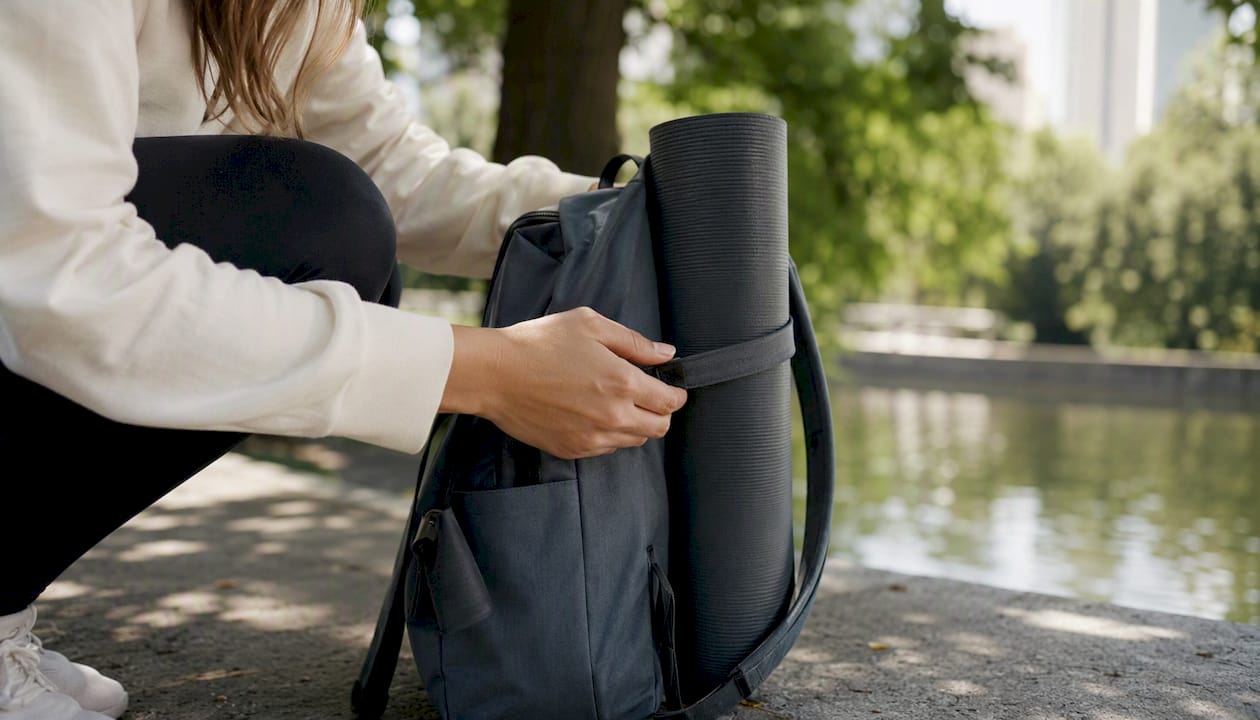
Pack your yoga mat inside your backpack whenever it’s thin or foldable enough to fit; when it isn’t, use a vertical two-point tie at the top and bottom of the pack instead of a single strap. Both options keep the mat’s weight tucked close to your spine instead of swinging off one side. A single-point carry, like one bungee looped through a shoulder strap, turns every step into a small pendulum swing that gets worse on stairs or a crowded platform.
- Inside the pack: best for foldable travel mats, flights, and packed subway cars.
- Two-point vertical tie: best for thicker rollable mats that won’t fit inside.
- Cross-body sling: best for short walks when speed matters more than a perfectly still load.
Pro Tip: Keep your total pack weight in check. HTS Yoga’s guidance on load and balance points to wide, padded straps and a centered carry as the difference between a stable commute and a lopsided one, and a loose external mat only amplifies whatever imbalance already exists.
Key Takeaways
Securing a mat to a backpack comes down to three things: pack it inside when you can, tie it at two points when you can’t, and keep the roll tight before you attach anything.
| Point | Details |
|---|---|
| Pack inside first | Fit a thin or foldable travel mat inside the main compartment whenever possible to avoid snags and scuffs. |
| Use a two-point tie | Attach top and bottom lash points instead of a single strap to stop pendulum swing. |
| Roll tight, cinch firmly | A tight roll secured with a compression band or elastic loop keeps every attachment method working. |
| Expect scuffs on flights | External carry during air travel causes surface wear, so roll tight and add a sleeve for long trips. |
| Match gear to the routine | Yuneyoga’s foldable travel mats and padded, non-slip straps cover both the inside-pack and two-point tie methods. |
Table of Contents
- Three Quick Ways to Secure a Mat to a Backpack
- How to Roll or Fold Your Mat So the Attachment Holds
- Where Should You Attach the Mat on Your Pack?
- Which Straps and Accessories Actually Hold Up?
- What Should You Know Before Flying With a Mat?
- How Do You Keep the Mat and Straps in Good Shape?
- A Fast Pre-Departure Checklist
- What a Daily Commute With a Mat Actually Looks Like
- Ready-Made Accessories That Skip the Guesswork
- Sources
Three Quick Ways to Secure a Mat to a Backpack
You don’t need specialty gear to get a mat locked down before you walk out the door. Three methods cover almost every situation a commuter or traveler runs into.
- Pack it inside. If your mat is a thin, foldable travel style, fold it flat against your back panel or slide it down one side of the main compartment. This works for crowded trains, flights, and anywhere you don’t want fabric catching on turnstiles or seatbacks. HTS Yoga notes that a thin travel mat stored inside stays quieter and snag-free compared to any external carry.
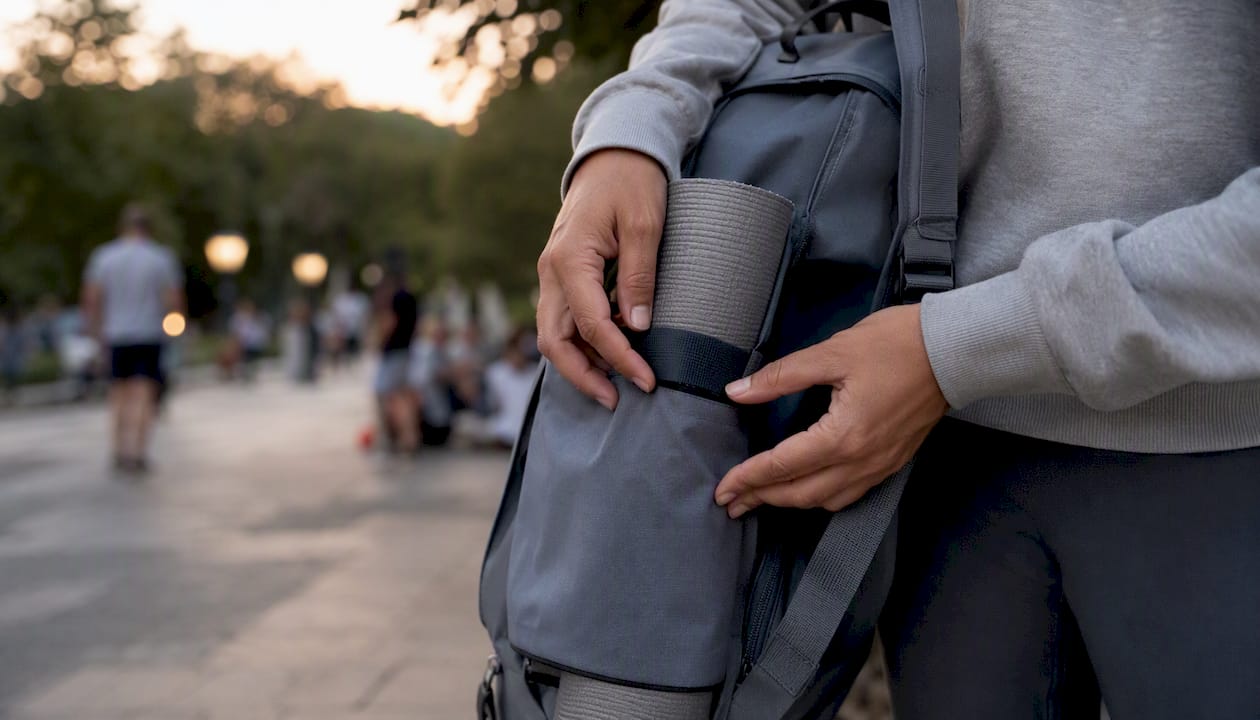
- Tie it vertically, top and bottom. Roll the mat tight, then run one strap through the pack’s top lash point and a second through a lower daisy chain or compression strap. Two contact points stop the mat from swinging forward when you bend to tie a shoe or duck through a doorway.
- Sling it cross-body for short hops. Loop a strap around the midpoint of the roll, cinch it into a “noose,” and sling it diagonally across your chest. BikeHike’s noose loop method is fast to set up and works well for a five-minute walk to a studio, though it’s not the move for a packed rush-hour train where a long strap can snag on other riders.
Match the method to the trip. A bike commute favors the vertical tie because your torso is already leaning forward and a loose sling will bounce with every pedal stroke. A quick errand or class two blocks away is exactly what the sling was built for.
How to Roll or Fold Your Mat So the Attachment Holds
A loose roll defeats every strap you put on it. Roll travel mats tight from one short edge, keeping even tension the whole way, rather than folding them into a bulky square that fights your pack’s shape. Foldable travel mats are the exception: fold along their built-in seams so they sit flat and slim inside the main compartment.
- Cinch the finished roll with a compression band or elastic loop before you attach anything else.
- Springy natural rubber mats tend to unroll themselves. Add a second wrap of the cinch band near the loose end to stop it.
- If the roll still feels soft in the middle, roll it again from the other end. A firm, even roll is what keeps a strap from sliding off center.
Pro Tip: A travel yoga mat built for foldability rolls tighter and stays compact longer than a standard home mat, which matters more than the strap you choose once it’s rolled.
Where Should You Attach the Mat on Your Pack?
Attachment point matters as much as the strap itself. A mat tied high and centered rides with your body instead of against it, while a mat hanging off one hip swings every time you turn a corner or take a stair two at a time.
- Top and bottom lash points create a vertical two-point tie that pins the roll flat against the pack’s back panel, which is the single best way to kill sway.
- A single top-only loop is faster to rig but lets the bottom of the mat swing freely, especially on stairs or in a crowd where you’re stopping and starting.
- Side compression straps work if your pack has them on both sides, letting you sandwich the roll vertically along one edge instead of across the back.
Daisy chains, the row of small loops sewn onto many packs, are built for exactly this kind of lash. If your pack lacks them, a compression strap doubled through the lower grab handle does the same job. HTS Yoga’s carry comparisons back this up directly: a backpack carry with two points of contact keeps weight centered far better than a single shoulder strap ever can. Keep your overall pack load reasonable, too. A mat strapped to an already overloaded bag exaggerates every wobble instead of canceling it out.
Which Straps and Accessories Actually Hold Up?
Not every strap sold as a “yoga mat carrier” earns that name. The accessory matters as much as the technique wrapped around it.
Dedicated mat straps and slings with a padded shoulder section beat generic bungee cords for daily commuting, mostly because they don’t stretch under load the way an elastic cord does. Compression bands work well as the cinch layer but shouldn’t be your only attachment. ExercisePick’s rundown of tie methods and hardware points to figure-eight and bowline knots as reliable options when you’re working with rope-style ties instead of a manufactured strap.
- Look for: non-slip webbing, adjustable buckles or metal D-rings, and a low-profile clip that won’t catch on turnstiles or subway doors.
- Skip: slick nylon straps with no grip texture, oversized carabiners that snag on everything nearby, and single bungee cords stretched past their rated length.
- A padded strap built for mats also tends to include a sleeve option, which cuts down on the surface wear a bare mat picks up against pack fabric.
Pro Tip: Test any new strap on a short walk before your first real commute with it. A buckle that slips under load will show itself in the first ten steps, not the tenth trip.
What Should You Know Before Flying With a Mat?
Air travel adds a wrinkle that daily commuting doesn’t: security lines, overhead bins, and gate agents who don’t care how carefully you rolled your mat. Pack a foldable travel mat inside your carry-on whenever it fits, since that avoids handling it separately at security altogether.
If it has to ride outside your bag, roll it as tight as you can manage. The International Yoga Conference’s guidance is blunt about this: expect surface scuffs on any mat carried externally, and a tighter roll simply reduces how much surface area is exposed to gate jams and overhead bins.
- Add a thin outer sleeve for long-haul flights or multi-leg trips.
- Re-tighten the roll after each flight segment. Compression bands loosen with handling.
- A dedicated travel mat sized for carry-on compartments skips this problem for most short trips.
How Do You Keep the Mat and Straps in Good Shape?
A quick wipe-down after any external carry stops sidewalk grime and rideshare grease from setting into the mat’s surface, especially in humid weather. Check strap stitching and buckle hardware every few weeks. Frayed webbing or a buckle that’s started to slip is your sign to replace the strap before it fails mid-commute.
- Wipe the mat’s exposed side with a damp cloth after outdoor carries.
- Inspect lash points, buckles, and stitching monthly for fraying.
- Choose wider straps over thin cords. They distribute weight across your shoulder instead of digging in.
- Swap shoulders every ten minutes or so on a long sling carry to avoid one-sided strain.
Pro Tip: A strap under 1.5 inches wide tends to dig in on trips over fifteen minutes. Width matters more than padding once you’re carrying real distance.
A Fast Pre-Departure Checklist
Run this before you leave the house, especially if you’re rushing:
- Roll or fold the mat tight, no loose edges.
- Cinch it with a compression band or elastic loop.
- Attach top and bottom if carrying externally.
- Walk ten steps and check for sway.
- Shorten the strap if it’s swinging near your hip.
- Tuck any loose strap ends into a pocket or buckle so nothing flaps or catches.
That ten-step test takes about five seconds and catches almost every loose tie before it becomes a problem on the subway stairs.
What a Daily Commute With a Mat Actually Looks Like
Most mornings, the routine is the same: roll the mat tight, snap on a compression band, then run a strap through the top and bottom lash points on the pack before I’ve even finished my coffee. It takes maybe twenty seconds once it’s a habit.
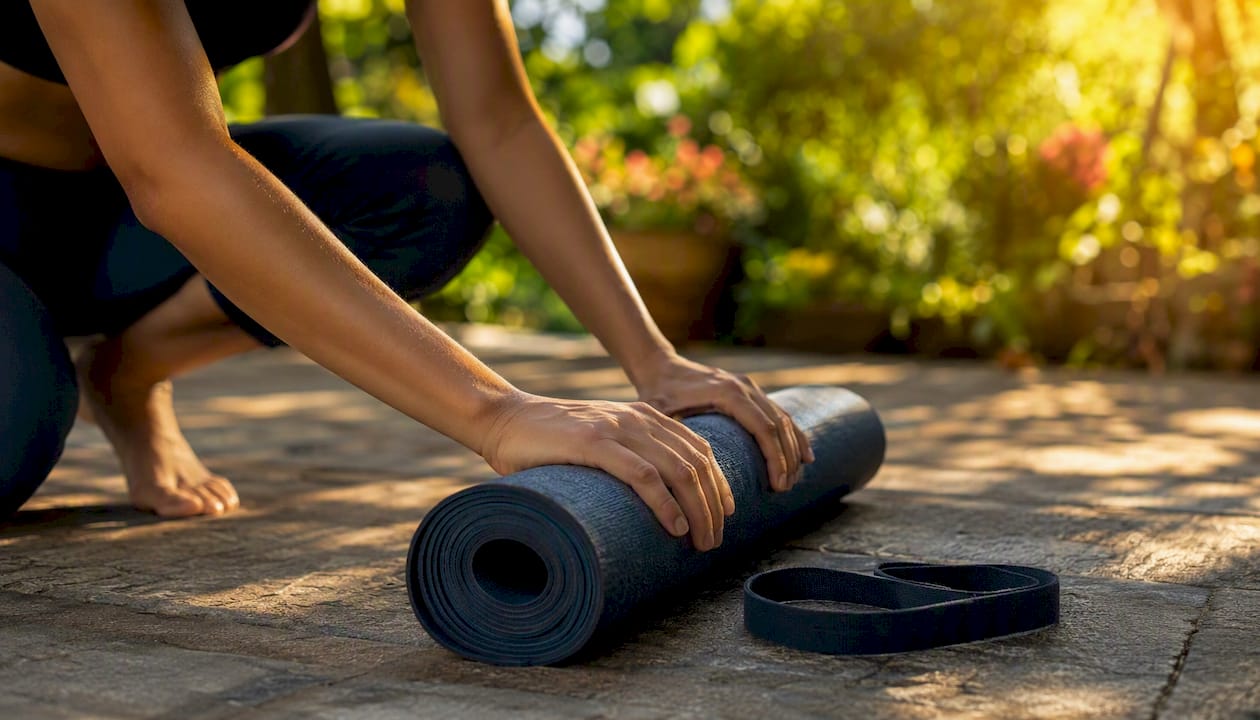
The one thing that saves real hassle is tucking the loose strap end into a side pocket instead of letting it dangle. A flapping strap end is what catches on train doors and other people’s bags, not the mat itself. Small habit, fewer snags.
Ready-Made Accessories That Skip the Guesswork
If rigging your own tie every morning sounds like one more thing on a busy schedule, Yuneyoga carries the pieces built specifically for this. Its foldable travel mats are cut thin enough to pack inside most daypacks, and its mat straps come with adjustable buckles and non-slip webbing instead of the slick nylon that slides loose halfway through a commute.
Protective sleeves round out the lineup for anyone flying regularly or expecting rougher external carries, cutting down on the surface scuffing that comes with strapping a mat outside a bag. Every piece is built around the same features this guide recommends: a compact travel profile, hardware that won’t scuff or snag, and buckles that actually hold under daily use. Browse the full lineup of mats and straps to find a setup that matches your commute instead of assembling one from spare parts.
Sources
- How to Carry a Yoga Mat: Straps, Bags, Bike Setups and DIY Tricks
- Question: How To Strap A Yoga Mat To A Backpack - BikeHike
- How To Tie Yoga Mat To Backpack? - Easy Travel Hacks - ExercisePick