Exercise Ball Size Chart: The Right Fit by Height
If you’re between 5’0" and 5’5", get a 55 cm ball. Between 5’6" and 5’11", a 65 cm ball is commonly recommended. Under 5’0" generally fits a 45 cm ball, and 6’0" or taller often uses a 75 cm ball. That is the height-based exercise ball size chart most physical therapists and manufacturers point to first, and it gets most people to the right ball on the first try.
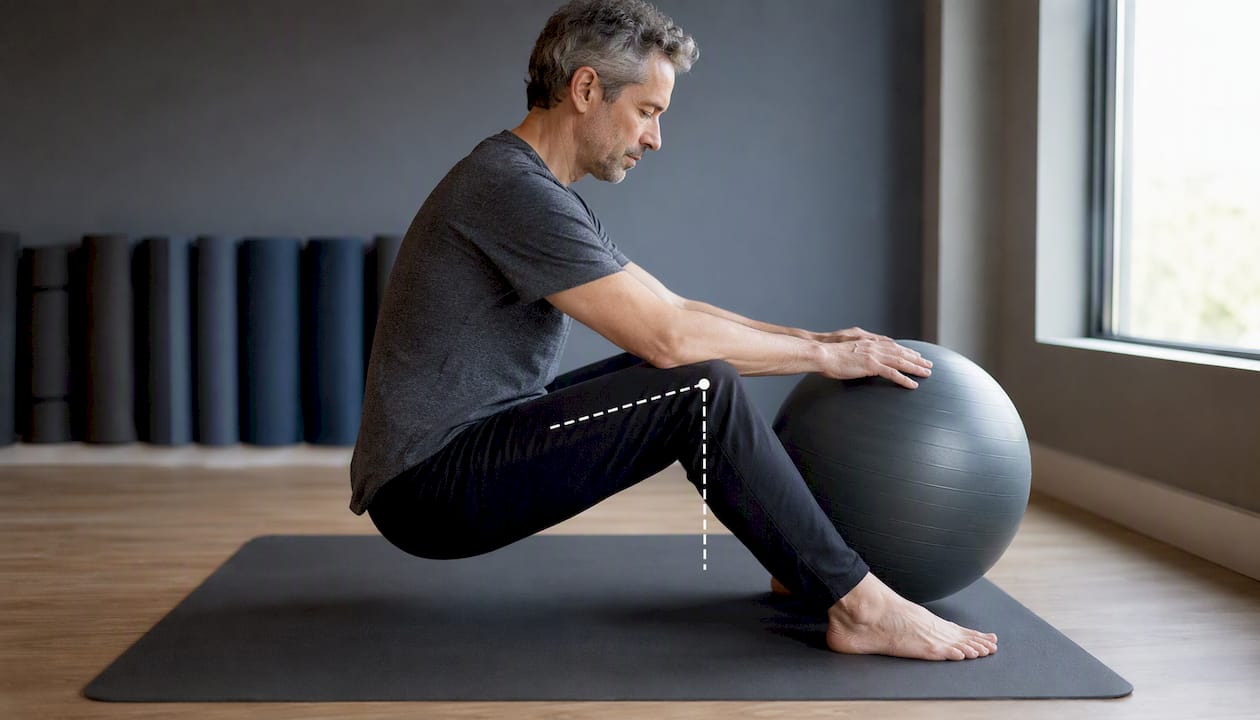
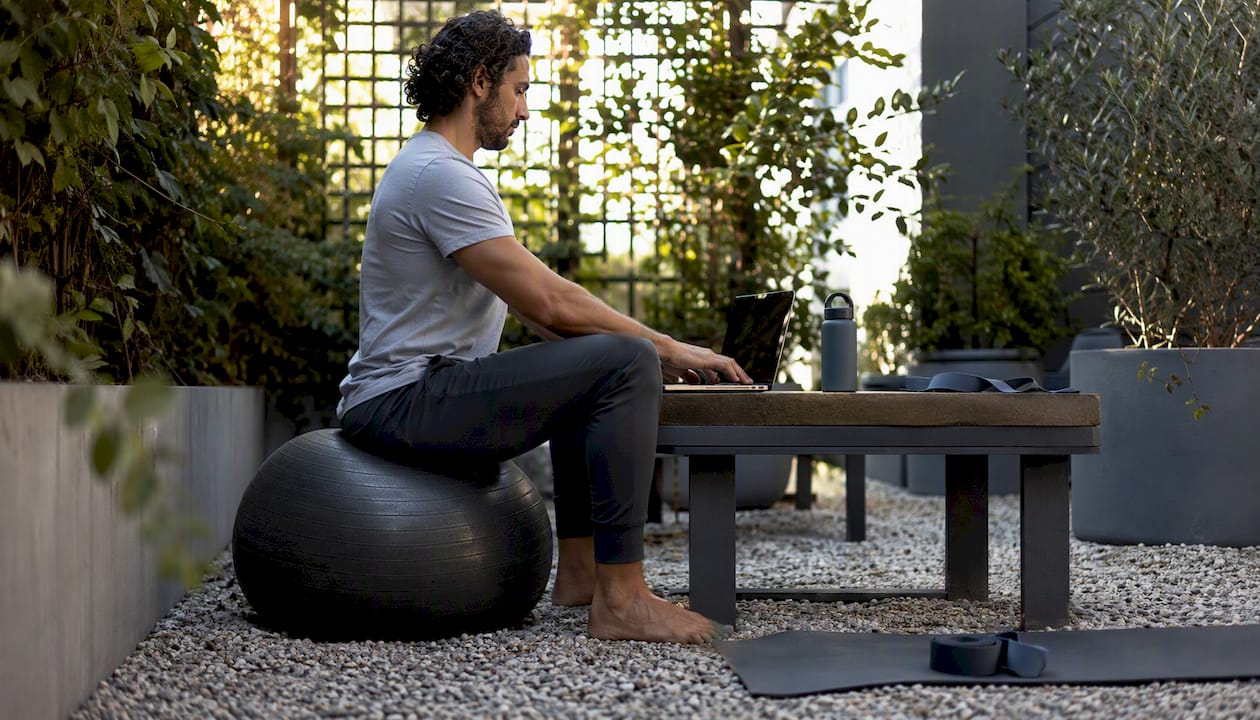
The single best way to confirm it fits: sit on the ball with your feet flat on the floor. Your hips and knees should form roughly a 90-degree angle. If your hips sit lower than your knees, the ball is too small. If your feet dangle or you’re straining to touch the floor, it’s too big.
Height and inseam don’t always agree, though, and neither does intended use. Before you lock in a size, run through this:
- Long legs for your height? Size up, even if the chart says otherwise.
- Buying for desk sitting? Lean toward the larger end of your range to keep hips at or slightly above knee height.
- Buying for core training or rehab work? Lean smaller, since a firmer, tighter ball demands more control and balance.
- Between two sizes on the chart? Choose the bigger one. You can always let a little air out; you can’t stretch a ball past its limit.
Key Takeaways
The correct exercise ball size comes from matching height to a standard chart, then confirming fit with the 90-degree sitting test rather than trusting height alone.
| Point | Details |
|---|---|
| Start with height | Use 45, 55, 65, or 75 cm as your baseline, based on standard height ranges. |
| Confirm with the sitting test | Sit with feet flat; hips should sit level with or slightly above your knees. |
| Adjust for use | Size up for desk sitting, size down for core training and advanced control work. |
| When between sizes | Choose the larger ball and slightly under-inflate rather than sizing down. |
| One thing to remember | If you only do one thing, run the 90-degree sitting test before committing to a size. |
Table of Contents
- What Size Exercise Ball Do I Need? Full Chart With Inches
- How Are Exercise Balls Measured, and Why Does Inflation Matter?
- How Do You Test if an Exercise Ball Actually Fits?
- Does the Right Ball Size Change Based on What You’re Using It For?
- How Do You Properly Inflate and Set Up a New Exercise Ball?
- What if You’re Between Sizes or Have an Unusual Build?
- What Should You Check Before Buying an Exercise Ball?
- A Practical Note on Choosing Your Own Ball Size
- Frequently Asked Questions
- Sources
What Size Exercise Ball Do I Need? Full Chart With Inches
Here’s the complete breakdown, in both centimeters and inches, with who each size actually suits.
| Diameter (cm) | Diameter (inches) | Recommended Height Range | Typical User |
|---|---|---|---|
| 45 cm | 22 to 25.5 inches | Under 5’0" | Petite adults, children, rehab clients needing extra control |
| 55 cm | 22 to 25.5 inches | 5’0"–5’5" | Most shorter to average-height adults |
| 65 cm | 26 to 31.5 inches | 5’6"–5’11" | The most common adult size overall |
| 75 cm | 26 to 31.5 inches | 6’0"–6’5" | Taller adults, desk users needing extra hip clearance |
| 85 cm | 31.75 to 35.5 inches | 6’6" and up | Very tall users, some specialty ergonomic setups |
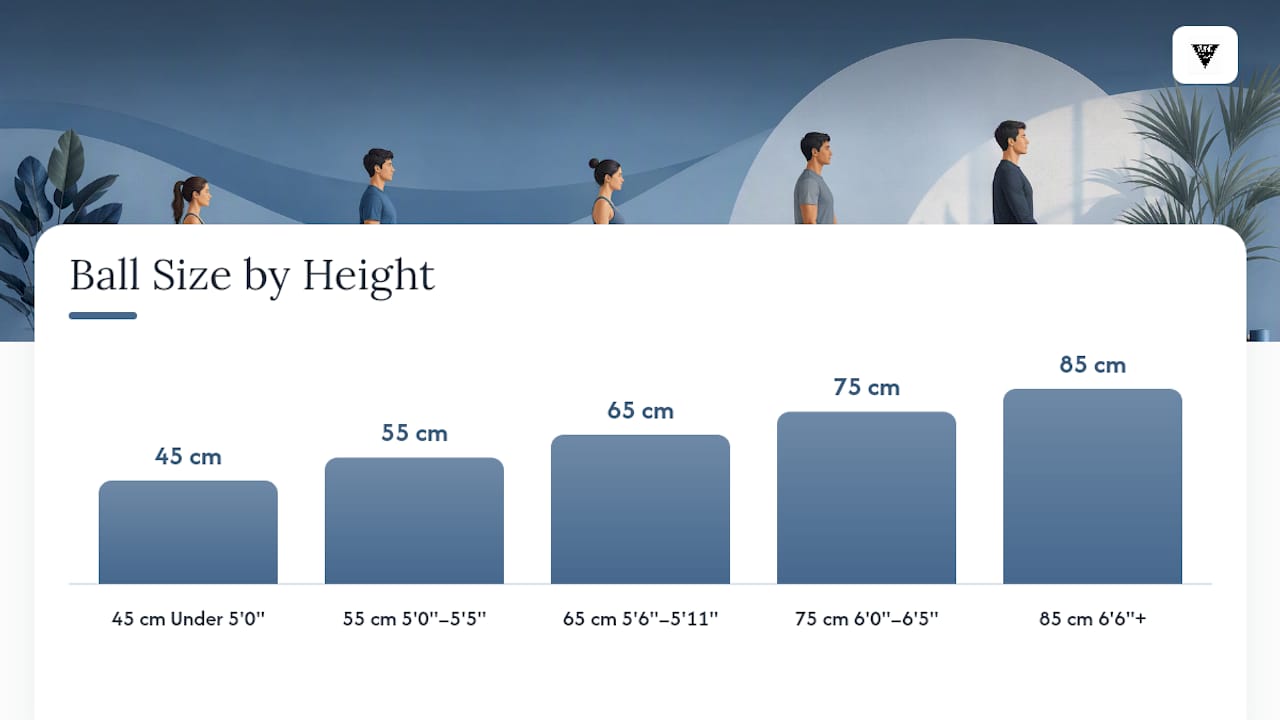
The 55 cm and 65 cm balls cover the bulk of adult buyers, which is why most stability ball size charts treat those two as the default recommendations before drilling into edge cases. The 45 cm size shows up most in kids’ fitness programs and petite-frame rehab work, while 75 cm and 85 cm are built for taller users or for offices swapping a desk chair for something less static.
One label quirk trips people up: the number on the box is a nominal diameter, not a guaranteed measurement. A ball marked “65 cm” is designed to reach that diameter at full, correct inflation. Under-inflate it and it measures smaller. Overinflate it, and depending on the material, it can measure slightly larger before you hit the manufacturer’s pressure limit. The number on the packaging is a target, not a fixed fact.
How Are Exercise Balls Measured, and Why Does Inflation Matter?
Manufacturers size a ball by its nominal diameter, meaning the diameter it’s engineered to hit once it’s fully and correctly inflated, not the size it measures fresh out of the box. A flat or half-inflated “65 cm” ball might sit closer to 55 cm across, which throws off every seated measurement you take against it.
Here’s how to check it yourself:
- Inflate the ball most of the way, following the fill line or pressure guidance on the packaging.
- Place a flat surface, like a book or clipboard, across the top of the ball.
- Measure straight down from the flat surface to the floor with a tape measure.
- Compare that number to the nominal diameter listed on the ball. Add air in small amounts until they match.
- Let the ball sit for a few hours, then remeasure, since new material typically stretches slightly after first inflation.
Pro Tip: No tape measure handy? Measure your own arm span from fingertip to shoulder instead. Roughly 22 to 25.5 inches lines up with a 55 cm ball, 26 to 31.5 inches with 65 cm, and 31.75 to 35.5 inches with 75 cm, according to the arm-span sizing method. It’s a solid cross-check when your legs are longer or shorter than average for your height.
How Do You Test if an Exercise Ball Actually Fits?
The 90-degree sitting test is still the fastest, most reliable check. However, doing it right matters more than most people realize.
The full protocol:
- Sit centered on the ball with both feet flat on the floor, hip-width apart.
- Keep your spine neutral, not slouched forward or arched back.
- Look down at your knees relative to your hips.
- Hips level with knees, or a touch above, means a good fit for general sitting and rehab.
- Hips noticeably below knees means the ball is too small; move up a size.
- Feet barely reaching the floor, or knees pressed near your chest, means the ball is too big; move down a size.
If your leg length doesn’t match your overall height, the arm-span method makes a better primary reference than height alone. Someone with a long torso and shorter legs can measure “tall” on a height chart but still need a smaller ball to sit correctly.
Shopping in person? Run a quick trial before you buy:
- Ask if the display ball is inflated to its listed nominal diameter, not partially filled.
- Sit and check the 90-degree angle exactly as you would at home.
- Rock gently side to side. A properly sized ball feels stable, not wobbly or sluggish.
Pro Tip: Wear the shoes (or bare feet) you’ll actually use the ball with when you test it in-store. A half-inch heel changes your seated hip angle more than people expect.
Does the Right Ball Size Change Based on What You’re Using It For?
Yes, and this is where a pure height chart can lead you astray. Physical therapists point out that the ball’s purpose should shape the size decision just as much as your height does.
| Use Case | Size Tendency | Why |
|---|---|---|
| Desk sitting / ergonomics | Slightly larger | Keeps hips at or above knee height for spinal support |
| Core training, planks, rollouts | Slightly smaller | Firmer surface, less roll, more muscular control required |
| Rehab / balance recovery | Larger, more stable | Reduces wobble, easier to maintain safe posture |
| General fitness / stretching | Standard chart size | No special adjustment needed |
For desk replacement, clinical guidance suggests planning for roughly 10 cm, or 4 inches, more diameter than your chair seat to account for compression once you’re sitting on it and still land at the right hip height. Core training runs the opposite direction. A firmer, smaller ball gives you less give and more instability to fight against, which is exactly the point when you’re training balance and control.
Trainers frame it plainly: there is no single right answer from a height chart alone, because the same person might want a smaller ball for ab work and a larger one for sitting at a desk all day.
Rehab settings tend to favor the larger, more stable option, since patients recovering from injury need predictable support, not a wobbly surface that demands extra core engagement they may not be ready for.
Pro Tip: If you’re using the ball for a mix of desk sitting and the occasional core workout, size for the desk. It’s easier to do a harder plank on a bigger ball than to sit comfortably on one that’s too small.
How Do You Properly Inflate and Set Up a New Exercise Ball?
A new ball almost never comes at full size. Getting the setup right takes a few extra minutes the first time, but it saves you from resizing headaches later.
- Use the hand pump usually included with the ball, or a household air pump with the right nozzle attachment.
- Inflate gradually, checking firmness every 20 to 30 pumps rather than going all at once.
- Stop near the nominal diameter listed on the packaging, then measure using the flat-surface method described earlier.
- Leave the ball inflated for 24 hours before your first real workout or sitting session.
- Remeasure after that 24 hour window. Most vinyl and PVC balls stretch slightly as the material relaxes, so you’ll likely need to top off with a bit more air.
- Recheck firmness weekly at first, then monthly once it holds steady.
Weight limits matter too. Most consumer exercise balls carry a static weight rating between 300 and 700 pounds depending on the brand and material thickness, though anti-burst models are rated higher. Check the label rather than assuming, since ratings vary widely across manufacturers. Inspect for small punctures or thinning patches periodically, especially if you use the ball on rough flooring, and replace it once you notice visible wear, slow leaks, or a permanent loss of firmness that won’t hold air overnight.
What if You’re Between Sizes or Have an Unusual Build?
Charts assume an average build, and plenty of people don’t fit that mold. Here’s how to adjust:
- Between two chart sizes: Choose the larger ball. You can always release air to shrink the effective diameter slightly, but you cannot expand a ball beyond its manufactured limit if you’d bought the smaller one.
- Long torso, shorter legs: Trust the 90-degree sitting test and arm-span method over the height chart.
- Higher body weight: Heavier users compress the ball more once seated, which can quietly drop hips below knee level even on a “correctly sized” ball. Sizing up helps maintain that 90-degree angle.
- Special mobility needs or recovery from injury: Test the ball seated with support nearby before committing to regular use, and treat any physical therapist recommendation as the deciding factor over a generic chart.
| Body Factor | Chart Adjustment | Reason |
|---|---|---|
| Long legs relative to height | Size up | Prevents knees from sitting too high |
| Higher body weight | Size up | Accounts for compression once seated |
| Petite or shorter torso | Stick with chart size or size down | Avoids overreaching to touch the floor |
| Rehab or balance concerns | Size up, favor stability | Reduces wobble and fall risk |
What Should You Check Before Buying an Exercise Ball?
Run through this list before you check out, whether you’re shopping online or in a store:
- Nominal diameter clearly listed: Confirm it matches the size chart range for your height and use case.
- Max weight rating stated: Look for a specific number, not a vague “supports most adults” claim.
- Burst-resistance rating: Anti-burst construction slows deflation if punctured, which matters for home gyms with kids or pets around.
- Pump or plug included: Some balls ship without one, which adds an unexpected extra cost.
- Return policy and warranty: Sizing charts are a guide, not a guarantee, so confirm you can exchange for a different size if the fit feels off after your first sitting test.
- Matching size chart on the product page: If the seller’s chart contradicts standard height ranges by a wide margin, treat that as a red flag rather than a shortcut.
Pro Tip: If storage space is tight, remember most balls deflate for travel and storage but rarely reinflate perfectly the first time. Budget a few extra minutes to re-measure after every deflate and reinflate cycle, not just the first one.
A Practical Note on Choosing Your Own Ball Size
Most people overthink the height chart and underthink the actual sitting test. The chart gets you into the right neighborhood, but the 90-degree check is what actually confirms fit, and it takes about ten seconds. If I had to pick one size mistake to warn readers about, it’s buying based on height alone when leg length runs long or short for that height. That’s the gap between what looks right on paper and what actually feels right once you sit down.
For everyday ergonomic use, I lean toward sizing up rather than down. A slightly larger ball at a desk keeps posture safer over a full workday, even if it means a little extra effort getting settled.
Yune Yoga’s approach to equipment sizing follows the same logic we apply to mats and straps: give people a clear starting chart, then let their body confirm the fit.
Frequently Asked Questions
What size exercise ball do I need for my height? Use 45 cm under 5’0", 55 cm for 5’0"–5’5", 65 cm for 5’6"–5’11", and 75 cm for 6’0" and taller, then confirm with the 90-degree sitting test.
How do I know if my exercise ball is too small? When seated with feet flat, your hips will sit noticeably lower than your knees. That’s the clearest sign to move up a size.
Does the exercise ball size chart apply to rehab and desk use the same way? Not exactly. Rehab and desk sitting both favor sizing up slightly for stability and hip height, while core training favors sizing down for more challenge.
Should I round up or down if I’m between two sizes on the chart? Round up. You can under-inflate a larger ball to shrink its effective diameter, but a smaller ball can’t be expanded past its manufactured size.
Does body weight change what size exercise ball I should buy? Yes. Heavier users compress the ball more once seated, which can push hips below the ideal 90-degree angle, so sizing up helps maintain proper posture.
Sources
- Exercise Ball Size Guide | What Size Should I Use?
- Choosing the right exercise ball
- Which Size Stability Ball Is Best For You? - Fitness Reality
- Sizing Up Exercise Balls to Find the Right Fit | dummies
- What Size Exercise Ball To Buy, According To A Trainer