
PVC yoga mat material: Safety, benefits, drawbacks, and how to choose
Key Takeaways
PVC yoga mat material is popular because it can provide cushioning, traction, and a relatively low purchase price. Its suitability depends on how it was made, how it feels under your hands and feet, and how carefully it is maintained.
- PVC mats can offer dependable cushioning and grip for many practice styles.
- Plasticizers, odors, and unclear labeling deserve careful attention when shopping.
- Thickness alone does not determine comfort; density and surface texture matter too.
- Natural rubber, TPE, cork, and jute each create a different balance of feel, grip, and sustainability.
- A good buying decision considers practice style, portability, cleaning needs, and end-of-life disposal.
What PVC yoga mat material is and how it is made
PVC, or polyvinyl chloride, is a synthetic polymer that begins as a relatively rigid plastic. Manufacturers modify it with additives and processing techniques so it becomes flexible enough to roll, cushion movement, and provide a textured practice surface. The result is a familiar material found in many entry-level, studio, and everyday yoga mats.
The feel of a mat is not determined by the word PVC alone. A thin, firm mat and a thick, soft mat may use the same broad material category while performing very differently. Reading the full product description is therefore more useful than relying on a material label by itself.
The basic structure of PVC yoga mats
A PVC mat usually consists of a flexible vinyl-based body with a patterned or textured upper surface. Some mats use a single homogeneous layer, while others combine layers or surface treatments to change cushioning and traction. The backing is designed to stay relatively stable against the floor, although the exact performance depends on the mat’s density and texture.
Manufacturers may describe a mat as closed-cell or moisture-resistant, but those terms should be checked against the product’s actual labeling. A surface that resists moisture is generally easier to wipe down than one that readily absorbs it, though no mat should be treated as self-sanitizing.
How cushioning and texture are created
Cushioning comes from the thickness and structure of the material, not simply from its softness. Foaming, compression, and density affect how far a hand or knee sinks into the mat and how quickly the surface rebounds. A deeply cushioned mat can feel comfortable, but excessive give may make balancing poses less steady.
Texture is created through embossing, molding, or an added finish. Fine patterns may feel smooth while still helping with traction; deeper ridges can provide a more pronounced grip but may be harder to clean. The best choice is the one that supports your movement without distracting pressure points.
Common PVC formulations and surface finishes
PVC mats can differ in flexibility, firmness, color, and surface feel because manufacturers use different formulations and finishing processes. Some have a smooth, slightly tacky face, while others have a fabric-like or embossed texture. In practical terms, these differences influence how the mat feels during transitions and how much maintenance it needs.
A strong odor when first unrolled is not a reliable quality rating by itself, but it is a reason to ventilate the mat before use. Clear labeling about the material, additives, and testing gives shoppers more useful information than broad words such as “eco” or “premium.” For a wider discussion of material claims and safety questions, this PVC yoga mat safety guide offers another perspective.
Why PVC is widely used in yoga mats
PVC has remained common because it can be manufactured in many thicknesses and textures at different price points. It is also familiar to large-scale producers, easy to print or color, and capable of standing up to repeated rolling and unrolling when the formulation is sound. Those practical advantages help explain its presence in studios and home practice spaces.
That popularity does not make every PVC mat identical. A carefully specified mat may be a reasonable choice for someone who wants a stable, cushioned surface, while a poorly labeled product may leave important questions unanswered.
The main benefits of PVC yoga mats
A PVC mat can be a practical starting point for someone who wants a supportive surface without spending heavily. It may suit home practice, studio classes, light fitness, and floor exercises, provided the dimensions and grip match the user’s needs. The most useful comparison is between the mat’s actual construction and the demands of the practice.
Price, comfort, and durability often pull a purchase in different directions. A thicker mat may be more forgiving on hard floors, while a firmer one may feel better for balance. Before choosing, think about where the mat will be used and whether it needs to travel often.
Cushioning for joints and pressure points
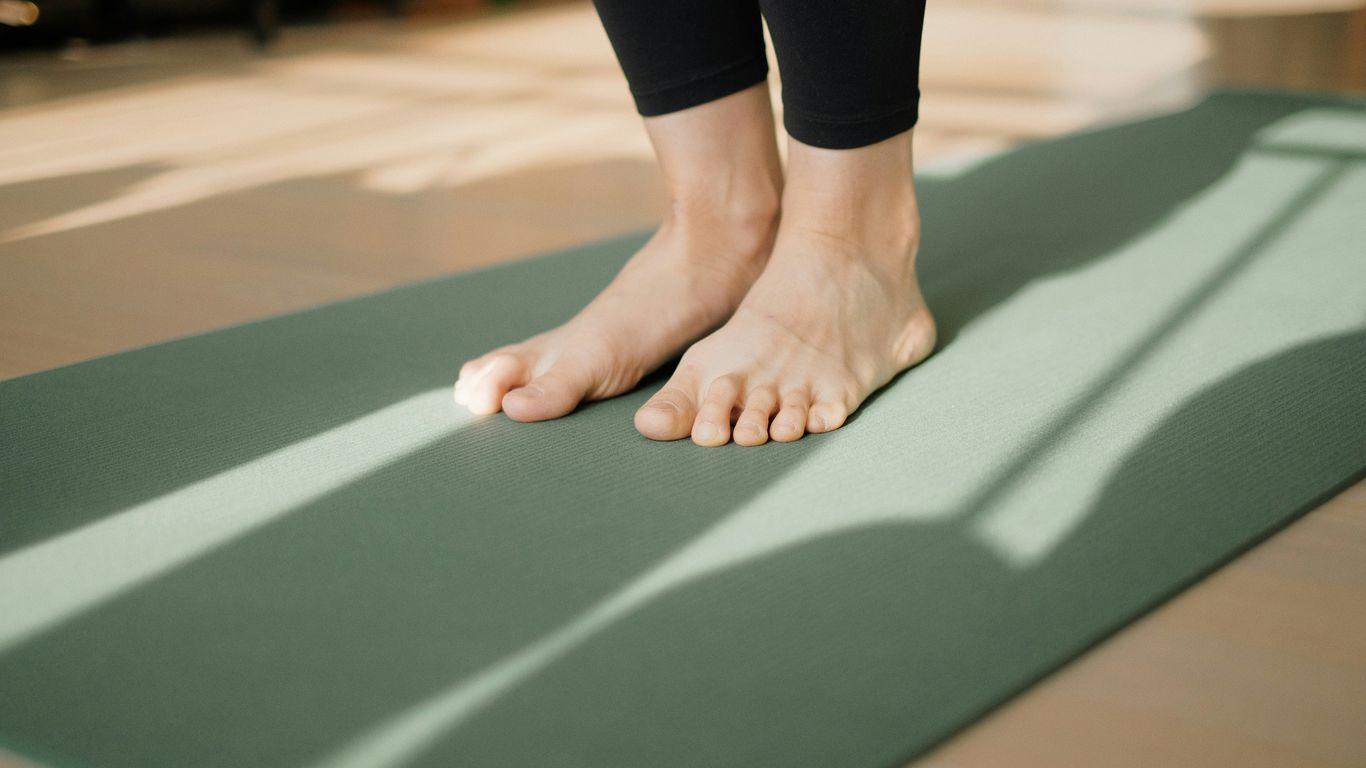
PVC can provide a substantial layer between the body and a hard floor, particularly in kneeling, seated, or supine positions. Thickness helps, but density determines whether the cushion feels supportive or overly spongy. People who practice on tile or wood may appreciate more padding, while balance-focused users may prefer a firmer response.
One example of a documented product specification is the Turner Yoga Mat, described as a 6mm mat with plush cushioning, a non-slip surface, and an easy-clean, moisture-resistant construction. Those are product-specific features, so they should not be assumed of every PVC mat.
For a comfortable fit, look for these related details rather than choosing by thickness alone:
- The surface should not bottom out under knees or elbows.
- The mat should recover after pressure instead of staying visibly compressed.
- The density should feel stable during standing poses.
- The edges should remain reasonably flat after unrolling.
Together, these checks give a more realistic sense of support than a single millimeter measurement. If possible, test the mat on the floor where you usually practice.
Grip and stability during practice
Grip depends on the interaction between the surface texture, moisture, pressure, and the floor underneath. A slightly tacky PVC surface can feel secure during slow sequences, while a ridged pattern may help hands and feet stay planted during active movement. Grip can also change as sweat accumulates, so a mat’s performance in a dry shop may not predict its performance in a heated class.
A travel-focused option such as the Juliet Trekk Travel Mat is documented as having a soft, ridged top and a firmer, stickier bottom, along with a 5mm thickness and 2.5-pound weight. That combination illustrates how surface design and portability can matter as much as the base material.
Durability for frequent use
A well-made PVC mat can tolerate frequent rolling, unrolling, and wiping. Durability still depends on storage, exposure to heat and sunlight, and the force used during cleaning. Repeated folding, dragging across rough floors, or leaving the mat damp can shorten its usable life.
Inspect the surface periodically for peeling, cracks, thinning, or areas that have become unexpectedly slick. A mat that remains intact but no longer provides reliable traction is no longer performing its central job.
Affordability across different quality levels
PVC is available across a broad range of prices, which makes it accessible to beginners and useful for shared spaces. The lowest-priced mats may compromise on density, odor control, edge finishing, or long-term surface stability. A modest increase in price can sometimes buy a more consistent texture and a more durable construction.
The sensible comparison is cost over time, not just the checkout total. A mat that lasts through regular practice may be better value than a very cheap mat that peels or loses grip within a few months. For another general comparison of mat categories, see this yoga mat material guide.
Potential drawbacks and safety considerations
PVC is not automatically unsafe, nor is a material label enough to prove that a mat is a good fit for every person. The main questions concern additives, manufacturing controls, ventilation, skin sensitivity, and eventual disposal. A careful buyer can reduce uncertainty by seeking specific information rather than relying on reassuring marketing language.
Odor is one visible signal, but it is not a complete safety test. Some people are especially sensitive to smells or airborne irritants, and a new mat may be inappropriate for a small, poorly ventilated room. When doubt remains, choose a product with clearer disclosures or consider a different material.
PVC, plasticizers, and chemical odors
Flexible PVC generally requires formulation changes that make the rigid base softer and more workable. Plasticizers and other additives can affect flexibility, surface feel, and odor, and the exact ingredients vary by manufacturer. Because a consumer-facing label may not list every component, claims such as phthalate-free should be read alongside the full materials statement.
A new-plastic smell often fades with airing, but persistent or irritating odor should not be ignored. This non-toxic mat discussion explores concerns commonly raised about additives and off-gassing; it is useful as a prompt for questions, not a substitute for a manufacturer’s documentation.
How manufacturing quality affects safety
Manufacturing quality influences consistency, residue, surface bonding, and the accuracy of the label. Responsible specifications may identify restricted substances, testing practices, or relevant certifications, while vague descriptions leave the buyer with little to verify. Product pages that clearly state what the mat contains are generally easier to assess.
Pay attention to the wording around “eco-friendly,” “non-toxic,” and “green.” Those terms can mean different things unless the company explains the standard or test behind them. The same habit of checking details applies when reviewing a privacy policy from MAC Chain or a product’s materials disclosure: look for concrete information, not just broad assurances.
When a PVC mat may be unsuitable
A PVC mat may not be the right choice for someone with strong sensitivity to chemical odors, a preference for natural materials, or strict environmental priorities. It may also be unsuitable when a practice requires very thin ground feedback or when the mat’s surface becomes slippery with sweat. Users with known allergies or respiratory concerns should discuss material choices with an appropriate professional.
Portability can be another limitation. Thick PVC mats may be comfortable but bulky, especially for people who practice in hotel rooms, parks, or shared studios. A lighter design may be more useful if the mat regularly travels by foot or public transport.
Ways to reduce exposure when buying and using one
A few simple habits can make the first days with a new mat more comfortable. They do not change the material itself, but they can reduce unnecessary contact with concentrated odor and help reveal whether the surface is suitable.
- Choose a seller that provides a specific materials statement.
- Air out the mat in a shaded, well-ventilated place before regular use.
- Wipe it according to the care instructions before the first session.
- Stop using it if odor or surface residue causes irritation.
These steps are practical precautions, not a guarantee of chemical safety. When the information provided is incomplete, choosing another product is a reasonable response.
PVC vs. other yoga mat materials
Comparing materials is most useful when it is tied to real practice conditions. A mat for restorative movement may prioritize softness, while a travel mat may need to be light and easy to pack. Cost, grip, odor, cleaning, and end-of-life concerns can all change the apparent value of a material.
No material wins in every category. The table below provides a quick orientation, but individual formulations vary, so the manufacturer’s specifications still deserve the final word.
PVC compared with natural rubber
Natural rubber is often chosen for its grippy feel and renewable source, while PVC is valued for its broad price range and familiar cushioned texture. Rubber can have a noticeable odor of its own and may be unsuitable for people with latex allergies. PVC may be the more straightforward choice for shoppers seeking a synthetic, low-cost surface, but its additives and disposal profile need consideration.
The right comparison is not simply “natural versus synthetic.” Check whether the mat stays stable on your floor, whether the surface suits your hands, and whether the care instructions fit your routine.
PVC compared with TPE
TPE, or thermoplastic elastomer, is a broad category rather than one single recipe. TPE mats are often marketed as lightweight and flexible, while PVC mats may offer a more familiar sticky feel and a wider range of densities. Actual grip and durability depend on the particular formulation and surface finish.
For shoppers comparing the three common categories, this TPE, PVC, and rubber comparison can help organize questions about performance, price, and environmental impact. Treat broad category descriptions as a starting point, not a guarantee.
PVC compared with cork and jute
Cork surfaces can feel firm and naturally textured, while jute is often used to add a fibrous feel or reinforcement. These materials may appeal to people who want a less plastic-like surface, but they can behave differently with moisture and may not provide the same plush cushion as a thick PVC mat. Construction matters: a cork or jute top may still be bonded to another material underneath.
If environmental claims matter to you, ask what the complete mat is made from rather than focusing on its visible top layer. The backing, adhesives, inks, and packaging all contribute to the product’s overall profile.
How material differences affect grip and comfort
Grip is a lived experience shaped by sweat, pressure, temperature, and movement speed. Comfort is similarly personal: a soft surface may help with kneeling but feel unstable under one-foot balances. A firmer mat may offer clearer floor feedback but be less forgiving on hard ground.
| Material | Common feel | Potential advantage | Possible trade-off |
|---|---|---|---|
| PVC | Cushioned and sometimes tacky | Broad price and thickness range | Additives and odor require attention |
| Natural rubber | Grippy and resilient | Strong traction for many practices | Latex concerns and rubber odor |
| TPE | Light and flexible | Easy handling and varied formulations | Performance varies widely |
| Cork or jute | Textured and more natural-feeling | Distinct surface character | May feel firmer or change with moisture |
Use this table to narrow the field, then compare specific product measurements and care instructions. A short trial on your usual floor is more informative than a material label alone.
How to choose a high-quality PVC yoga mat
A good PVC mat should match the way you practice, the floor beneath it, and the amount of care you are willing to provide. Start with the physical basics, then investigate grip, labeling, and dimensions. The goal is not to find the most expensive mat; it is to find one whose compromises make sense for you.
Portable practice adds another layer to the decision. A mat that is excellent at home may be awkward on a trip, while a lighter one may sacrifice some cushioning. Yune Yoga’s Skaro Yoga Mat, for example, is documented as a 6mm mat with balanced density, a non-slip design, portability, and suitability for several practice types. Those listed features show why product-level details matter more than category assumptions.
Checking thickness, density, and cushioning
Thickness is a useful first filter, but density tells you how that thickness behaves. Press the surface with your palm and notice whether it compresses quickly, rebounds, and remains stable. Also check the mat’s dimensions so your hands and feet do not regularly extend beyond the usable area.
For sensitive knees, a moderately cushioned mat may be more comfortable than an ultra-thin travel model. For standing balance, too much softness can make the surface feel uncertain. If possible, test several mats side by side on a hard floor.
Evaluating grip for different yoga styles
Slow, controlled movement often benefits from a predictable tacky surface, while fast or sweaty practice may require texture that continues to feel secure as moisture builds. Try pressing your palm down and shifting it gently rather than judging grip by touch alone. Also check whether the underside stays fixed on the floor.
Look for specific wording about non-slip construction, moisture resistance, or surface texture, but remember that these are not universal performance standards. A towel, careful cleaning routine, or different material may be more appropriate if sweat regularly changes your traction.
Looking for certifications and transparent labeling
A trustworthy listing should identify the primary material and make any important exclusions or certifications easy to find. Look for precise statements about phthalates, latex, inks, and testing rather than relying on a green color scheme or an “eco” badge. If a certification is named, check what it covers and whether it applies to the finished mat.
Transparency also means explaining care, dimensions, thickness, and expected use. Even a page about balloon decoration materials demonstrates the broader shopping principle: materials, durability, finish, and safety are more useful when described specifically.
Matching mat size and design to your practice
A standard mat may be enough for a compact home routine, but taller users or people who move widely may prefer extra length or width. Consider whether you carry it to class, store it in a small closet, or use it outdoors. Printed designs can make a mat more enjoyable to use, but the artwork should not obscure care or material information.
A portable setup should remain simple. If you practice away from home, weigh the mat, check how tightly it rolls, and make sure its surface will work on the floors you commonly encounter. The best design is the one you will actually bring with you.
How to clean, maintain, and replace a PVC yoga mat
Routine care helps preserve traction and makes the mat more pleasant to use. Most PVC surfaces can be wiped after practice, but the safest cleaner and method depend on the manufacturer’s instructions. Avoid assuming that strong disinfectants, soaking, or machine washing are harmless.
Maintenance also affects longevity. Heat, sunlight, trapped moisture, and rough storage can change the surface faster than ordinary practice. A few minutes of care after class is usually easier than trying to restore a damaged mat later.
Safe cleaning methods for the surface
Begin by removing loose dust with a dry or lightly damp cloth. If the care label allows it, use a small amount of mild soap diluted in water, then wipe away residue with a clean damp cloth. Let the mat dry fully before rolling it, especially after a sweaty session.
Avoid abrasive brushes and harsh solvents unless the manufacturer specifically approves them. Test any cleaning solution on a hidden area first, because some finishes can become sticky, faded, or brittle when exposed to unsuitable chemicals.
Preventing cracking, peeling, and odor buildup
Do not leave a PVC mat compressed in a hot car or in direct sun for long periods. Repeated exposure can accelerate fading, hardening, or surface breakdown. Wipe away sweat and allow the mat to breathe before putting it into a bag.
A persistent odor can also build when moisture is trapped between rolled layers. Unroll the mat fully from time to time, clean it gently, and let both sides dry. If the surface begins peeling or shedding, replacement is safer than trying to glue it during practice.
Storing the mat between practices
Roll the mat with the practice surface facing outward or inward according to the manufacturer’s guidance, keeping the roll even rather than sharply bending one edge. Store it in a cool, dry place away from radiators, windows, and damp floors. A simple strap or breathable carrier can prevent the mat from being crushed in a crowded closet.
Travel users should also inspect the mat after outdoor sessions. Grit can work into the texture and transfer to the next practice, so a quick wipe and thorough drying are worthwhile before packing.
Recycling and disposal considerations for PVC mats
PVC mats are not automatically accepted in ordinary curbside recycling. Local rules vary, and mixed-material mats may be difficult for municipal programs to process. Contact the local waste authority or the retailer to ask about take-back, specialty recycling, or responsible disposal options.
Replace a mat when it has lost dependable traction, developed deep cracks, or begun shedding material. Reusing it as a protective layer for messy household work may delay disposal, but it should not be donated as a practice mat once its surface is unreliable.
Conclusion
PVC yoga mat material can offer a practical mix of cushioning, grip, durability, and affordability, but quality and transparency make a real difference. Compare density, texture, labeling, dimensions, and care requirements, then choose the surface that fits both your practice and your values.
Frequently Asked Questions
Is PVC yoga mat material safe?
It can be suitable for many users, but safety depends on the formulation, additives, manufacturing quality, and individual sensitivity. Look for clear materials information, ventilate a new mat, and stop using it if it causes irritation or persistent discomfort.
Why does a new PVC yoga mat smell?
The odor can come from materials and additives used during manufacture. It may lessen with airing and gentle cleaning, but a strong or persistent smell is a reason to seek more information or choose another mat.
Are thicker PVC mats better for joints?
Not necessarily. Thickness can add padding, but density and stability determine how supportive the mat feels. A very soft surface may be comfortable for kneeling yet less steady for balance work.
How long can a PVC yoga mat last?
Lifespan varies with construction, practice frequency, storage, heat, sunlight, and cleaning. Replace the mat when it cracks, peels, sheds material, or no longer provides reliable traction.
How should a PVC yoga mat be cleaned?
Follow the care label first. In many cases, a soft cloth, diluted mild soap, and thorough air-drying are appropriate, while abrasive tools and harsh solvents may damage the surface.
Is PVC more durable than TPE?
There is no universal answer because both are broad material categories with different formulations. Compare the specific mat’s density, surface bonding, warranty, care instructions, and user conditions.
Can PVC yoga mats be recycled?
Some local or specialty programs may accept them, but ordinary curbside recycling often does not. Ask the local waste authority or retailer about take-back and disposal options before throwing one away.