
Mini yoga mat: how to choose the right compact mat for yoga, travel, and workouts
Key Takeaways
A mini yoga mat can make a portable practice much easier, but the right choice depends on where and how you move. Focus on usable space, traction, cushioning, material, and care rather than size alone.
- Measure the poses and exercises you use most often.
- Choose thickness according to joint comfort and packing needs.
- Match the surface material to your grip and cleaning preferences.
- Use a compact mat for travel, targeted cushioning, or small spaces.
- Check weight, dimensions, durability, and return terms before buying.
What is a mini yoga mat?
A mini yoga mat is a compact practice surface designed for targeted support, short sessions, or easier transport. Some models cover only the area beneath your knees or hands, while others are shortened versions of a full mat. The best mini yoga mat is not necessarily the smallest one; it is the one that gives you enough room for your routine without becoming a burden to carry.
Typical dimensions and how they differ from standard mats
Standard yoga mats commonly provide enough length for lying down and enough width for broad standing poses. A mini version may be closer to a knee pad, a travel rectangle, or a shortened practice mat, so dimensions vary considerably. Before buying, check the listed length and width rather than relying on the word “mini,” especially if you want to use it for more than seated stretching.
Best uses for stretching, yoga, and floor exercises
Compact mats work well for kneeling, seated mobility, warm-ups, meditation, and floor exercises that do not require much travel across the surface. They can also add cushioning on top of a larger mat. A portable model such as the Movement Pad is described for yoga, mobility work, and bodyweight exercises, making that kind of crossover use a useful benchmark when comparing options.
Who benefits most from a compact mat
A mini yoga mat suits travelers, office workers, students, and anyone practicing in a small apartment or hotel room. It is also handy for people who want targeted padding under sensitive areas without carrying a full-size mat. Parents may prefer a smaller surface for quick home routines, while experienced practitioners may use one as an accessory rather than their only mat.
Situations where a full-size mat is still better
A full-size mat remains the safer choice for flowing sequences, long standing poses, wide lunges, and exercises that involve rolling or changing direction. It also gives you a consistent boundary for home practice. If your elbows, feet, or head regularly move beyond a compact mat, the extra carrying weight may be worthwhile.
Choose the right size and thickness
Size and thickness should follow your routine, not a trend. Think about the positions you repeat, the floor beneath you, and how far you need to carry the mat. A thin, foldable surface can be wonderfully convenient, while a thicker one may feel far better during kneeling or seated work.
Finding enough room for your most-used poses
List your three or four most common movements and picture the space they need. A mat used for child’s pose, seated twists, and kneeling stretches can be much shorter than one used for planks, downward-facing dog, or standing balance. Leave a little margin around your hands and feet so small shifts do not put you on the floor.
Balancing portability with joint support
Thin mats are easier to fold and pack, but they offer less separation from a hard floor. If your routine includes frequent kneeling, look for cushioning that does not make balance feel unstable. Targeted comfort matters most when the mat is being used for a few pressure-heavy positions rather than a complete practice.
When a foldable design makes more sense than a roll
A foldable mat fits neatly into a tote, suitcase, or drawer and usually avoids the bulky shape created by rolling. It is particularly practical for flights, commuting, and shared storage. Yune Yoga’s Apollo Foldable Suede Mat is described as a 2mm foldable travel mat with a recycled vegan suede top and natural rubber base, an example of how a slim design can prioritize packing convenience.
Matching mat dimensions to your height and workout space
Your height matters most when you lie down or extend your arms and legs. Your room matters just as much: measure the clear floor area in front of a bed, desk, or sofa before choosing. For a portable full-length option, the Greenland Foldable Travel Mat is described as a 2mm mat that folds into carry-ons and small spaces, though you should still compare its dimensions with your own practice needs.
Compare mini yoga mat materials
Materials influence grip, feel, odor, weight, and long-term care. No surface is perfect for every practitioner, so consider whether you prefer a soft touch, a firm base, a textured finish, or easy wipe-down maintenance. Also read the manufacturer’s material and allergy information instead of assuming that an environmental label tells the whole story.
Natural rubber for grip and durability
Natural rubber often feels springy and secure underfoot, making it attractive for people who want strong traction. It can also be heavier and may have a noticeable smell when new. The JadeYoga Fusion Mini Yoga Mat is described as a 24-by-12-inch natural rubber mat with targeted cushioning, so it illustrates the focused support this material can provide in a compact format.
PVC and TPE for lightweight, budget-friendly options
PVC can offer a familiar, durable surface and is available in many price ranges, while TPE is often chosen for a lighter feel. The details vary by manufacturer, including texture, density, and recyclability. Compare the complete specification rather than judging a material category alone, and check whether the mat is intended for indoor, outdoor, or occasional use.
Cork and other natural surfaces
Cork has a distinctive dry feel and may become more secure with moisture, depending on its construction. Other natural surfaces can feel warmer or less uniform than synthetic ones. If you prefer a natural top layer, check what supports it underneath; the base often determines whether the mat slides during transitions.
Checking odor, allergens, and environmental claims
Ask whether the mat contains latex, phthalates, PVC, or other substances that matter to you. “Eco-friendly” can refer to different things, including material sourcing, manufacturing, packaging, or shipping, so look for specific explanations. A short period of airing out may help with new-material odor, but persistent irritation is a reason to stop using the product.
Prioritize grip, stability, and comfort
A compact mat has less room to forgive slips, so traction and stability deserve close attention. Grip should feel dependable without forcing you to tense your hands or toes. Comfort is equally personal: a surface that feels supportive to one person may feel too soft, too firm, or too textured to another.
Evaluating traction during standing poses
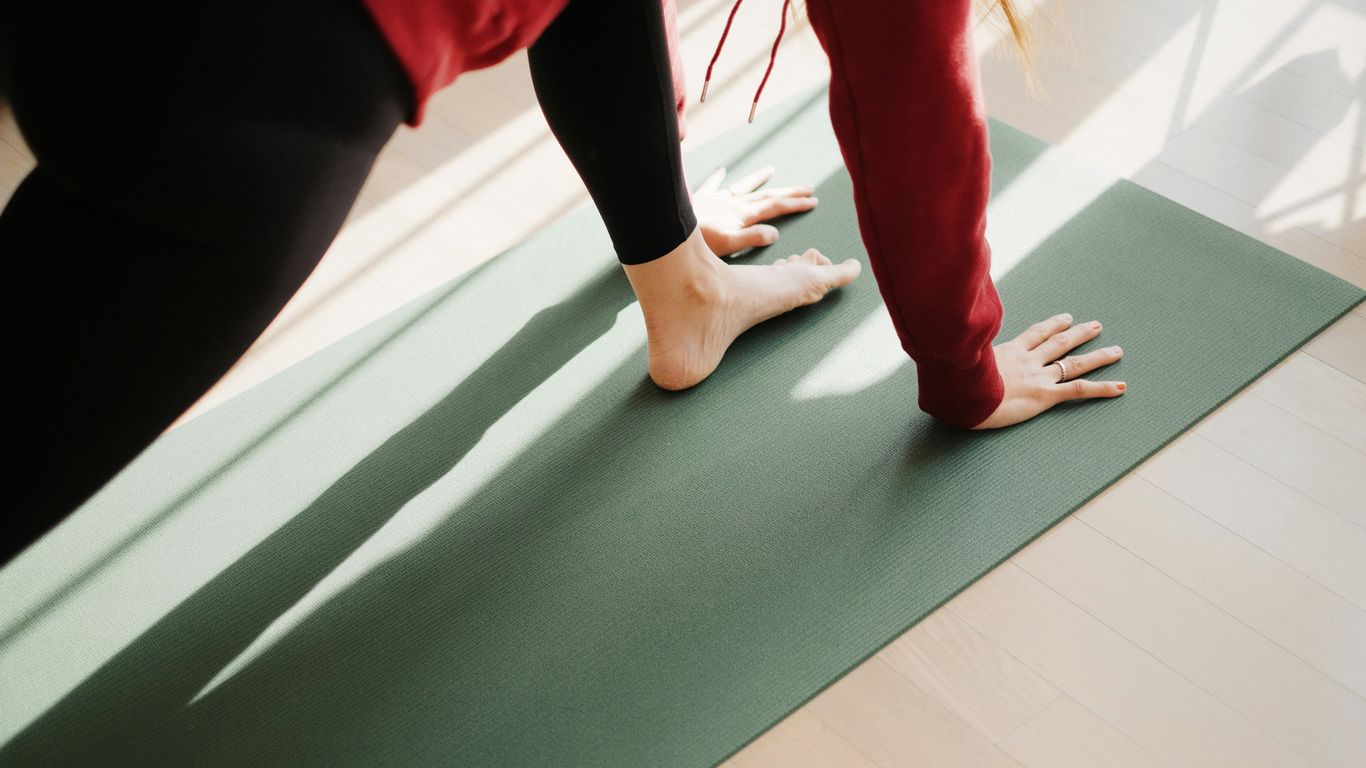
Test the surface with bare hands and feet if possible, especially in a lunge or a plank. Some mats feel grippy when dry, while others become more secure with sweat. Look for a texture that supports controlled movement rather than one that feels sticky only when you remain still.
Maintaining stability on carpet, hardwood, and tile
The same mat can behave differently on each floor. A rubberized underside may hold well on smooth flooring, while carpet can create drag or allow the mat to bunch. Before a session, smooth the mat flat and check the corners; a little preparation can prevent a distracting slide.
Choosing cushioning for knees, wrists, and hips
Cushioning should reduce pressure without making your joints sink so deeply that balance changes. If you use a mini mat mainly under your knees or wrists, targeted thickness may be more useful than a thick surface across the entire body. A supportive towel or separate pad can also fine-tune comfort without replacing your main mat.
Understanding how sweat affects performance
Sweat can improve traction on some absorbent or suede-like surfaces and reduce it on others. Bring a small towel if your hands become slippery, and clean the mat soon after practice so moisture does not linger. For a broader travel option, the Airstream Yellowstone Mat is described as a 6mm mat with a textured surface for traction and use across yoga, Pilates, and bodyweight training.
Use a mini yoga mat for travel and daily routines
The strongest argument for a mini yoga mat is often simple: you are more likely to use equipment that is easy to reach. A compact surface can turn a hotel room corner, park bench area, or spare patch of floor into a workable practice space. Keep the setup modest so packing and unpacking do not become a reason to skip movement.
Packing a mat for flights, road trips, and hotel stays
Foldable mats are usually easier to fit around clothing and toiletries than rolled mats. Protect the surface from shoes and rough luggage hardware, and let it air out after outdoor sessions before packing it away. Yune Yoga focuses on portable and foldable mats, and its Moab Rocks Foldable Travel Mat is described as an ultra-thin 2mm option for storage and travel.
Creating a compact home workout setup
Choose one clear floor area and store the mat nearby, perhaps with a strap, towel, and two small blocks. A consistent setup reduces friction and makes short sessions feel realistic. Keep enough space around the mat for stepping off safely, particularly if you add strength exercises.
Pairing the mat with blocks, straps, and towels
Accessories can make a small mat more useful without changing its footprint. Blocks raise the floor for support, straps help with reach, and towels manage sweat or add a little padding. Pack only the pieces that serve your routine; portability disappears quickly when every possible accessory comes along.
Using it for Pilates, mobility work, and strength exercises
A compact mat can support floor-based Pilates, hip mobility, core work, glute bridges, and controlled bodyweight exercises. It is less suitable for movements that require repeated lateral travel or a long landing area. Start slowly on unfamiliar flooring and make sure the mat stays flat before adding intensity.
Clean and maintain your mini yoga mat
Cleaning is easiest when it becomes part of the session rather than a major chore. Sweat, skin oils, dust, and outdoor grit can change how a surface feels over time. Gentle care usually protects both grip and appearance better than aggressive scrubbing.
Removing sweat and dirt after each session
Wipe the mat with a soft, damp cloth after practice, paying attention to hand and knee areas. If it was used outdoors, remove grit before folding or rolling it. Allow the mat to dry fully in open air before placing it in a bag.
Choosing safe cleaning solutions for different materials
Follow the care instructions first, since rubber, cork, suede-like surfaces, PVC, and TPE may respond differently to cleaners. When instructions are limited, use a small amount of mild soap diluted in water and test an inconspicuous spot. Avoid soaking a foldable mat or saturating layers that may hold moisture.
Preventing odors, peeling, and surface damage
Heat, direct sun, harsh chemicals, and damp storage can shorten a mat’s life. Do not leave it in a hot car for long periods, and avoid abrasive brushes that can roughen the top layer. If the surface begins peeling or cracking, replace the mat rather than relying on a damaged grip.
Storing the mat without losing its shape
Fold along existing creases when the design calls for folding, and roll gently when rolling is recommended. Keep heavy objects off the mat and store it somewhere dry and reasonably cool. A breathable bag is preferable to sealing a damp mat in plastic.
Compare mini yoga mats before buying
A quick comparison prevents the common mistake of choosing by color or thickness alone. Put the specifications beside your actual routine and travel habits. The most suitable option may be a small accessory mat, a thin foldable travel mat, or a compact full-length design.
Checking dimensions, weight, and portability
Write down the mat’s length, width, thickness, folded size, and weight. Then compare those numbers with your bag, storage space, and intended floor area. A mat that weighs only a little less but folds dramatically smaller may be more useful for frequent travel.
Reviewing grip and cushioning specifications
Look for clear descriptions of the top and bottom surfaces, not just general claims about being non-slip. Consider whether the grip is designed for dry use, moisture, or both. Cushioning should be judged alongside stability; a very soft mat is not automatically more comfortable during balance work.
Assessing durability, warranty, and return policies
Read the care instructions and inspect the warranty for exclusions related to wear, heat, or improper cleaning. A return policy is especially useful when texture and firmness are difficult to judge online. Keep packaging and purchase details until you are satisfied with the fit.
Identifying the best value for your routine and budget
Value comes from repeated use, not the lowest price. A frequent traveler may prefer a thin mat that is always packed, while a home practitioner may gain more from cushioning and a larger surface. Use this comparison as a final check:
| Priority | What to compare | Why it matters |
|---|---|---|
| Portability | Weight and folded size | Determines whether you will actually carry it |
| Practice space | Length and width | Shows which poses and exercises will fit |
| Comfort | Thickness and density | Affects knees, wrists, hips, and balance |
| Traction | Top texture and underside | Helps the mat stay useful across floors |
| Care | Cleaning and storage instructions | Protects grip, shape, and lifespan |
After comparing those points, choose the mat that supports your real routine rather than an imagined one. A low-cost mat that stays in a closet is poor value, while a slightly more considered purchase can earn its place through regular use.
When planning a wider wellness routine, readers may also explore six steps for strengthening faith, compact urban mobility, wellness care in Mount Dora, or a whole-food plant-based diet. These resources address different parts of daily life, so they are best treated as separate considerations rather than features of a yoga mat. For privacy questions, review the GDPR privacy policy before sharing personal information online.
Conclusion
The right mini yoga mat balances enough usable space and cushioning with the portability that makes regular practice easier. Compare dimensions, surface feel, material, cleaning needs, and return terms, then choose the format that matches where you genuinely exercise.
Frequently Asked Questions
Is a mini yoga mat suitable for beginners?
Yes, if the beginner’s routine mainly includes seated stretches, kneeling work, mobility drills, or targeted cushioning. A full-size mat is usually easier for learning flowing sequences and standing poses.
Can I use a mini yoga mat for travel?
Yes. Foldable or lightweight designs can fit in carry-ons, backpacks, and small storage spaces. Check the folded dimensions and protect the mat from damp clothing and rough luggage.
How thick should a compact yoga mat be?
Choose thickness based on joint comfort, balance, floor hardness, and packing needs. Thinner mats are easier to transport, while thicker mats generally provide more separation from hard floors.
Is natural rubber better than PVC or TPE?
Not automatically. Natural rubber may offer a grippy, springy feel, while PVC and TPE can provide different combinations of weight, texture, cost, and durability. Personal comfort and care requirements matter most.
How do I stop a mini mat from sliding?
Use it on a clean, dry floor, smooth it flat, and check that the underside suits the surface. If it still moves during transitions, reserve it for slower exercises or add a compatible base underneath.
Can a mini yoga mat replace a full-size mat?
Sometimes, but not for every routine. It can replace one for targeted floor work and short sessions, while flowing yoga, broad poses, and exercises with lots of movement usually need more room.
How often should I clean a mini yoga mat?
Wipe it after sweaty or outdoor sessions and let it dry completely before storage. Follow the material-specific care instructions for deeper cleaning and avoid harsh products unless the manufacturer recommends them.


