
How to choose the best wide thick yoga mat for comfort, stability, and space
Key Takeaways
A wide thick yoga mat can make home practice feel more relaxed, but extra size and cushioning are only useful when they suit your movement, room, and storage habits.
- Measure your practice area before choosing a wider mat.
- Match thickness and firmness to the way you move.
- Look for grip that stays dependable as you sweat.
- Consider weight, odor, cleaning, and storage before buying.
- Treat return policies and warranty coverage as part of the value.
Understand what makes a yoga mat wide and thick
A wide thick yoga mat gives you more room to move and more material beneath your hands, knees, and feet. Those benefits can be welcome during floor-based work, but they may also make a mat heavier, slower to roll, and less convenient to carry. Start with the dimensions you actually need rather than assuming the largest option is the most comfortable. A useful thick yoga mat guide can help you compare cushioning and practice styles before you shop.
Standard, wide, and extra-wide mat dimensions
Many conventional mats are around 24 inches wide and roughly 68 to 72 inches long. Wider versions may give your arms and legs more room in poses such as Warrior II, while extra-wide designs can function almost like a small floor surface for a home studio. Measure your own reach and the space around you, since a mat that feels generous in a store may crowd furniture at home.
Length matters just as much as width. If your heels or head regularly extend beyond the mat, a longer model may improve comfort more than adding several inches to the sides. Also leave enough uncovered floor to step on and off safely.
Thickness levels and how they affect comfort
Thin mats tend to preserve a close connection with the floor, while thicker mats soften contact with hard surfaces. Around 4 to 6 millimeters is a common range for a balance of cushioning and control, with thicker designs often better suited to floor exercises or sensitive pressure points. Thickness alone does not tell you whether a mat will feel supportive; the material can compress quickly or remain quite firm.
If you want to compare a few established thickness options, Yune Yoga describes a 6mm mat with balanced density for yoga, Pilates, mobility, and meditation. That kind of description is more useful than a number by itself because it connects thickness with how the mat is intended to feel.
Balancing cushioning with stability
A soft mat may feel inviting during kneeling poses but make standing balances less certain. A firm, dense surface can provide clearer feedback, though it may feel less plush on the hips. Try to picture your most frequent practice rather than your occasional ideal session. Firm, supportive cushioning is often a better target than maximum softness.
A good test is to shift slowly from a kneeling position into a standing pose. Notice whether your hands sink, whether the edges curl, and whether your feet can adjust without the surface bunching beneath them. Those small details reveal more than the thickness printed on a product page.
When a larger mat is worth the extra space
Extra width makes sense when your arms routinely leave the mat, you practice beside children or pets, or you combine yoga with floor-based strength work. It can also reduce the need to reposition during mobility sessions. The trade-off is a larger footprint, so check doorways, furniture clearance, and the floor area needed for storage.
For a dedicated home setup, a large mat may stay open most of the time and earn its keep every day. For a commuter or traveler, a slightly narrower mat may be the more practical choice even if it offers less room.
Match the mat to your yoga practice
The best mat depends on how often you change position, how much you sweat, and whether you carry the mat beyond your home. Restorative practice rewards gentle support, while a faster flow needs traction and a surface that will not shift. If you combine yoga with strength or mobility work, consider how the mat responds to repeated pressure from hands, knees, and shoes-free feet. The right choice should make your routine easier, not add another piece of equipment to manage.
Best features for restorative and yin yoga
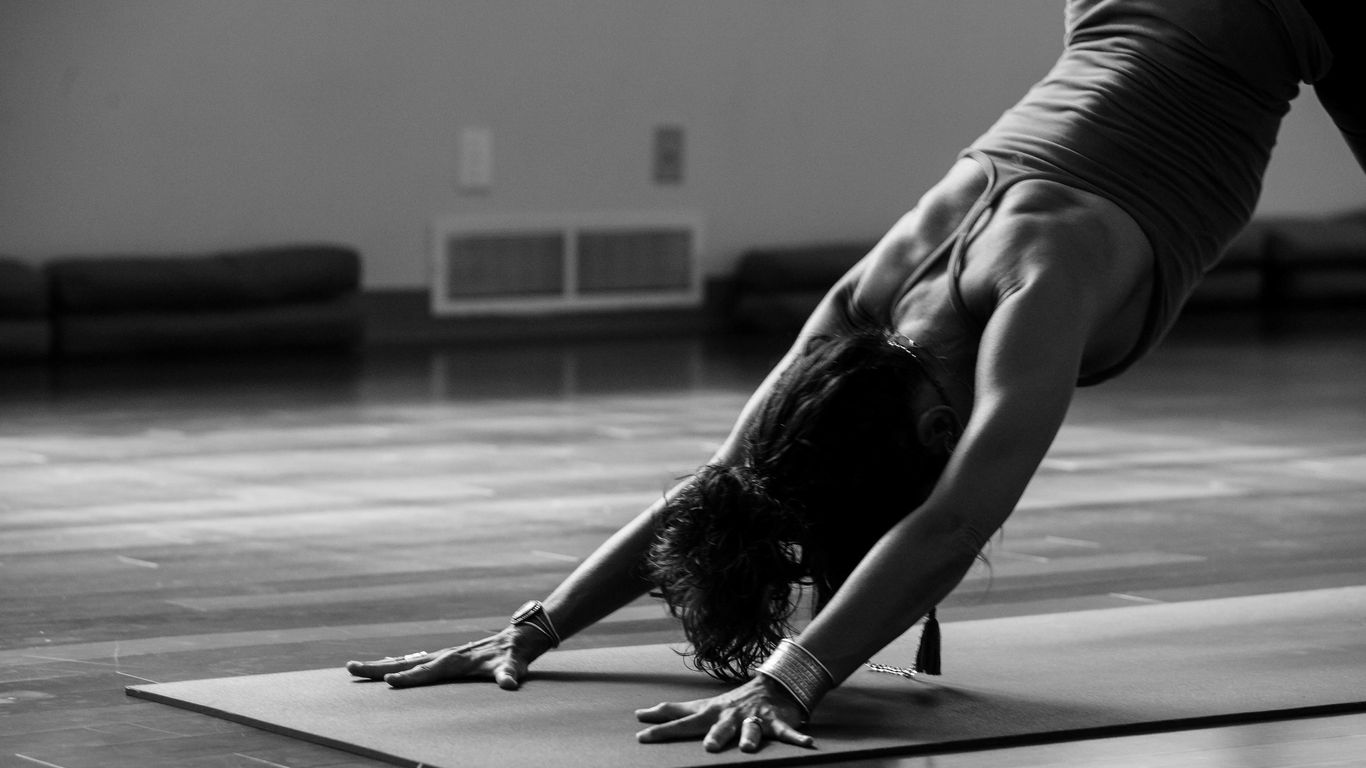
Restorative and yin sessions often include longer holds, so comfort under the hips, knees, and ankles matters. A moderately thick mat with a stable underside can make stillness more pleasant, while a textured top helps prevent small slips when you settle into a pose. You may also value a surface that wipes clean easily because longer sessions bring more contact with the mat.
A wide design is especially useful when props, blankets, or bolsters share the floor. Still, leave room for the props beside the mat rather than buying a size that overwhelms the room.
What to look for in vinyasa and power yoga
Faster flows call for reliable traction, predictable transitions, and enough firmness to support changes in direction. A surface that grips when dry may feel different once palms become damp, so check whether the material is designed for moisture-responsive traction or simply has a rough texture. Weight also matters if you travel to a studio.
For a portable option, Airstream Arches is described as a 6mm, travel-ready mat with non-slip traction, a lay-flat design, and easy care. Those features fit the practical needs of a dynamic practice without requiring a claim that every practitioner will prefer the same feel.
Choosing cushioning for yoga and strength training
Yoga and strength training place pressure on a mat in different ways. Planks, mountain climbers, and floor presses may benefit from a surface that resists sliding, while kneeling work often feels better with more cushioning. If you use the mat for both, seek a middle ground that does not feel unstable when you stand.
Think about the exercises you actually repeat. A mat designed to cushion floor movements may be too bulky for frequent transport, whereas a travel-friendly mat may need a towel or pad for concentrated knee support.
Considerations for meditation, stretching, and mobility work
Meditation and stretching usually reward a clean, quiet surface that stays flat. Mobility work adds more lateral movement, so grip and edge stability become more noticeable. A mat that rolls compactly can be useful if you practice in hotel rooms, parks, or shared spaces, provided it still gives enough room for your range of motion.
For broader wellness planning, a reader may also explore a Mount Dora wellness center, though that kind of resource is separate from selecting exercise equipment. A mat can support a routine; it should not be treated as a substitute for individualized care.
Evaluate comfort and joint support
Comfort is personal, and a thicker mat is not automatically kinder to every joint. The floor beneath you, your movement pattern, and the mat’s density all change how pressure is distributed. If you have persistent pain, seek advice from an appropriate professional rather than trying to solve it through equipment alone. For everyday selection, test how the mat feels in the positions you repeat most.
How thickness affects knees, wrists, and hips
Knees often appreciate a little extra material during lunges and tabletop work, while wrists may prefer a surface that does not collapse under load. Hips can benefit from cushioning during seated poses, but too much softness may make transitions awkward. The goal is even support rather than a mattress-like feel.
Try placing your hands under your shoulders and your knees beneath your hips. If the mat compresses unevenly or leaves you feeling tilted, the advertised thickness is not telling the whole story.
Choosing foam density instead of relying on thickness alone
Density describes how much resistance a material offers when pressed. Two mats with the same thickness can feel very different if one compresses easily and the other stays firm. Look for clear descriptions of firmness, support, or balanced density, then compare those claims with reviews that discuss actual use.
A dense mat may be heavier, but it can also remain more stable during standing poses. A lighter design may be easier to pack, which can matter more if your practice moves between home, studio, and travel.
Testing cushioning without losing balance
Before committing, stand on one foot, lower into a squat, and move through a slow lunge. Notice whether the mat feels springy, whether your ankle has to work harder, and whether your feet remain planted. Then kneel and sit for a few minutes to check pressure points.
If you shop online, confirm the return window and keep packaging until you know the mat works for you. A short home trial is often more revealing than pressing a sample with one hand.
When to use a towel, pad, or supplemental support
A towel can add absorbency during sweaty practice, while a small pad can target one sensitive area without making the entire mat softer. Folded blankets and blocks can also adjust height and comfort during long holds. These additions are often more flexible than buying an unusually thick mat for a single pose.
Choose support that stays put and does not create a ridge beneath a weight-bearing joint. If it shifts, it may distract from the practice instead of helping it.
Compare materials, grip, and durability
Material affects feel, weight, odor, cleaning, and how a mat ages. Natural rubber, PVC, TPE, cork, and proprietary blends each make different trade-offs, so there is no universal winner. Pay attention to whether the surface is open-cell or closed-cell, how it reacts to moisture, and what care the maker recommends. A mat that is easy to live with is more likely to become the one you use.
Natural rubber, PVC, TPE, and cork options
Natural rubber can provide a grippy feel but may not suit people with latex sensitivities, and it can have a noticeable scent at first. PVC is often durable and easy to clean, while TPE may offer a lighter feel. Cork tends to feel firm and can become more grippy with moisture, depending on its construction.
Read the material description carefully rather than assuming an eco label explains everything. For example, Nakata Yoga Mat is described as a 6mm, moisture-resistant, latex-free and phthalate-free PER mat with a non-slip texture. That is a specific product description, not a reason to generalize about every PER mat.
Understanding dry grip and wet grip performance
Dry grip is what you notice at the start of practice, while wet grip becomes relevant as palms and feet warm up. A rough texture may help with traction but feel abrasive during slow work. A smooth surface may feel comfortable but require a towel in humid conditions.
If you sweat heavily, look for clear information about moisture response and consider an absorbent towel. Test a few transitions rather than judging grip by touching the mat with a dry hand.
Odor, allergens, and material sensitivities
New mats can carry a manufacturing smell that fades with airing, but sensitivity varies. Check whether the product is latex-free, phthalate-free, or made without other materials that concern you. Keep the mat in a ventilated area at first and follow the maker’s cleaning instructions.
A careful buyer also checks the source of health-related claims. For food and lifestyle ideas, NOURISH Cooking Co. discusses a whole-food, plant-based approach, but dietary information and mat-material choices are separate decisions. Keeping those categories distinct makes product research clearer.
How surface texture affects movement and cleaning
Texture changes how easily hands and feet adjust. It can also trap dust, so inspect whether the surface is simple to wipe or needs a particular cleaner. Closed-cell materials are often convenient for routine cleaning, while textured finishes may require more attention around seams and raised patterns.
Wipe the mat after sweaty sessions, let it dry fully, and avoid storing it damp. Regular care is a small habit that can extend the useful life of almost any mat.
Measure your space and storage options
A wide mat needs more than floor space during practice. It needs a path through the room, room for your body to move, and somewhere to go afterward. Measure the open area with furniture in its usual position, not pushed temporarily against a wall. If you practice outside the home, add the folded or rolled size to your transport plan.
Checking floor clearance in a home studio
Lay out the mat’s full width and length with tape before ordering. Extend your arms and legs in several directions, then check whether a coffee table, wall, or nearby equipment interrupts the movement. Hard flooring can also make edge movement more noticeable, especially if the underside does not grip well.
Leave a margin around the mat for stepping off safely. That extra clearance may matter more than another inch of cushioning.
Choosing a mat length for different body types
Your mat should allow you to lie down without your head or heels hanging over the edge. Taller practitioners may prefer a longer mat, while shorter users may prioritize a manageable roll and enough width for lateral movement. Consider your longest position, not only your standing height.
If you often practice in compact rooms, length can be a better upgrade than width. A longer but standard-width mat may fit more easily while still supporting full-body stretches.
Transporting and rolling a wide thick yoga mat
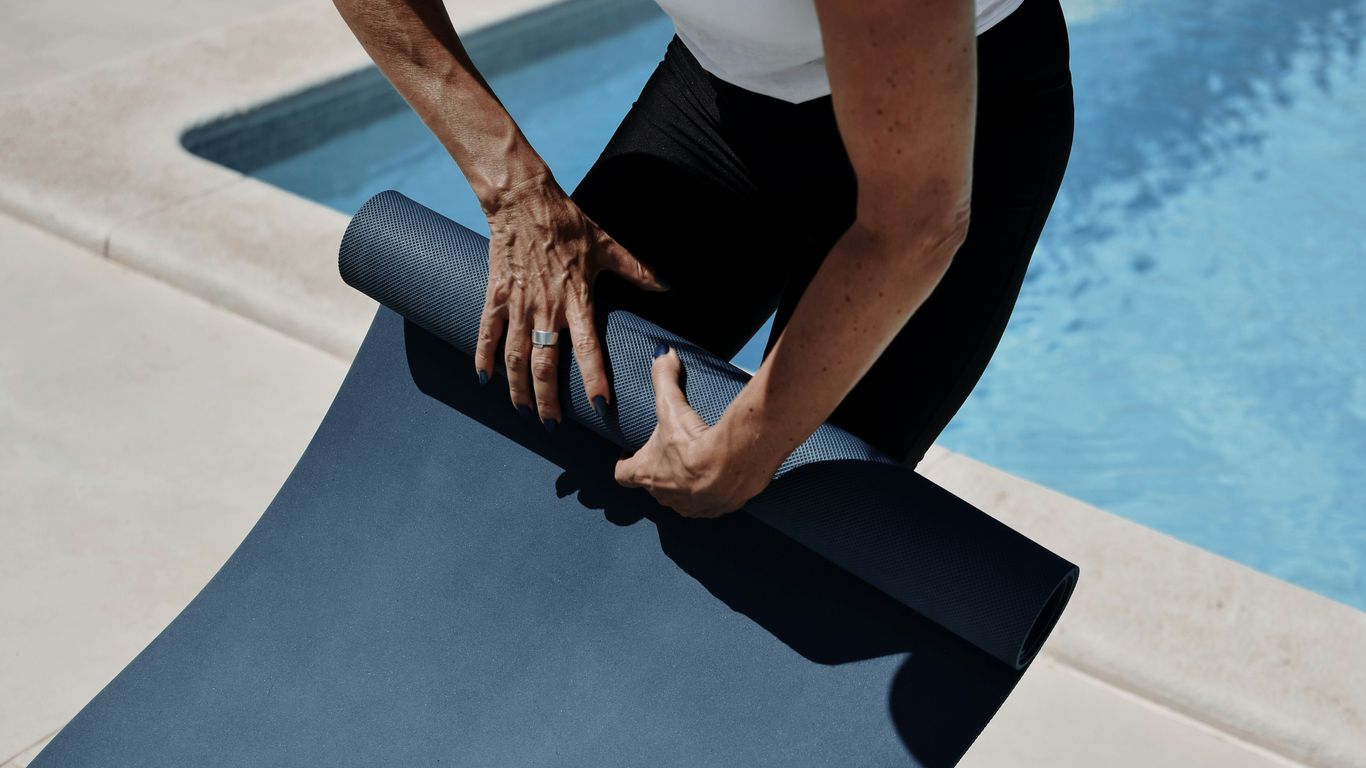
Thicker and wider mats usually take more effort to carry, especially when rolled tightly. Check the rolled diameter, total weight, and whether a strap or carrier is included. A mat that is comfortable at home may become frustrating if it does not fit in your car or locker.
Yune Yoga’s positioning centers on portable and foldable mats, and Tofino Yoga Mat is described as travel-ready and suitable for studio commutes or outdoor sessions. Those details are useful for shoppers who need convenience as much as floor coverage.
Storage solutions for bulky mats
Store a rolled mat upright only if it cannot topple into a walkway. A wall hook, open shelf, or under-bed space may work better, provided the mat is dry and not sharply bent. Wide mats can also be folded, but repeated creases may change how they lie flat.
Measure the storage location before purchase. If the mat must be hidden after every session, a lighter or more compact model may encourage more consistent use.
Decide which features and price are worth it
The most useful extras are the ones that solve a repeated annoyance. Alignment lines may help you position hands and feet, while a carrying strap makes transport easier and a textured finish can improve traction. Do not pay for decoration or accessories that will sit unused. Build your shortlist around the practical details that affect every session.
Alignment lines, textured surfaces, and carrying straps
Alignment markings can be helpful when you practice alone, especially if you are learning consistent hand and foot placement. Texture influences grip and cleaning, while straps help with transport but do not make a heavy mat light. Look at each feature alongside the mat’s dimensions and material.
A well-chosen accessory can sometimes solve a specific issue more cheaply than replacing the whole mat. That is particularly true for towels, carriers, and small support pads.
Comparing premium mats with budget alternatives
Premium pricing may reflect denser material, longer-lasting construction, better finishing, or more generous return protection. Budget mats can still work well when their grip, dimensions, and durability match your routine. Compare like with like: weight, thickness, surface feel, warranty, and shipping can change the real cost.
For a quick comparison, use the factors below rather than relying on price alone.
| Factor | Budget option may offer | Premium option may offer |
|---|---|---|
| Cushioning | Basic comfort for occasional use | More consistent density and support |
| Surface | Simple texture and grip | More carefully tuned traction |
| Durability | Suitable for lighter routines | Stronger construction for frequent use |
| Portability | Lighter or thinner profile | Carrier, finish, or materials that justify weight |
The table is a starting point, not a promise about every product in a price category. A reasonably priced mat that fits your room and practice can be a better purchase than an expensive mat that stays rolled up.
Reviewing warranty and return policies
Check how long you have to return the mat, whether it must be unused, and who pays return shipping. A warranty may cover manufacturing defects but not ordinary wear, cuts, or damage from improper cleaning. Save your order details and read exclusions before disposing of the packaging.
Also distinguish a retailer’s policy from a manufacturer’s warranty. Clear terms reduce unpleasant surprises, especially when a large mat is expensive to ship.
A practical checklist for choosing your mat
Before you buy, pause and compare the mat with your actual room, routine, and carrying habits. A short checklist keeps attractive extras from distracting you from the basics:
- Measure the usable floor and storage space.
- Choose length and width for your largest movements.
- Compare firmness, grip, material, and moisture response.
- Check weight, rolled size, cleaning instructions, and accessories.
- Read the return policy and warranty before ordering.
Then give the shortlist a final reality check. If the mat is too large to store or too heavy to transport, its extra comfort may not matter much in daily life. For broader terms and site-use details when researching online, review the eigenKOR terms separately from product specifications.
Conclusion
Choosing a wide thick yoga mat is a practical exercise in matching space, cushioning, grip, and portability to the way you really practice. Measure first, test firmness where possible, and treat materials, cleaning, storage, and return terms as part of the purchase. The best mat is the one that gives you enough room and support while remaining easy to use often.
Frequently Asked Questions
Is a wide thick yoga mat better for beginners?
It can be, especially if extra room and moderate cushioning make basic movements feel less cramped. Beginners should still check stability, weight, and whether the mat fits their available floor space.
How thick should a yoga mat be for joint comfort?
Many people find a medium-thick mat comfortable, but the right choice depends on density, flooring, and personal sensitivity. A thicker mat is not automatically more supportive if it compresses too easily.
Does a wider mat make balancing harder?
Width itself does not usually make balance harder, but a very soft surface can feel unstable. Choose a mat with enough firmness for standing poses and clear foot placement.
Are thicker yoga mats difficult to carry?
They can be heavier and have a larger rolled diameter. Check the listed weight and rolled dimensions, and consider a strap or carrier if you travel to practice.
What material is easiest to clean?
That depends on the surface construction, but a moisture-resistant, easy-clean finish is generally convenient. Always follow the maker’s care instructions and let the mat dry fully before storing it.
Do I need a yoga towel with a thick mat?
Not always. A towel can be useful for sweaty sessions, extra absorbency, or targeted support, but it is optional if the mat already feels secure and comfortable.
Should I choose a long mat or a wide mat?
Choose length if your head or heels regularly extend beyond the mat, and choose width if your arms and legs frequently leave the sides. Measure your most common full-body positions before deciding.