
Towel for hot yoga mat: how to choose the right one
Key Takeaways
A well-chosen towel for hot yoga mat use can make a sweaty practice feel steadier, cleaner, and easier to manage. Focus on grip, fit, absorbency, and care rather than appearance alone.
- Choose a towel with a secure backing or corner anchors.
- Match the towel dimensions to your actual mat.
- Microfiber dries quickly and handles heavy sweat well.
- Wash the towel promptly and protect its grip surface.
- Compare long-term performance, not just the initial price.
Understand why a hot yoga mat towel matters
A heated studio changes how your mat feels within minutes. Sweat can collect under your hands and feet, making transitions less predictable and leaving the surface damp after class. The right towel for hot yoga mat use gives that moisture somewhere to go while creating a more comfortable practice layer.
This is a practical accessory, not a replacement for a suitable mat. A useful hot yoga towel guide can help you think through traction, hygiene, comfort, size, and durability before you shop.
How heat and sweat affect grip
As the room warms, perspiration can make a smooth mat feel slick. That does not mean every slip is solved by adding fabric, but a towel that absorbs moisture under your hands and feet can reduce the wet feeling that interrupts a pose. Look for a surface that stays reasonably stable rather than one that merely feels plush when dry.
Some people sweat lightly at first and much more heavily later in class. A towel should continue to feel usable after repeated contact with damp skin, especially during downward-facing positions and floor work.
When a towel protects the mat surface
A mat towel acts as a barrier between your body and the mat. It can catch sweat, lotion, and everyday studio residue before they settle directly onto the mat surface, which may make routine cleanup simpler. The towel still needs washing after a sweaty session; it is not a substitute for cleaning either piece of equipment.
This separation is also useful when you practice in shared spaces. The practical mat towel benefits include managing sweat, improving comfort, and creating a cleaner-feeling layer between you and the mat.
The difference between a mat towel and a bath towel
A bath towel is usually made for drying the body, not for staying flat while you move. It may bunch under your feet, leave uncovered areas, or shift when you change positions. A yoga towel is shaped with mat dimensions in mind and may include a grippy underside, corner pockets, or other ways to limit movement.
Thickness matters too. A bath towel can feel bulky and absorbent but may make balance less consistent. A purpose-built towel generally aims for a flatter profile and easier packing.
Who benefits most from using one
A mat towel is especially useful for people who sweat heavily, attend heated classes often, or prefer a fresh layer over a shared studio mat. It can also suit travelers who want one washable accessory that packs down smaller than an extra mat. Beginners may appreciate the added moisture management while they learn how their body responds to heat.
If you practice outdoors or move between studios, portability becomes part of the decision. A towel that folds neatly into a bag is more likely to be used consistently than one that is awkward to carry.
Look for the features that improve stability
Stability comes from several small design decisions working together. The underside should stay reasonably connected to the mat, while the top should absorb sweat without becoming heavy or clammy. Edge finishing matters as well, since loose corners can become a distraction during movement.
Do not assume that the most textured or thickest towel is automatically the best. Consider how it behaves when damp, how it fits your mat, and whether you can wash it frequently without weakening its useful features.
Non-slip backing and corner anchors
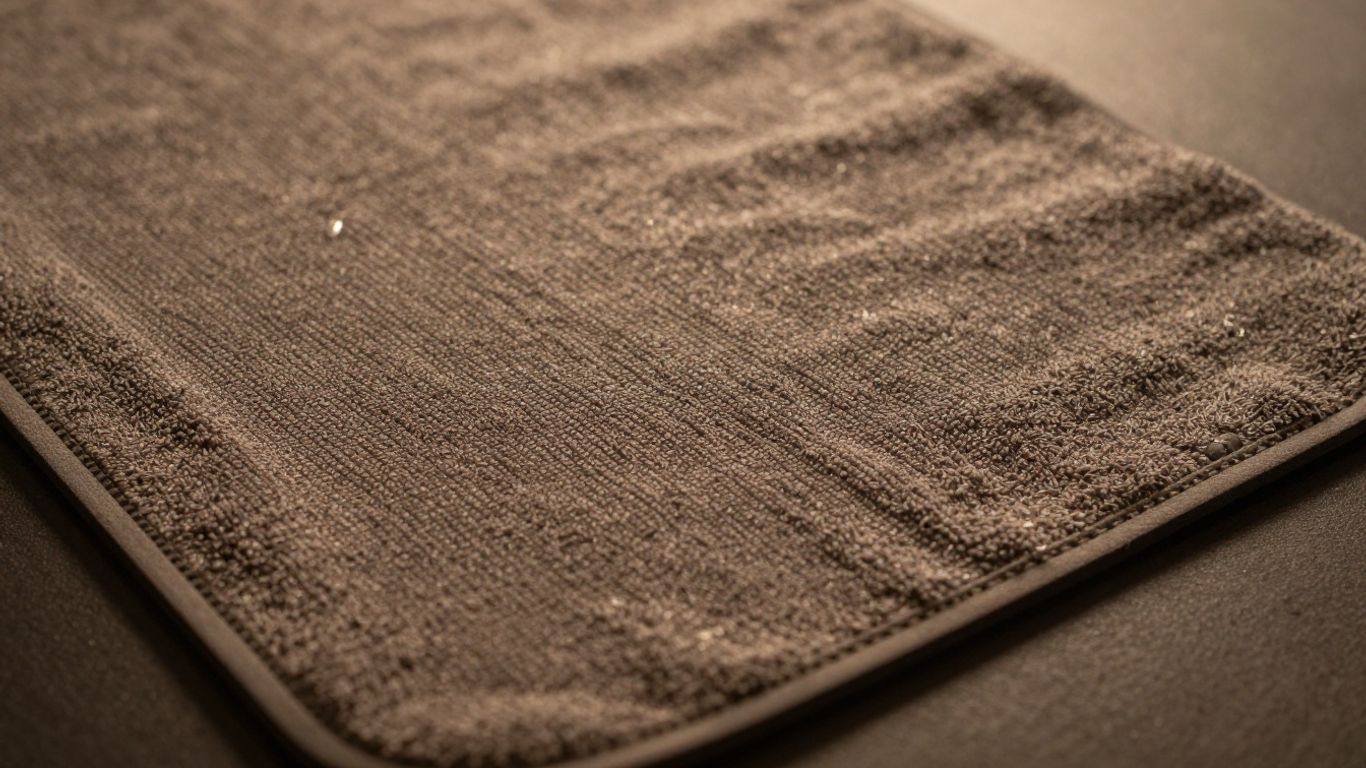
Silicone dots, textured grips, and corner pockets are common ways to reduce shifting. A backing can help the towel stay in place, while corner anchors hold the fabric at the mat’s edges. Neither feature removes the need to smooth the towel out before class, but both can make adjustments less frequent.
Check whether the grip is distributed across the whole underside or concentrated at a few points. Also consider the mat underneath: a very soft or unusually textured mat may interact differently with the same towel.
Absorbency for heavy sweating
Absorbency is more than a marketing word. The towel should take in moisture without immediately feeling saturated or dragging beneath your hands. If you regularly leave class with a soaked towel, choose a size and fabric weight that can handle that amount of moisture without becoming cumbersome.
A towel with good absorption can also help you avoid wiping the mat repeatedly during class. That keeps your attention on positioning instead of on chasing damp spots.
Quick-drying construction
Fast drying is useful when you attend class on consecutive days or pack your towel into a bag after practice. A thinner performance fabric generally dries sooner than a dense, heavy weave, though airflow and humidity still make a difference. Give the towel space to dry fully rather than leaving it compressed in a hamper or gym bag.
The portable towel collection from Yune Yoga is described as offering non-slip, absorbent microfiber styles for hot yoga, travel, and everyday use. That combination fits shoppers who want a practical accessory that can move between locations.
Softness, durability, and odor resistance
A towel touches your hands, face, knees, and feet, so softness affects whether you want to use it throughout a long class. At the same time, a fragile fabric may pill, shed, or lose its shape after repeated washing. Look for secure seams, consistent edging, and care instructions you are realistically willing to follow.
Odor resistance often begins with drying and washing habits rather than a special finish. Even a well-made towel can smell if it stays damp for hours, so routine care is part of its performance.
Choose the right size and fit
Size changes how much of the mat is protected and how often you need to reposition the towel. A compact design may pack beautifully but leave uncovered areas during wide stances. A larger design offers more coverage but can add bulk to your studio bag.
Measure your mat before ordering, including its usable length and width. Then decide whether the towel should cover the entire surface or simply create a stable zone beneath the areas that sweat most.
Full-length towels for complete mat coverage
A full-length towel is the straightforward choice when you want a washable layer from the top of the mat to the bottom. It can protect more of the mat surface and give you one consistent fabric area for standing, kneeling, and seated work. Make sure its width does not leave edges curling upward.
Full coverage is also convenient when the mat is shared or when you want to simplify cleanup. The tradeoff is that a full-length towel may take longer to dry and occupy more space when folded.
Yoga mat-size towels for precise placement
A yoga mat-size towel is designed to follow the general shape of a standard mat. This makes placement quick and helps the towel look tidy without much excess fabric. It is a sensible middle ground for most studio users who want coverage without an oversized bundle.
The Hermes Yoga Towel from Yune Yoga is listed at 24 by 70 inches and described as lightweight, easy to pack, and suited to sweaty flows. Those dimensions may work well for a narrower or shorter mat, but always compare them with your own equipment first.
Oversized options for extra movement
An oversized towel can extend beyond the mat, giving you more fabric for broad leg positions or floor-based movement. It may also be useful when you prefer to place your hands beyond the mat’s edges. The downside is extra weight when wet and more fabric to wash and dry.
Choose this style for a clear reason, not simply because larger sounds more comfortable. If your practice stays centered on a standard mat, excess fabric may bunch instead of helping.
Matching towel dimensions to your mat
Lay your mat flat and compare its measurements with the towel’s finished dimensions, not just the package description. Leave enough room for the towel to sit flat without creating raised borders. If the towel includes corner pockets, confirm that they can reach the mat corners without stretching the fabric.
A simple comparison table can make the choice less abstract:
| Towel style | Best suited to | Main advantage | Main tradeoff |
|---|---|---|---|
| Full-length | Complete mat coverage | Consistent surface | More drying and storage space |
| Mat-size | Standard studio practice | Balanced fit | Less room beyond the mat |
| Oversized | Wide movement or floor work | Extra coverage | Greater bulk when wet |
| Compact or travel | Short sessions and travel | Easy packing | Limited coverage |
After comparing the measurements, prioritize the size that will lie flat in your actual practice space. A theoretically generous towel is less useful if it repeatedly folds under your feet.
Compare materials and towel designs
Material affects how a towel feels, dries, and handles repeated washing. Design affects how it stays in place and how much cushioning it provides. You do not need the most elaborate combination; you need one that matches your sweat level, packing habits, and preferred contact with the mat.
Microfiber and cotton are the most familiar choices, though their weave and finishing can vary widely. Read the care label and look for clear information about the top fabric, backing, and edges.
Microfiber for fast absorption and drying
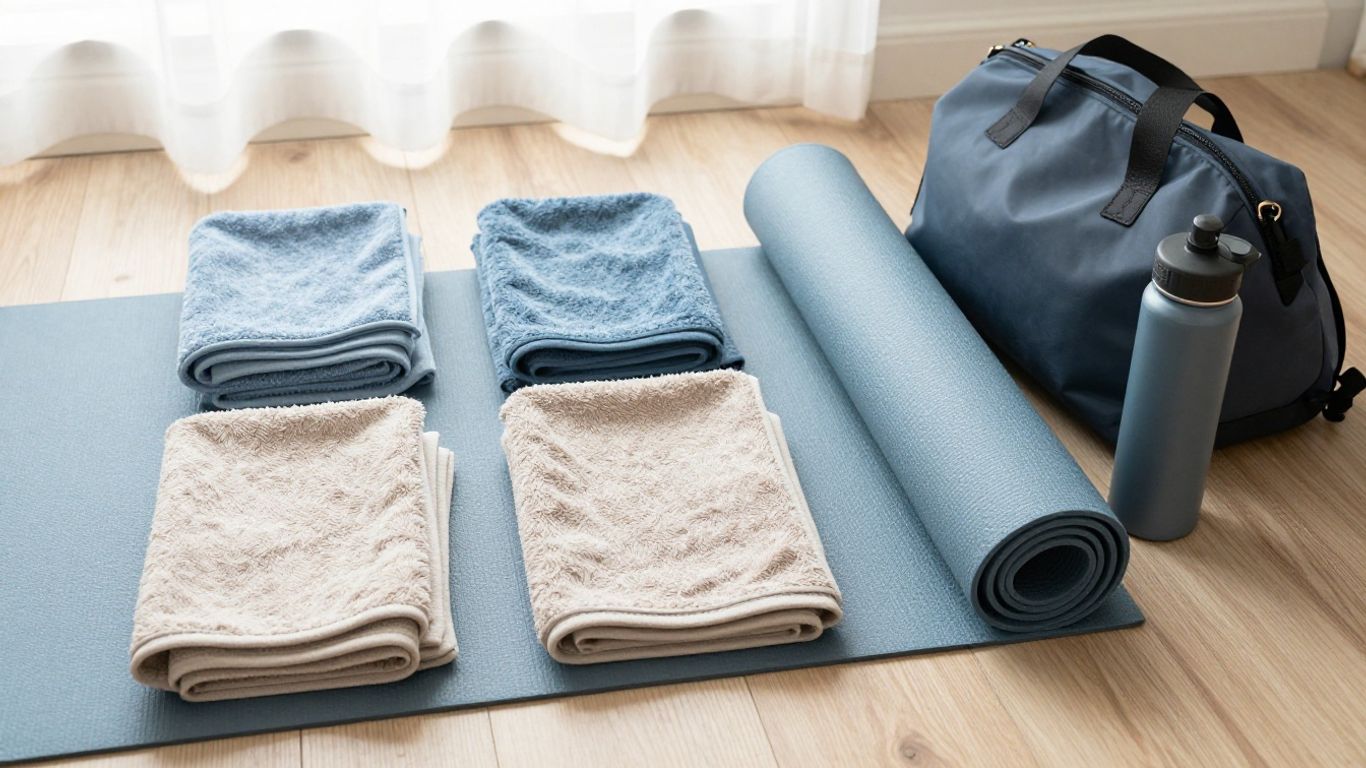
Microfiber is often chosen for hot yoga because it can absorb moisture while remaining relatively light. It also tends to dry faster than a dense cotton towel, which helps people who carry gear home after class. A microfiber towel may feel smooth or slightly slick when dry, so its grip design deserves separate attention.
For travelers, low weight and quick drying can matter as much as raw absorbency. The microfiber towel guide offers a useful way to compare those qualities with grip and care requirements.
Cotton for softness and natural comfort
Cotton can feel familiar and comfortable against the skin, especially for gentle movement or people who dislike the feel of performance fabrics. It may also provide a substantial, towel-like hand. However, a thicker cotton weave can hold more water and take longer to dry after a hot class.
Choose cotton when softness and natural texture are your priorities, and make sure you have a dependable place to dry it. A damp, folded cotton towel is more likely to develop an unpleasant smell.
Silicone dots versus textured grips
Silicone dots create discrete contact points between the towel and mat. A woven or textured grip uses the structure of the underside to reduce movement. Both approaches can work, but the pattern should remain comfortable when you kneel or lie down if the underside presses through the fabric.
Inspect the backing for even coverage and secure attachment. If the grip begins peeling, cracking, or transferring residue, the towel may no longer be worth using even if the top fabric looks fine.
Lightweight towels versus thicker cushioning
Lightweight towels are easy to pack, wash, and carry when damp. They are usually the better fit for commuters and travelers who already have a mat and do not want a heavy accessory. Thicker towels can feel softer and more padded, but they may shift if the extra material is not supported by a suitable backing.
Think of cushioning as a comfort preference, not a replacement for a mat. If you need meaningful joint support, choose the mat separately and use the towel primarily for moisture control and surface comfort.
Use a towel effectively during hot yoga
Even a well-designed towel performs better when it is placed and maintained properly during class. Smooth it before the room gets hot, check the contact points, and notice where moisture gathers as the session continues. Small adjustments early are easier than fixing a bunched towel halfway through a sequence.
A towel should support your practice without becoming another thing to monitor. Once it is flat and secure, let its design do the work.
How to position it before class
Place the towel on a clean, dry mat and align its long edges first. If it has corner pockets, fit those over the mat before smoothing the center. Run your hands across the surface to remove folds, especially where your palms and feet will land.
Allow the towel to settle before the class begins. Starting with a damp or wrinkled mat makes slipping and shifting more likely, regardless of the towel’s construction.
Keeping the towel secure through transitions
Move through transitions with deliberate foot placement rather than dragging your feet across the towel. If a corner folds, pause and flatten it instead of repeatedly stepping over the problem. This is particularly useful during fast flows, when a small crease can become a larger bunch.
Grip features help, but they are not magic. A towel that is too large, placed on a wet mat, or pulled out of alignment can still move.
Managing moisture during longer sessions
For a long class, use the towel’s drier areas strategically when possible. You can also briefly press a hand or foot into the fabric before a demanding pose, rather than wiping aggressively and disturbing its position. If the top becomes saturated, it may be time to use a fresh towel rather than expecting the same surface to keep absorbing indefinitely.
These simple habits keep moisture management predictable. They also reduce the temptation to throw a wet towel into your bag immediately after the final pose.
When to use a hand towel alongside the mat towel
A hand towel is useful for wiping your face, neck, or hands without moving the larger mat towel. It gives you a clean, reachable option during pauses and can keep the mat towel focused on the floor. Choose a small towel that is easy to identify and does not become tangled with the main one.
Using both can be especially convenient when you sweat heavily but prefer not to interrupt the placement of the full-length towel.
Wash and maintain your hot yoga towel
A hot yoga towel works hard, so care should be part of the purchase decision. Sweat, skin oils, and studio dust build up quickly when the towel is used often. Washing it promptly helps preserve its feel and keeps it ready for the next session.
Follow the care label first, since backing materials and dyes vary. In general, gentle washing, complete drying, and avoiding long periods of damp storage will do more for longevity than occasional intensive cleaning.
Recommended washing and drying practices
Shake out the towel after class and wash it according to the manufacturer’s instructions. Use a suitable cycle and avoid overcrowding the machine, since dense loads can prevent the fabric from rinsing properly. Dry it fully before folding, whether you use a dryer setting allowed by the care label or air-dry it in a well-ventilated place.
Wash the towel separately from rough items that could snag the fabric or damage the grip. If you attend frequent classes, rotating two towels may make proper drying easier.
Preventing smells, stains, and fabric buildup
Do not leave a wet towel compressed in a closed bag. Rinse or wash it as soon as practical, and occasionally inspect the seams and underside for product buildup. Heavy detergent, fabric softener, and oily laundry additives can coat absorbent fibers or reduce the feel of a grippy backing.
If a stain remains after normal washing, follow the care instructions rather than using a harsh treatment automatically. Strong chemicals may change the color or weaken the underside.
Avoiding damage to non-slip backing
Non-slip backing deserves gentle handling. Avoid ironing it, scrubbing it with abrasive tools, or exposing it to heat beyond the care instructions. Folding the towel with the grip surface protected can also reduce unnecessary rubbing during storage.
Before every few uses, inspect the underside for loose dots, peeling sections, or hardened areas. Once the backing becomes uneven, the towel may shift even if the top still looks clean.
Knowing when it is time to replace the towel
Replace a towel when it no longer lies flat, absorbs effectively, or stays connected to the mat after proper washing. Persistent odor can also signal that the fibers are holding buildup that normal care is not removing. Small cosmetic wear is not always a problem, but structural wear can affect stability.
A useful yoga towel care guide can help you compare cleaning, maintenance, material, and durability considerations before you decide whether to replace an older towel.
Make a practical buying decision
The best towel is the one you will use, wash, and carry without fuss. Start with your mat dimensions and sweat level, then narrow the options by backing, fabric, drying time, and care instructions. A beautiful print is a bonus; reliable behavior during a sweaty class matters more.
It can help to think in terms of total use rather than a single purchase price. A towel that dries quickly and remains stable after repeated washing may be more convenient than a cheaper option that needs replacing early.
Evaluating price against performance
Price should reflect the construction you actually need. If you practice once a month, a simple, washable towel may be enough. Frequent practitioners may value stronger seams, dependable grip, faster drying, or a second towel for rotation.
A comparison of premium and budget towels found that less expensive options can perform similarly in basic use, while construction details may influence preference. That is a useful reminder to read the specifications and reviews instead of assuming price alone predicts performance.
Checking reviews for slipping and shedding
Reviews are most useful when they describe conditions rather than simply assigning stars. Look for comments about whether the towel shifts when wet, sheds fibers, develops odor, or survives repeated washing. Reviews that mention mat size and class length are more informative than vague praise.
Pay attention to patterns across several reviews. One report of a loose thread may be ordinary variation; repeated comments about backing failure deserve more weight.
Choosing between one towel and a towel set
One towel is sufficient if you practice occasionally and can wash it after every session. A set makes more sense for frequent classes, travel, or anyone who wants one towel drying while another is in use. A hand towel can also add convenience without requiring a second full-size mat towel.
For shoppers comparing portable accessories, the Yune Yoga towel option is presented alongside considerations such as grip, sweat absorption, portability, and hygiene. Use those criteria to judge whether a single towel or a small rotation fits your routine.
Building a simple hot yoga towel checklist
Before buying, reduce the decision to a few practical questions. This keeps attractive but unsuitable options from winning your attention.
- Does the finished size fit my mat without bunching?
- Will the fabric absorb my usual level of sweat?
- Does the underside stay stable on my mat?
- Can I wash and dry it after every demanding session?
- Is it light enough for my studio, travel, or outdoor routine?
Once you have answered these questions, compare only the towels that meet the basics. For a lightweight travel setup, portable yoga accessories can also help you think about what else belongs in your class bag without overpacking.
Conclusion
The right towel for hot yoga mat use should absorb sweat, stay reasonably secure, fit your mat, and remain easy to wash and carry. Measure first, inspect the backing, choose a fabric that suits your drying routine, and judge value by repeated performance. With those basics in place, the towel becomes a quiet, useful part of a more comfortable practice.
Frequently Asked Questions
Do I need a towel for hot yoga?
You do not have to use one, but a mat towel can help manage sweat, create a more comfortable surface, and reduce direct moisture on the mat. It is especially useful during heated or high-sweat sessions.
What size towel fits a standard yoga mat?
A towel close to the mat’s length and width is usually the easiest fit. Measure your mat and compare finished towel dimensions so the edges do not bunch or curl.
Is microfiber or cotton better for hot yoga?
Microfiber is often lighter and faster drying, while cotton may feel softer and more familiar. The better choice depends on your sweat level, washing routine, and preference for fabric texture.
How do I stop a yoga towel from slipping?
Choose a towel with a suitable non-slip backing or corner anchors, place it on a clean, dry mat, and smooth out folds before class. A backing cannot fully compensate for an oversized or poorly positioned towel.
Can I wash a hot yoga towel in a washing machine?
Many can be machine washed, but always follow the care label. Use a suitable cycle, avoid harsh treatments unless approved, and dry the towel completely before storing it.
How often should I wash my yoga towel?
Wash it after each sweaty session when possible. Prompt washing limits odor and buildup and gives the towel a better chance of staying fresh and absorbent.
When should I replace a hot yoga towel?
Replace it when the fabric stops absorbing, the towel no longer lies flat, the backing peels or hardens, or persistent odor remains after proper washing. These signs can affect comfort and stability.

