

How to choose the right lululemon yoga mat for your practice
Key Takeaways
Choosing a mat is less about finding one universal “best” option and more about matching the surface, cushioning, and size to the way you actually practice.
- Decide whether grip, cushioning, stability, or portability matters most.
- Match thickness and texture to your usual yoga style.
- Check the mat’s dimensions against your height and practice space.
- Consider cleaning, storage, and expected frequency of use.
- Test the mat with familiar poses before committing when possible.
Understand the lululemon yoga mat lineup
A lululemon yoga mat can feel very different from another model in the same range, even when both look suitable at first glance. Start with the kind of practice you do most often, then compare the mat’s surface, thickness, size, and weight. Product names matter less than how those details fit your routine. A little planning can prevent buying a mat that is comfortable in one class but awkward everywhere else.
The Mat for everyday yoga and studio sessions
The Mat is generally positioned as an everyday option for regular practice, including sessions at home or in a studio. Its appeal is straightforward: a substantial feel under the hands and feet, enough cushioning for ordinary floor work, and a surface intended to support traction. If you attend classes frequently, think about how easily it rolls, how much it weighs, and whether you have room to store it between sessions.
A review of The Mat focuses on grip, cushioning, cleaning, and portability, which are useful categories to consider before you buy. Those categories also make a better comparison framework than color or appearance alone.
The Take Form yoga mat for alignment-focused practice
The Take Form yoga mat is the choice to investigate when visual positioning or alignment guidance is a meaningful part of your practice. Before selecting it, consider whether you genuinely use alignment cues during class or whether you prefer an uninterrupted surface. A mat can be well made and still feel distracting if its layout does not suit the way you move.
Alignment support should complement instruction rather than replace attention to your body. Try a few familiar standing and floor poses on the mat so you can judge whether the markings feel helpful, easy to follow, and comfortable beneath your hands.
Travel-friendly options for portability
Portability changes the decision completely. A mat that feels excellent in a dedicated home space may be inconvenient if it has to fit in a carry-on, a small car, or a crowded studio locker. Travelers should look at folded or rolled dimensions as well as total weight, since both affect whether the mat actually gets used.
For a practice that moves between hotel rooms, parks, and other temporary spaces, a thin and light design may be more useful than extra cushioning. Keep a separate towel or compact strap in mind too, especially when the practice surface or weather is unpredictable.
How sizes, thicknesses, and weights differ
Dimensions are easy to overlook because most mats appear similar when displayed side by side. Check your height, the amount of space you need for stretching out, and whether your usual poses take you close to the mat’s edges. This yoga mat size guide offers a useful way to think through length, width, thickness, and personal space before comparing models.
Weight and thickness usually involve a trade-off. Thicker mats can feel kinder on firm floors, while lighter mats are easier to carry and store. Measure the space where you will practice and keep these differences in view:
| Feature | What it affects | Who may value it |
|---|---|---|
| Length | Room for reclining and extended poses | Taller practitioners or expansive floor work |
| Thickness | Cushioning and connection to the floor | Restorative practice or hard surfaces |
| Weight | Carrying and storage | Commuters and travelers |
| Width | Personal space and lateral movement | Wide stances or shared rooms |
The best size is the one that gives you enough room without becoming a burden every time you need to move it. If your mat stays rolled up because it is difficult to handle, its theoretical comfort will not matter much.
Match the mat to your yoga style
Your practice gives the clearest clue about what to prioritize. Fast, sweaty sequences ask different things of a surface than quiet floor-based work, while balance poses reward a different feel again. The yoga mat recommendations by style are a helpful starting point, but your own experience should lead the final decision. Notice where your hands slip, where your knees need support, and how often you carry the mat.
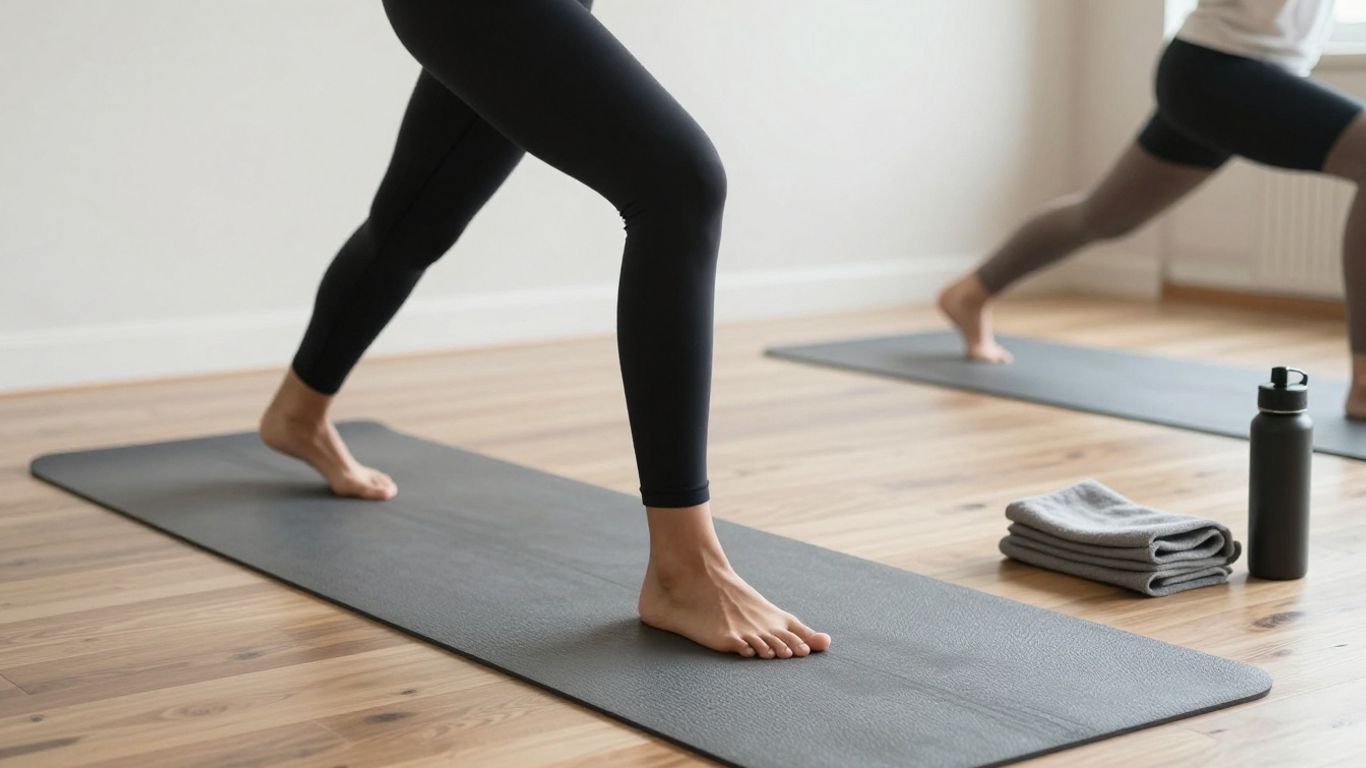
Choosing grip for hot yoga and sweaty practices
Grip becomes more consequential as moisture builds. Test whether your hands and feet stay planted during downward-facing dog, plank, and transitions rather than judging the surface by touch alone. Some textures feel grippy when dry but change noticeably once perspiration appears.
A towel can be a practical addition for sweaty sessions, particularly if you prefer a lighter mat that is easier to transport. Look for a surface that gives you confidence without forcing you to press excessively through your hands.
Finding cushioning for restorative and yin yoga
Restorative and yin practices often involve staying close to the floor for longer periods, so pressure points may become more noticeable than they are during a flowing sequence. Extra thickness can make kneeling, reclining, and supported poses more comfortable, especially on wood or tile.
There is no need to choose the thickest available option automatically. Too much softness can make transitions feel less steady, so compare cushioning with the amount of floor feedback you prefer. A dedicated meditation practice mat guide can also help when long, quiet sessions are part of your routine.
Selecting stability for balance poses and inversions
Balance work benefits from a predictable base. A mat that shifts underfoot or compresses unevenly can make a pose feel harder to repeat, even when your technique has not changed. Try standing on one leg, moving through a lunge, and placing your hands down with care before deciding whether the surface feels secure.
Stability is also affected by the floor beneath the mat. A smooth studio floor, carpet, and outdoor paving each create a different experience, so test in the place where you expect to practice most often.
Considering texture for transitions and floor work
Texture affects how a mat feels during slides, pivots, seated movements, and hands-and-knees work. A pronounced texture may provide traction but can feel busy against bare skin, while a smoother surface may make transitions pleasant but require more control. Neither approach is universally right.
Think about the rhythm of your practice. If you move continuously, a surface that allows controlled transitions may matter more than maximum stickiness. If you pause frequently in one pose, stable contact may take priority.
Evaluate grip, cushioning, and support
Grip, cushioning, and support are related, but they are not interchangeable. A mat can be soft without being stable, or firm without feeling comfortable at the knees. Try to judge each quality separately, then consider how the combination behaves during your actual sequence. Your practice pattern matters most when specifications seem close.
How the top surface affects traction
The top layer is where your hands and feet make contact, so its feel can shape the entire session. Consider traction in both dry and damp conditions, and pay attention to whether your palms need constant repositioning. A surface that feels secure in a showroom may respond differently after several minutes of movement.
Cleanliness also affects feel. Dust, lotion, and residue can change how much contact you get, which is one reason a simple care routine matters as much as the original texture.
Balancing comfort with connection to the floor
Comfort should not mean feeling disconnected from the floor. When a mat compresses too much under your feet, standing poses and transitions can feel less precise. On the other hand, a very firm surface may become tiring during kneeling or seated work.
Try pressing through your hands and feet separately. Notice whether the mat cushions pressure without making your base wobble. That small distinction is often more useful than a thickness number by itself.
When a thicker mat is worth considering
A thicker mat makes sense when your practice includes extended kneeling, long floor sequences, or regular sessions on hard flooring. It may also suit people who simply prefer a softer landing. Before choosing one, check whether it remains easy to roll, carry, and store.
If you travel often, a thinner mat paired with a towel may be more practical than carrying a large, heavy roll. The right answer depends on how often comfort, portability, and floor connection each appear in your week.
How mat construction influences durability
Durability is shaped by repeated friction, cleaning habits, storage conditions, and the way the mat is transported. Look at the areas that receive the most use: the center of the mat, the hand positions in plank, and the places where feet pivot during transitions. Early surface changes in those zones can tell you more than a perfect-looking edge.
A sensible maintenance routine helps preserve the original feel. Roll the mat as directed, avoid leaving it damp in a closed bag, and give it enough time to dry before storage.
Choose the right lululemon yoga mat for your needs
The right lululemon yoga mat should fit the routine you already have, not an imaginary version of your practice. Beginners may need a forgiving, easy-to-handle option, while experienced yogis may have very specific preferences about traction and floor feel. Home users can usually prioritize comfort, but commuters must account for weight and storage. If you want a broader comparison of features for beginners, use it to make a shortlist rather than a final decision.
Best features for beginners
A beginner-friendly mat is usually one that feels predictable, is easy to clean, and does not create extra decisions during a class. Moderate cushioning, dependable traction, and a familiar standard size can make early practice less distracting. The mat should also be manageable enough that carrying it does not become a reason to skip class.
Look for clear care instructions and a surface that feels comfortable in the poses you are learning. You do not need every possible feature at once; a straightforward fit is often the most useful starting point.
What experienced yogis may prioritize
Experienced practitioners often know exactly where a mat falls short. They may prioritize a particular level of grip, a stable base for balance work, a certain amount of cushioning, or a texture that suits repeated transitions. Those preferences are worth writing down before shopping, because a small difference can become obvious after regular use.
It can help to compare your current mat with the one you are considering. Identify the two things you would keep and the two things you would change. That makes the purchase more focused than chasing a general reputation.
Options for home, studio, and outdoor use
A home mat can be chosen around the floor and storage space you already have. A studio mat needs to travel well and fit comfortably in shared rooms, while an outdoor mat must cope with uneven ground, dust, and a less predictable setup. If you practice in several places, prioritize versatility over a feature that only helps in one location.
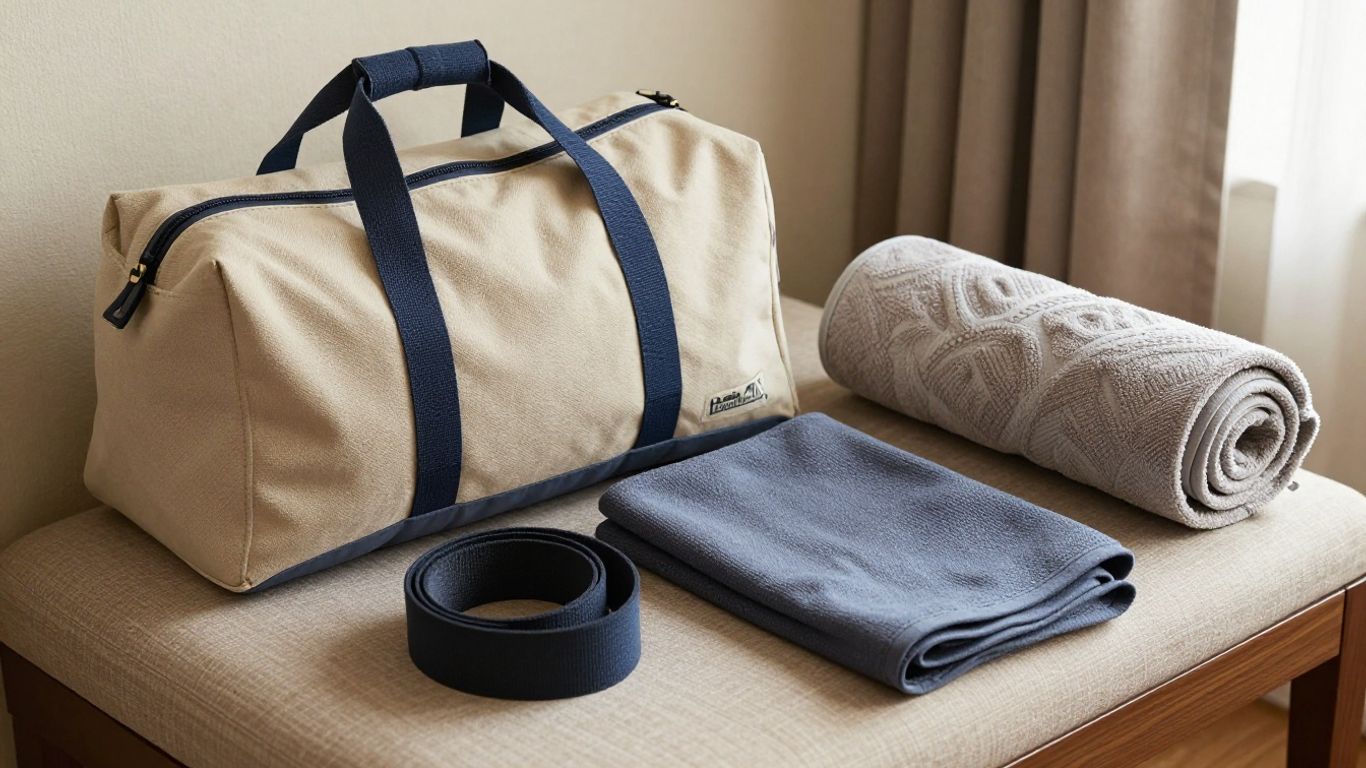
The portable mat approach is especially useful for people who practice away from home. A foldable design, compact towel, and strap can create a simple kit without requiring a large bag.
Factors to consider for travel and storage
Travel changes what “convenient” means. A mat that rolls tightly may fit better in a car, while a foldable mat can be easier to place in luggage. Check the packed dimensions, weight, drying needs, and whether the mat can be carried without damaging its surface.
For frequent travelers, use this short checklist before buying:
- Measure the compartment or luggage space where the mat will go.
- Check whether the packed mat can be carried comfortably for several minutes.
- Decide if you need a separate towel for moisture or unfamiliar floors.
- Confirm how quickly the mat can dry after cleaning or outdoor use.
These details sound ordinary, but they determine whether the mat becomes part of your routine or stays at home. Convenience is a practical feature, not a minor extra.
Compare price, care, and long-term value
Price makes more sense when viewed alongside frequency of use and expected lifespan. A mat used several times a week has different value from one used occasionally during travel. Compare construction, surface feel, cleaning requirements, and storage demands rather than focusing on the number on the tag alone. A yoga mat buying guide can help organize those trade-offs.
What affects the cost of a lululemon yoga mat
Cost may reflect materials, construction, thickness, finish, size, and the amount of surface treatment involved. It can also reflect how consistently the mat performs across different conditions. That does not mean a higher price automatically suits you; it means you should identify which qualities you will use often enough to appreciate.
If portability is your main concern, paying for a heavier construction may not be worthwhile. If you practice daily on a hard floor, comfort and durability may justify spending more than you would for an occasional travel mat.
Cleaning routines for regular practice
Start with the maker’s care instructions and avoid assuming every surface can be treated the same way. Wipe the mat after sweaty sessions, use a suitable diluted cleaner when needed, and let it dry fully before rolling it away. Regular light cleaning is usually easier on a surface than waiting until residue has built up.
Keep a clean towel nearby during practice if your hands or feet become damp. This can reduce the amount of moisture transferred to the mat and make post-session care simpler.
Preventing odors, stains, and surface wear
Do not leave a damp mat compressed inside a bag. Air it out after practice, keep it away from prolonged direct heat, and avoid placing it on visibly dirty ground without a protective layer. Oils, lotions, and outdoor grit can gradually change the surface feel.
Storage matters too. A loosely secured roll in a cool, dry place is generally easier to maintain than a tightly packed mat left in a hot vehicle. Small habits protect the texture you chose in the first place.
When premium construction justifies the investment
Premium construction is most defensible when the mat solves a recurring problem. That might be slipping during your usual sequence, discomfort on your regular floor, or replacing inexpensive mats too frequently. The benefit should be visible in your practice rather than assumed from the price.
A review of lululemon The Mat discusses long-term use, grip, cushioning, and care as part of the value question. Use those same categories when deciding whether an upgrade would actually improve your routine.
Test a lululemon yoga mat before buying
Whenever possible, test a lululemon yoga mat in person rather than relying only on photographs or a specification list. Bring the decision back to familiar movements: standing, kneeling, transitioning, and lying down. A few quiet minutes on the surface can reveal more than an attractive product description. If an in-person trial is not available, check the return terms before opening or using the mat.
Checking length and available practice space
Lie down fully and extend your arms and legs as you would in savasana or a long floor stretch. Then try a wide stance and a lunge near the edges. You want enough room for normal movement without choosing a size that is difficult to store or transport.
Also consider the room around the mat. A longer or wider option is not useful if furniture forces you to step off the surface during transitions. Your practice area and your body both belong in the measurement.
Assessing grip with common yoga poses
Test grip with downward-facing dog, plank, a lunge, and a standing balance pose. Move slowly at first, then repeat the sequence once your hands are warm. Notice whether you slide, whether the surface feels harsh, and whether you need to grip with your toes or tense your fingers to stay steady.
A useful in-person mat testing guide can help you compare these sensations when visiting a local shop. Try to recreate your real practice rather than judging the mat with one fingertip.
Testing cushioning on hard floors
Place the mat on the hardest floor you regularly use and spend time kneeling, sitting, and lying down. Pay attention to pressure at the knees, hips, and spine, but also notice whether standing poses feel stable. Cushioning should support the session without making the base feel vague.
If you usually practice outdoors or in hotel rooms, test the packed mat as well as the unrolled one. Carry it, store it, and set it up. Practical friction becomes obvious quickly.
Reviewing the return and warranty policies
Read the return policy before purchase, including any conditions about use, packaging, and time limits. Warranty language can also clarify what the maker considers a manufacturing issue versus normal wear. Keep your receipt and follow the care instructions so you have a clear record if a problem appears.
The safest purchase is one that gives you enough time to decide whether the size, grip, and cushioning work together. A careful trial is more reliable than trying to predict your preferences from marketing language alone.
Conclusion
The best mat is the one that fits your body, practice, space, and habits without adding unnecessary hassle. Compare grip, cushioning, size, weight, care, and storage as a connected set, then test the surface with the poses you actually do. A thoughtful choice should make it easier to roll out your mat and begin.
Frequently Asked Questions
How thick should a yoga mat be?
A moderate thickness suits many practices, while extra cushioning can help with long floor sessions or hard surfaces. Choose based on comfort and stability together rather than thickness alone.
Is a textured or smooth yoga mat better?
A textured mat may provide a more noticeable grip, while a smoother surface can feel comfortable during transitions. The better option is the one that remains secure and pleasant during your usual movements.
What size yoga mat is best for a tall person?
A taller person may prefer extra length so the head and feet remain supported during reclining poses. Measure your full body length and compare it with the available practice space.
Can one yoga mat work for different styles?
Yes, if its grip, cushioning, and stability suit the demands you place on it. People who alternate between vigorous and restorative practices may want a balanced surface or a second mat for a specialized need.
How often should a yoga mat be cleaned?
Wipe it after sweaty sessions and clean it more thoroughly as needed according to the care instructions. Let it dry completely before rolling and storing it.
How can I make a yoga mat last longer?
Keep it away from prolonged heat, moisture, abrasive dirt, and harsh cleaners. Store it properly and avoid compressing it while damp.
Should I buy a yoga mat online or in person?
Online shopping offers convenience and selection, while in-person shopping lets you test grip, cushioning, size, and weight. If buying online, prioritize clear specifications and a workable return policy.

