How to choose the best yoga mat extra long for comfort, grip, and stability
Key Takeaways
An extra-long yoga mat can make ordinary poses feel less cramped, but length is only one part of a comfortable setup.
- Measure the space your body actually uses before choosing a mat.
- Compare width, thickness, grip, material, and packed size together.
- Choose cushioning that supports your joints without feeling unstable.
- Consider sweat, cleaning, storage, and transport before buying.
- A portable mat is more useful when it suits your real routine.
Understand why you may need a yoga mat extra long
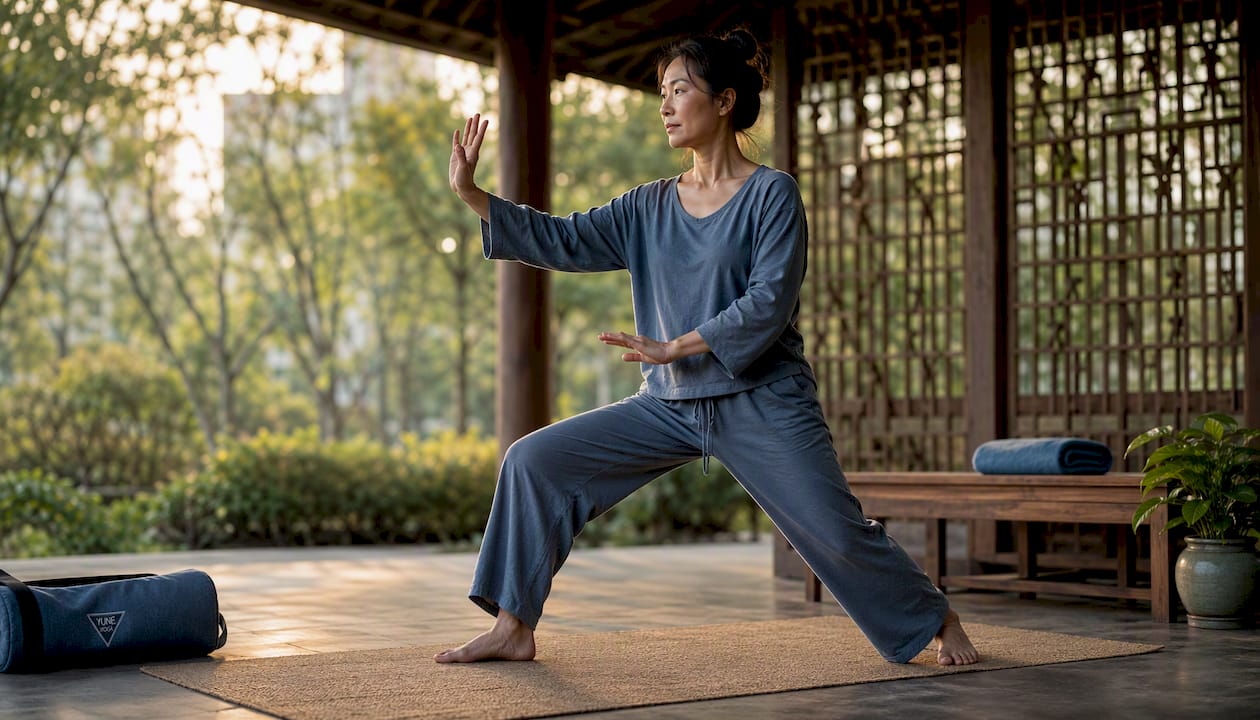
A yoga mat should give you enough room to move without constantly checking where your hands and feet land. For some people, that means choosing a yoga mat extra long rather than accepting the familiar standard size. Height, pose transitions, floor space, and the type of practice all affect the answer. The best choice feels spacious but still works in the places where you actually practice.
How standard yoga mat dimensions compare
Many standard mats are around 68 to 72 inches long and roughly 24 inches wide. That works well for a great many routines, but your head, hands, or heels may extend beyond the edges in poses such as savasana, downward-facing dog, or a full-body stretch. Extra-long options commonly add several inches, while extra-wide designs create room side to side rather than only at the top and bottom. Treat these figures as a starting point, since thickness and the way a mat lies flat also change how spacious it feels.
Who benefits most from extra length
Taller practitioners are the obvious candidates, especially if their feet or hands regularly reach the floor beside the mat. Extra length can also help anyone who enjoys long stretches, broad transitions, or home workouts that combine yoga with mobility exercises. A longer surface is useful when you practice in a hotel room or on a patio and want one defined area for movement. If you are unsure, try your usual sequence on the floor and notice where your body travels rather than choosing by height alone.
When extra width matters as much as length
Width becomes valuable when your hands land wide, your knees open outward, or you often roll from side to side. It can make seated twists, restorative poses, and Pilates-style movements feel less restricted. A wider mat also gives you more freedom to place props beside your body, though it may take up more floor space in a small room. For a generous option, the Nomad XL Cork Yoga Mat is described as measuring 80 by 48 inches, so its main advantage is the added width as much as its length.
How your practice style affects mat size
A slow practice may reward a broad, comfortable surface, while a fast flow makes stable traction and an edge-free landing area more noticeable. Stretching and mobility work often benefit from extra room for legs and arms, and mixed home workouts may need space for planks or floor exercises. Outdoor practice brings another question: will the mat fit the ground you use without catching on uneven edges? Think about your most common sequence, not an idealized routine you may only do occasionally.
Choose the right yoga mat dimensions
Dimensions are easiest to judge when you separate the mat from the product photograph and imagine it on your own floor. Length and width determine how freely you can move, while thickness affects the packed roll and the way the surface feels under balance poses. Storage and transport matter too, particularly for people who practice in several places. A few minutes with a tape measure can prevent an expensive mat from becoming awkward equipment.
Common extra-long and extra-wide measurements
Extra-long mats often measure about 78 to 85 inches, while extra-wide choices may range from 26 to 48 inches. Some products combine both features, but the larger footprint can be harder to carry and store. The XW Fusion Yoga Mat, for example, is described as 80 inches long and 28 inches wide, with 8mm thickness and natural rubber construction. Those dimensions illustrate the trade-off clearly: a large practice area can come with more bulk.
How to measure your ideal personal practice space
Lie down in your longest relaxed position, then add room for the movement that follows. Measure from the furthest point your head or hands reach to the furthest point your feet reach, and repeat the process side to side. Add a few inches of margin so you are not balancing on the border. Measure your real movement pattern rather than relying only on a general height chart; it is a more useful guide for a flowing practice.
Balancing floor space with portability
A large mat can feel wonderful at home and frustrating on a commute. Check its listed weight, rolled diameter, and whether it includes a strap or carrying sleeve. A thinner mat may fold or pack more easily, while a thicker one can provide a softer landing but take up more room. For broader buying context, longer and wider mat choices can be compared by size, thickness, material, and style instead of by length alone.
Checking whether the mat fits your storage area
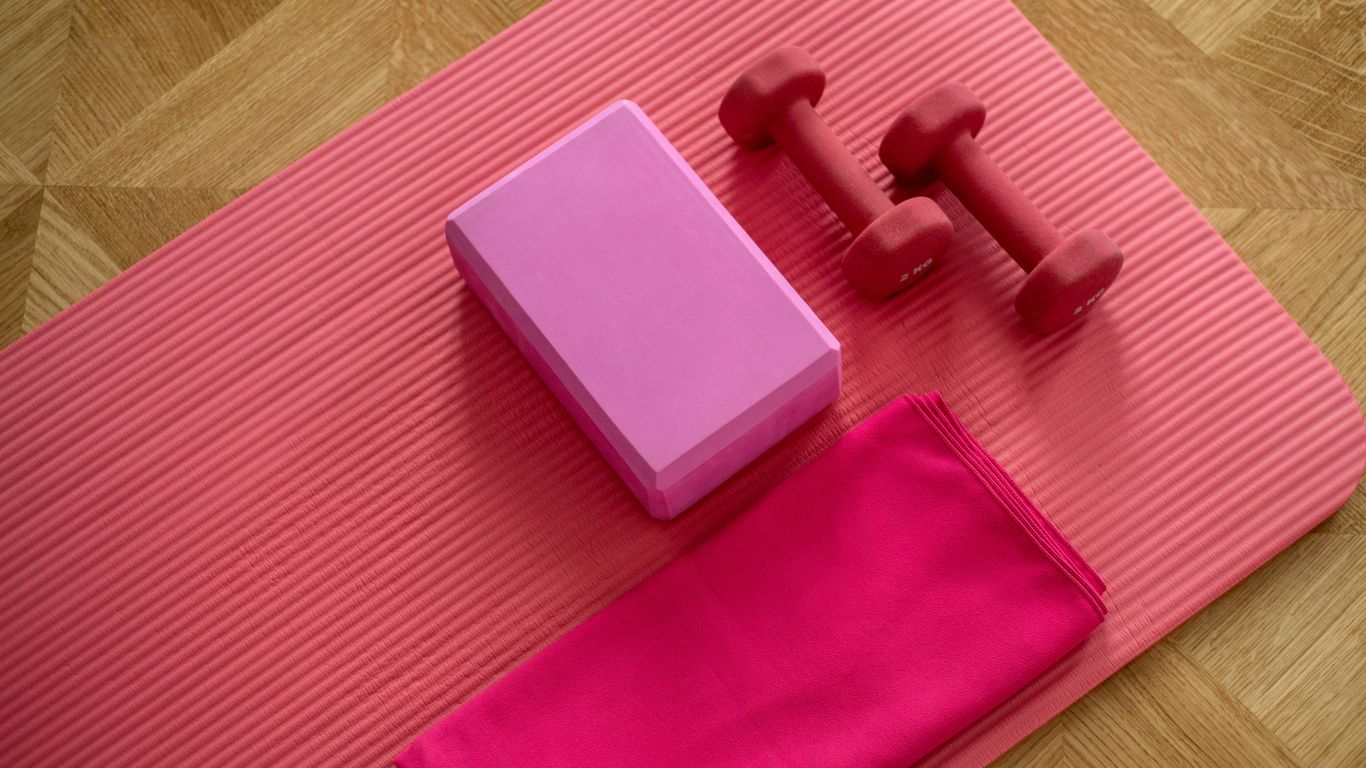
Measure the shelf, closet, or narrow gap where the mat will live, including the door opening it must pass through. A rolled mat needs enough clearance to avoid being squeezed, which can leave permanent bends or make unrolling annoying. If you store props with it, allow room for blocks, towels, and straps rather than measuring the mat in isolation. The right dimensions are the ones you can use often and put away without a small daily battle.
Compare yoga mat materials and surface feel
Material changes the first impression of a mat and how it behaves after weeks of use. It affects texture, odor, cleaning, flexibility, and sometimes weight, so there is no single best surface for every practitioner. Read the care instructions before deciding, especially if you practice hot yoga or carry the mat outdoors. A surface that feels excellent when dry may need a towel or different cleaning routine in humid conditions.
Natural rubber for cushioning and traction
Natural rubber is often chosen for a substantial, grippy feel and can suit people who want the mat to stay planted during transitions. It may have a noticeable odor when new, and people with latex sensitivities should check the material carefully. The XW Fusion Yoga Mat is described as using non-toxic natural rubber and offering grip for preventing slips. Its example also shows why material should be considered alongside width and thickness, not as a separate shopping decision.
PVC for durability and easy maintenance
PVC mats are known for their resilient surface and straightforward wipe-down care. They can feel smooth, dense, or textured depending on the finish, so the material label alone does not tell you how your hands will respond. If you prefer a PVC-free option, check the product details rather than assuming an eco label means the same thing across brands. A mat that is easy to clean is especially practical when it travels between home, studio, and outdoor floors.
Cork and other eco-friendly surface options
Cork offers a distinctive natural feel and is often paired with a grippy backing or base layer. Some cork surfaces become more traction-friendly with moisture, though the exact feel varies by construction. The Nomad XL Cork Yoga Mat is presented as vegan, free from PVC, latex, and plasticizers, and made with bio-based renewable materials. Those are product-specific details, so compare the exact specification when evaluating other eco-minded materials.
Open-cell versus closed-cell construction
Open-cell surfaces tend to feel more absorbent and textured, while closed-cell surfaces generally resist moisture entering the material and can be simpler to wipe clean. Neither description replaces a hands-on test: texture, density, and finish determine the practical experience. If you sweat heavily, consider how quickly the mat can dry and whether a towel will be needed. Also check whether the manufacturer recommends air-drying, gentle soap, or no soaking at all.
Evaluate cushioning, grip, and stability
Comfort is not simply a matter of choosing the thickest mat available. A soft surface may feel kind to knees and wrists, yet a very squishy base can make standing balances less certain. Grip has two dimensions as well: your hands and feet should stay connected to the top, and the entire mat should stay connected to the floor. Test these qualities together whenever possible, since one can hide weaknesses in another.
Selecting the right thickness for joints
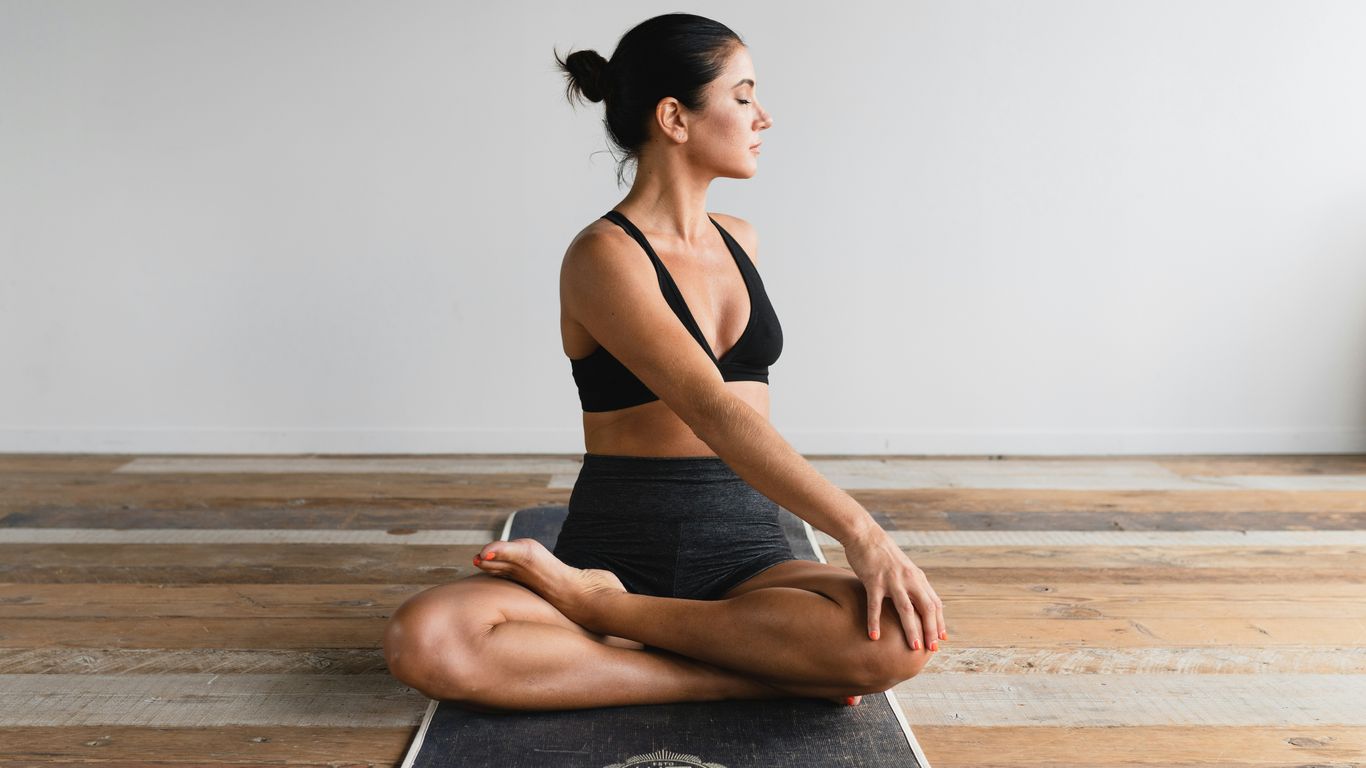
Around 4 to 6mm is a common range for an all-purpose mat, while thicker options may appeal to people who want more cushioning for knees, hips, or wrists. Thinner mats can provide clearer contact with the floor and may pack more easily. If joints are sensitive, consider using a folded towel under a specific area rather than automatically choosing the thickest possible mat. The Yune Yoga Moab Plains is described as a 6mm mat with cushioning, double-sided grip, and a lightweight, easy-to-clean design.
Maintaining grip during sweaty sessions
Grip depends on the mat surface, your skin, sweat, and the floor beneath it. A textured top can help, but heavy moisture may still call for an absorbent towel or a pause to wipe your hands. Hot-yoga users should look for clear care guidance and allow the mat to dry completely after class. The goal is predictable contact, not an aggressively sticky surface that makes transitions uncomfortable.
Avoiding movement on smooth floors
Start by placing the mat on a clean, dry floor and smoothing it from the center outward. Dust, lotion, and moisture can reduce contact even when the underside is designed to grip. If the mat curls at the ends, reverse-roll it briefly or let it rest flat before a demanding session. A double-sided grip can be useful when you practice on different floors, but always confirm that feature in the product description.
Understanding how thickness affects balance
Thickness changes how far your feet sit from the floor and how much the material compresses under pressure. That difference may be welcome in kneeling poses but distracting in tree pose or other standing balances. Try shifting weight slowly and notice whether the mat rebounds or stays firm. The Yune Yoga Obsidian Ridge is described as extra-thick at 6mm, with double-sided textured grip and cushioning for joint support, which illustrates the kind of combination to evaluate.
Match the mat to your yoga routine
The right mat is shaped by where and how you practice. A home practitioner may prioritize generous dimensions, while a traveler may accept a thinner surface to keep luggage manageable. Hot rooms, outdoor ground, Pilates sessions, and stretching all place slightly different demands on the same piece of equipment. Choose for your most frequent use, then add accessories for occasional situations.
Choosing a mat for tall practitioners
Begin with the longest pose in your regular sequence, not just your standing height. If your heels leave the mat in downward-facing dog or your shoulders reach the edge during rest, extra length is likely to feel worthwhile. Extra width can help too if your arm span is broad or you move diagonally. Leave enough clearance around the mat to avoid stepping onto furniture or a cold floor during transitions.
Features for yoga, Pilates, and stretching
Yoga may call for traction during transitions, Pilates often benefits from cushioning and a stable base, and stretching may require room to extend in several directions. If one mat needs to cover all three, prioritize a balanced thickness, a surface that is comfortable against bare skin, and dimensions that do not force you to reposition constantly. The Yune Yoga Othello is described as a 6mm mat suitable for yoga styles, Pilates, and strength training, with a moisture-resistant surface that wipes clean easily.
Selecting a mat for hot yoga
Heat and sweat make surface feel more consequential, so choose traction you can trust when hands and feet are damp. A towel can protect the mat and improve comfort, but it should not bunch beneath you. Think about drying time, odor, and whether the mat can be cleaned after every heated session. A slightly smaller mat that stays secure may be more useful than a very large one that becomes difficult to handle when wet.
Using an extra-long mat for home workouts
An extra-long mat can create one defined zone for yoga, mobility work, bodyweight exercises, and stretching. Check that the surrounding floor is clear, since the mat may encourage you to use a larger range of motion. For routines that include shoes, weights, or furniture, verify the care instructions before exposing the surface to abrasion. A mat should support the exercises you actually do, rather than becoming a decorative boundary in the room.
Check practical features before buying
The final decision often comes down to the details that are easy to overlook in a product listing. Weight, cleaning, markings, warranty terms, and price affect whether a mat remains convenient after the novelty fades. This is particularly true for portable equipment used at parks, beaches, studios, or hotel rooms. Make a short checklist, but keep your priorities in order: a beautiful print cannot compensate for a mat that slides or will not fit your storage space.
Weight and carrying options
An extra-long mat naturally takes up more room, though materials and thickness can change the weight considerably. Look for a built-in strap, carrying sling, or compatible carrier if you walk to class or travel by public transport. Foldable designs may fit luggage more easily than rolled ones, but inspect the folded dimensions and crease pattern. Portability is not a bonus if carrying the mat discourages you from practicing.
Cleaning and odor considerations
Ask whether the surface is moisture-resistant, washable, or intended only for a light wipe. Let a damp mat dry fully before rolling it, and avoid storing it in a sealed bag while wet. New-material odor may fade with ventilation, but anyone sensitive to smells should read reviews and care notes before buying. The practical test is simple: can you clean it quickly after a sweaty session without damaging the finish?
Alignment markings and textured surfaces
Alignment lines can help you place hands and feet consistently, while a textured finish can make the surface feel more secure. Markings are useful only if they match the way you practice; some people find a plain surface less distracting. Compare the visibility of printed lines with the texture under bare skin. As a broader buying habit, field service software selection offers an unrelated but useful reminder: compare the features that affect everyday use, not just the headline specification.
Durability, warranty, and price
A low price may be appealing, but replacement costs matter if the surface wears quickly or the edges curl. Look for information about tear resistance, print durability, warranty coverage, and what the warranty excludes. The Yune Yoga Moab Rocks is described as lightweight and travel-friendly, with a tear- and moisture-resistant PER construction and UV-cured inks; use those listed details as the basis for comparison rather than assuming every printed mat is equivalent. You can also apply a clear decision process to other purchases, whether comparing freemium and free trial models or comparing mats, by weighing the long-term fit instead of the first price you see.
A final check is whether the product can support your actual routine without making transport, cleaning, or storage needlessly difficult. The Ninja Slushi Max XXL belongs to an entirely different category, but its recipe guidance still makes a general planning point: details such as capacity and avoiding overfilling matter when choosing equipment for a specific use. For a yoga mat, translate that same care into checking floor area, packed size, and the surface conditions you face most often. Even a mindfulness practice guide or information about inclusive youth sports can sit alongside a practical lifestyle routine, but neither changes the core buying test: choose gear that makes regular movement easier.
Conclusion
The best yoga mat extra long is not simply the longest or thickest option; it is the one that gives you useful room, dependable grip, suitable cushioning, and manageable care. Measure your practice space, compare the surface and material, then test the packed size against your storage and travel habits. When those practical details line up, the mat becomes an easy part of your routine rather than another obstacle.
Frequently Asked Questions
How long should an extra-long yoga mat be?
Many extra-long mats measure roughly 78 to 85 inches, but the right length depends on your height and the space used by your longest poses. Measure your body in motion and add a small margin rather than choosing by label alone.
Is a wider yoga mat better than a longer one?
It depends on where you feel restricted. Choose more width for broad arm positions, open knees, or side-to-side movement; choose more length if your head, hands, or heels reach beyond the ends.
What thickness is best for a yoga mat?
A 4 to 6mm mat is a useful all-purpose range for many people. Thicker mats can feel more comfortable for joints, while thinner mats may offer firmer floor contact and easier portability.
Are thick yoga mats harder for balance poses?
They can be, especially when the material compresses noticeably under your feet. A firm, supportive construction may reduce that effect, so consider density and surface feel as well as the thickness number.
How do I keep a yoga mat from sliding?
Use it on a clean, dry floor and remove dust or lotion from both surfaces. A textured or double-sided grip can help, but the mat should still be tested on the floor you use most often.
Can I use an extra-long mat for Pilates?
Yes. Extra length can provide room for rolling, stretching, and floor exercises, while moderate cushioning can make the surface more comfortable. Check that the mat remains stable during the faster or more controlled movements in your routine.
How should I clean and store a yoga mat?
Follow the manufacturer’s care instructions, wipe the surface after use, and let it dry completely before rolling or folding. Store it away from prolonged heat and direct sun, with enough space to prevent sharp bends or crushing.