Article: Baking Soda on Yoga Mats: 30 Minutes, But Not for Every Mat
Baking Soda on Yoga Mats: 30 Minutes, But Not for Every Mat
Yes, baking soda can deodorize and help restore grip on a yoga mat when you use the right method for your mat material. The quickest fix is a light sprinkle or spray, a dwell time of about 30 minutes for powder and less for a spray, then wiping away the residue and letting the mat air-dry fully. Always test a small patch first and check your manufacturer’s care instructions before trying a new method.
TL;DR:
- Closed-cell and travel mats need a light spray and wipe; open-cell mats can tolerate gentle soaking, while natural rubber should stay out of direct sunlight.
- For everyday deodorizing, dissolve 1 teaspoon of baking soda in 1 cup of warm water, mist lightly, wipe within minutes, and use the mixture within 24 hours.
- Baking soda absorbs surface oils and neutralizes acidic odors, but it does not disinfect; visible mold or poorly cleaned shared use calls for a disinfecting product.
- Wipe your mat after every practice, deep clean about monthly or more often after hot yoga, and air-dry it fully before storage.
Table of Contents
- Two Quick Baking-Soda Methods You Can Try Today
- Matching Your Cleaning Method to Your Mat’s Material
- DIY Recipes You Can Mix in Minutes
- What Baking Soda Actually Does, and What It Doesn’t
- Keeping Your Mat Fresh: A Simple Maintenance Calendar
- Our Mat-Care Checklist and a Few Favorite Fixes
- Watching for Discoloration and Surface Wear
- Doing It Safely, Step by Step
- How Baking Soda Stacks Up Against Other Natural Cleaners
- Is Baking Soda an Eco-Friendly Choice for Mat Care?
- Why We Still Reach for Baking Soda First
- Products That Make Mat Care Easier
- FAQ
- Sources
Two Quick Baking-Soda Methods You Can Try Today
Most practitioners reach for one of two approaches: a dry sprinkle treatment for tackiness and odor, or a diluted spray for a lighter refresh. Both rely on the same ingredient, but they solve slightly different problems.
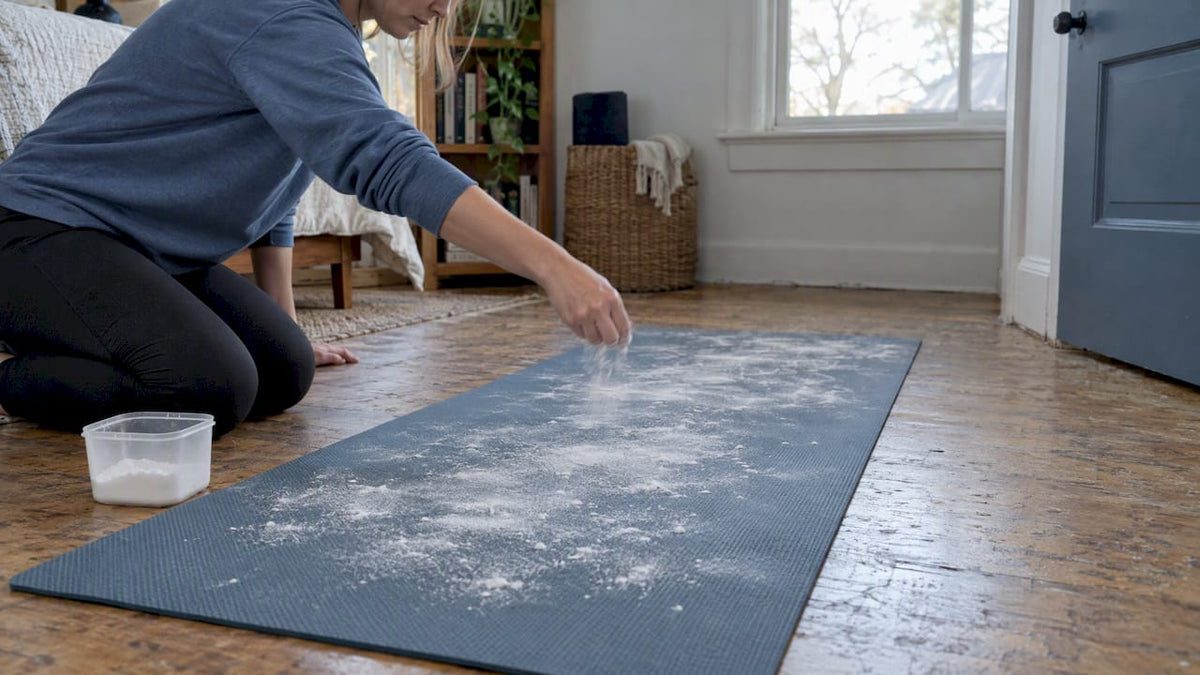
The sprinkle-and-rub method works best when a mat feels slippery or smells musty after heavy use. Sprinkle baking soda directly onto the surface, rub it in with a dry cloth, let it sit for about 30 minutes, then brush or vacuum off the powder before wiping with a slightly damp towel.
The spray-and-wipe method suits a faster, lighter clean between deep cleans. Here’s how to do both:
- For a spray, dissolve 1 teaspoon of baking soda in 1 cup of warm water, shake well, and mist the mat lightly rather than soaking it.
- Wipe the surface with a soft cloth, working in small sections so the mat never sits wet for long.
- For the sprinkle method, apply the powder evenly, let it rest for roughly 30 minutes, then remove it completely with a brush, vacuum, or damp cloth.
- Finish either method by air-drying the mat fully before rolling it up.
Choose the spray when your mat just feels a little stale. Choose the sprinkle treatment when it feels genuinely slick or carries a noticeable odor after a sweaty session.
Matching Your Cleaning Method to Your Mat’s Material
Not every mat tolerates the same treatment, and using the wrong approach can do more harm than good. Closed-cell mats, including most thin travel mats, have a dense, non-porous surface that resists water absorption, which makes them a poor candidate for soaking.
- Closed-cell and travel mats: stick to the spray-and-wipe method and avoid submersion entirely, since trapped moisture can degrade the surface layer over time.
- Open-cell and natural rubber mats: these can typically handle a gentle soak and soft scrub, since their more porous texture allows for a deeper clean without damage, according to REI’s cleaning guidance.
- Natural rubber specifically: rinse thoroughly after any soap-based clean and avoid leaving the mat in direct sun, since UV exposure and heat can dry out and crack rubber over time.
- PVC and TPE mats: both tolerate light sprinkle or spray treatments well, but excessive scrubbing can wear down textured grip patterns faster than normal use would.
Pro Tip: Test any new method, baking soda included, on a small corner of the mat first and wait a few hours to check for discoloration or texture changes before treating the whole surface.
Open-cell mats that get a full soak should be rinsed until no soap residue remains, since leftover film can make a mat feel slicker rather than grippier once it dries.
DIY Recipes You Can Mix in Minutes
A handful of exact ratios cover most cleaning needs without guesswork. These recipes use pantry ingredients and stay gentle enough for regular use when matched to the right mat type.
- Everyday deodorizing spray: dissolve 1 teaspoon of baking soda in 1 cup of warm water, shake thoroughly, and use it within 24 hours since the solution settles over time.
- Deep-soak mix for open-cell mats: combine 1 tablespoon of mild dish soap per gallon of warm water, as recommended by REI, and add a light sprinkle of baking soda directly to stubborn spots before scrubbing.
- Optional scent boost: a drop or two of diluted tea tree oil or lavender can be added to a spray bottle, since instructors cited by Peloton’s cleaning guide note tea tree oil’s antimicrobial reputation, but always test first.
- Skip essential oils entirely on natural rubber mats or if anyone using the mat has sensitive skin, since concentrated oils can interact poorly with certain surfaces.
Many brand care sheets explicitly discourage vinegar or strong essential-oil concentrations, so it’s worth a quick check of your mat’s own instructions before adding anything beyond baking soda and water.
What Baking Soda Actually Does, and What It Doesn’t
Baking soda works by chemically neutralizing acidic odor compounds and physically absorbing moisture and oils trapped on the surface. According to Wikipedia’s entry on sodium bicarbonate, it has genuine deodorizing properties, but it is not a disinfectant and does not reliably kill the bacteria that cause mat odors in the first place.
It removes the smell without sterilizing the surface, which matters if the mat is shared or shows signs of mold.
That distinction shapes how you should think about frequency and purpose. A quick sprinkle lifts surface oils and absorbs odor molecules, which is also why mats often regain some tack after treatment: it’s less about the baking soda adding grip and more about it removing the slick residue that was masking it.
Performance also depends on conditions. Powder sitting on a mat in a very dry room may need a bit of friction or a light misting to activate properly, since humidity and contact time both affect how well it absorbs odor. If a mat has visible mold spots or has been used by multiple people without regular cleaning, a baking-soda wipe isn’t the right next step. That calls for an actual disinfecting product or a diluted alcohol solution instead, since baking soda alone won’t address the underlying microbial issue.
Keeping Your Mat Fresh: A Simple Maintenance Calendar
A consistent routine prevents most odor and grip problems before they start. The steps are simple enough to fold into a normal post-practice cooldown.
- Wipe the mat with a damp cloth or light spray after every single practice, especially after a sweaty session.
- Deep clean about once a month for regular practitioners, or more often if you practice hot yoga or sweat heavily, following the monthly guidance from REI.
- Let the mat air-dry completely before rolling it, since rolling a damp mat traps moisture and invites mildew.
- Avoid direct sunlight when drying natural rubber mats, and never use a clothes dryer or direct heat source on any mat material.
- Store the mat rolled loosely in a well-ventilated spot rather than a sealed bag or hot car trunk.
Check your mat periodically for surface cracking, flaking, or a permanently slick feel that cleaning no longer fixes. Those are signs the material itself has broken down, and it’s time to replace rather than clean.
Our Mat-Care Checklist and a Few Favorite Fixes
A small kit makes mat care painless: a spray bottle with your baking soda and water mix, a soft microfiber cloth, a dedicated mat towel, and a small container of baking soda for sprinkle treatments. Keep a travel-sized version on hand for studio sessions.
If your mat still feels slippery after a clean, the issue is sometimes less about dirt and more about technique or surface wear. Our guide on overcoming a slippery yoga mat walks through troubleshooting steps, and our post on making a yoga mat less slippery covers additional fixes worth trying. For a fast diagnostic, our 30-second sliding check helps pinpoint whether the mat or your form is the real culprit.
Watching for Discoloration and Surface Wear
Baking soda is gentle, but it isn’t entirely risk-free on every surface. Mats with printed designs, dyed patterns, or certain coated finishes can show light discoloration if powder sits too long or gets scrubbed in too aggressively, particularly on lighter colors.
Natural rubber mats are the most sensitive to extended exposure. Leaving a baking-soda paste on rubber for hours instead of the recommended 30 minutes can dry out the material’s surface, and combined with sun exposure, this can accelerate the kind of cracking that shortens a mat’s usable life.
PVC and TPE mats generally tolerate baking soda well, but repeated aggressive scrubbing, rather than the baking soda itself, is usually what wears down textured grip patterns over time. The powder is abrasive at a microscopic level, so pressing hard with a stiff brush does more damage than a gentle hand with a soft cloth.
The safest approach is the one already built into the basic method: short dwell times, gentle pressure, full rinsing or wiping, and a patch test before treating the whole mat. Watching how your specific mat responds the first time tells you more than any general rule, since materials, dyes, and coatings vary even within the same mat type.

Doing It Safely, Step by Step
A few habits make the difference between a mat that lasts for years and one that degrades early. Follow these in order for the best results with the least risk.
First, confirm your mat’s material and check the manufacturer’s label for any specific warnings about cleaning agents. Second, test baking soda on a hidden corner and wait a few hours to check for color or texture change. Third, apply only the amount needed, a light sprinkle or a mist, rather than a thick paste, since more product doesn’t mean a better clean.
Fourth, respect the dwell time: about 30 minutes for a dry sprinkle treatment, and only a few minutes for a spray before wiping. Fifth, remove all residue completely with a brush, vacuum, or damp cloth, since leftover powder can leave a chalky film that actually reduces grip. Sixth, rinse open-cell mats thoroughly if soap was used, and always finish with a full air-dry before rolling or storing.

Skipping the drying step is the most common mistake. A mat rolled while even slightly damp creates the exact moist, dark environment that breeds the odor-causing buildup you were trying to clean away in the first place.
How Baking Soda Stacks Up Against Other Natural Cleaners
Baking soda isn’t the only natural option, and it’s worth knowing how it compares to the alternatives instructors commonly mention. A mostly-water spray with a capful of vinegar is another approach some instructors recommend, noted in Peloton’s cleaning guide, though vinegar’s smell lingers longer and some mat brands specifically advise against it.
A few drops of tea tree oil added to a water-based spray offers antimicrobial properties that baking soda doesn’t provide on its own, which makes it a reasonable supplement for mats that see heavy, sweaty use. Mild dish soap, diluted in water, is the gentlest all-purpose option and works well for open-cell mats that can tolerate a soak, while baking soda shines specifically at absorbing odor and lifting the oily residue that causes slickness.
None of these fully replace proper disinfection when it’s genuinely needed, since none of them, baking soda included, reliably kill the bacteria behind persistent odors. For most regular at-home maintenance, though, baking soda remains the simplest, cheapest, and most versatile of the natural options, especially paired with consistent post-practice wiping.
Is Baking Soda an Eco-Friendly Choice for Mat Care?
Baking soda breaks down naturally and doesn’t carry the same environmental concerns as harsher chemical cleaners or scented commercial sprays packed with synthetic fragrances. It rinses away without leaving persistent residues in wastewater, and the packaging, typically a simple cardboard box, tends to generate less plastic waste than bottled commercial cleaners.
For practitioners already drawn to natural rubber mats and sustainable gear, baking soda fits the same mindset: a low-toxicity, widely available ingredient that does the job without introducing synthetic additives onto a surface you’re in close contact with for an hour at a time. It’s also inexpensive enough to use generously without worrying about cost per clean, which matters for anyone building eco-conscious habits into daily routines beyond just the mat itself.
Why We Still Reach for Baking Soda First
Baking soda earns its spot as a go-to mat cleaner because it’s affordable, low-toxicity, and genuinely effective when matched to the right mat material. It won’t disinfect, and it won’t fix a mat that’s already breaking down, but for the everyday job of lifting odor and restoring tack, it does exactly what’s needed without added chemicals.
The real secret isn’t the ingredient, though. It’s consistency: a quick wipe after every practice prevents most of the buildup that makes a deep clean necessary in the first place. Baking soda is the reliable occasional fix, not the whole strategy.
— Nicholas
Products That Make Mat Care Easier
A clean mat starts with the right gear underneath the baking soda and water, including gadget personalizzati per Yoga that enhance your practice and care. Our natural rubber mats are built from durable, sustainable materials designed to hold grip well between cleanings, and our quick-dry microfiber towels cut down on the sweat and residue that lead to odor in the first place.

The Jagger Yoga Towel is a non-slip, quick-dry microfiber towel built for hot yoga, laid directly over your mat to absorb sweat before it soaks into the surface. We also carry the Cassady Yoga Towel for the same purpose in a different finish, along with straps and accessories in our full collection to round out a low-maintenance practice. Browse our full lineup of mats, towels, and accessories at Yune Yoga to find the combination that fits your routine.
FAQ
How do I get my yoga mat to stop smelling?
Sprinkle baking soda over the mat, rub it in, and let it sit for about 30 minutes before brushing or vacuuming it away. Follow up with a damp cloth wipe and a full air-dry, and repeat after every sweaty session to prevent odor from building back up.
What’s the best thing to clean a yoga mat with?
A simple baking-soda spray, 1 teaspoon dissolved in 1 cup of warm water, handles most everyday cleaning without harsh chemicals. For a deeper monthly clean, mild dish soap diluted in water works well on open-cell mats that can tolerate a gentle soak, according to REI’s cleaning advice.
What is the best homemade yoga mat spray?
A mostly-water spray with a small amount of baking soda or a capful of diluted cleaner covers most needs, and some instructors add a few drops of tea tree oil for its antimicrobial properties, per Peloton’s cleaning guide. Always test a small area first since some mat brands caution against vinegar or strong oil concentrations.
Can I use Dawn dish soap on my yoga mat?
A small amount of mild dish soap diluted in water, roughly 1 tablespoon per gallon, works for deep cleaning open-cell and natural rubber mats that can tolerate a gentle soak, based on REI’s recommended ratio. Closed-cell and travel mats should stick to a light spray rather than any soaking method, regardless of the soap used.
How often should I deep clean my yoga mat?
Wipe your mat after every practice, and plan on a full deep clean about once a month for regular use, or more often if you practice hot yoga, following guidance from REI. Letting grime build up longer than that tends to make odor and slipperiness harder to fully reverse.
Sources
- How to Clean a Yoga Mat | REI Expert Advice
- How to Clean a Yoga Mat With 2 Easy Methods | The Spruce
- How to Clean a Yoga Mat, Step by Step | The Output by Peloton
- Sodium bicarbonate — Wikipedia