
10 Popular yoga exercise names to practice at home
Key Takeaways
Practicing yoga at home is a simple and effective way to incorporate movement into your daily routine. Here are the core benefits and tips for your home practice:
- Consistency is more effective than session duration for building strength.
- Using a quality mat, like the Yune Yoga CU29 Yoga Mat, provides the grip needed for safe alignment.
- Focus on steady breathing to relax your nervous system during held postures.
- Incorporate varied movements to keep your practice interesting and balanced over time.
- Create a dedicated space that encourages you to return to your mat regularly.
1. Mountain pose (Tadasana)
Finding your footing is the foundation of any effective yoga exercise name you choose to practice. Stand at the top of your mat with your feet together or hip-width apart, distributing your weight evenly across both feet. Engage your leg muscles by pulling your kneecaps upward and lengthening your spine toward the ceiling.
Keep your shoulders relaxed and away from your ears while letting your arms rest naturally at your sides. Imagine a string pulling your crown upward, which encourages an upright and proud posture. This simple standing shape helps you develop a refined awareness of your body in space.
Regular practice of standing postures helps you carry yourself with grace throughout your day. For those finding their rhythm in a new home routine, having a supportive base like the 6mm Thick Grey Non-Slip Yoga Mat can ensure you feel steady and secure while focusing on your alignment.
2. Downward-facing dog (Adho mukha svanasana)
Start on your hands and knees, keeping your wrists aligned under your shoulders and your knees under your hips. Press into your hands to lift your hips toward the ceiling, creating an inverted V shape with your body. Focus on lengthening your spine rather than forcing your heels to touch the floor.
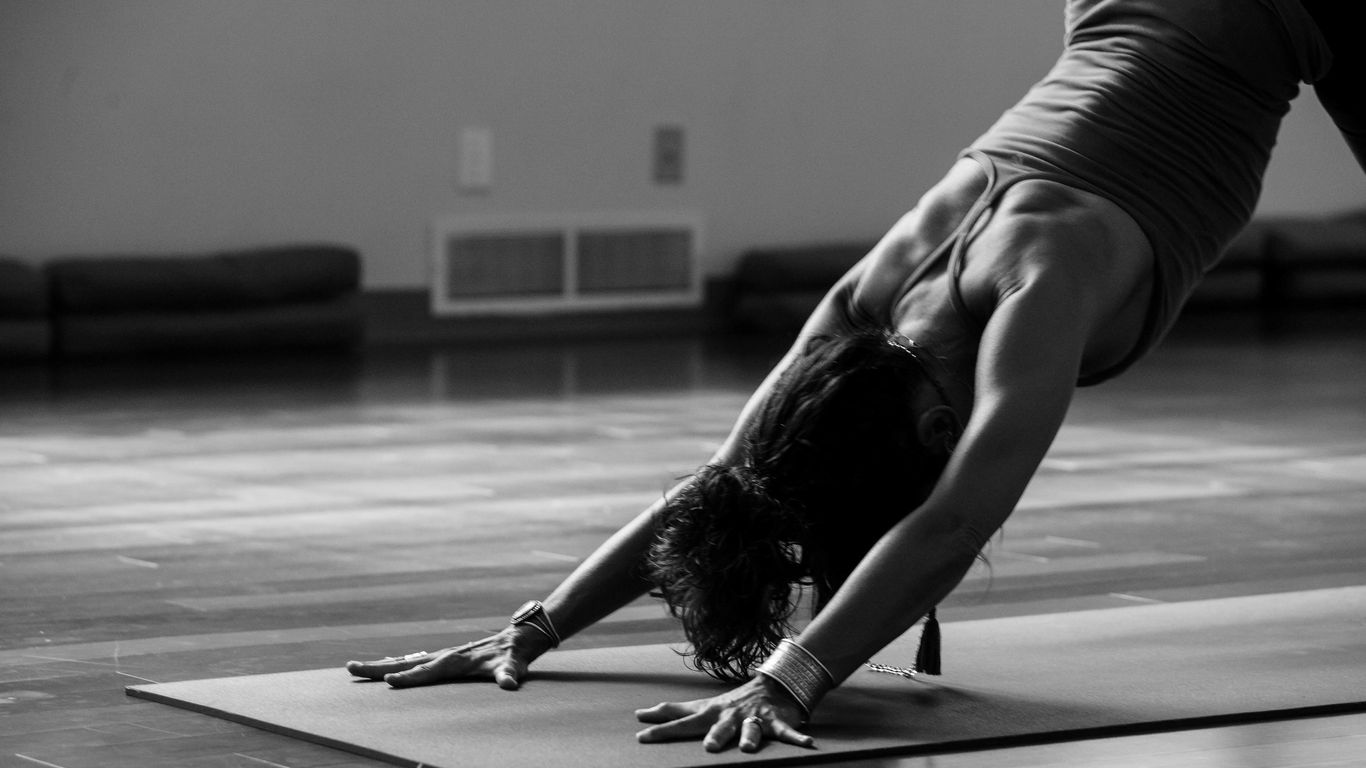
This classic position provides a gentle stretch for the entire back body, including your hamstrings and calves. It is a fantastic way to reset your breath and invigorate your circulation after sitting for long periods. Feel free to keep a slight bend in your knees if this makes the posture more comfortable and accessible for your physiology.
As you transition into this pose, notice how engaging your shoulder muscles helps create a stable foundation. You might find that practicing this on a high-grip surface helps you hold the shape with greater confidence, allowing you to deepen the stretch without slipping.
3. Child's pose (Balasana)
From a kneeling position, bring your big toes together and separate your knees wide, creating space for your torso. Slowly lower your hips toward your heels and drape your upper body toward the floor, extending your arms forward or resting them alongside your legs. This is widely considered the ultimate reset moment in any flow.
Allow your forehead to rest against the ground or a soft cushion to encourage relaxation in your neck and shoulders. Use this time to observe your natural breath rhythm without attempting to force it. It is a gentle way to soothe the nervous system and practice grounding after more dynamic standing movements.
Many practitioners find this pose particularly useful when returning to their breath during a challenging home session. If you have been busy exploring natural anxiety relief secrets for dogs, you understand the value of a calm routine, and this pose brings a similar peace to your human practice.
4. Warrior i (Virabhadrasana i)
Step one foot back from your mountain pose and turn your back heel inward at a slight angle. Bend your front knee until it is stacked over your ankle while lifting your torso and arms toward the ceiling. Keep your hips square to the front of the room to maintain proper alignment and stability.
This powerful pose builds strength in your legs and helps improve your balance. It teaches you to stay focused and resilient as you manage your weight across both feet while reaching upward. Maintaining a strong, active stance reinforces your dedication to your movement goals each day.
For those managing complex properties, the challenge of home sales can be as demanding as holding a long posture, which is why solving house selling issues remains a priority for many. On the mat, focus your energy on the strength required to maintain this warrior shape, letting the effort radiate through your arms and legs.
5. Cobra pose (Bhujangasana)
Lie on your stomach with your legs extended behind you and place your palms face down under your shoulders. Pressing firmly into your hands, gently lift your chest off the floor while keeping your elbows slightly bent and tucked in by your sides. Broaden your collarbones to open your heart center.
Focus on using your back and core muscles to support the lift, rather than relying solely on your arms. Keep your gaze soft and directed slightly forward or up, being careful not to strain your neck. This backbend is a wonderful way to stretch your belly and chest while strengthening your spine.
If you are aiming to deepen these stretches consistently, it is essential to have reliable gear. The Obelisk Yoga Mat is designed to withstand daily use, providing the durability needed for heart-opening backbends in your own personal sanctuary.
6. Tree pose (Vrikshasana)
Find your balance by shifting your weight onto one leg and lifting your other foot to rest on your calf or inner thigh. Avoid placing the foot directly on your knee joint to protect its integrity. Bring your hands together at your heart or reach them toward the sky to refine your focus.
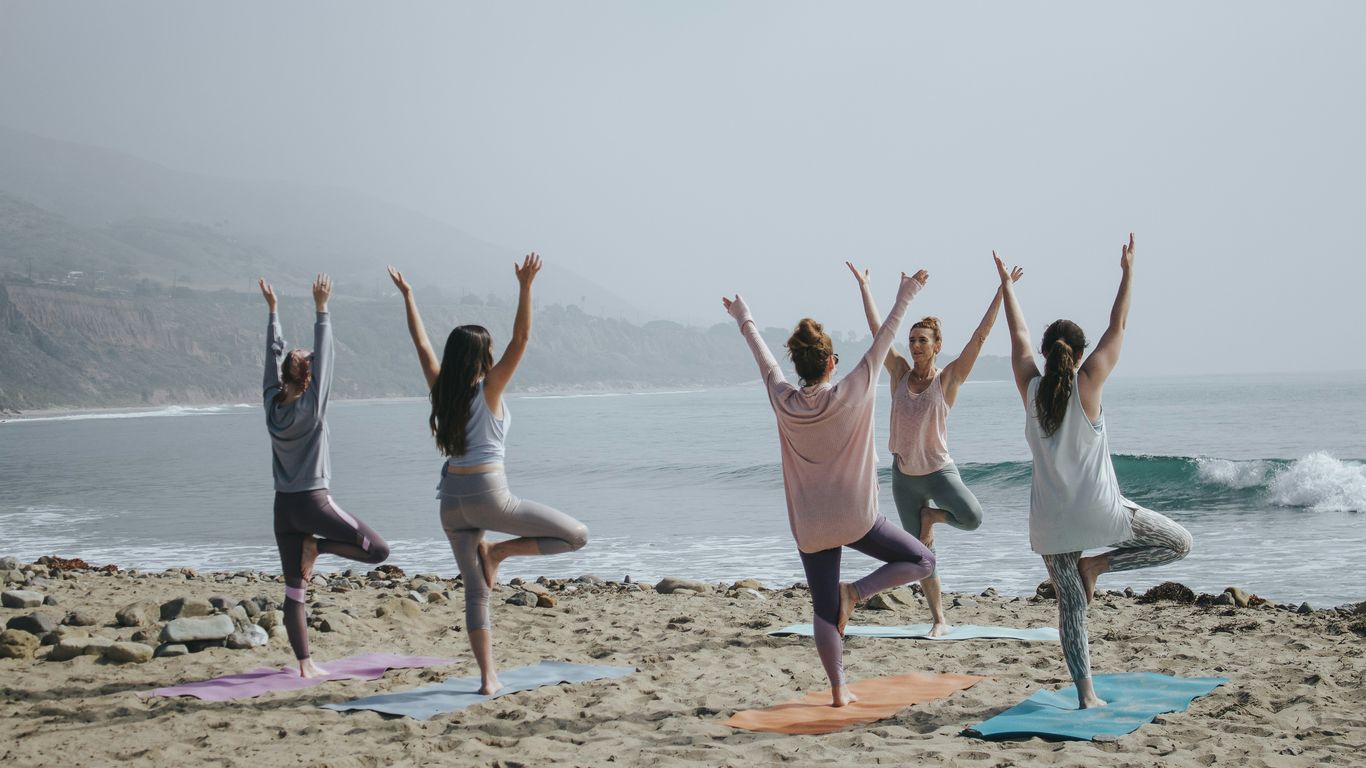
This balancing posture requires total concentration and a steady gaze, known as a drishti. If you find yourself wobbling, reset and try again—it is all part of the process. Establishing a consistent practice of balancing helps improve your proprioception and stability on and off the mat.
Practicing tree pose effectively often requires a mat that keeps you from slipping. Using the Yune Yoga Howling Rock Yoga Mat can offer the confidence you need to hold the pose longer, turning internal wobbles into a smooth, upright line of energy.
7. Triangle pose (Trikonasana)
Step your feet wide apart and turn your front toes out while your back toes face slightly forward. Extend your arms out to the sides and reach forward with your front hand before folding at the hip to lower your hand toward your shin or a block. Keep both legs long and reach your top hand toward the ceiling.
This pose is excellent for stretching your hips, waist, and shoulders simultaneously. It requires you to rotate your torso to look up at your top hand, which introduces a gentle spinal twist. Focus on maintaining a straight line from your head to your hips to maximize the benefits of the stretch.
It is essential to stay mindful of your limits when performing this sequence. Just as you might navigate Essential 8 compliance by following established controls, keep your focus on alignment standards to ensure your practice remains safe and effective for your long-term mobility.
8. Cat-cow stretch (Marjaryasana-bitilasana)
Begin on all fours, ensuring your hands are beneath your shoulders and knees beneath your hips. Inhale as you drop your belly toward the mat, lifting your head and chest into Cow pose. When you exhale, pull your belly toward your spine and round your back toward the ceiling for Cat pose.
Move with your breath, allowing the inhalation and exhalation to dictate the pace of your transitions. This gentle spinal oscillation helps distribute movement across every vertebra. It is a fantastic way to warm up your muscles before moving into more demanding asanas or to cool down after a long day.
When exploring these movements, comfort is paramount. The Yune Yoga Black1 mat provides the cushioning necessary to protect your wrists and knees during this floor-based flow, making the rhythm of the movement feel much more accessible.
9. Boat pose (Navasana)
Sit on the floor with your knees bent and feet on the ground. Lean back slightly, engaging your core muscles, and lift your feet off the floor until your shins are parallel to the ceiling. Reach your arms forward, keeping them parallel to your legs, and find your center of gravity.
If you want to track your progress with various floor postures, consider this simple breakdown of common focus areas:
| Pose Category | Key Focus Area | Benefit |
|---|---|---|
| Standing | Leg Strength | Stability |
| Balancing | Deep Focus | Balance |
| Seated/Core | Abdominal Strength | Core Power |
Maintaining Boat pose challenges your core strength and cardiovascular endurance even during a slow-paced home session. You can modify this by keeping your hands on the floor or by resting your feet lightly on the mat until you feel strong enough to fully extend your limbs. Focus on holding a steady breath throughout the hold.
Consider trying these variations to level up your strength:
- Hold with bent knees and hands gripping under thighs for stability.
- Extend your legs fully while keeping your lower back neutral.
- Take small pulses by lowering and lifting your upper body slightly.
10. Corpse pose (Savasana)
Lie flat on your back with your arms by your sides, palms facing upward to encourage openness. Allow your feet to fall to the sides and close your eyes, letting go of any tension you might be holding in your jaw, shoulders, or face. This is the time to integrate your practice before you head back to your day.
Let your breath return to its natural pattern, deepening your relaxation with every exhale. Even lying still requires practice, as your mind may wander to your to-do list. Gently guide your attention back to the present moment, feeling the weight of your body supported by the ground underneath you.
Finish your home session by resting here for at least five minutes. This final pause is crucial for recovering and internalizing the benefits of your work. By creating this space to be quiet, you provide your body and mind the environment they need to return to a state of balance.
Conclusion
Starting a home yoga practice is a rewarding experience that helps you build strength and focus on your own terms. Whether you are finding stability in Mountain pose or finding stillness in Savasana, the key is to stay consistent and kind to yourself as you progress. Use simple tools and a bit of discipline to transform your living room into a dedicated space for mindful movement, ensuring you can return to the flow whenever you need a boost.
Frequently Asked Questions
How long should I practice each day?
You do not need to spend hours on your mat, as even fifteen minutes a day can provide significant benefits for your flexibility and focus.
Can I do yoga if I am not flexible?
Yes, absolutely, as flexibility is a result of consistent practice rather than a requirement to get started, so focus simply on your range of motion.
What should I do if a pose hurts?
You must listen to your body and back off immediately if you feel sharp pain, as yoga should be a comfortable, challenging experience that avoids injury.
Do I need special equipment to begin?
You only need a dedicated, non-slip space and comfortable clothing, though a supportive mat makes poses much safer and easier to hold correctly.
How do I stay motivated at home?
Try creating a consistent time for your practice and preparing your space beforehand to make showing up to your mat feel like an inviting, simple ritual.
Is it safe to practice yoga alone?
Yes, provided you start with gentle, foundational movements and stay within your current physical capabilities while maintaining a focus on proper breath and alignment.
Can I practice yoga in small spaces?
Yoga requires very little space, as almost any pose can be performed in the footprint of a standard-sized mat regardless of your room size.