
10 essential yoga positions with name and benefits for beginners
Key Takeaways
Starting a yoga practice is a rewarding journey that helps you build awareness of your body in space. By learning the fundamental poses, you can create a routine that travels with you wherever you go.
- Standing postures establish steady balance and focus.
- Forward folds and gentle inversions help release tension.
- Backbends open the chest and brighten your energy levels.
- Restorative poses are vital for recovery and calming the mind.
- Using portable accessories like Yune Yoga towels and mats ensures comfort in any location.
1. Mountain pose (tadasana)
The Mountain pose is the fundamental stance for almost all standing exercises, functioning as a solid foundation for your movement throughout your entire session. Even though it looks like just standing still, it requires active engagement from your feet all the way up to the crown of your head. You start by bringing your big toes together and keeping the heels slightly apart, then grounding down through all four corners of your feet.
To really get the most out of this pose, think about tucking your tailbone slightly and rolling your shoulders back and down. This posture helps you cultivate a sense of presence and stillness in your day-to-day life. Many experts, as seen in the standing yoga poses collection, note that it acts as the starting block for more complex sequences. Developing this posture helps you find stability early in your practice, whether you are using a standard mat or a portable Yune Yoga travel mat.
Consider these primary benefits of Tadasana:
- Improves overall posture and body alignment.
- Strengthens thighs, knees, and ankles.
- Firms abdomen and buttocks.
- Relieves sciatica pain.
By practicing this repeatedly, you gain the discipline required to stand tall in other, more challenging shapes. Maintaining this alignment translates into better posture whether you are walking, sitting at your desk, or standing in line for coffee.
2. Downward-facing dog (adho mukha svanasana)
This inversion is perhaps the most recognized shape in the Yoga Poses Dictionary. From a tabletop position, you lift your hips high toward the ceiling to form an inverted V shape by pushing into your palms and activating your core. It is excellent for waking up the back of your legs and lengthening your spine after a long day of sitting.
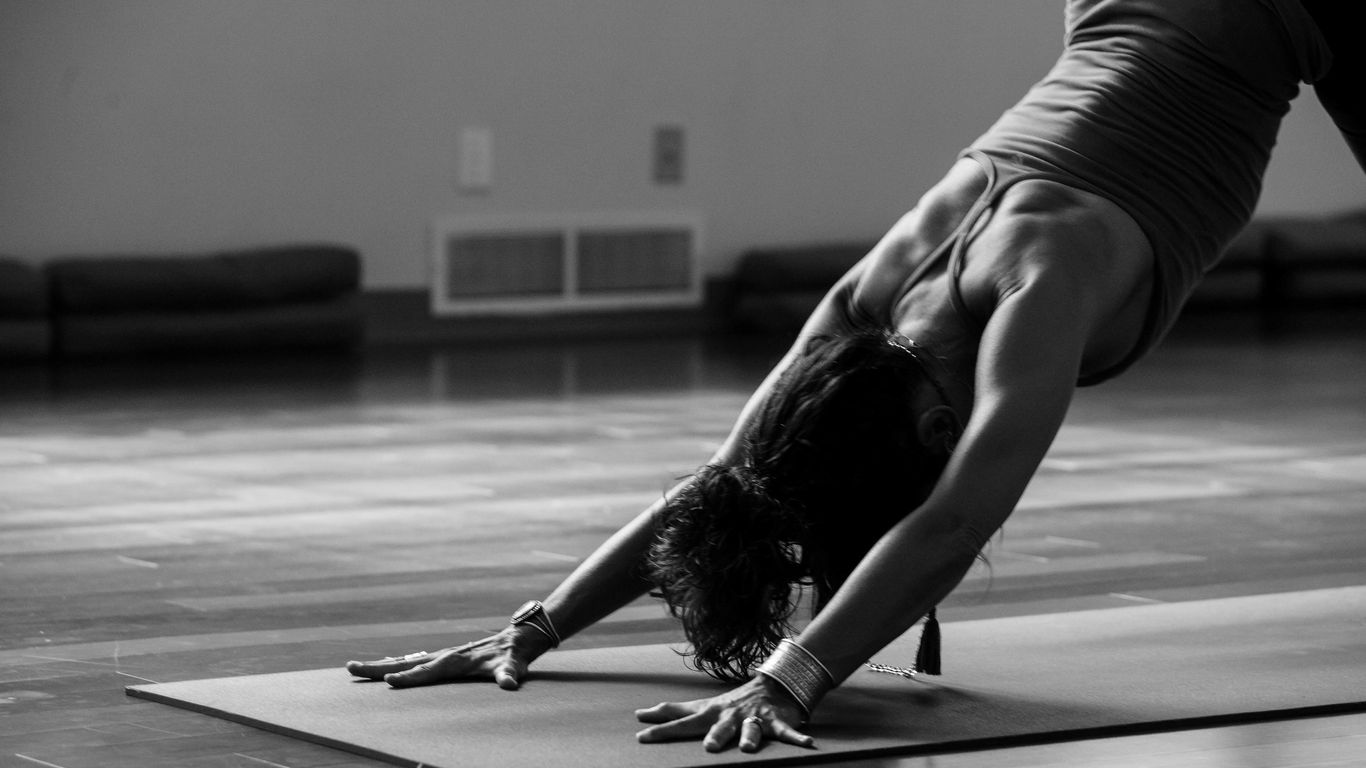
If you find your hands slipping during your practice, using a towel can make a significant difference. Yune Yoga offers absorbent yoga towels that provide the extra grip needed to hold this shape securely, ensuring you focus on the stretch rather than your balance. This added stability helps you hold the pose longer, letting your shoulders and hamstrings get the full benefit of the inversion.
Remember to spread your fingers wide to distribute your weight evenly. This small adjustment protects your wrists while allowing you to push back further, deeper into the fold. Consistent practice of this shape will naturally increase your flexibility and prepare your body for more intense transitions later in your sequence.
3. Child’s pose (balasana)
Child’s pose is the ultimate restorative position for when you need a moment to catch your breath or reset your nervous system. By kneeling on the floor and gently folding your torso over your thighs with your arms extended forward, you create an internal space that encourages deep, rhythmic breathing. It is soft, comforting, and accessible no matter where you happen to be practicing.
Whether you are on a hotel room floor or at a local park, having a portable mat makes this resting posture much more comfortable. Yune Yoga products are designed to be thin and light, allowing you to easily fold your mat and store it away or take it anywhere. This convenience means you never have to skip your recovery time just because you aren't at home or in a dedicated studio.
Allow your forehead to rest gently on your mat, which helps signal to your brain that it is time to relax. Many practitioners find that staying in this shape for several slow breaths helps transition the mind away from daily stressors. It is a wonderful way to honor your body by acknowledging when it simply needs a moment of quiet stillness.
4. Warrior i (virabhadrasana i)
Warrior I is a powerful, grounding pose that requires strength in the legs and openness in the hips. You step one foot back into a lunge and ground the heel, turning the toes at about a forty-five degree angle while keeping your front knee bent over your ankle. Reaching your arms toward the sky engages your upper body, building heat and determination.
It is the kind of shape that makes you feel strong and capable, whether you are in your living room or practicing outdoors. Since this pose relies heavily on a firm base, ensure you are using a surface that prevents slipping. By focusing on pressing into your back heel, you deepen the engagement through your legs and create a sense of resolve that permeates your entire practice.
Keep your torso square to the front of the room, rather than opening your hips to the side. This alignment requires effort but creates a fantastic stretch across your chest and hip flexors. It is a brilliant way to challenge your balance while stretching muscles that often get tight from inactivity, providing a boost of alertness and energy.
5. Tree pose (vrksasana)
Tree pose is a classic balance challenge that forces you to draw your focus inward and find your center of gravity. Stand on one leg, placing the sole of your other foot against your ankle, your calf, or your inner thigh—just avoid the knee joint itself. Bring your hands to your heart, or reach them overhead to mimic the branches of a tree.
The real beauty of finding your balance lies in the concentration it demands. If you wobble, simply laugh it off, place your foot back down, and try again. Balancing is a constant dialogue between your body and the surface beneath you, requiring you to be present and engaged with every tiny muscle move you make.
As you stand on one leg, push your foot firmly into your standing leg and resist with the leg itself. This engagement keeps you upright and steady. It is a wonderful posture to return to whenever you feel overwhelmed, as it literally forces you to stop and focus on just one thing at a time.
6. Cobra pose (bhujangasana)
Cobra pose is a gentle backbend that helps you open your chest and strengthen your spine. Lying face down, you press your palms into your mat under your shoulders and lift your head and neck, peeling your chest off the floor. Keep your elbows slightly bent and your shoulders pulling away from your ears to engage your upper back muscles effectively.
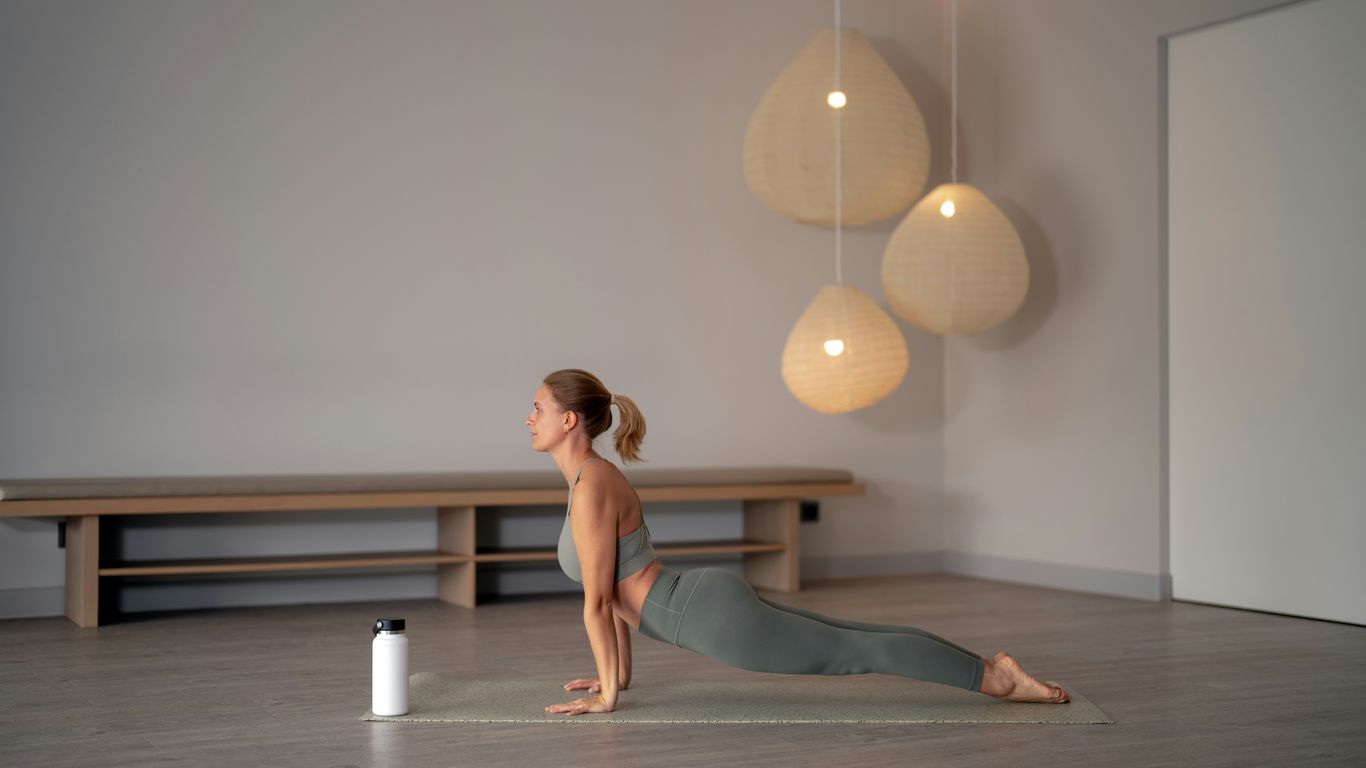
This movement is a highlight in the Yoga Poses Guide for its efficacy in improving spinal flexibility. By carefully engaging your glutes and core, you protect your lower back while encouraging the chest to bloom open. It is a fantastic pose for those who spend hours hunched over keyboards or steering wheels, providing a refreshing counter-stretch to your daily posture.
Try holding the pose for three to five deep breaths, focusing on expanding your ribcage with each inhale. You do not need to push into a high lift to gain the benefits of the pose; even a small, active lift is enough to stimulate the muscles along the spine. Focusing on quality of movement rather than height will keep your back safe and strong.
7. Cat-cow pose (marjaryasana-bitilasana)
Cat-cow is a fluid movement that connects your breath to your spinal mobility, acting as both a warm-up and a release. In Cow, you drop your belly and lift your chin and chest on the inhale; in Cat, you arch your back and tuck your chin toward your chest on the exhale. Think of it as a rhythmic wave traveling through your body.
This movement helps you identify where you are holding tension along the spine and helps loosen up tight areas. You can perform this flow as many times as you like, slowly coordinating the movement to match your natural breathing rate. It is incredibly soothing, especially after waking up or right before you roll up your mat in the evening.
When doing this movement, ensure your palms are directly under your shoulders and your knees directly under your hips. This setup creates the safest structure for spinal movement. By moving intentionally, you create a calm atmosphere that permeates the rest of your session, making the transition between other postures feel seamless.
8. Triangle pose (trikonasana)
Triangle pose provides an incredible stretch for the entire body, especially the sides, hips, and hamstrings. You stand with your feet wide apart, rotating one foot outward and leaning your torso over the front leg while reaching one hand toward the floor and the other toward the sky. It is a visually striking shape that opens up the body to the side.
To see how this fits into a broader practice, check the A to Z guide for detailed variations. This pose is wonderful for building lateral strength and finding stability while the body is in an asymmetrical position. It effectively stretches the waist and legs while requiring core stability to keep your torso from collapsing toward the floor.
Look up toward your top hand only if it feels comfortable for your neck. If not, keeping your gaze forward or down is perfectly acceptable. The goal is to feel a long line of energy extending from your bottom fingertips all the way to the top hand, creating space in your lungs and torso.
9. Bridge pose (setu bandha sarvangasana)
Bridge pose is a foundational backbend that helps you articulate your spine while strengthening the legs and glutes. Lie on your back, bend your knees, and plant your feet flat on the floor; lift your hips upward by pressing into your feet and shoulders. You can interlace your fingers underneath you to help open your chest further.
| Feature | Benefit | Focus |
|---|---|---|
| Spinal Articulation | Improves flexibility | Spine mobility |
| Glute Engagement | Builds body strength | Lower body |
| Chest Opening | Improves breathing | Heart center |
This posture is excellent for energizing the body without requiring too much strain on the wrist or shoulder joints. As the table illustrates, the pose offers multiple physiological advantages that balance the body's energy. It is quite common for yoga teachers to include this early in a cool-down routine to help stabilize the spine after more vigorous standing work.
When lifting your hips, be sure to keep your knees parallel rather than letting them splay outward. This keeps the work centered in your legs and protects your sacroiliac joints. By focusing on your feet pushing into the earth, you reveal a sense of elevation that is both physically exhilarating and mentally grounding.
10. Corpse pose (savasana)
The final pose in any session is the most important for integrating the work you have done, despite it appearing to be just lying down. You lay flat on your back, limbs relaxed, letting your breath return to its natural rhythm. Using Yune Yoga accessories, such as a folded towel under your head or neck, can provide that little bit of extra comfort needed to fully surrender into the floor.
This pose is where the benefits of your practice truly settle into your nervous system. Even if you only have a few minutes, committing to complete stillness allows your body to recover from the physical exertion of the previous shapes. It is the perfect time to clear your mind and let go of any tension you might still be carrying.
Give yourself full permission to do absolutely nothing. If your mind starts to wander to your to-do list, gently acknowledge the thoughts and return your focus to the sensation of your body resting against the mat. This final check-in with yourself is a vital practice for maintaining balance in your daily life, no matter how busy the day becomes.
Conclusion
Yoga practice is not about perfecting a specific look but about cultivating a consistent routine that works for your body and your lifestyle. By mastering these ten foundational postures and staying flexible with your gear, you can take your session anywhere and enjoy the benefits of movement at your own pace.
Frequently Asked Questions
Can I do yoga at home alone?
Certainly, you can practice anywhere, provided you have a small amount of floor space and a comfortable mat to get started.
How often should a beginner practice?
Consistency beats duration, so finding time for even ten or fifteen minutes a few times a week is often more sustainable than one long session.
Do I need to be flexible to start?
Not at all, as flexibility is a result of consistent practice rather than a requirement to begin, and modifications can help you reach every pose safely.
What if I cannot hold a pose?
Modification is a key part of the practice; you can always use a block, a strap, or simply reduce the depth of the stretch to suit your current fitness level.
What do I do if I get dizzy?
If you feel lightheaded, slowly bring yourself back to a seated or child's pose and focus on steady, calm breathing until you feel better.
How long should I hold a pose?
As a beginner, holding for five to ten slow breaths is a standard goal, but listen to your body and come out earlier if you feel any sharp discomfort.
Is it okay to practice daily?
Daily practice is a great way to form a habit, but remember to include rest days to let your body recover from the exertion of your movements.