Article: Yoga Towel vs Grip Socks: Which One Keeps You From Slipping?
Yoga Towel vs Grip Socks: Which One Keeps You From Slipping?
For most people who slip on the mat, a yoga towel is the better fix. It covers the whole mat, so it manages the sweat that makes hands and feet slide, and it puts a clean layer between you and the mat. Grip socks add traction at the feet only. They suit cold rooms, shared studio rules and some reformer classes. Below you will find how each one works, where each wins, and how to choose for hot yoga, home practice and travel.
TL;DR
- A yoga towel handles moisture across the whole mat, hands and feet included. Grip socks add traction at the feet only.
- In hot or sweaty classes, a grippy towel over the mat with bare feet is the setup many practitioners prefer. A soaked cotton sock gets heavy and slippery.
- Socks make sense in cold rooms, in barre or reformer-style classes, or when a studio requires them.
- A towel can’t replace a mat. It has too little cushioning, so use it on top of one.
- Wash a towel after every session. Look for a grippy underside and a quick-drying fabric.
Table of Contents
- The short version: they solve different problems
- How a yoga towel works
- How grip socks work
- Side by side: traction, sweat, hygiene and comfort
- Hot yoga: where the towel pulls ahead
- Can a towel replace a yoga mat?
- Do you need either one?
- How to choose a yoga towel
- If you wear socks, what to look for
- Our pick for most practices
- Find your towel
- FAQ
- Sources
The short version: they solve different problems
People search “yoga towel vs grip socks” as if the two were interchangeable. They are not. Slipping on a yoga mat usually has one cause: moisture between skin and surface. Sweat from your palms, feet and body turns even a good mat slick, especially in Downward Dog, Warrior poses and any pose where your weight rests on a hand or foot.
A yoga towel deals with that moisture directly. It absorbs sweat and gives your hands and feet a textured surface to hold. Grip socks deal with a different problem: how your foot meets the floor. The silicone or rubber dots on the sole create traction and put fabric between your skin and the mat.
A Gulf News buying guide from September 2026 draws the same line. Grip socks solve traction at the feet, while a mat towel tackles moisture across the larger working surface. If your hands slide in Down Dog, socks do nothing for them. If your feet are cold, a towel does nothing for that.

How a yoga towel works
A yoga towel is a long, thin towel sized to lie over your mat. Good ones are built with a grippy underside, often silicone dots or a textured rubberized backing, so the towel stays put. They are usually made from microfiber, which is thinner and sleeker than an ordinary bath towel and absorbs well for its size. Shape’s roundup of the best yoga towels notes that microfiber is a good choice for exactly that reason, with soft suede as another option.
The same Shape piece describes the towel’s value as twofold. It absorbs sweat from hands, feet and body for better grip, stability and safety, and it acts as a hygienic barrier when you use a shared mat.
That second benefit matters more than people expect. In Wirecutter’s hot yoga towel testing, both towels it tested kept testers from slipping and cut down the need to deep-clean the mat. Because the towel stops sweat from pooling on the mat, a standard wipe-down was enough afterward. The towels also wicked sweat similarly across several 90-minute hot yoga sessions.
How grip socks work
Grip socks are thin socks with non-slip dots or patches on the sole. They help in a few specific situations:
- Cold rooms. Warm feet are more comfortable and easier to relax.
- Studios that require them. Barre, Pilates and some gym classes often ask for grip socks.
- A barrier on shared mats. Some people prefer not to touch a communal surface with bare feet.
- Reformer classes. Your feet balance on machine surfaces, where socks are the usual choice. Ally G. Nathan, a Pilates and yoga instructor at Mayo Clinic’s Dan Abraham Healthy Living Center, recommends Pilates socks for reformer work. She also encourages students to try bare feet on a mat, since balancing barefoot can strengthen the muscles around the ankle.
One point of evidence is worth knowing. Gulf News cites a 2011 study in the journal Gait & Posture finding that non-slip socks gave better slip resistance during walking than ordinary socks and backless slippers, with no significant difference from bare feet. The same article cautions that grip socks add traction but do not teach balance or correct technique. Note that the study looked at walking, not yoga poses, so treat it as a general indicator of what the grips do.
Ordinary socks are a different story. Verywell Fit’s beginner equipment guide says standard socks can make your feet slippery and raise the risk of falling. It also says barefoot is preferable for balance, and that if you can’t practice barefoot, you should choose yoga socks with grips.
Side by side: traction, sweat, hygiene and comfort
| What you care about | Yoga towel | Grip socks |
|---|---|---|
| Traction for feet | Textured surface under bare feet | Grip dots on the sole |
| Traction for hands | Yes, the towel covers the whole mat | No, hands stay bare |
| Sweat absorption | Absorbs sweat from hands, feet and body | Fabric absorbs foot sweat only, and a soaked sock gets heavy |
| Hygiene on shared mats | Barrier for hands, feet and body | Barrier for feet only |
| Warmth | Neutral | Adds warmth to cold feet |
| Ground feel and balance feedback | Bare feet, full feedback | Slightly reduced by fabric |
| Packing for travel | Folds flat, one item covers the mat | Small, but only covers the feet |
| Care | Machine wash after each use | Air-dry, no fabric softener |
The pattern is clear. If your problem is sweat, the towel covers more ground. If your problem is cold or a studio rule, socks fit.
Hot yoga: where the towel pulls ahead
Heated classes are where the choice matters most. In a room at high temperature you sweat from the first few minutes, and the moisture ends up everywhere: palms, soles, the mat itself.
A soaked cotton sock can become heavy and slippery in that environment. That is why many hot yoga practitioners do better with a grippy towel over the mat and bare feet. If you do wear socks in heat, the thinnest synthetic pair is the safer pick, ideally paired with a non-slip towel under the heels and hands.
The towel also protects the mat. In Wirecutter’s testing, the towel meant sweat did not pool on the mat, so a wipe-down was enough afterward. That means less time scrubbing your mat and a mat that lasts longer. If you practice in the heat, our own guides go deeper on choosing a hot yoga towel and on what makes one comfortable and absorbent.
Can a towel replace a yoga mat?
No, and you shouldn’t try. On bare flooring with no mat, Wirecutter found that the better of its two tested towels gripped well, but neither had enough cushioning to stand in for a mat. Your knees, wrists and spine still need padding.
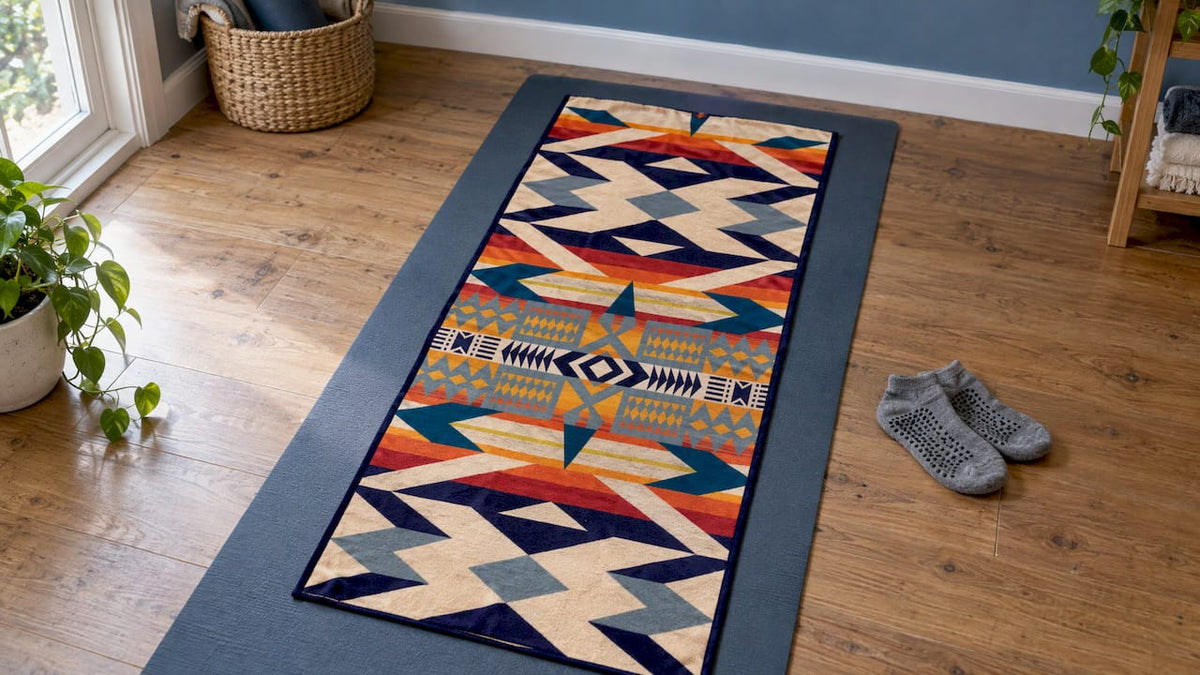
Think of the towel as a layer that sits on a mat. The mat gives cushion and structure. The towel gives sweat control and extra grip. Together they cover what neither does alone.
If you are also shopping for the mat, a natural rubber mat grips well on its own and pairs nicely with a towel for sweaty sessions. Our mat collection includes natural rubber, eco-friendly and foldable travel options.
Do you need either one?
Honestly, not always. Verywell Fit says yoga socks are not a requirement. Many people practice barefoot on a decent mat and get excellent grip from dry skin, and bare feet give you the best feedback for balance.
So ask yourself these questions:
- Do your hands or feet slide when you sweat? A towel is your answer.
- Do you use shared studio mats? A towel gives you a hygienic barrier across the mat. Our guide on why a mat towel is essential covers this in more detail.
- Are your feet cold, or does the class require socks? Grip socks fit that moment.
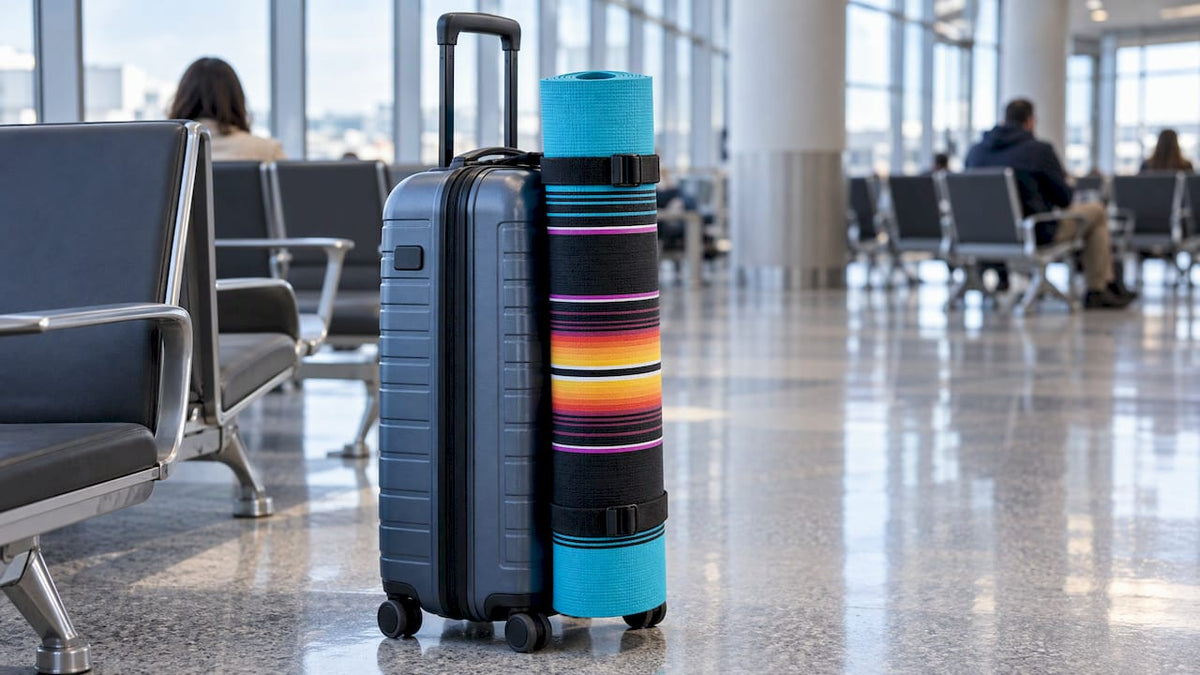
- Do you travel with your practice? A towel that folds flat and lays over any mat, or over a hotel room floor, keeps your setup light.
How to choose a yoga towel
A few details separate a towel that works from one that bunches and slides.
Grippy underside. The towel should stay in place when you move into a pose. Silicone dots or a rubberized backing do this. Without it, the towel itself becomes the thing that slides.
Fabric. Microfiber is thin, sleek and absorbent for its size, which is why instructors often prefer it over plush cotton. Kenza Lo, a Corepower Yoga instructor quoted by Shape, makes this point: the material drives both grip and portability.
Size. Pick one that covers your mat. Gulf News cites one mat towel at 24 by 68 inches, close to a standard mat’s footprint. Corner pockets help hold it in place on a mat.
Drying speed. A towel that dries quickly is easier to pack and to reuse a few days in a row. The same Gulf News piece cites a microfiber blend that absorbs twice as much as cotton and dries in half the time.
Care. All yoga towels should be laundered after each use. In Wirecutter’s tests, both top towels held up to repeated machine washing and drying with no grip dots damaged. Sweat left in a towel in your gym bag is a quick way to get odor.
For a longer walk through these points, see our guide to choosing and using the right yoga towel for your mat and the one on grip towels for a safer, slip-free practice.

If you wear socks, what to look for
Some practices, such as barre or reformer classes, call for socks, so it helps to know what a good pair looks like. Look for grip dots that cover the whole sole, not just the ball and heel. Size down if you fall between sizes, because a loose sock shifts and defeats the grips. For hot rooms, choose fast-drying synthetic blends over thick cotton, and air-dry them without fabric softener, which coats the grips. A well-made pair may keep its grip for roughly one to two years of regular use, according to a guide to non-slip yoga socks.
Our pick for most practices
The towel does more jobs. It handles sweat, grip for hands and feet, and mat hygiene in a single piece, and it packs flat. That is why we recommend starting with a towel, then adding socks only if your class or climate calls for them.
What we think
We make yoga gear for people who practice at home, in studios and on the road, and the slipping question comes up constantly. Our view is simple: treat the cause, not the symptom. Sweat is the cause, and a towel that sits on the mat deals with it where it happens, under your hands, your feet and your body.
We also like that a towel does not change how you stand. Your bare feet keep their full feedback with the floor, which is what balance practice is built on. The towel gives you grip without taking that feeling away.
Pair a towel with a good mat and you have a setup that lasts. Our mats come in natural rubber, eco-friendly and foldable travel versions, and our towels are made from durable, sustainable materials, so the two work as a set at home or on a trip.
Nicholas
Find your towel
If sweat is what slides you, start with a towel built for the mat. Browse our yoga towels, including the Yoga Towel SE34, the Pendleton Fire Legend yoga towel and the Yoga Towel Reed. Our full range of mats, towels and accessories is on yuneyoga.com.

Pair a towel with a natural rubber or foldable travel mat and you have a set that goes from your living room to a hotel floor.
FAQ
Do grip socks help with yoga?
They can, mainly when your feet sweat enough to slip, when the room is cold, or when a studio requires them. They add traction at the feet but do not teach balance or technique. Most people practice well barefoot on a good mat, and a towel adds grip for both hands and feet.
Can I use a towel instead of a yoga mat?
Not comfortably. In Wirecutter’s testing on bare flooring, even the better towel lacked the cushioning to replace a mat. Use the towel on top of your mat, where it adds grip and soaks up sweat while the mat provides padding.
Is a yoga towel worth it?
If you sweat, practice hot yoga or use shared mats, yes. It absorbs sweat for better grip and stability, it works as a hygienic barrier, and it keeps the mat cleaner so a quick wipe-down is enough. Our guide to the benefits of a yoga mat towel lists more.
Should I wear socks or use a towel in hot yoga?
Many hot yoga practitioners do better with a grippy towel over the mat and bare feet, because a soaked cotton sock gets heavy and slippery. If you wear socks, choose the thinnest synthetic pair and keep a non-slip towel under your heels and hands.
How often should I wash a yoga towel?
After every use. Wirecutter found that its top towels survived repeated machine washing and drying without damage to the grip dots, so a regular wash cycle is fine.
Sources
- What Separates a $70 Hot Yoga Towel From a $20 One? (Wirecutter)
- The 8 Best Yoga Towels (Shape)
- Best Yoga Equipment Guide for Beginners (Verywell Fit)
- How Grip Socks Improve Traction in Yoga and Pilates (Gulf News)
- Pilates with your socks on: Grippy or gross? (Mayo Clinic Press)
- Non-Slip Yoga Socks: Types Compared and How to Choose