

Yoga straps and blocks: How to choose and use the right yoga props
Key Takeaways
Yoga props are simple tools for making poses more accessible, stable, and comfortable. Choose them for the way you practice, then use them lightly enough that your body still does the work.
- Blocks bring the floor closer and can steady balance poses.
- Straps extend your reach without forcing a stretch.
- Material, size, firmness, and portability all matter when shopping.
- Using both props together can support gradual, controlled practice.
- Good alignment and careful setup matter more than going deeper.
Understand what yoga straps and blocks do
Yoga straps and blocks are not signs that a pose is being done incorrectly. They change the distance, height, or leverage of a movement so you can explore it with more control. The best prop is the one that helps you stay present without making the setup feel complicated.
How blocks support alignment and stability
A block can raise the floor when your hands do not comfortably reach it. In a standing pose, that extra height may help you keep your spine longer and your weight more evenly distributed. Turn the block to its low, medium, or high side depending on how much support you need.
Place blocks under the hands in poses such as a supported lunge or triangle, or use one beneath the sitting bones when the floor feels too low. Steady support beats forced depth when you are learning where your joints and muscles should be. As your position becomes more familiar, you may reduce the height rather than removing the block abruptly.
How straps improve reach and flexibility
A strap gives your hands something to hold when they cannot yet meet around a foot, leg, or behind the back. It should create a connection, not pull you into a larger range than you can control. Keep your grip firm but relaxed, and allow the strap to take up distance without yanking.
This makes straps useful for hamstring work, shoulder openers, and seated stretches. The Horatio Yoga Strap, for example, is described as an 8-foot organic cotton strap with metal D-ring buckles, and its source says it is designed for stretching and carrying a mat. Those features suit a practice that moves between home, studio, and travel.
When to use one prop or both
Start with one prop when you are trying to understand a pose. A block may solve a height problem, while a strap may solve a reach problem; there is no need to add both unless each has a clear job. Once the pose feels steady, combining them can make a longer sequence feel less awkward.
For example, a block can support one hand in a lunge while a strap helps the opposite arm reach overhead. This arrangement lets you focus on the movement instead of wrestling with distance. Keep the setup simple enough that you can breathe and adjust it without losing your attention.
Common misconceptions about yoga props
Props do not make a practice less demanding, and they are not reserved for beginners. Experienced practitioners use them to refine angles, repeat a shape with consistency, or make a long hold more manageable. A prop also does not guarantee correct alignment; it only gives you another way to organize the pose.
Avoid treating a block or strap as a way to win a flexibility contest. If the tool creates pressure, shaking, or a need to hold your breath, change the height, loosen the strap, or come out of the pose.
Choose the right yoga blocks
A good block should feel predictable under your hands and easy to place where you need it. Think about the surfaces you practice on, how much equipment you carry, and whether you prefer a soft or solid feel. Buying two matching blocks is often useful for symmetrical poses, but one can be enough for many routines.
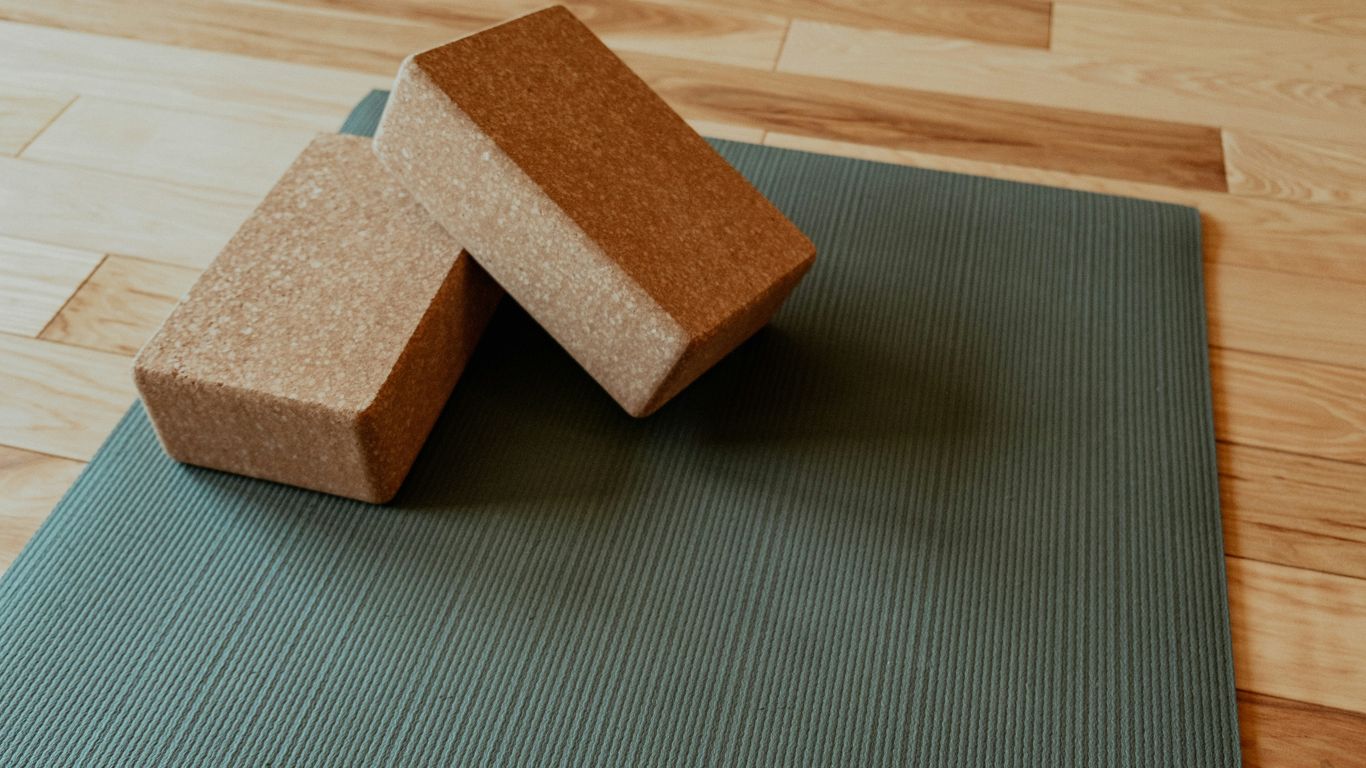
Comparing foam, cork, and wood blocks
Foam blocks are light and often comfortable for seated support or restorative positions. Cork feels firmer and usually has a more grounded texture, while wood offers a particularly solid surface but can feel less forgiving. None is automatically best; the right material depends on how much weight and softness you want.
If you practice in different locations, weight becomes part of the decision. A firm block may feel reassuring in a balance pose, but a lightweight foam pair can be easier to pack for a hotel room or park session. Consider browsing yoga props and accessories when comparing the kinds of support available for poses and stretches.
Selecting the best block size and shape
Most standard blocks offer several working heights because you can use different sides as your needs change. A larger block can feel more stable for supported sitting or broad contact, while a smaller one may fit more easily beneath a hand. Rounded edges can make transitions and hand placement feel more comfortable.
Before choosing, picture the poses you use most. If your hands often reach toward the floor in standing poses, height may matter more than a compact shape. If you mainly sit on the block, surface area and stability deserve more attention.
Matching block firmness to your practice
Firmness changes the character of support. A softer foam block can be pleasant when you want cushioning, but it may compress under heavier pressure. Cork or wood tends to preserve its shape, which can help when you want a stable reference point.
Use the block as a platform rather than leaning into it with all your force. If it shifts or sinks unexpectedly, select a firmer option or place it on a more reliable surface.
Evaluating grip, weight, and portability
Grip matters most when a block supports active weight, particularly under the hands. Weight matters when you carry props regularly, and portability matters if your practice happens in more than one room or location. A block that stays at home can be chosen differently from one that travels every week.
These practical comparisons can help narrow the field:
| Feature | Lighter option | Firmer option | Best question to ask |
|---|---|---|---|
| Feel | Softer foam | Cork or wood | Do I want cushioning or a fixed platform? |
| Carrying | Compact and light | Heavier and steadier | Will I pack it often? |
| Grip | Textured foam | Cork or finished wood | Does it stay stable under my hands? |
| Use | Restorative and travel practice | Balance and weight-bearing work | Which poses make up most of my routine? |
After comparing those details, choose the block that matches your actual habits rather than an idealized routine. The most useful prop is one you can reach for without hesitation.
Find a yoga strap that fits your needs
A strap should be long enough for the positions you practice and comfortable enough to hold for several breaths. Material affects feel, while the fastening system affects how quickly you can adjust a loop. If you travel, washable construction and a manageable packed size may be just as valuable as appearance.
Comparing cotton, nylon, and recycled materials
Cotton often feels soft and familiar in the hands, while nylon can feel smooth, light, and highly durable. Recycled materials may appeal if lower-waste purchasing is part of your decision. Check the actual product details rather than assuming a material will behave the same across every strap.
The Moab Rocks Yoga Strap is described as an 8-foot GOTS-certified organic cotton strap with metal D-ring buckles. Its source specifically mentions deeper stretches, alignment, and shoulder openers, so it is a fitting example of a strap designed for adjustable practice.
Choosing between buckle and loop designs
A buckle lets you create and change a loop around a foot, leg, or hands. A fixed loop is quicker when you repeat one movement, but it offers less flexibility if several people share the prop or if your routine changes. Decide whether speed or adjustability matters more to you.
D-ring buckles can take a moment to learn, yet they make it easier to fine-tune the length. Thread the strap carefully and test the hold before placing it under meaningful tension.
Selecting the right strap length
An 8-foot strap works for many common stretches and shoulder exercises, but your height, reach, and intended uses still matter. A longer strap can offer more room for larger loops, while a shorter one may be easier to manage in a small space. Measure the distances you actually need rather than choosing by appearance alone.
If you want a strap that can also carry a mat, confirm that the product is designed for that purpose. The Gemini Yoga Strap is documented as an 8-foot strap that serves as both a stretching aid and a yoga mat carrier.
Checking comfort, durability, and adjustability
Inspect the stitching, buckle edges, and strap width before committing to a purchase. A strap that feels rough against the skin or slips through its fastening system will distract you from the pose. Adjustability should feel smooth, not like a struggle at every changeover.
For readers who practice while traveling, the ability to wash and pack the strap easily can make the difference between occasional use and regular use. Keep the prop simple, dependable, and suited to the places where you really practice.
Use yoga straps and blocks for better alignment
Alignment is easier to understand when the body has enough room to organize itself. Blocks can bring the floor upward, and straps can bridge a gap without asking your joints to compensate. Use both as temporary guides, paying attention to how the pose feels from the ground up.
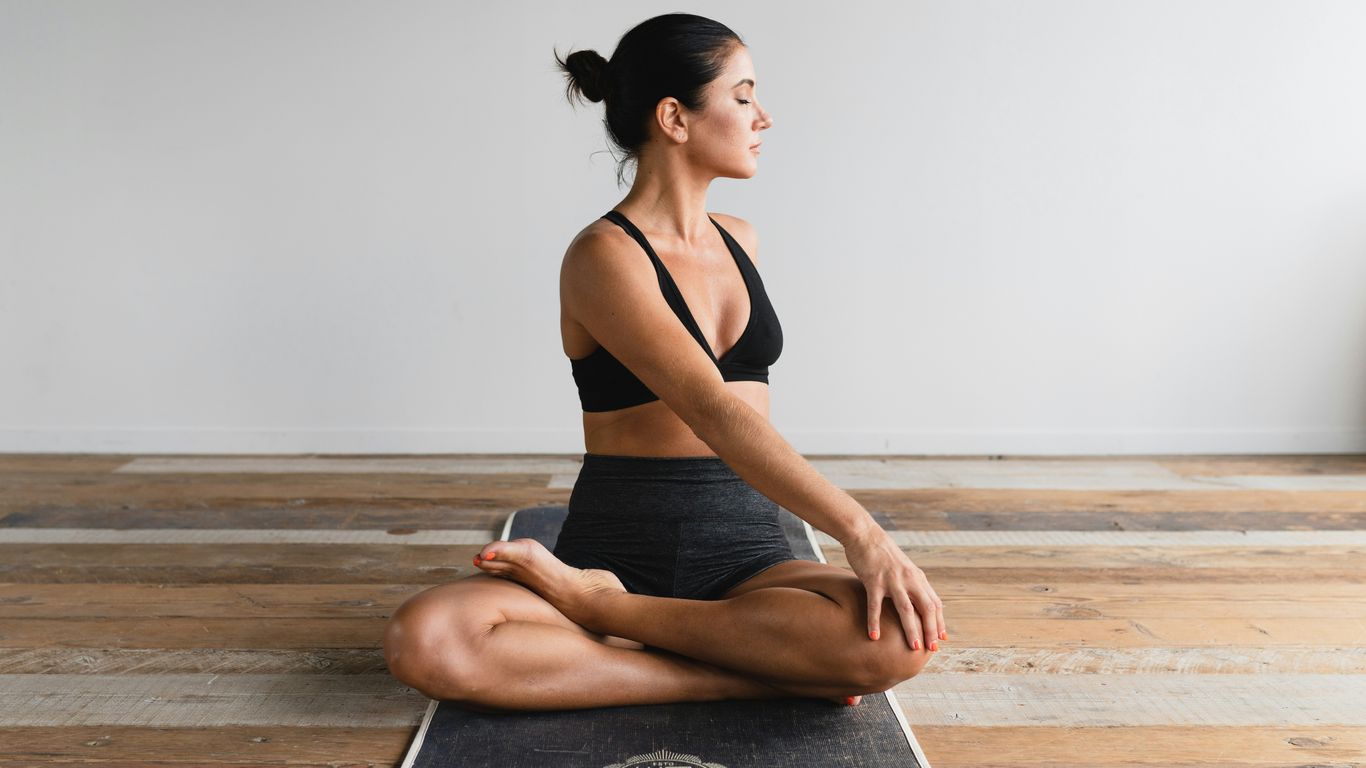
Supporting standing and balance poses
In triangle, half moon, or a supported lunge, place a block beneath the lower hand so the chest can open without collapsing toward the floor. In balance work, a nearby block can also provide a light touch while you learn where your weight belongs. Keep the prop close enough to use, but do not grip it as if it must hold you up.
Set your feet first, then place the block where your hand naturally lands. This order prevents the prop from dictating a shape that your stance cannot support.
Modifying forward folds and hamstring stretches
A strap can connect your hands to a foot during a seated forward fold when reaching directly would round your back. Keep the spine comfortable and use the strap to maintain a steady relationship with the leg. A block beneath the sitting bones may also help if the pelvis feels stuck.
The goal is not to pull the torso closer at any cost. Keep a small amount of bend in the knees if that helps you maintain control, and stop before the stretch becomes sharp or distracting.
Improving shoulder and hip mobility
Hold a strap wider than shoulder distance for gentle overhead movements, then gradually narrow the grip only if the shoulders remain comfortable. For the hips, a strap can help position a leg without requiring the hands to reach it directly. Move slowly enough to notice whether the restriction comes from the joint, muscle tension, or an unstable setup.
Use a block when a hand needs support during a hip-opening position. Raising the hand can reduce twisting and give you a clearer starting point for the movement.
Reducing strain in challenging poses
A prop should make the route into a pose more manageable, not disguise a limit that needs respect. Place blocks under areas that tend to collapse, and use a strap to maintain contact without pulling. If your breath becomes strained, the setup is probably asking for too much.
Try changing only one variable at a time: block height, strap length, stance, or range of motion. That makes it easier to understand which adjustment helped and keeps the practice from becoming a guessing game.
Build yoga strap and block sequences
A sequence does not need to be long to be useful. Choose a few movements that address the places where you regularly lose space or stability, then repeat them calmly. Props are especially helpful when the same routine needs to work in a studio, at home, or while traveling.
Props for beginners and limited flexibility
Begin with positions where the prop has an obvious purpose: a block under a hand, a block beneath the seat, or a strap around a foot. Hold each shape for a few steady breaths and leave enough time to come out without rushing. This approach builds familiarity without treating flexibility as a prerequisite.
A beginner-friendly sequence might move from supported seated posture to a gentle strap-assisted leg stretch, then to a standing fold with blocks. Keep the range modest and repeat the setup until it feels ordinary.
A gentle routine for tight hips and hamstrings
Start seated on a block, extend one leg, and loop the strap around the foot without pulling the knee straight by force. Follow with a low lunge supported by blocks, then finish with a wide-legged fold where the hands rest on the blocks. Move between sides slowly so the prop stays part of the movement rather than becoming an obstacle.
You can use this four-step order when you want a simple routine:
- Sit on a block and settle your breathing.
- Use a strap for a gentle one-leg stretch.
- Add blocks to a low lunge for hand support.
- Finish with a supported fold and an easy exit.
After the sequence, notice whether you feel more organized or simply more stretched. The first result is usually the more useful one for building a repeatable practice.
Upper-body mobility exercises with a strap
Stand tall and hold the strap with both hands wider than your shoulders. Sweep it slowly overhead and behind you only as far as the shoulders remain relaxed, then return to the starting position. You can also hold the strap in front of the chest and gently draw the hands apart to create awareness through the upper back.
Avoid turning the movement into a test of how narrow your grip can become. A wider hold with smooth control is more valuable than a narrow hold that causes shrugging or pinching.
Balance and strength work with blocks
Use blocks to raise the floor in a supported lunge, then practice shifting weight gradually from one foot to the other. In a squat or bridge variation, blocks can provide a clear target for hand placement or a stable reference for alignment. Keep the movement small enough that you can stop cleanly.
For travel sessions, choose exercises that need little rearranging. One or two blocks beside the mat can support a complete balance-focused sequence without filling the room with equipment.
Practice safely with yoga props
Safety begins before the first pose. Check that the floor is clear, the blocks are stable, and the strap is threaded correctly. Props should make feedback easier to notice, not encourage you to ignore it.
Avoiding overreliance on blocks and straps
Using a prop every time is not automatically a problem, but it is useful to test your natural range occasionally. Remove a block only when you can keep the same control without it, and loosen a strap when your hands can comfortably make the connection. Progress is not measured by how quickly the equipment disappears.
Let the prop support a decision, then make the decision yourself. If the body cannot maintain the pose without it, keep the support and continue practicing there.
Recognizing when a pose needs modification
A pose needs modification when you feel sharp pain, numbness, unusual pressure, or a loss of steady breathing. Modify the angle, reduce the range, change the block height, or leave the pose altogether. There is no value in holding a shape that makes you tense or uncertain.
You can also adapt for the setting. A soft hotel carpet, uneven outdoor ground, or limited wall space may call for a simpler sequence and more conservative balance work.
Preventing slips, pressure, and overstretching
Place blocks on a level, clean surface and check them before weight-bearing movements. Do not wrap a strap so tightly that it cuts into skin or restricts circulation. When a strap is around a foot or leg, maintain enough slack to release it immediately.
Keep joints in positions you can control rather than locking them to create a more dramatic line. Slow exits matter as much as slow entries, especially when a prop has supported you for several breaths.
Cleaning and storing your yoga equipment
Follow the care instructions for each material, and let washable straps dry fully before storing them. Wipe blocks after regular use, especially if they travel between shared spaces. Keep buckles and edges free of grit so they do not damage the strap over time.
Store blocks where they will not be crushed and loosely coil straps instead of knotting them. A small, consistent storage routine keeps your equipment ready for the next practice.
Conclusion
The right yoga straps and blocks should make practice feel clearer, steadier, and easier to take with you. Choose materials and designs that match your space, use props to support alignment rather than force range, and let comfort guide every adjustment.
Frequently Asked Questions
Are yoga blocks only for beginners?
No. Practitioners at every level use blocks to change height, improve stability, and explore alignment with more consistency. A block can remain useful even when flexibility and strength improve.
How do I know what yoga block material to choose?
Choose foam for a lighter, softer feel, cork for firm textured support, or wood for a very solid surface. Your preferred feel, the poses you practice, and how often you travel should guide the decision.
What length should a yoga strap be?
An 8-foot strap suits many common stretches and mobility exercises, but taller practitioners or people who want larger loops may prefer more length. Consider your reach and intended movements before buying.
Can I use a yoga strap if I am not flexible?
Yes. A strap can reduce the distance between your hands and feet or help you maintain a connection without forcing the body to reach. Use gentle tension and keep the movement within a comfortable range.
Should I buy two yoga blocks?
Two blocks are useful for symmetrical poses, supported sitting, and sequences that require both hands to be elevated. One block can still cover many standing poses and simple modifications.
How can I stop yoga props from slipping?
Use blocks on a clean, level surface and check their position before adding weight. Keep the strap threaded correctly, avoid excessive tension, and adjust your stance if the setup feels unstable.
How should I clean yoga straps and blocks?
Follow the care label for the material. Wipe blocks regularly, wash straps only as directed, and let everything dry completely before storing it in a clean, ventilated place.

