

Yoga strap stretches for shoulders: A safe, effective guide to improving mobility
Key Takeaways
A yoga strap can make shoulder mobility work more accessible when you use it as a guide rather than a lever.
- Keep the grip wide enough to move without pinching.
- Warm the neck, shoulders, and upper back before stretching.
- Look for steady, mild tension instead of forcing range.
- Pair flexibility work with gentle shoulder control.
- Stop for sharp pain, numbness, tingling, or unusual weakness.
Understanding how yoga strap stretches support shoulder mobility
Yoga strap stretches for shoulders can give your hands extra reach while keeping your movements measured. The strap does not pull your joints into place or replace active strength. It simply helps you explore positions that may feel awkward when your hands cannot yet meet. Think of it as a quiet guide for gradual, repeatable practice.
What a yoga strap can and cannot do
Hold the strap between your hands and use it to create a wider, more manageable connection. You can adjust your grip, keep your elbows soft, and move through a range that feels available today. The strap may help you maintain alignment, but it cannot tell you whether a sensation comes from a useful stretch or an irritated structure. That judgment stays with you.
A strap is also not a substitute for warming up or for medical assessment. If a shoulder has recently been injured, begin with professional advice rather than testing its limits with a prop. For a broader look at using a strap for accessible poses, this shoulder mobility guide offers related ideas.
Shoulder flexibility versus shoulder stability
Flexibility describes how far a joint can move, while stability describes how well you can control that movement. A shoulder may reach overhead passively but feel shaky when you lower the arms. For that reason, follow a stretch with easy active movements, such as slowly lifting and lowering the arms without the strap.
The goal is not the largest possible shape. A comfortable range that you can repeat with steady breathing is usually more useful than a dramatic position that leaves the joint feeling unsettled.
How to recognize useful tension
Useful tension often feels broad, mild, and easy to observe. You might notice it across the chest, the back of the shoulder, or along the side of the upper back. Mild tension is enough; the sensation should not intensify sharply with every breath.
Ease off if you begin gripping your teeth, holding your breath, or twisting your torso to create more room. When the body has to brace heavily, the stretch has probably become too ambitious.
When limited mobility may have another cause
Persistent restriction can be related to an old injury, inflammation, nerve irritation, or movement habits outside your yoga practice. One side being consistently different is worth paying attention to, especially if the change is new. A strap can reveal a limitation, but it cannot diagnose why it is there.
Readers sometimes arrive here through unrelated practical resources, including Bayshore Club, TikTok marketing, protective order guidance, longevity clinic care, or flat-roof solar support. Those subjects are separate from shoulder mobility; use this guide only for general movement education.
Preparing your shoulders for strap stretching
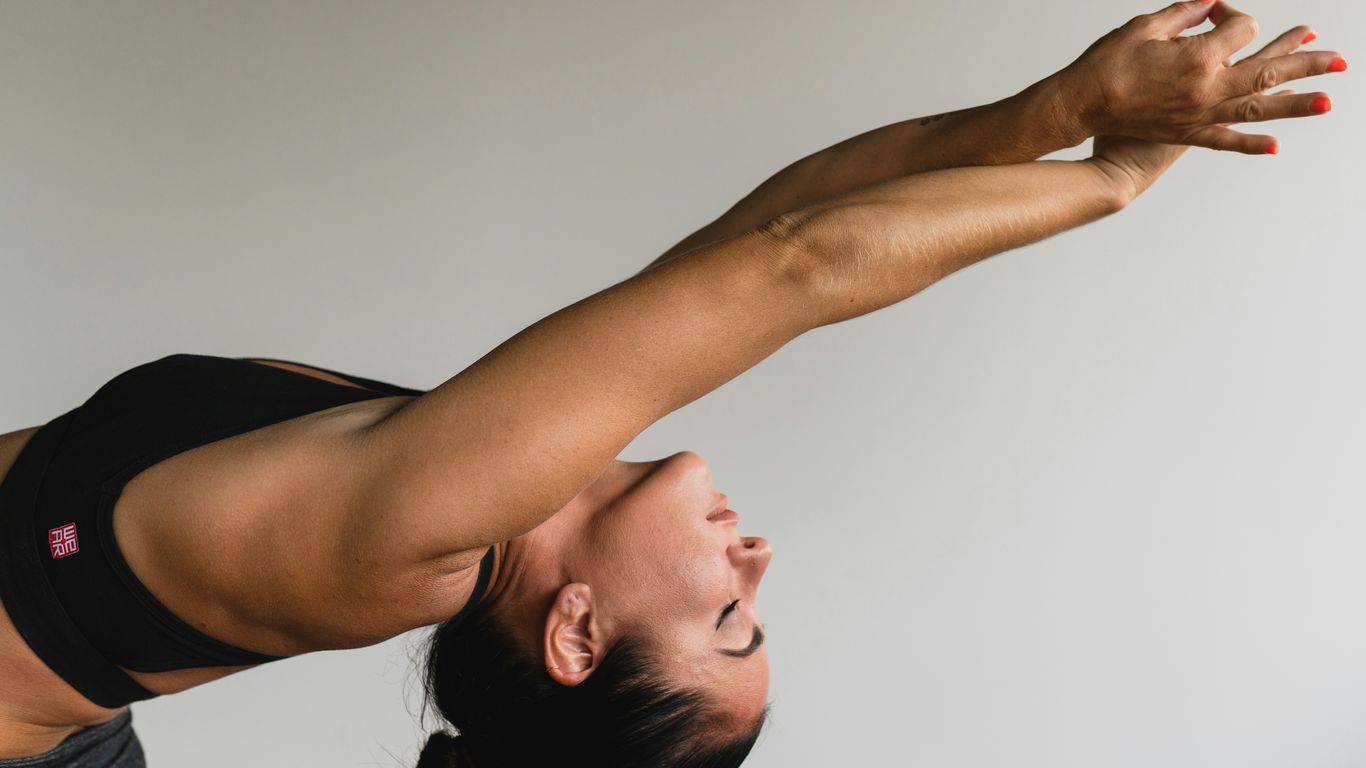
Preparation makes shoulder stretching feel calmer and more precise. Set up enough space to move your arms without hitting furniture, and choose a stable surface beneath you. A portable mat can make hotel rooms, parks, and other temporary practice spots more comfortable. Begin slowly, since the first few movements tell you how your shoulders feel that day.
Choosing the right strap length and grip
Start with the strap fully open rather than making a small loop. For overhead work, hold it wider than shoulder distance so the arms can travel without strain. The Bowie Yoga Strap is an 8-foot strap with metal D-ring buckles, so its length and adjustment can suit several shoulder positions.
Keep the fabric resting across the fingers and palm instead of wrapping it tightly around the hand. A secure grip should let you release quickly if the shoulder feels uncomfortable.
Warming up the neck, shoulders, and upper back
Spend two or three minutes moving before holding any stretch. Roll the shoulders gently, turn the head within a comfortable range, and sweep the arms forward and back without forcing them overhead. Add a few slow cat-cow movements or seated upper-back rotations if they feel natural.
The purpose is not to tire the muscles. It is to notice stiffness, increase awareness, and make the first strap movement less abrupt.
Setting up good posture and alignment
Stand with the feet comfortably grounded, or sit tall on the front edge of a firm cushion. Let the ribs remain over the pelvis and allow the shoulder blades to move instead of pinning them down. Keep the chin level so the neck does not take over the exercise.
Check that both hands hold the strap at a similar height. Small differences are normal, but a large twist through the trunk usually means the grip is too narrow or the range is too demanding.
Breathing through each movement
Use a quiet inhale to create space through the ribs and an unhurried exhale as you settle into the available range. Do not hold the breath to endure a stronger sensation. If breathing becomes choppy, reduce the leverage by widening your hands or lowering the arms.
A steady breath gives you useful feedback. It also keeps the stretch from turning into a contest with the strap.
Overhead yoga strap stretches for shoulders
Overhead work targets the coordinated movement of the arms, shoulder blades, and upper back. It can feel limited by tightness in several places, so avoid assuming that the shoulder joint alone is responsible. Move slowly enough to notice whether the ribs, neck, or lower back are compensating. These variations work best when the strap gives you space rather than pressure.
Overhead reach to open the shoulders
Stand or sit with both hands on the strap, using a wide grip. Lift the strap in front of you and gradually move it overhead, stopping before the ribs thrust forward or the elbows bend sharply. Pause for one breath, then return the strap along the same path.
Repeat five to eight times. Treat the movement as a controlled arc, not a forced stretch at the end range.
Strap-assisted shoulder flexion
For a gentler flexion drill, lie on your back with the knees bent and hold the strap between your hands. Raise the arms toward the ceiling, then slowly take them toward the floor behind you only as far as the back of the ribs can stay relaxed. Return before the shoulders pinch.
The floor provides helpful feedback: if the ribs pop up or the back arches dramatically, shorten the range. You can also use a folded towel beneath the head if the neck feels strained.
Overhead triceps and lat stretch
Hold one end of the strap in each hand and bring the right arm overhead, bending the elbow so the strap falls behind the head. Let the left hand hold the lower section, then use only a light downward assist. Keep the chest facing forward rather than leaning away.
Stay for three to five slow breaths, then change sides. The sensation may travel from the back of the upper arm toward the side ribs, but it should remain broad and manageable.
How to adjust your hand spacing
Hand spacing is the simplest way to change the intensity. Wider hands reduce the demand on the shoulders; narrower hands increase it. Try these small adjustments rather than jumping immediately to a deep position:
- Widen the grip if the elbows bend or the neck tightens.
- Move one hand a little at a time instead of sliding both inward.
- Lower the strap in front of the body if overhead motion feels restricted.
- Return to the previous width if the shoulder pinches.
After each adjustment, take one complete breath and reassess. The best grip is the one that lets the arms move smoothly while the torso stays quiet.
Yoga strap stretches for shoulder rotation
Rotation asks the shoulder to move in a more specific way than a simple overhead reach. It is also where forcing can create a pinching sensation quickly. Keep the strap loose enough to permit gradual movement, and compare sides without trying to make them identical. A few controlled repetitions are more useful than a long, tense hold.
Shoulder dislocates with controlled movement
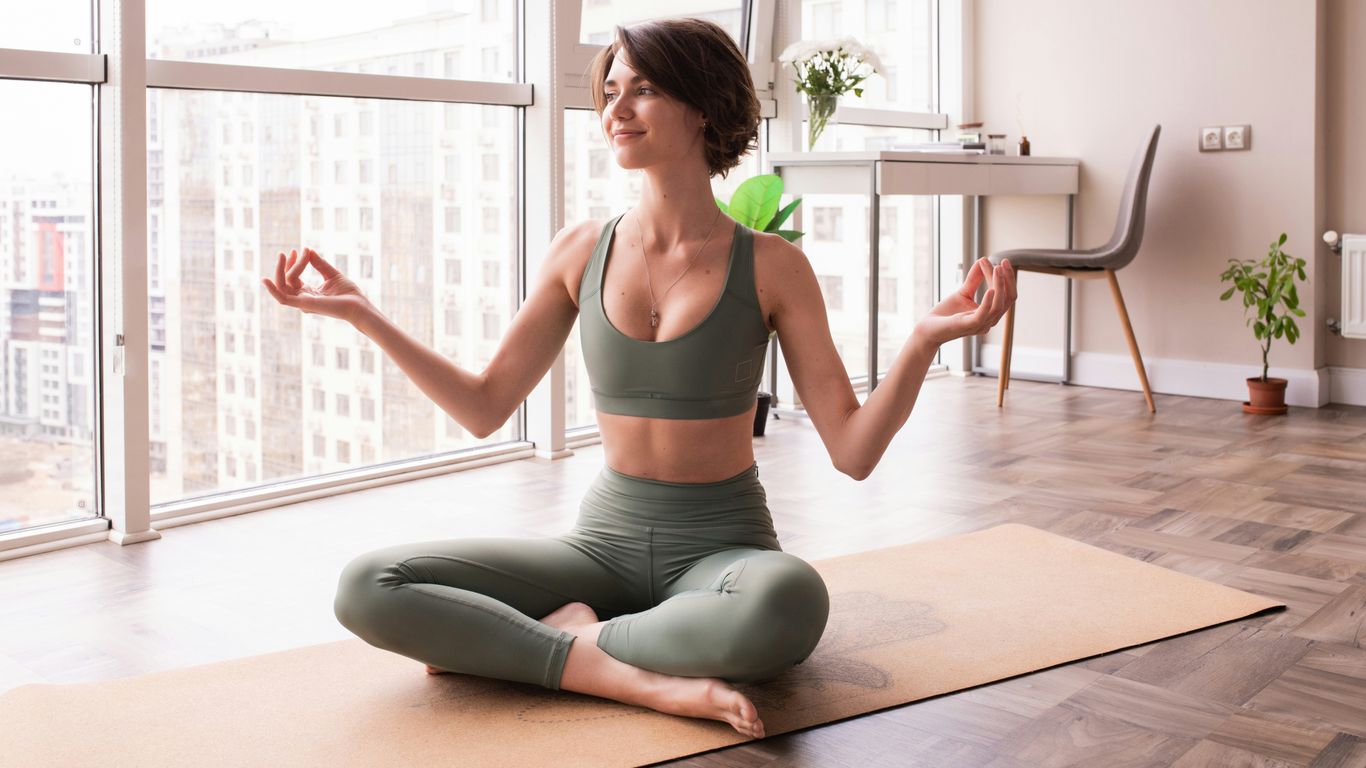
Hold the strap wide in front of the body and slowly move it overhead and behind you, then return it to the front. The name can sound alarming, but the exercise should be gentle and fully controlled. There is no need to take the hands close together or move through a range that feels stuck.
Start with three repetitions. If the shoulders feel compressed behind you, widen the grip or stop at the overhead position.
Strap-assisted cow-face arms
Sit or stand tall and bring one arm overhead while the other reaches behind the back. Hold the strap between the hands so the lower hand does not need to reach the upper wrist. Keep the head neutral and let the elbows point generally up and down without forcing them into a perfect line.
This arrangement can make the arm position more accessible. A guide focused specifically on cow-face shoulder opening may help you visualize the setup, but the strap should still be adjusted to your own range.
Internal and external rotation practice
Keep the upper arm close to the ribs and bend the elbow to roughly a right angle. Hold the strap with the opposite hand and gently guide the forearm outward or inward, depending on the side being practiced. The upper arm should remain quiet; the motion comes from the shoulder rather than the wrist.
Use a small range and pause at the point where the shoulder begins to tense. This is practice for awareness and control, not a test of how far the forearm can travel.
Modifications for tight or sensitive shoulders
If overhead rotation is uncomfortable, practice with the arms lower than shoulder height. You can also use a towel, take a wider grip, or perform the movement lying on your back. A wall can provide a visual boundary without adding force.
Work one side at a time when comparing range. That makes it easier to notice subtle differences and prevents the more mobile side from setting an unrealistic target.
Yoga strap stretches for the chest and upper back
The chest and upper back often influence how freely the shoulders move. Opening the front of the body can feel relieving, but it should not become a rib-thrusting exercise. Keep the breath easy and let the shoulder blades slide across the back. The following positions are simple enough to adjust in the middle of a practice.
Chest opener with the strap behind your back
Stand with the strap held behind you, using a grip wider than the shoulders. Gently draw the hands away from the body while keeping the collarbones broad. Do not yank the arms backward; the movement can be small and still create a clear chest sensation.
Hold for two or three breaths, then lower the arms. If the wrists feel awkward, let the hands separate farther or turn the palms toward each other.
Shoulder extension stretch
With the strap behind the body, explore a mild shoulder-extension position by moving the hands slightly away from the hips. Keep the elbows soft and avoid lifting the shoulders toward the ears. The chest may open as the arms travel back, but the front ribs should remain contained.
Release immediately if the sensation becomes sharp at the front of the shoulder. Extension is often more limited than expected, so patience matters here.
Upper-back reach with active shoulder blades
Bring the strap in front of you and reach both hands forward as though widening the space between the shoulder blades. Keep the arms long without locking the elbows. Then soften the reach and let the shoulder blades return to a neutral position.
Repeat slowly for five breaths. This active variation helps you feel the difference between moving the shoulder blades and simply rounding the entire spine.
Avoiding rib flare and lower-back compensation
A mirror can help you check whether the ribs lift when the arms go overhead. You can also practice against a wall, keeping the back of the pelvis gently grounded without flattening every curve of the spine. If the lower back arches, reduce the arm range and breathe into the sides of the ribs.
The aim is not rigid posture. It is to keep the movement coming mainly from the shoulders and upper back rather than borrowing motion from the lower spine.
Building a safe shoulder-stretching routine
A useful routine should feel repeatable on an ordinary day, not impressive only when you are highly warmed up. Begin with movement, add one or two supported stretches, and finish with active control. The Horatio Yoga Strap is another 8-foot organic cotton option with adjustable metal D-ring buckles, which can be practical when changing grip widths during a sequence.
A beginner sequence for limited mobility
Start with five shoulder rolls, then use a wide-grip overhead reach for five slow repetitions. Follow it with a seated upper-back reach and a gentle chest opener. Finish with one easy arm raise without the strap to see whether the movement feels smoother.
Keep the first session short. The purpose is to learn your comfortable range, not to create a strong sensation.
A longer routine for improving flexibility
Once the basic sequence feels familiar, add controlled shoulder dislocates, the lying flexion drill, and strap-assisted cow-face arms. Practice both sides and use different grip widths rather than repeating one intense position. Between stretches, let the arms rest by your sides.
A longer practice still benefits from restraint. More exercises do not automatically mean more progress if the shoulders remain tense throughout.
How long to hold each stretch
For a static stretch, begin with 15 to 30 seconds or three to five relaxed breaths. Dynamic drills should use slow repetitions instead of a timed hold. If the sensation fades and the breath remains comfortable, you can gradually extend the hold.
There is no prize for staying longer. The right duration leaves you able to move normally when you finish.
How often to practice
Three or four brief sessions per week can be easier to maintain than one demanding session. You may also use a few gentle movements as a warm-up before other activities, provided the shoulders feel comfortable. Track how the range feels over several weeks rather than judging progress from one day.
For travel or small spaces, keep the routine to the overhead reach, upper-back reach, and one rotation drill. The Suzy Yoga Strap is described as an 8-foot strap that can function as both a stretching aid and mat carrier, a convenient format for a portable setup.
Common mistakes and safety precautions
Shoulder stretching is usually most productive when it remains boringly controlled. A strap offers leverage, and leverage can make it easy to pass the point where the body feels ready. Keep the movements quiet, compare sides gently, and treat discomfort as information rather than an obstacle.
Pulling too aggressively with the strap
The strap should assist your position, not drag you into it. If you are pulling hard enough to tense the forearms or brace the abdomen, reduce the effort. A lighter grip often reveals more useful range than a forceful one.
Move in small increments and pause before the end of the available motion. The shoulder should feel supported, not trapped.
Locking the elbows or shrugging the shoulders
Over-straight elbows can make the movement feel rigid, while shrugged shoulders shift work into the neck. Keep a slight softness in the elbows and imagine the tops of the shoulders moving away from the ears. Check this especially during overhead work.
If the neck starts working harder than the shoulder, lower the arms and reset. Alignment is something you revisit, not a shape you hold perfectly from start to finish.
Stretching through pain, numbness, or tingling
Stop a stretch that produces sharp pain, burning, numbness, tingling, or sudden weakness. A mild pulling sensation in muscle is different from symptoms that travel down the arm or linger after you release the strap. Do not try to breathe through those warning signs.
Return to a smaller range only if normal sensation comes back promptly. Otherwise, end the session and seek advice.
When to stop and seek professional guidance
Speak with a qualified clinician or physical therapist if pain persists, range changes suddenly, the shoulder repeatedly slips or catches, or everyday tasks become difficult. Recent surgery, significant injury, or unexplained weakness also calls for individualized guidance before stretching.
General instructions cannot account for every shoulder. Professional assessment is the safer next step when the body is giving you more than ordinary stiffness.
Conclusion
Yoga strap stretches for shoulders work best as a patient practice of range, control, and attention. Keep the grip comfortable, let the breath stay steady, and choose movements you can repeat without pain. With consistent, modest sessions, the strap can help you explore shoulder mobility while keeping the work practical and approachable.
Frequently Asked Questions
Are yoga strap stretches for shoulders suitable for beginners?
Yes, beginners can use a strap to widen the grip and reduce the need to reach behind or overhead. Start with small movements and mild tension, then progress only when the shoulders remain comfortable.
How wide should I hold a yoga strap for shoulder stretches?
Begin with a grip wider than shoulder distance, especially for overhead movements. Gradually narrow the hands only if you can move without shrugging, arching the back, or feeling a pinch.
Should I stretch my shoulders every day?
Gentle mobility movements may fit into a daily routine, but longer static stretches do not need to be intense or daily. Several short, comfortable sessions each week are often easier to maintain.
Why do my shoulders pinch during overhead stretches?
Pinching may come from too much range, a grip that is too narrow, or compensation through the ribs and neck. Lower the arms, widen the grip, and stop if the sensation persists.
Can a yoga strap improve shoulder flexibility?
A strap can help you practice a position with more control and consistent alignment. Flexibility changes gradually through repeated, comfortable movement rather than by pulling harder.
What should I do if one shoulder is tighter?
Use a wider grip or smaller range on the tighter side and avoid forcing both sides to match. If the difference is new, painful, or persistent, consider professional assessment.
Is pain normal when stretching the shoulders?
Sharp pain, numbness, tingling, burning, or weakness is not a normal stretching target. Release the strap, return to neutral, and seek guidance if symptoms do not settle quickly.

