

Yoga mat grip towel guide: How to choose, use, and care for the right one
Key Takeaways
A yoga mat grip towel can make a sweaty, shifting practice feel more manageable without adding much weight to your gear bag.
- Choose a towel that matches your mat size and practice intensity.
- Microfiber usually dries quickly, while cotton offers a softer, familiar feel.
- Silicone dots, textured backing, corner pockets, and a close fit can reduce movement.
- A towel works best when both the mat and towel are clean and correctly positioned.
- Wash promptly, dry fully, and replace the towel when its grip or fabric noticeably breaks down.
What a yoga mat grip towel does
A yoga mat grip towel sits over some or all of your mat to manage sweat and create a more dependable practice surface. It is especially useful when your hands or feet become damp, but it can also help keep a shared studio mat cleaner. The right towel should support your practice without feeling bulky or distracting. Think of it as a practical layer between your body, your mat, and the moisture that builds up during movement.
How it improves traction during practice
Traction comes from the interaction between the towel, your mat, and your hands or feet. A towel with a grippy underside can help it stay more settled, while a textured or absorbent top surface gives damp palms and soles something to press into. It will not correct a poor mat choice or replace careful alignment, but it can reduce the small shifts that make a pose feel uncertain.
The towel should lie flat rather than act like a loose blanket. If the fabric gathers under your hands, the problem may be its size, its backing, or the way it was laid out. A clean surface also matters: lotion, dust, and dried sweat can all interfere with contact.
How it absorbs sweat and reduces slipping
Sweat changes the feel of a mat quickly. It can make the surface slick, especially during transitions, downward-facing dog, lunges, and other poses where your hands or feet bear weight. An absorbent towel draws some of that moisture away from the contact area, giving you a chance to reset without repeatedly wiping your palms on your clothes.
The result is not necessarily a stronger grip in every pose. Rather, it is a steadier surface that behaves more consistently as the class continues. For more practical advice on managing traction, see this guide to preventing yoga mat slips, which also considers mat material and practice habits.
How it protects your mat from moisture and odor
A towel can catch a meaningful amount of sweat before it reaches the mat. That does not make the mat maintenance-free, but it may reduce the amount of moisture that needs to be cleaned from the surface after class. It also gives you a washable layer to carry home instead of leaving a damp mat rolled up in a bag.
Odor usually becomes more noticeable when moisture remains trapped. Unroll the mat and towel soon after practice, wipe the mat according to its care instructions, and let both pieces dry fully. A towel is one part of a clean routine, not a substitute for airing out the mat.
When a grip towel is more useful than a regular towel
A bath or hand towel can absorb sweat, but it often has the wrong proportions and may bunch under movement. A grip towel is made to sit across a mat, so its length, width, and underside are more likely to suit practice. That difference is most obvious when you change positions often or need to place your hands and feet near the edges.
A regular towel can still be useful for wiping your face, drying your hands, or placing under your knees. Use a mat-sized grip towel when the main job is staying flat and managing moisture across the practice area.
How to choose the right yoga mat grip towel
The best yoga mat grip towel is not automatically the thickest or most absorbent option. Start with the way you practice, the size of your mat, and how much space you have in your bag. A traveler may care more about low weight and quick drying, while a person attending heated classes may prioritize coverage and sweat capacity. Yune Yoga offers absorbent yoga towels alongside portable yoga accessories, a useful combination for people who want a setup that is easy to carry.
Comparing microfiber, cotton, and blended fabrics
Microfiber is often light, compact, and quick to dry, making it convenient for regular classes or travel. Cotton feels familiar and soft, though it can hold more water and take longer to dry when it is densely woven. Blended fabrics try to balance those qualities, but the actual feel depends on the weave and finishing rather than the label alone.
If you practice in several locations, portability may matter as much as softness. A useful microfiber yoga towel guide can help you compare absorbency, drying speed, size, and grip features before choosing a fabric.
Choosing the right size for your mat
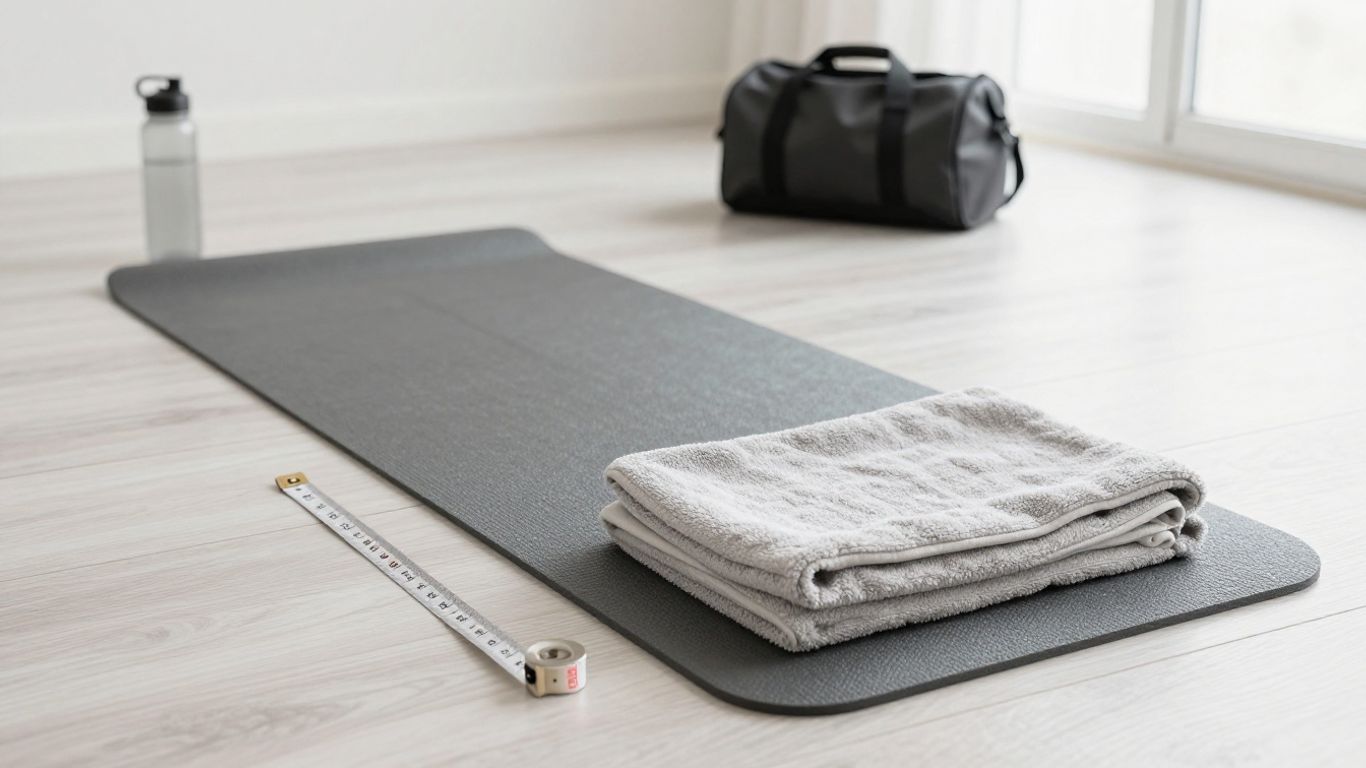
Measure your mat rather than relying on the word “large.” A towel that is too narrow may leave your hands outside the absorbent area, while one that is too long can fold or drag against the floor. Some people prefer full mat coverage; others use a smaller towel across the upper half where their hands spend the most time.
Allow a little tolerance for movement, but avoid excess fabric. A close fit is easier to smooth at the start of class and less likely to form ridges during transitions. If you regularly practice outdoors or in hotel rooms, a slightly smaller, lighter option may be easier to pack and reposition.
Checking silicone dots, corner pockets, and other grip features
Look at the underside, not just the top fabric. Silicone dots, raised patterns, corner pockets, and elastic edges can each help in a different way. Silicone or textured backing may improve contact with the mat, while corner pockets hold the towel over the mat’s edges and help prevent it from creeping inward.
No feature works equally well on every mat. A backing can feel secure on one material and less effective on another, so read care instructions and, when possible, test the towel on the mat you already use. The broader yoga mat towel selection guide is also useful when comparing grip, material, size, and durability.
Balancing absorbency, softness, and drying speed
Absorbency is helpful only if the towel can dry between uses. A very plush fabric may feel comfortable but become heavy in a gym bag, while an ultralight fabric may dry quickly but feel less cushioned. Consider how soon you need to pack the towel after class and whether you can hang it open when you get home.
A simple comparison can clarify the trade-offs before you buy:
| Feature | What it helps with | What to check |
|---|---|---|
| Absorbency | Managing sweat during practice | Whether the fabric feels saturated too quickly |
| Drying speed | Packing the towel after class | How easily air reaches both sides |
| Softness | Comfort under hands and feet | Whether the surface becomes slippery when damp |
| Grip backing | Keeping the towel settled | Compatibility with your mat’s material |
There is no single ideal balance. Choose the combination that suits your class length, washing routine, and available drying space rather than chasing one impressive specification.
Matching a grip towel to your yoga style
Your practice style changes how much a towel needs to do. A gentle session may call for a soft, lightweight layer, while a heated class may demand broad coverage and fast moisture handling. The room, your mat, and your own sweat level matter too. Yune Yoga’s focus on portable, easy-to-pack accessories fits practitioners who move between studios, parks, beaches, hotel rooms, and home practice.
Hot yoga and high-sweat sessions
Heat and sustained movement can create sweat faster than a standard mat surface can manage. Choose a towel with enough coverage for your hands and feet, a backing that stays compatible with your mat, and fabric that does not remain drenched for the whole class. If you take back-to-back sessions, having a second towel may be more useful than choosing an especially thick one.
For more ideas specific to heated practice, compare the considerations in this hot yoga towel guide. It covers traction, hygiene, material, size, and durability without assuming that every practitioner sweats at the same rate.
Vinyasa and other flowing practices
Flowing classes involve repeated transitions, so bunching can be more annoying than a small amount of exposed mat. Look for a towel that stays aligned as you move from standing poses to the floor. Corner pockets or a close-fitting shape may help, but the best choice still depends on how well the backing interacts with your mat.
Lightweight fabric is often convenient here because you may need to smooth or reposition the towel once during class. A towel should support the rhythm of practice, not require constant attention.
Bikram and heated studio classes
Bikram-style and other heated classes place a long demand on absorbency. A towel that starts comfortable but becomes saturated halfway through may not offer the consistency you need. Full coverage can also help create a cleaner barrier on a shared mat, provided the towel is washed after use.
Bring a breathable bag for the damp towel and avoid sealing it tightly for hours. The heated yoga towel guide offers another perspective on microfiber, sweat management, grip, and care for Bikram and Vinyasa settings.
Gentle, restorative, and low-sweat yoga
For restorative or low-sweat practice, maximum absorbency may not be necessary. You might prefer a soft, thin towel that adds a little comfort or keeps a mat clean without changing the feel of the floor. A full-length grip towel can still be useful if you practice on a hard surface or share equipment.
A smaller towel may be enough for hand support, seated work, or occasional moisture. In these sessions, low bulk and easy washing can matter more than aggressive traction features.
How to use a yoga mat grip towel correctly
A towel performs best when you treat it as part of your setup rather than dropping it onto the mat at the last second. Check the mat, spread the towel flat, and give the material a moment to settle. Small adjustments before class can prevent bigger distractions later. For people who practice away from home, Yune Yoga makes portability a central part of its range, including foldable mats and absorbent yoga towels that are practical to carry.
Preparing the towel and mat before class
Start with a dry, reasonably clean mat. Shake out sand, brush away lint, and remove oily residue according to the mat manufacturer’s care advice. If the towel is freshly washed, make sure it is fully dry before packing it; a slightly damp towel can develop odor even before you begin.
Unfold the towel completely and check which side is meant to face the mat. If the backing has silicone dots or a textured pattern, those features should sit against the mat rather than against your hands and feet.
Positioning the towel to prevent bunching
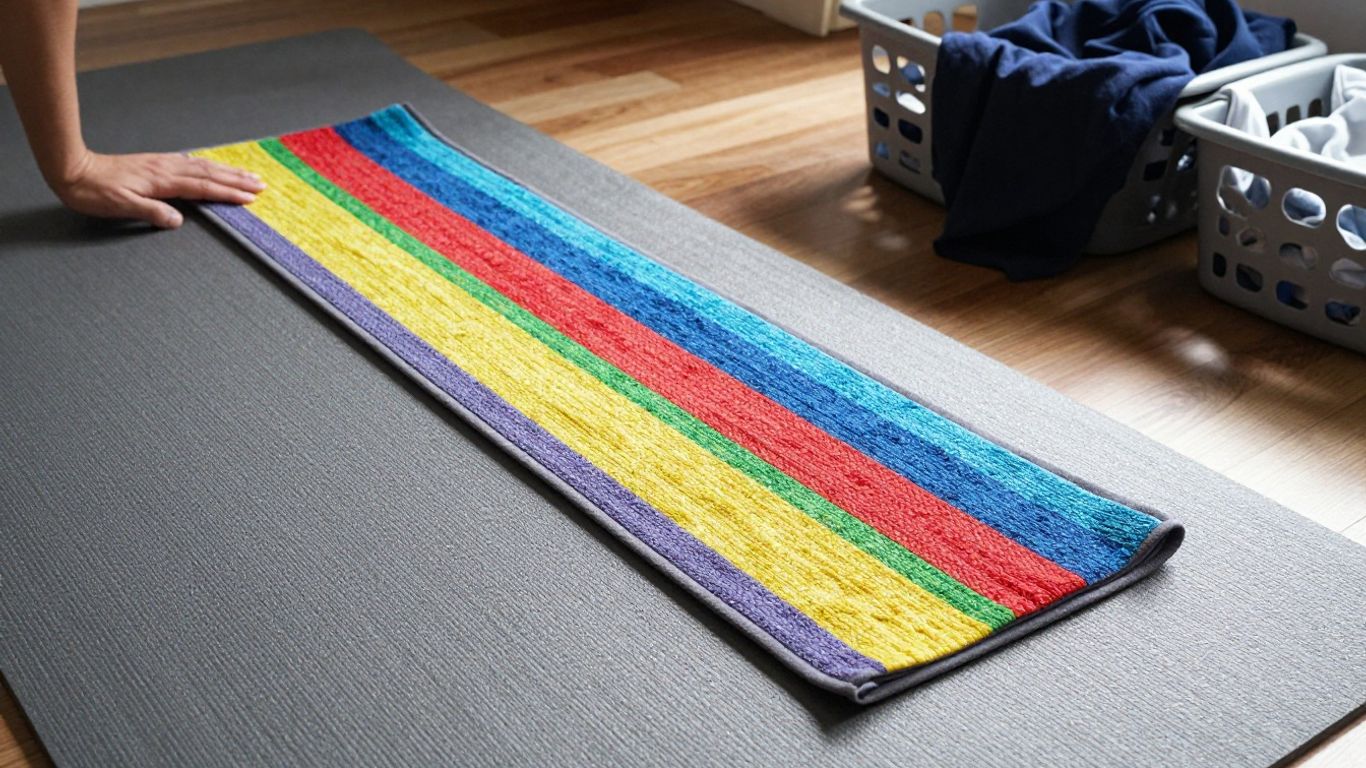
Align the towel with the mat’s long edges, then smooth from the center toward the ends. If it has corner pockets, fit them carefully rather than stretching them into place. Keep the fabric flat around the areas where you expect to plant your hands and feet most often.
A few seconds of setup can make a noticeable difference. Avoid folding excess length under the mat unless the design specifically allows it, since a hidden fold can create a ridge that shifts during movement.
Adding water for better traction when recommended
Some towel designs are intended to provide more traction when lightly damp. If the care or product instructions recommend this, mist the top surface evenly rather than soaking one small area. The towel should feel slightly moist, not wet enough to leave puddles or slide over the mat.
Test the surface with your hands before beginning a demanding sequence. If it feels slick, too cold, or overly saturated, use less water next time. Not every grip towel needs moisture, so do not add water unless the design calls for it.
Adjusting placement during long or intense practices
Even a well-fitted towel can move as sweat and repeated transitions accumulate. If you notice a wrinkle, pause in a stable position and smooth it rather than trying to work around it. Reposition the towel from the edges, keeping your hands clear of any damp patch that has become slippery.
For a long class, a small face towel can help you dry your hands without disturbing the mat towel. Pack the used towel separately afterward so moisture does not spread to clean clothing or other equipment.
Common yoga mat grip towel problems
Most towel problems have a simple cause: the wrong size, too much moisture, an incompatible mat surface, or delayed cleaning. Before replacing the towel, inspect how it is being used and stored. A towel that worked well in one studio may behave differently on a textured, smooth, rubber, or cork mat. Small changes in setup often reveal whether the issue is the towel or the surrounding conditions.
Why the towel slides or wrinkles
A towel can slide when the underside is dirty, the mat is damp, or the towel is too large for the surface. Wrinkles may also appear when you place it down quickly without aligning the edges. Heavy lotion on your hands or mat can reduce contact between the layers.
Clean both surfaces according to their care instructions, then try smoothing the towel from the center outward. If movement continues, compare the towel’s dimensions with the mat and consider whether corner pockets or a different backing would be more suitable.
What to do when the towel loses grip
First, wash away detergent residue, body oil, and dried sweat. Fabric softener can coat fibers and change the feel of some performance fabrics, so avoid it unless the manufacturer specifically permits it. Inspect the backing for worn dots, peeling areas, or permanent flattening.
If the towel still feels slippery after a careful wash and complete drying, use it for wiping or lighter practice rather than relying on it for demanding poses. A towel’s grip is a practical feature with a limited service life, especially when used often.
Preventing pilling, odors, and slow drying
Pilling can come from friction, harsh washing, or contact with rough surfaces. Odor is more likely when a damp towel stays rolled or compressed. Wash it promptly, give it room to dry, and avoid storing it in a closed bag until it is completely dry.
A short care routine is easier to maintain when it becomes part of packing up:
- Separate the damp towel from dry clothing and accessories.
- Rinse or wash it soon after a sweaty practice.
- Hang it fully open rather than folded over a narrow rail.
- Check that the backing and corners are dry before storage.
These habits reduce stale smells and help the fabric recover between uses. They also make it easier to notice wear before it affects your next practice.
When a towel is too large, small, or thick
A towel is too large when excess material gathers beyond the mat or repeatedly folds under your feet. It is too small when your main contact points land outside its coverage. Thickness becomes a problem when it changes balance, takes too long to dry, or makes the towel difficult to pack.
Do not assume more fabric means more protection. Match the towel to the poses you practice, the dimensions of your mat, and the space available in your bag. A compact option may be the better everyday choice, with a larger towel reserved for high-sweat sessions.
How to wash and maintain your grip towel
A yoga mat grip towel handles sweat well only when it is cleaned regularly. Washing also removes oils and residue that can make the surface feel less secure. Read the sewn-in label before choosing a temperature or cycle, especially when the towel has silicone, elastic, or a special backing. Proper care protects both the absorbent fabric and the features that keep it in place.
Following fabric-specific washing instructions
Microfiber and cotton may tolerate different temperatures, detergents, and cycles, so follow the instructions for the actual towel rather than relying on a general laundry habit. Wash it with similar lightweight items when possible, and avoid overloading the machine. A crowded drum may leave sweat and detergent behind.
Mild detergent is usually a sensible starting point, but the label has priority. If you are comparing routine care methods, this yoga mat cleaning guide is helpful for the mat itself, while the towel should still be washed according to its own fabric and backing requirements.
Drying the towel without damaging its grip
Air-drying is often the safest choice for a towel with silicone dots, textured backing, or elastic corners. Spread it open so air can reach both sides, and keep it away from excessive heat unless the care label allows machine drying. Do not store it while the backing is cool and damp to the touch.
Drying time is part of the buying decision. If you attend an early class and need the towel again that evening, a quick-drying fabric may be more useful than a heavier, plusher option.
Removing sweat buildup and persistent odors
For ordinary buildup, prompt washing and full drying may be enough. If an odor remains, check whether detergent or fabric softener is leaving residue, and review the care label before trying any soak or household treatment. Strong chemicals can weaken fibers or affect the grip surface.
Do not mask a persistent smell with fragrance. If the towel continues to smell after careful washing and drying, inspect it for trapped moisture, mildew, or material breakdown. Sometimes replacement is more practical than repeated aggressive cleaning.
Knowing when it is time to replace the towel
Replace the towel when it no longer lies flat, the backing has worn away, the fabric stays saturated, or washing cannot remove persistent odor. Small cosmetic changes are not always a problem, but structural wear can affect stability. Pay attention to how it behaves during the poses that matter most to you.
A worn towel can still serve as a general workout or cleaning towel if it remains hygienic, but it should not be treated as a dependable grip layer. Keeping a simple note of when you bought it and how often you use it can make replacement less of a guess.
Conclusion
The right yoga mat grip towel is a modest piece of equipment that can make practice cleaner, steadier, and easier to manage. Choose for your mat, sweat level, movement style, and drying routine, then give the towel a flat setup and regular care. With those basics in place, a lightweight towel can travel from studio to hotel room without becoming another source of fuss.
Frequently Asked Questions
What is a yoga mat grip towel?
A yoga mat grip towel is a mat-sized towel designed to absorb sweat and help create a more stable layer over a yoga mat. Many include a textured or silicone-style backing to reduce movement.
Do yoga mat grip towels stop slipping completely?
No towel can guarantee that you will never slip. It can reduce moisture-related sliding and bunching when the size, backing, mat, and care routine are a good match.
Should a yoga mat grip towel be wet?
Only if the manufacturer recommends dampening it. Some towels provide better traction when lightly misted, while others are designed to work dry.
Are microfiber towels better than cotton towels?
Neither is universally better. Microfiber is often light and quick to dry, while cotton can feel soft and familiar. Choose based on sweat level, drying access, and preferred texture.
How often should I wash a yoga mat grip towel?
Wash it after every sweaty practice when practical. At minimum, wash it whenever it feels damp, smells stale, or has visible residue.
Can I put a grip towel in the dryer?
Check the care label first. Air-drying is commonly safer for towels with silicone backing, elastic corners, or other grip features, but some fabrics may allow low-heat drying.
How long does a yoga mat grip towel last?
Its lifespan depends on frequency of use, washing, fabric, and backing. Replace it when it loses useful grip, stays saturated, develops persistent odor, or no longer lies flat.

