

How to choose the best wide thick yoga mat for comfort, stability, and space
Key Takeaways
A wide thick yoga mat can make floor practice feel more relaxed, but extra space and cushioning are only useful when they suit your body, movement, and room.
- Measure your practice area before choosing an oversized mat.
- Treat thickness and firmness as separate qualities.
- Choose surface grip according to sweat and practice style.
- Check material, odor, allergies, and cleaning needs.
- Balance home comfort with weight, storage, and portability.
Understand what makes a wide thick yoga mat different
A wide thick yoga mat changes two basic things at once: how much floor you can occupy and how much distance sits between your body and the floor. That extra room can feel liberating during lunges, stretches, and floor exercises. Extra thickness may also soften contact with a hard surface, although it can make balance feel less direct. The best choice depends less on chasing the largest dimensions and more on matching the mat to the way you actually move.
Standard, extra-wide, and oversized dimensions
A standard mat usually gives you a familiar rectangle for forward-facing poses, while an extra-wide version leaves more room beside your shoulders and hips. Oversized mats extend that idea further, sometimes becoming a permanent practice surface rather than something you roll up after every session. Compare the published width and length rather than relying on labels such as “large” or “studio.” A useful wide mat size guide can also help you think through wingspan, movement, and available floor area.
How thickness affects cushioning and balance
Thickness is only one part of comfort. A soft, compressible mat may feel pleasant under your knees but less predictable when you shift weight into a standing pose. A denser mat can offer a firmer base at the same nominal thickness. Firm cushioning matters when you want protection without feeling as though your hands and feet are sinking into the surface.
For a broader overview of how thickness changes comfort, stability, and portability, compare this mat thickness guide with the specifications of the mats you are considering. The useful question is not simply “How thick is it?” but “How does it feel when I press, push, and turn?”
When additional surface area improves your practice
More width is especially helpful when your practice includes lateral movement or poses in which your arms and legs spread away from the center line. It can reduce the need to reposition your hands between transitions and gives you a little more freedom to adjust alignment. A larger mat may also work well for stretching, Pilates-style floor work, or mixed home workouts where a standard rectangle feels restrictive.
The benefit is practical rather than dramatic: you can concentrate on the movement instead of checking whether an elbow or foot has crossed the edge. That extra margin is often most noticeable in a home practice where you are not limited by rows of neighboring mats.
Potential drawbacks of larger, heavier mats
A wide thick yoga mat takes more floor space, weighs more, and may be slower to unroll. Thick materials can also retain moisture longer if they are put away before fully drying. If you practice in several places, a mat that feels wonderful in a dedicated room may become frustrating in a car, hotel, or shared studio.
Think through the full routine, not just the pose itself. Carrying distance, stairways, storage height, and drying space all become part of the buying decision.
Choose the right size for your practice
Size should follow your movement pattern and your surroundings. A taller practitioner may appreciate extra length, while someone who moves side to side may gain more from additional width. The right wide thick yoga mat should give you usable space without turning setup into a daily negotiation with furniture. Start with measurements, then consider how often you will carry it.
Matching mat width to your height and movement
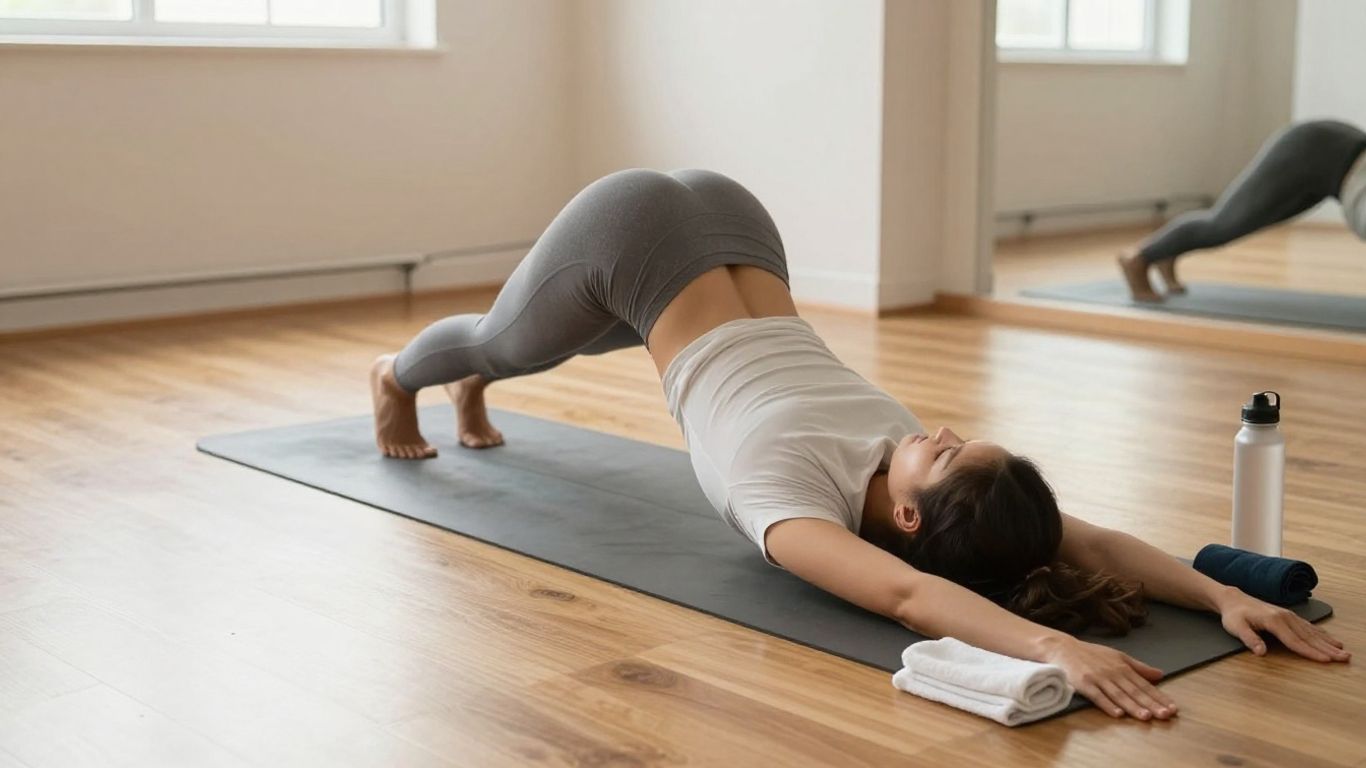
Lie down with your arms and legs extended as you would during your usual practice. If your hands or feet regularly reach beyond the edges, add room in that direction first. Width is useful for open-stance poses, while length matters for reclining poses and long stretches. A few extra inches can be enough; doubling the footprint is not always necessary.
Your preferred style matters too. A mostly forward-and-back sequence may work well on a longer standard mat, while broad transitions and floor exercises can justify a wider one. Use your own movement history as the guide rather than choosing by appearance.
Selecting a mat for yoga, Pilates, stretching, or fitness
Yoga often benefits from a surface that supports both standing balance and kneeling transitions. Pilates and stretching may place more emphasis on cushioning and room to lie down. General fitness can introduce repeated changes of direction, so a stable underside and durable top surface become particularly important.
For a compact comparison of comfort, materials, grip, and practice styles, browse this thick mat selection guide. It is easier to choose when the mat is judged against the activity rather than against a single thickness number.
Comparing home studio and travel-friendly sizes
A home mat can be broad enough to remain in place between sessions, especially if you have a clear practice area. A travel mat has a different job: it should fold, pack, and come out easily when you are away from home. Yune Yoga foldable travel mats fit the brand’s documented focus on thin, light, portable practice gear, making portability the priority rather than maximum cushioning.
For a travel setup, consider whether the mat will sit on a hotel carpet, a park surface, or another mat. A portable cork mat is another useful reference point when comparing roomy dimensions with packability, though the details of any option should be checked before purchase.
Measuring available floor and storage space
Mark the intended practice area with painter’s tape or folded towels before ordering. Include the space needed to step around the mat, open a closet door, and move through transitions without hitting a table or wall. Then measure the storage location in its actual shape, including shelf height and clearance.
A large mat can be comfortable yet impractical if it must be wedged behind furniture. If you want a permanent setup, leave it flat only where it will not become a trip hazard; otherwise, confirm that its rolled or folded dimensions fit the place you have chosen.
Compare cushioning, stability, and support
Comfort is not the same as softness. Your knees, wrists, hips, and spine may appreciate a little separation from a hard floor, but standing poses require a surface that does not wobble under pressure. The interaction between thickness, density, and flooring determines how secure the mat feels. Try to assess all three rather than treating cushioning as the sole measure of quality.
Finding the right thickness for joints and sensitive areas
If kneeling or lying down feels uncomfortable, additional thickness can make practice more approachable. It may also provide insulation from a cold floor and reduce the sharpness of contact during floor-based movements. Still, the ideal amount varies with body weight, sensitivity, and the firmness of the material.
You can also add a folded towel beneath a specific joint instead of choosing the thickest possible mat. That approach keeps the main surface more stable while giving targeted support where you need it.
Balancing softness with stability in standing poses
Stand on the mat with feet hip-width apart and slowly shift your weight from heel to toe. Notice whether the surface rebounds evenly or compresses noticeably under one foot. During a wide stance, pay attention to whether the mat stays level when you press through the outer edges of your feet.
A stable mat should let you make small balance corrections without feeling delayed by the surface. If standing poses feel uncertain, a slightly firmer option may serve you better than simply adding more millimeters.
Choosing supportive surfaces for knees, wrists, and hips
Different body parts load the mat differently. Knees and hips often need gentle cushioning, while wrists need enough firmness to avoid sinking and excessive bending. A textured top can help hands stay placed, but texture alone cannot compensate for a base that slides across the floor.
Before buying, test several positions if possible: kneeling, tabletop, downward-facing movement, seated stretches, and a standing transition. If you are comparing options online, look for clear information about surface feel, density, and underside construction rather than relying on photographs.
Understanding how flooring changes mat performance
Hardwood and tile reveal sliding and edge movement quickly, while carpet can hold a mat in place but may make the surface feel less even. Concrete can feel unforgiving without enough cushioning. A thick mat may soften a hard floor, yet its underside still needs reliable contact with the surface beneath it.
Use this simple comparison when thinking about your room and routine:
| Flooring | Likely concern | Useful mat quality |
|---|---|---|
| Hardwood | Sliding or shifting | Grippy underside |
| Tile | Hard contact and cold | Dense cushioning |
| Carpet | Uneven compression | Firm, stable construction |
| Concrete | Impact and discomfort | Supportive thickness |
The table is a starting point, not a guarantee. Dust, humidity, floor finish, and the force of your movement can change how the same mat behaves, so a short home test remains valuable.
Evaluate materials and surface grip
Material affects feel, smell, weight, flexibility, and care. The top surface may be smooth, textured, or slightly tacky, while the underside controls how confidently the mat stays put. A material that feels excellent during a dry morning practice may respond differently after heat and perspiration enter the picture. Read the care instructions before you commit to a large mat that will be difficult to replace.
Comparing natural rubber, PVC, TPE, and cork
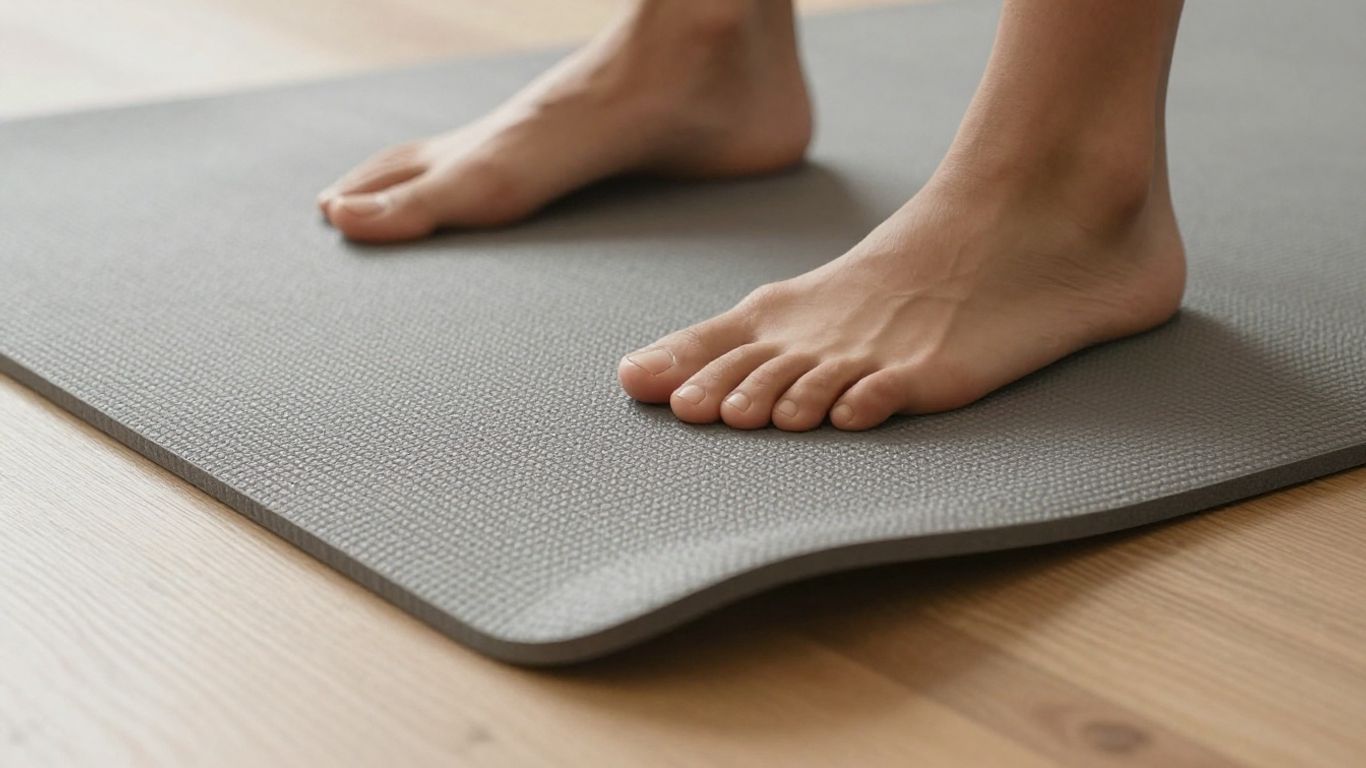
Natural rubber is often chosen for a grounded, grippy feel, while PVC can offer a familiar, durable surface in many constructions. TPE is commonly used when a lighter, flexible material is preferred. Cork has a distinctive natural texture and may feel more secure as moisture builds, depending on its construction and backing.
There is no universally best material. Compare the actual mat’s weight, top texture, underside, odor, cleaning directions, and stated composition. A material comparison such as this thick mat material guide can help organize those tradeoffs without reducing the decision to an eco label or a thickness figure.
Choosing grip for hot, sweaty, or slower practices
For a warm or vigorous practice, grip becomes more noticeable as hands and feet perspire. A surface that feels comfortable during slow stretching may become less secure during repeated transitions. If you practice slowly, you may prefer a texture that feels pleasant against bare skin rather than an especially aggressive finish.
Yune Yoga absorbent yoga towels are designed around the brand’s documented emphasis on absorbency and grip, so they can be considered as an accessory when a portable setup needs help managing moisture. The towel should sit flat and be washed according to its care instructions; it is not a substitute for choosing a suitable mat surface.
Checking texture, odor, and durability
Run your fingertips across the top and inspect the edges for clean finishing. A strong initial odor may fade, but you should still follow the manufacturer’s airing and cleaning instructions. Look for a surface that can tolerate the way you practice, including repeated rolling, folding, or exposure to sweat.
Durability also includes shape retention. A mat that curls at the ends or develops deep pressure marks may become distracting even if its top layer remains intact. Store it in a way that does not put constant stress on one edge.
Considering latex allergies and material sensitivities
Natural rubber can be unsuitable for people with latex allergies, and other materials may contain components that do not agree with sensitive skin or breathing. Check the full material statement and contact the manufacturer when the information is unclear. Do not assume that a broad phrase such as “eco-friendly” explains every ingredient or adhesive.
If you are sharing equipment, choose a cleaning routine that removes sweat without leaving a harsh residue. Personal comfort and safety should take priority over a particular look or texture.
Match the mat to your home practice setup
A mat works best when the room supports it. Lighting, floor temperature, nearby furniture, and storage habits all affect whether you use the mat consistently. A wide surface can make a small room feel crowded, but it can also reduce the need to shift furniture before every session. Plan the setup around the routine you can realistically maintain.
Creating a comfortable home yoga studio
Leave enough clearance for your arms, legs, and transitions, then place frequently used accessories within reach. A small basket can hold a towel, strap, and cleaning cloth without crowding the practice area. Soft lighting and a clear line of sight may make the space more inviting, but the essentials are simple: a level floor, safe footing, and room to move.
When furnishing a corner for regular use, practical comfortable furniture ideas can help you keep seating and storage supportive without letting them spill into the mat’s working area. Keep heavy furniture off the mat unless it is specifically designed for that use.
Using a wide mat on hardwood, tile, or carpet
On hardwood or tile, clean both the floor and the underside before practice so dust does not reduce traction. On carpet, check whether the pile causes the mat to rock or bunch. A thin rug pad may change the feel, but it can also introduce another layer that shifts under movement.
Place the mat in the same orientation each time if the room has a slight slope or a particularly smooth section. Consistency makes it easier to notice whether movement comes from your technique, the floor, or the mat.
Preventing slipping and movement during practice
Start with a dry floor and smooth the mat from the center outward. If corners curl, give the material time to relax rather than placing objects on top during practice. Avoid relying on adhesives or improvised fasteners unless the manufacturer expressly allows them.
A few simple habits protect stability:
- Wipe dust from the floor before unrolling the mat.
- Place the mat away from loose rugs and thresholds.
- Test the corners before beginning a faster sequence.
- Keep lotion and excess moisture off the practice surface.
These checks take less than a minute and can prevent a distracting slide halfway through a pose. If the mat still moves, the floor and underside may simply be a poor match.
Planning for cleaning, drying, and storage
Decide where the mat will dry before you buy it. A thick surface may need more time and airflow than a thin travel mat, and a large mat may not fit over a shower rail or narrow balcony. Wipe it after sweaty sessions, follow the material-specific instructions, and avoid rolling it while damp.
Yune Yoga durable yoga straps are part of the brand’s documented accessory range and may be useful for organizing or carrying practice gear, but any strap should be used according to its intended instructions. For broader equipment research, even a detailed construction camera planning guide illustrates the value of deciding placement, access, and storage before installing or buying something substantial.
Make a confident purchase and care for your mat
A good purchase comes from comparing the details that affect daily use, not from choosing the most impressive number on a product page. Write down your required size, acceptable weight, preferred feel, and storage limits. Then check whether the mat’s construction supports those priorities. This short process can prevent an oversized mat from becoming an expensive piece of unused equipment.
Key specifications to compare before buying
Look for dimensions, thickness, material, surface texture, underside grip, weight, care instructions, and return terms. Also check whether the mat is intended to fold, roll, or remain flat. If you have allergies or sensitivities, find the complete material information rather than relying on a general marketing description.
A practical buying note should include the floor type and practice style you intend to use. Even details outside the mat category can reward this kind of careful comparison: for example, a line marker paint guide organizes a purchase around surface, traffic, and environmental conditions. The same habit applies here—match the specification to the situation.
How to test comfort and stability
In person, stand still, shift weight, kneel, lie down, and move through a familiar transition. Press a palm into the surface and notice whether it compresses evenly. Then lift a corner gently to see how readily the mat follows the floor instead of separating from it.
At home, test the mat during the kind of session you actually do. A quick demonstration may not reveal edge curling, heat buildup, or sliding after several minutes of movement. Keep the packaging until you are satisfied that the size and feel work in your space.
When premium construction is worth the cost
Higher cost can make sense when it buys a surface that remains comfortable, stable, and usable after frequent practice. It may also be worthwhile when the mat must withstand regular transport or when replacing a low-quality mat would be more expensive over time. Price alone, however, does not confirm that the dimensions or feel are right for you.
Prioritize the features you will notice every session. If portability is central, a lighter foldable mat may be more valuable than extra thickness; if the mat stays in one room, density and edge stability may deserve more attention.
Cleaning and maintaining a thick yoga mat
Follow the care instructions for the specific material and use a gentle method unless the manufacturer says otherwise. Wipe away sweat, allow the mat to dry fully, and avoid prolonged direct heat that could alter its shape. Store it loosely enough that the surface is not permanently compressed in one spot.
For regular upkeep, use a clean cloth, mild approved solution, and plenty of drying time. A little routine care helps preserve grip and keeps a wide thick yoga mat ready for the next practice rather than turning cleaning into a major project.
Conclusion
The best wide thick yoga mat gives you enough room and cushioning for your real practice while still fitting your floor, storage habits, and budget. Compare dimensions, firmness, grip, materials, and maintenance together, then choose the largest and thickest option that remains genuinely practical.
Frequently Asked Questions
Is a wide thick yoga mat better for beginners?
It can be helpful if extra room and cushioning make basic movements more comfortable, but a larger mat is not automatically easier to balance on. Choose a stable surface that fits your space and feels manageable to carry and clean.
How wide should a yoga mat be?
Choose a width that gives your shoulders, hips, hands, and feet room during your usual movements. Measure your practice area first, then add only as much extra space as you can use without crowding the room.
Is a thicker yoga mat harder to balance on?
It can be, particularly when the material is soft or compressible. A dense, firm mat may provide cushioning while preserving a more stable feel, so thickness should always be considered alongside firmness.
What thickness is best for sensitive knees?
A moderately thick, supportive mat may reduce uncomfortable contact with a hard floor. The best choice depends on the mat’s density, your sensitivity, and whether you can add targeted support beneath your knees when needed.
Which material offers the best yoga mat grip?
Grip depends on the material, surface texture, underside, moisture, and flooring. Test how the mat behaves with dry and damp hands if possible, and choose a surface suited to the pace and temperature of your practice.
Can I use a wide thick yoga mat on carpet?
Yes, but carpet can make a thick mat feel uneven or less stable. Check whether the pile causes rocking or bunching, and test the mat through standing and floor movements before committing to that setup.
How should I store a thick yoga mat?
Clean and dry it fully before storing. Follow the manufacturer’s guidance on rolling or folding, keep it away from prolonged heat, and choose a storage location where the mat will not be bent sharply or create a trip hazard.

