

Yoga mat cleaners: How to choose and use the right formula
Key Takeaways
A gentle, consistent cleaning routine can help keep your mat comfortable to use and ready for your next practice. Let the mat’s material and care instructions guide your choice of cleaner.
- Check your mat maker’s care guidance before choosing a cleaner.
- Start with a gentle, mat-compatible formula and avoid abrasive tools.
- Wipe away cleaner if needed, then let the mat dry fully before storing it.
- Clean more often after sweaty sessions or when others share your mat.
- Air out and store your mat in a dry place between practices.
Why regular yoga mat cleaning matters
A mat meets your hands, feet, and the floor each time you practice, so it can collect more than you notice at first. A simple cleaning habit removes everyday grime before it builds up into a slippery or unpleasant-feeling layer. The right routine depends on how often you practice and what your mat is made of. Yune Yoga offers foldable travel mats designed for portability, and any mat that goes from place to place benefits from a little attention after use.
Sweat, oils, and dirt that build up during practice
Even a calm session can leave traces behind: skin oils, dust, and bits of lint from the floor or a towel. A faster flow or a warm room may mean more sweat on the surface, particularly where your hands and feet press down. These deposits can collect gradually, so the mat may look fine while feeling different underfoot. Wiping it after use gives you a chance to clear away that everyday buildup.
How residue can affect grip and comfort
A film from sweat, body oils, or an unsuitable cleaner can make a mat feel slick or tacky in an unfamiliar way. That change does not automatically mean the mat is worn out; sometimes it is simply time to clean it or rinse away leftover product according to the care directions. A clean, dry surface is a more useful goal than a strong fragrance or a visibly wet finish. If your grip still feels different after cleaning and drying, check the mat maker’s advice before trying a stronger formula.
Signs it is time to clean your mat
A noticeable odor is an obvious cue, but it is not the only one. Look for visible marks, a dusty feel, or a surface that seems to have a residue after use. If the mat has been shared, used outdoors, or carried in a packed bag, a wipe-down is a sensible next step even when it appears clean. A routine helps make those small signals easier to catch.
Types of yoga mat cleaners
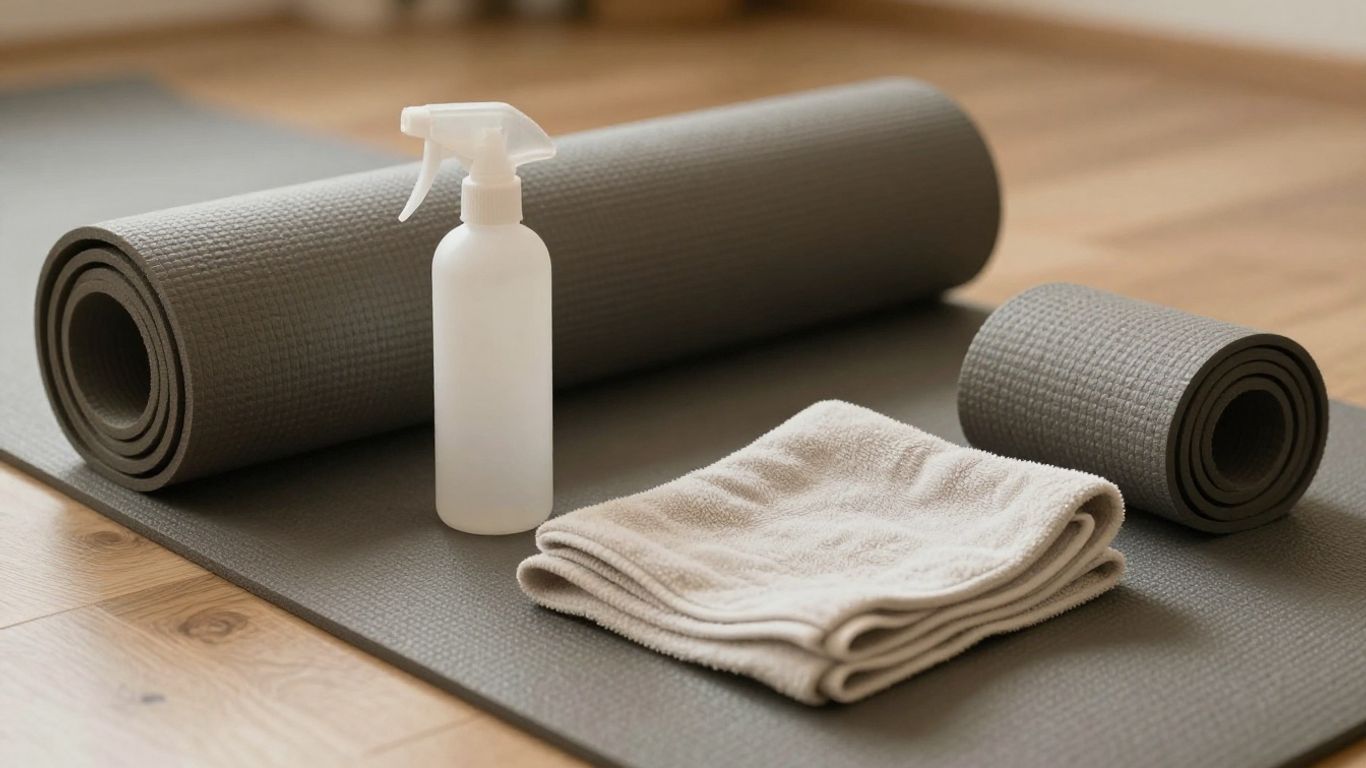
Yoga mat cleaners range from ready-to-use sprays to concentrates and simple homemade mixtures. Convenience matters, but compatibility matters more: a product that suits one mat may not be appropriate for another. Yune Yoga offers absorbent yoga towels, which can help keep sweat off the mat during practice, but the mat itself still needs care suited to its material. The short yoga mat cleaner guide can also help you compare general cleaner options.
Ready-to-use sprays and wipes
A ready-to-use spray is straightforward: apply it as directed, wipe the surface, and allow the mat to dry. Wipes can be convenient when there is no sink nearby, though the ingredients and directions still deserve a quick check. Avoid assuming that a pleasant scent means a formula is gentle or that a product labeled for general surfaces is suitable for every mat. Follow the product directions and your mat maker’s guidance.
Concentrated cleaners and refill options
Concentrates may offer a compact way to keep cleaner on hand, especially if you have storage space for a larger refill. They require accurate dilution, so use the amount of water stated on the label rather than estimating. A solution that is too strong can leave residue or be unsuitable for the mat’s surface. For any refill system, keep the instructions with the bottle so you can mix and use it consistently.
Homemade solutions and their limitations
A homemade mixture can be appealing when you want to choose the ingredients yourself, but simple does not always mean compatible. Household ingredients may affect some materials, and essential oils can leave residue or bother sensitive skin. Do not mix cleaners, and test a small, inconspicuous area first if the maker allows it. If you want to explore a DIY option, this overview of homemade cleaner ingredients gives a starting point; treat any recipe as something to verify against your mat’s care instructions.
How to choose a cleaner for your mat
Begin with the mat’s label or care page, then look at the cleaner’s directions and ingredient information. The material, finish, and any special surface treatment can affect what is suitable, so a universal rule is rarely as helpful as the maker’s specific advice. Yune Yoga offers foldable travel mats for portable practice; regardless of where you use a mat, choosing a cleaner by material is more reliable than choosing one by scent alone. Care guidance for other materials can differ too, as seen in cutting board care and vegan leather seat care.
Match the formula to your mat material
Different mat materials can respond differently to moisture and cleaning ingredients. If the care label names a preferred method or rules out certain products, follow that guidance rather than relying on a general recipe. The table below is a prompt for what to check, not a substitute for the maker’s instructions.
| Mat material or finish | What to check before cleaning | A cautious starting point |
|---|---|---|
| PVC or vinyl | Whether sprays, wipes, or rinsing are permitted | Use only a cleaner the mat maker allows |
| Natural rubber | Any ingredient or soaking restrictions | Choose a gentle method approved for the mat |
| Cork | Whether the surface should stay lightly damp or dry-wiped | Avoid excess liquid unless care directions allow it |
| TPE or other foam | Whether the material has specific drying instructions | Wipe gently and let it dry fully |
Use the table to narrow down what to ask, then check the actual care instructions for your mat. If the material is unclear, contact the maker before applying a new cleaner across the full surface.
Consider fragrance and skin sensitivities
A strong scent can linger after cleaning, which may be distracting during practice or unpleasant for someone sensitive to fragrance. Unscented options may be worth considering, but check the full ingredient list rather than relying on a front-label claim. If a cleaner causes irritation, stop using it and rinse or wipe the mat only as its care directions permit. A light scent is a preference, not a measure of cleaning performance.
Check for ingredients that may leave residue
Some formulas leave a film if too much is used or if the surface is not wiped afterward. That residue may affect how the mat feels, even when it is not immediately visible. Read whether the directions call for a damp cloth, a second wipe, or a particular dilution. As with restaurant interior design, the surface and finish matter; in this case, use that as a reminder to consider your mat’s finish rather than as a cleaning recommendation.
How to clean a yoga mat safely
A gentle cleaning routine is usually more useful than an elaborate one. Clear loose dirt first, use only a compatible cleaner, and avoid leaving the mat damp for longer than necessary. For a visual overview, this video search placeholder points to general mat-cleaning demonstrations; still defer to your own mat’s care directions when methods differ.
Remove loose dirt before applying cleaner
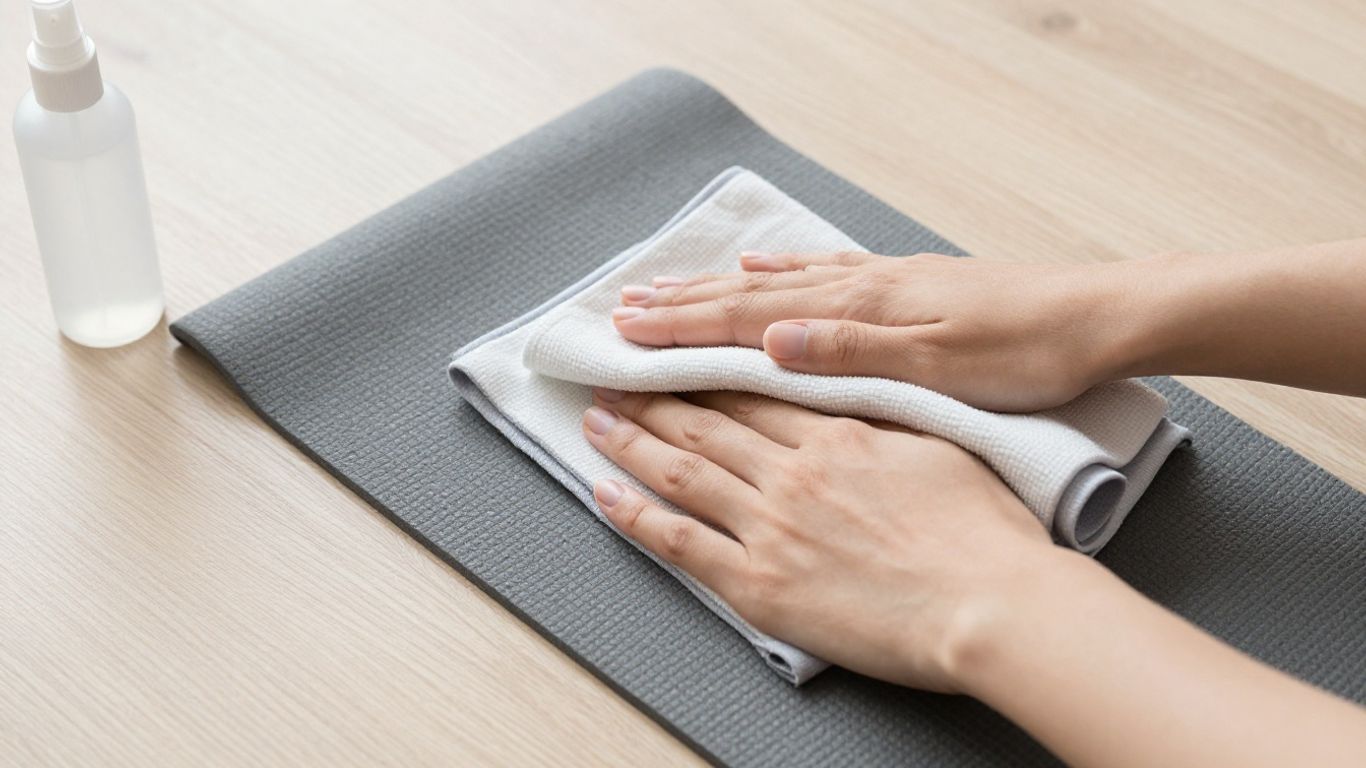
Shake off dust outdoors or brush away loose debris with a soft, clean cloth before adding moisture. This keeps grit from being dragged across the mat as you wipe. If there is a small spot, work on that area first rather than soaking the entire surface. A clean cloth helps you see what has lifted and whether another gentle pass is needed.
Follow the label and mat maker’s care guidance
Cleaner directions and mat instructions take precedence over general tips. Apply only the recommended amount, observe any dilution instructions, and do not combine products to make a stronger solution. A dependable routine is a sequence of small steps rather than a collection of extra ingredients:
- Check the mat’s care instructions and the cleaner label.
- Remove loose dust with a soft cloth.
- Apply the approved cleaner as directed.
- Wipe the surface and allow it to air-dry fully.
This sequence keeps the process simple while leaving room for material-specific instructions. If the label calls for a different method, use that instead of forcing the steps to fit.
Wipe away residue and let the mat dry fully
If the cleaner’s directions call for wiping, use a clean cloth and remove any remaining product rather than letting it dry in place. Then lay the mat flat or hang it in a well-ventilated spot, following the maker’s drying advice. Yune Yoga’s focus on portable practice makes easy packing part of its mat offering, but pack a mat only when it is fully dry. That small pause can help prevent a damp, closed-up smell.
How often to clean your yoga mat
There is no single schedule that fits every practice. A quick wipe after use may be enough for a short, low-sweat session, while a hot or vigorous practice can call for more frequent cleaning. Consider how often you practice, whether you use a towel, and whether the mat travels between locations. A consistent habit is easier to maintain than waiting until the surface smells or feels noticeably different.
Adjust your routine for sweat and practice frequency
A mat used every day will usually need attention more often than one brought out occasionally. Sweat, outdoor dust, and visible marks are useful signals; so is the way the mat feels under your hands. Rather than setting a strict calendar rule, build a quick wipe into the sessions that leave the most residue. A regular mat-cleaning routine can help you find a cadence that suits your own use.
Clean shared mats after each use
When several people use the same mat, clean it between users according to its care instructions. This is a practical courtesy as well as a way to clear away visible sweat and dirt before the next session. Use a fresh cloth rather than carrying residue from one surface to another. If the mat belongs to a studio or host, follow their cleaning process too.
Deep-clean when everyday wiping is not enough
A quick wipe may not remove a persistent mark or odor. Before deep-cleaning, check that the mat maker permits the method you plan to use; soaking or machine washing is not appropriate for every mat. Choose the gentlest allowed method and give the mat plenty of time to dry. For local details in other kinds of planning, people also rely on verified Maui wedding planning information rather than assumptions—a useful general reminder to check instructions that apply to your situation.
Common cleaning mistakes to avoid
Most cleaning problems come from doing too much: too much liquid, too much force, or a product that was never intended for the mat. Gentle care is usually easier to repeat and less likely to leave the surface feeling strange. If a cleaning attempt changes the texture, pause and check the instructions before applying anything else. Avoid treating every mat as if it were made from the same material.
Using harsh chemicals or abrasive tools
Strong household cleaners and rough scrubbers can be unsuitable for a mat’s finish. A scratchy pad may wear the surface, while an unapproved chemical may leave a film or affect the material. Use a soft cloth and a cleaner that the maker allows. If a mark does not lift with a gentle pass, check the care instructions before increasing pressure.
Soaking the mat or exposing it to excess heat
A long soak can leave moisture in the mat, and direct heat may be inconsistent with its care guidance. Do not put a mat in a tub or washing machine unless the maker specifically permits that method. Keep it away from heaters and very hot surfaces while it dries. When in doubt, use the least wet method that the label allows.
Rolling or storing the mat while damp
A mat can feel dry on top while moisture remains in folds or along the underside. Give it time to air out, and check both sides before rolling it up. Storing it damp in a bag or closet can make it smell stale and means the surface is not ready for the next session. Patience here is part of cleaning, not an optional extra.
How to keep your mat fresh between sessions
A little care between full cleanings can make the next practice feel more pleasant. Keep the routine uncomplicated: reduce what gets onto the mat, let moisture escape, and store it somewhere dry. A towel can help with sweat, especially during a warmer session, while a quick airing gives the surface time to dry. These habits are useful at home and when practicing away from it.
Use a clean towel during practice
A clean towel can absorb sweat before it settles on the mat, and it is easy to wash between sessions. Yune Yoga offers absorbent yoga towels, which are designed for use during practice. Choose a towel that stays in place for the movements you do, and wash it regularly so it does not simply transfer old residue back to the mat. A towel helps with upkeep but does not replace cleaning the mat when needed.
Air out the mat after each session
After practice, unroll the mat and give it time in a ventilated area before putting it away. This is especially helpful after a sweaty session or when you have cleaned the surface with a damp cloth. Let both sides dry rather than rolling it as soon as the top feels dry. A short airing routine can be easier to remember if it becomes part of packing up your practice space.
Store it away from moisture and direct sunlight
Keep the mat in a dry place, away from damp floors and prolonged direct sunlight, unless its maker advises otherwise. Avoid leaving it compressed in a closed bag while it is still warm or damp. If you regularly travel with a foldable mat, Yune Yoga offers foldable travel mats designed for portability; let yours dry fully before packing it away. Check business hours before visiting a place to practice, but keep mat storage itself simple: dry, ventilated, and out of harsh sun.
Conclusion
The right yoga mat cleaner is the one that suits your mat and can be used as directed. Clear away loose dirt, clean gently, and let the surface dry fully before storing it. With a routine adjusted to your practice and your mat’s care instructions, keeping it fresh can be a simple part of packing up after each session.
Frequently Asked Questions
Can I use a household cleaner on my yoga mat?
Not automatically. Check the mat maker’s care instructions and use a household product only if it is explicitly compatible with the material.
Should I clean my mat after every yoga session?
A quick wipe after each session is useful, especially after sweaty practice, but the best routine depends on how often you practice and the mat’s care guidance.
Can I make a homemade yoga mat cleaner?
Some people use homemade mixtures, but ingredients may not suit every mat. Check the material guidance and test only if the maker permits it.
How can I tell whether a cleaner is leaving residue?
A surface that feels slick, tacky, or different after cleaning may have leftover product. Wipe it as directed and review both the cleaner and mat instructions.
How long should a yoga mat dry before I roll it up?
Wait until the whole mat, including the underside, is fully dry. Drying time varies with the amount of moisture and the surrounding airflow.
Is it safe to put a yoga mat in a washing machine?
Only if the mat maker specifically says machine washing is allowed. Many mats require gentler care, so check the instructions first.
What is the best way to reduce odors between cleanings?
Air the mat out after practice, let it dry fully, and store it in a dry, ventilated place. A clean towel can also help absorb sweat during practice.

