

Unlock Calm: Your Guide to Stress Reducing Yoga Practices
Here are the main things to remember about using yoga to reduce stress. These points can help you get started and keep you motivated on your yoga path.
Key Takeaways
- Yoga connects your mind and body, helping to calm your nervous system and reduce feelings of anxiety.
- Simple poses like Child's Pose and Mountain Pose are great starting points for relaxation.
- Restorative poses such as Legs-Up-The-Wall can lead to deep relaxation and a soothed mind.
- Breathing exercises and mindfulness are powerful tools to use alongside yoga poses for stress relief.
- Making yoga a regular habit, even for short periods, is key to experiencing its long-term benefits for stress management.
Embrace Serenity Through Stress Reducing Yoga
In our fast-paced world, finding moments of peace can feel like a luxury. But what if I told you that a practice as ancient as yoga could be your secret weapon against daily stress? It's true. Yoga isn't just about flexibility or fancy poses; it's a powerful tool for calming your mind and soothing your nervous system. By uniting movement, breath, and awareness, yoga helps us step away from the chaos and reconnect with ourselves.
Understanding Yoga's Role in Stress Management
Life throws a lot at us, and it's easy to get overwhelmed. Yoga offers a way to process that stress. It works by activating your body's relaxation response, counteracting the fight-or-flight mode that stress often triggers. This practice can help regulate your mood and improve your overall sense of well-being. It's not a magic cure, but regular practice can build resilience.
- Reduces Cortisol Levels: Studies suggest yoga can lower the stress hormone cortisol.
- Improves Mood: The physical activity and mindful focus can boost mood-lifting neurotransmitters.
- Promotes Better Sleep: A calmer mind and body often lead to more restful sleep.
The Mind-Body Connection in Yoga Practice
Yoga is unique because it emphasizes the link between what's happening in your head and what's happening in your body. When you focus on your breath or a specific pose, your mind naturally quiets down. This focus pulls you out of anxious thoughts about the past or future and grounds you in the present moment. It's like hitting a reset button for your brain.
The practice encourages a gentle awareness of physical sensations, thoughts, and emotions without judgment. This non-reactive observation is key to understanding and managing stress responses.
Finding Your Calm with Daily Yoga
Making yoga a part of your daily life doesn't require hours on the mat. Even a few minutes can make a difference. Consistency is more important than duration. Think of it as tending to a garden; regular care yields the best results. You can start with simple poses and breathing exercises to build a routine that works for you. Exploring different styles can help you find what feels best for your stress relief needs.
Here's a simple way to start:
- Start Small: Begin with 5-10 minutes each day.
- Be Consistent: Try to practice around the same time daily.
- Listen to Your Body: Don't push yourself; modify poses as needed.
- Focus on Breath: Let your breath guide your movement and calm your mind.
Even a pose as simple as Child's Pose can be a powerful way to begin your journey toward a calmer state.
Foundational Poses for Stress Reducing Yoga
When you're starting out with yoga for stress relief, it's good to have a few reliable poses in your back pocket. These aren't the super complicated ones you see on Instagram; they're simple, effective, and designed to help you feel more grounded. Think of them as your go-to moves when the world feels a bit too much.
Child's Pose: A Gateway to Inner Peace
Child's Pose, or Balasana, is like a gentle hug for your body and mind. It's a resting pose that encourages you to turn inward. You can do this one pretty much anytime you need a moment to reset. It's especially good for releasing tension in your back and hips, which is where a lot of us tend to hold stress.
- Start on your hands and knees.
- Bring your big toes to touch and widen your knees apart, or keep them closer together if that feels better.
- Fold your torso down between your thighs, letting your forehead rest on the mat.
- Extend your arms forward or rest them alongside your body.
Just breathe here. Let each exhale release a little more tension. It’s a great way to start or end a practice, or just take a break during a busy day. You can find more calming yoga poses like this one here.
Mountain Pose: Cultivating Presence and Stability
Mountain Pose, or Tadasana, might seem too simple to be effective, but don't underestimate it. It's all about standing tall, feeling your feet on the ground, and being present in your body. This pose helps build a sense of stability and confidence, which can be really helpful when you're feeling overwhelmed.
- Stand with your feet together or hip-width apart.
- Distribute your weight evenly through your feet.
- Engage your leg muscles gently, but keep your knees soft.
- Lengthen your spine, relax your shoulders down and back, and let your arms hang naturally by your sides.
Focus on your breath and the feeling of being rooted to the earth. It's a reminder that you can stand strong, even when things feel shaky.
Standing Forward Bend: Releasing Tension from Head to Toe
Standing Forward Bend, or Uttanasana, is fantastic for letting go. When you fold forward, you're literally giving your head a chance to hang heavy, releasing tension in your neck and shoulders. It also gives your spine a nice stretch and can help calm your nervous system.
This pose is a great way to reverse the effects of gravity that can build up from sitting and standing all day. It helps clear your head and can make you feel more relaxed.
- From Mountain Pose, exhale and bend your knees slightly.
- Hinge at your hips and fold your torso over your legs.
- Let your head and neck hang completely loose. You can let your arms dangle or clasp opposite elbows.
- If your hamstrings feel tight, keep a generous bend in your knees. The goal is to release, not to force.
Stay here for a few breaths, feeling the release. You can find other simple yet powerful movements for stress relief here. To come up, bend your knees deeply and slowly roll up to standing, one vertebra at a time.
Restorative Practices for Deep Relaxation
Sometimes, the best way to deal with stress isn't about pushing yourself harder, but about gently letting go. That's where restorative yoga shines. Unlike more active styles, restorative practices focus on deep relaxation, using props like bolsters and blankets to fully support your body. This allows you to hold poses for longer periods, giving your nervous system a chance to truly unwind. It's about finding stillness and allowing your body to release tension it's been holding onto without you even realizing it.
Supine Spinal Twist: Soothing the Nervous System
This gentle twist, done lying on your back, is fantastic for decompressing. It helps to release tension in your spine and can even improve your breathing. Think of it as a way to gently massage your internal organs and encourage fresh blood flow. It's a quiet invitation to let go of what's weighing you down.
Here's how to do it:
- Lie on your back with your knees bent and feet flat on the floor.
- Extend your arms out to the sides in a 'T' shape.
- Gently let your knees fall to one side, keeping your shoulders grounded.
- Turn your head to look in the opposite direction of your knees.
- Hold for several breaths, then switch sides.
Legs-Up-The-Wall Pose: Gentle Inversion for Calm
This pose is incredibly simple yet profoundly effective for calming the mind. By simply resting your legs against a wall, you create a gentle inversion that helps to soothe the nervous system and reduce fatigue. It's a wonderful way to signal to your body that it's time to relax and recharge. Many people find this pose helps them feel more grounded and peaceful. You can find more information on gentle inversions and their benefits.
Reclining Bound Angle Pose: Opening the Heart and Releasing Stress
Also known as Supta Baddha Konasana, this pose is like a gentle hug for your body. Lying on your back with the soles of your feet together and knees falling open, you create a soft opening in the hips and chest. It's a beautiful way to release stored tension, especially in the hips, and can help to open up your heart space, both physically and emotionally. This pose is particularly good for releasing stress that might be held in the pelvic area.
Restorative yoga isn't about achieving a perfect shape; it's about finding comfort and stillness. The goal is to allow your body to rest completely, supported by props, so that your mind can quiet down. It's a practice of surrender, not striving.
Integrating Breathwork and Mindfulness
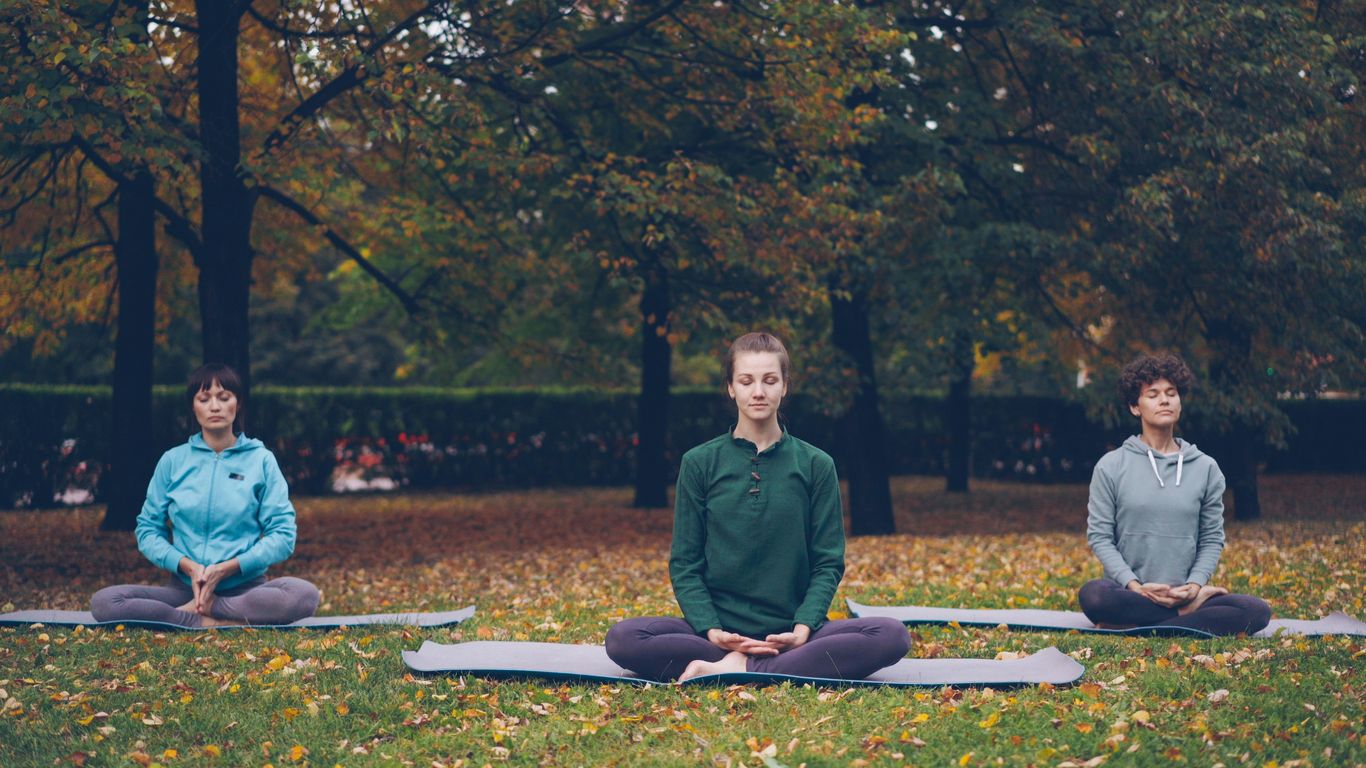
Yoga isn't just about the physical shapes your body makes; it's also about what's happening inside. When we talk about stress reduction, the breath and our mental state are huge players. Think of them as the secret sauce that makes yoga so effective for calming down.
The Power of Conscious Breathing
Our breath is always with us, a constant rhythm. But often, when we're stressed, it gets shallow and quick. Learning to breathe deeply and intentionally can signal to your nervous system that it's okay to relax. It's like giving your body a gentle nudge towards peace. Focusing on your exhale can be particularly helpful in releasing tension.
Here's a simple way to start:
- Sit or lie down comfortably.
- Place one hand on your belly and the other on your chest.
- Inhale slowly through your nose, feeling your belly rise.
- Exhale slowly through your mouth, letting your belly fall.
- Try to make your exhale a little longer than your inhale.
This kind of focused breathing for just a minute can really make a difference in how you feel throughout the day. It's a quick way to find a moment of calm, no matter where you are. You can practice this while walking, standing, or sitting, making it super accessible.
Mindful Movement for Anxiety Relief
Sometimes, just moving your body with awareness can help quiet a busy mind. Yoga offers a way to be present with yourself, noticing sensations without judgment. When you're focused on how your body feels in a pose, it's harder to get caught up in worries about the past or future. This practice helps you connect your mind and body, which is a big part of why yoga is so good for reducing stress.
Using Mantras to Enhance Calm
Mantras are words or phrases repeated silently or aloud to help focus the mind. They can be simple sounds or meaningful statements. Repeating a mantra during your yoga practice can help anchor your attention and create a sense of inner quiet. It's like giving your mind a gentle task to focus on, steering it away from anxious thoughts. Some people find that using a mantra helps them feel more grounded and centered during their practice and beyond. It's a personal tool that can bring a lot of peace when used consistently.
The more you practice strategies that help you feel less overwhelmed, the better your brain gets at calming itself down when you need it most. It's like training your mind, similar to how you train your body. By building a routine that includes self-compassion, you can lessen the impact of stressful feelings and maybe even prevent them from taking hold in the first place.
Building a Consistent Yoga Routine
So, you've explored some calming poses and breathing techniques, and you're feeling the benefits. That's awesome! But how do you keep that feeling going, day after day? The real magic of yoga for stress relief happens when it becomes a regular part of your life. It's not about doing a perfect headstand or holding a pose for five minutes; it's about showing up for yourself, even when you don't feel like it.
Morning Rituals for a Clear Mind
Starting your day with a few mindful movements can set a really positive tone. You don't need to dedicate hours. Even 10-15 minutes can make a difference. Think of it as gently waking up your body and mind, rather than jumping straight into the chaos of the day. A simple sequence like Child's Pose followed by a gentle seated twist can help clear the cobwebs and bring a sense of calm before the emails start flooding in.
- Begin with a few deep breaths while seated.
- Move into a gentle Cat-Cow stretch to warm up the spine.
- Hold Child's Pose for at least five breaths, focusing on exhaling tension.
- Finish with a brief seated meditation, just noticing your breath.
Evening Practices for Better Sleep
If your mind races when you try to sleep, an evening yoga practice can be a game-changer. The goal here is to wind down, not to energize. Focus on poses that release tension and encourage relaxation. Supine poses, like Legs-Up-The-Wall, are fantastic for this. They're gentle and help signal to your body that it's time to rest. You might find that a consistent evening routine helps you fall asleep faster and sleep more soundly. It's a great way to transition from the day's demands to a state of peace, much like enjoying a quiet meal by the waterfront.
The Importance of Regular Practice
Making yoga a habit might sound tough, but it's really about finding what works for you. Don't aim for perfection; aim for consistency. Even practicing just a few times a week can build momentum. The key is to start small and build up. A manageable approach, like committing to 10-15 minutes a few times a week, can help you establish a routine and gradually increase your practice time as you feel ready. It's a journey, not a race.
The benefits of yoga for stress management aren't usually instant miracles. While a single session can offer relief, the deeper, lasting changes in how you handle stress come from consistent effort over time. Think of it like tending a garden; regular watering and care yield the most beautiful results.
Here's a simple way to think about building your routine:
- Start Small: Commit to just 10-15 minutes, 2-3 times a week. This is a manageable approach that builds momentum.
- Be Flexible: If you miss a day, don't beat yourself up. Just get back on your mat the next day.
- Listen to Your Body: Some days you'll need a more active practice, other days just gentle stretching and breathing will do.
- Notice the Changes: Pay attention to how you feel before and after your practice, and over weeks and months. This positive feedback loop is a great motivator.
Conclusion
Bringing stress reducing yoga into your life is a journey, not a destination. Even a few minutes each day can make a big difference in how you feel. Remember to be patient with yourself, listen to your body, and enjoy the process of finding more peace and calm. Consistent practice, combined with mindful breathing and simple poses, can truly help you navigate life's challenges with greater ease.
Frequently Asked Questions
How does yoga help with stress?
Yoga helps stress by getting you to focus on your body and your breath. This helps calm down your nervous system, which is like the body's control center for stress. When you move and breathe in a focused way, it can quiet down those racing thoughts that often come with stress.
Can I really do yoga if I'm not flexible?
Absolutely! Yoga isn't about being super bendy. It's about moving your body in ways that feel good and help you relax. Many poses can be changed to fit what your body can do. The goal is to feel better, not to look a certain way.
What are some easy poses for beginners to reduce stress?
Child's Pose is a great one – it's like a hug for your body and helps you feel safe and calm. Mountain Pose helps you stand tall and feel present. Standing Forward Bend can help release tension in your neck and shoulders.
How often should I practice yoga for stress relief?
You don't need to practice for hours. Even 10-15 minutes a day can make a difference. Doing it regularly, like a few times a week or even daily, helps your body and mind get used to feeling calm. Find a time that works for you.
Is yoga a replacement for medical treatment for anxiety?
Yoga can be a really helpful tool to manage stress and feelings of anxiety. However, if you have a diagnosed anxiety disorder, it's important to talk to your doctor. Yoga is best used as a supportive practice alongside other treatments recommended by a healthcare professional.
What's the deal with breathing in yoga?
Breathing is a big part of yoga! Focusing on your breath, taking slow, deep breaths, helps to calm your mind and body. It's like giving yourself a mini-break. When you pay attention to breathing out, you can let go of some of that built-up tension.

