
Types of yoga: 12 styles explained and how to choose the right one
Key Takeaways
Yoga styles differ mainly in pace, sequence, physical demand, and how much attention they give to breath, meditation, or alignment.
- Hatha is a steady place to learn foundational poses and breathing.
- Vinyasa, Ashtanga, and Power yoga usually offer more movement and physical intensity.
- Yin, Restorative, Gentle, and Chair yoga favor slower, more supported practice.
- Heated, prenatal, and aerial classes have specific settings or needs to consider.
- The right style is the one that fits your goals, comfort level, schedule, and body.
How the main types of yoga differ
The many types of yoga can look similar on a class schedule, but they may feel completely different once you are on the mat. One class might keep you in a few poses for several minutes, while another links movement to every breath. The best choice depends less on a style’s reputation and more on what you want to do today.
Pace, intensity, and physical demand
Pace is often the quickest way to predict how a class will feel. Slower formats give you more time to settle into positions, while faster classes ask you to transition repeatedly and sustain effort. Intensity is not the same as quality, so a challenging class is not automatically more suitable than a quiet one.
A beginner who wants clear instruction may prefer a measured class, whereas someone seeking a vigorous workout may enjoy Power or a strong Vinyasa session. Studio descriptions can help, but the teacher’s approach and the level named on the schedule matter just as much.
Structured sequences versus creative flows
Some styles repeat a set sequence, which makes progress easier to observe and gives the practice a familiar rhythm. Ashtanga is the clearest example in this article, while Bikram is also known for a fixed sequence. Other classes are shaped by the instructor and may change from week to week.
Creative flow can keep practice fresh, but structure can be reassuring when you are learning. If you like knowing what comes next, ask whether a class follows a consistent order before you book it. For a quick comparison of class names, this yoga styles guide can be a useful starting point.
Breathwork, meditation, and spiritual focus
Every yoga class may include some attention to breathing, but the amount varies widely. In a movement-led class, breath may simply coordinate transitions; in a slower or more traditional class, it may receive equal billing with the physical poses. Meditation, chanting, and other reflective practices may also appear, depending on the teacher and lineage.
You do not need to adopt every element at once. It is reasonable to choose a class that emphasizes movement now and explore breathwork or meditation later, when those parts feel comfortable and relevant to you.
Class formats, props, and instructor guidance
Yoga can happen in a studio, at home, outdoors, or in a small hotel room. Classes may use blocks, straps, bolsters, blankets, chairs, or walls to make positions more accessible and to clarify alignment. A well-guided class explains why a prop is useful rather than treating it as a sign that you are behind.
The surrounding practical details matter too. Some people like to keep a mat ready for spontaneous practice, while others need accessories that pack easily. If you are planning a printed schedule or event sign-up, a QR code guide covers ways to connect people with information without adding clutter to the room.
Foundational and flow-based types of yoga
The foundational and flow-based styles are often the first types of yoga people encounter. They range from quiet, pose-by-pose instruction to demanding sessions with little pause between movements. Together, they offer a useful spectrum for learning, building consistency, or adding variety to a weekly routine.
Hatha yoga for learning the basics
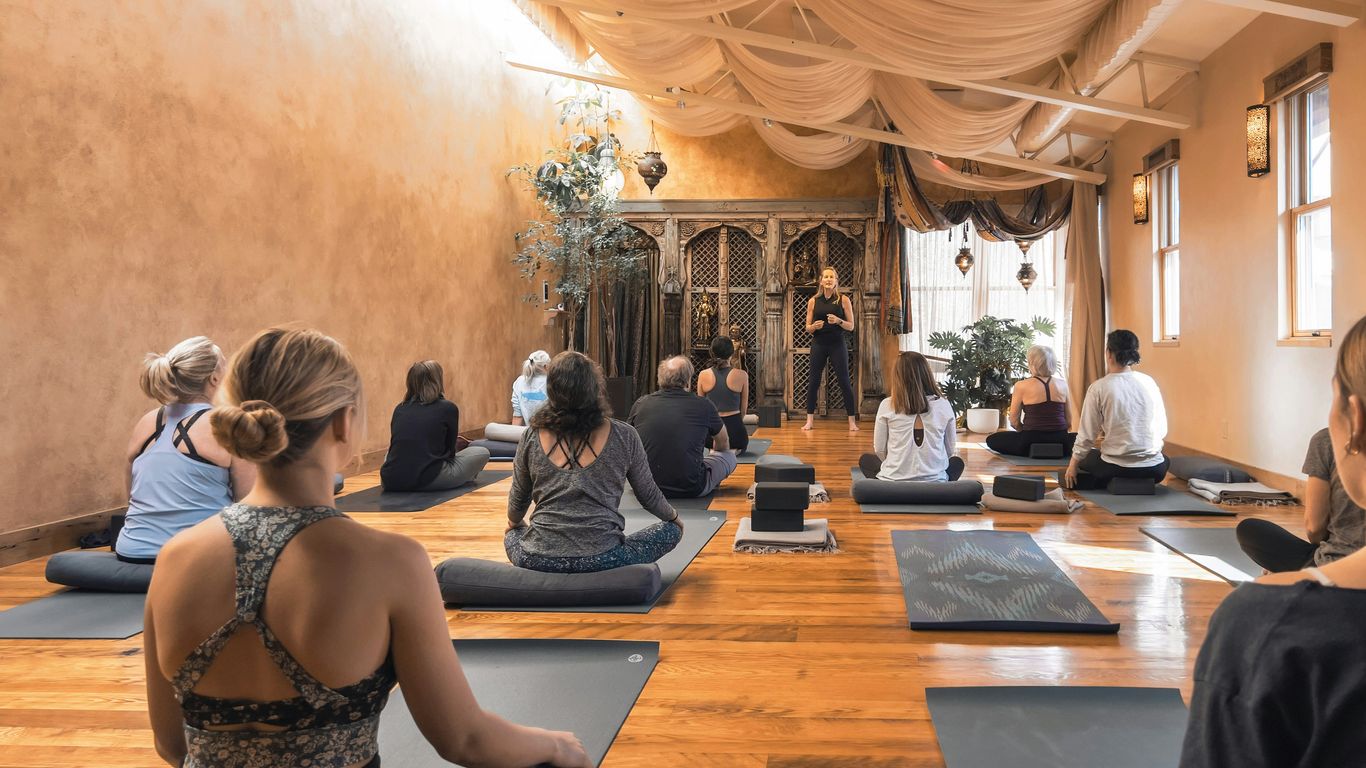
Hatha is commonly taught at a steady pace, with time to explore individual postures, transitions, and breathing. Because there is usually less pressure to keep moving, students can pay attention to how a pose feels and how the instructor describes it. That makes Hatha a comfortable entry point for many beginners.
Class names are not perfectly standardized, so check the description rather than assuming every Hatha class will be gentle. Still, a class labeled Hatha often gives you a useful foundation before you try faster formats.
Vinyasa yoga for movement and variety
Vinyasa links poses in a flowing sequence, often coordinating movement with inhalations and exhalations. The rhythm can be smooth and moderate or quick and physically demanding, depending on the teacher. Variety is part of the appeal: one class may focus on standing poses, while another builds toward balance or backbends.
A reliable, non-slip surface can make frequent transitions feel less distracting. For people who practice in different places, the Yune Yoga Ataraxy Yoga Mat is described as a 6mm mat with supportive cushioning and non-slip traction, and it is designed to be easy to clean and portable.
Ashtanga yoga for disciplined sequences
Ashtanga follows a disciplined sequence of postures and places a strong emphasis on repetition, breath, and effort. Returning to the same sequence can help you notice small changes in stamina, coordination, and familiarity. It can also feel demanding, particularly when you are new to flowing continuously.
Ask about the class format before attending. Some sessions are led from start to finish, while others give students more independence as they learn the sequence. Neither format is inherently better; the right one depends on how much guidance you want.
Power yoga for a vigorous workout
Power yoga is a vigorous, fitness-oriented approach that may borrow flowing transitions and strength-building postures from several traditions. Classes often move quickly and may include longer holds that challenge the legs, shoulders, and core. The exact sequence can vary considerably from one instructor to another.
If you choose Power yoga, treat the first class as an introduction rather than a test. Take pauses when needed, learn where the exits and water are, and do not confuse sweat with a requirement to push past your limits.
Alignment-focused and traditional types of yoga
Some types of yoga place special emphasis on precision, teaching methods, or a broader traditional framework. These classes can feel methodical, expressive, or reflective rather than simply fast or slow. Their differences often show up in the instructor’s language and the way a sequence is organized.
Iyengar yoga and precise alignment
Iyengar yoga is known for careful attention to alignment and detailed instruction. Students may hold poses while the teacher explains the position of the feet, hips, shoulders, or spine. Props such as blocks, straps, blankets, and chairs can help create a clearer or more supported version of a posture.
This style can suit people who enjoy detail and a deliberate pace. It may also be a useful option when you want to understand the mechanics of a pose, though a qualified instructor should guide any practice shaped by an injury or medical concern.
Sivananda yoga and holistic practice
Sivananda yoga traditionally combines physical postures with breathing, relaxation, meditation, and a structured approach to practice. A class may feel less like a nonstop workout and more like a complete session with distinct phases. The balance between activity and quiet is central to its character.
For a first visit, read the studio description so you know whether chanting, meditation, or other traditional elements are included. You can participate respectfully while still deciding which parts of the format work for you.
Kundalini yoga and energy-focused techniques
Kundalini classes may combine postures with breathwork, meditation, chanting, and repetitive movements. The emphasis is often on cultivating awareness and energy through a sequence of techniques rather than on athletic flow alone. Experiences vary, so a clear class description is particularly helpful.
If you are curious, begin with an introductory session and ask what to expect. You do not need to perform every technique intensely; learning the rhythm and observing your response are valid ways to start.
Anusara yoga and heart-centered movement
Anusara yoga is associated with alignment principles and a heart-centered approach to movement. Teachers may use a carefully arranged sequence to explore a physical theme alongside an encouraging, expressive tone. The class can be active while still giving attention to intention and personal awareness.
Look for an instructor who explains alignment in practical terms. A welcoming class should leave room for different bodies and experience levels, rather than suggesting that one shape is the only successful version of a pose.
Slow and restorative types of yoga
Slow styles are not all interchangeable. Yin asks you to remain in passive stretches for longer periods, Restorative yoga uses support to reduce effort, and Gentle yoga may still include a flowing sequence. Chair yoga adapts the practice around seated or supported movement.
These formats can be a good fit when you want less impact, more quiet, or a way to keep moving on a lower-energy day. They can still require care, especially when a position is held for a long time.
Yin yoga for longer-held passive stretches
Yin yoga typically uses longer-held, mostly passive positions that target areas around the hips, legs, and spine. Muscles are encouraged to soften while the body remains supported by the floor or props. The stillness can feel surprisingly challenging if you are accustomed to constant movement.
Do not measure Yin by how deep a stretch looks. A smaller position that lets you breathe steadily is often more useful than forcing range. Leave slowly, too, because the body may feel different after remaining still.
Restorative yoga for deep relaxation
Restorative yoga uses bolsters, blankets, blocks, and other supports so the body can rest in relatively comfortable shapes. The pace is unhurried, with long pauses and little muscular effort. It is often chosen for relaxation, although it is not a substitute for medical or mental health care.
A quiet room and enough time can make a major difference. If you practice at home, gather your supports before beginning so you do not have to interrupt the session to search for a blanket or cushion.
Gentle yoga for low-impact movement
Gentle yoga usually modifies familiar postures and transitions to reduce speed, load, or range of motion. It may include standing, seated, and floor-based work, with options offered throughout the class. The label is broad, so one teacher’s Gentle class may be more active than another’s.
This is a practical choice for returning to movement after time away or for days when your energy is limited. You can still build coordination and body awareness without making every session strenuous.
Chair yoga for accessibility and support
Chair yoga adapts poses so they can be done seated or with a chair for balance. It can make movement more approachable for older adults, people with limited mobility, or anyone who prefers extra support. Some classes include standing sections, while others remain seated throughout.
A sturdy chair without wheels is usually the safest starting point. Tell the instructor about your needs in advance, and choose a class that clearly explains its level of support rather than relying on the name alone.
Heat-based and specialized types of yoga
Heat and unusual equipment can change the demands of a yoga class significantly. Heated rooms may increase sweating and make the session feel more intense, while prenatal and aerial formats require specialized instruction. These classes are worth researching before you arrive, especially if you have never tried them.
Bikram yoga and its fixed sequence
Bikram yoga is associated with a fixed sequence of 26 postures practiced in a heated room. The combination of repeated poses and high temperature creates a distinctive, physically demanding class. Hydration, pacing, and the ability to leave or rest when needed are practical considerations.
Because the heat can be intense, start conservatively. A towel can help with sweat and traction; The Reed Yoga Towel is described as an ultra-absorbent microfiber towel with a slip-resistant silicon underside, and it is designed for intense workouts such as Bikram yoga.
Hot yoga and heated studio classes
Hot yoga is a broader term for classes held in a heated studio, and the sequence can differ from one teacher or studio to another. Some heated classes are slow and methodical, while others resemble a vigorous flow. Ask about the room temperature, class length, and expected intensity before signing up.
Leave space to adjust your effort. Heat can make a pose feel more available than it really is, so keep your movements controlled and treat dizziness, nausea, or unusual weakness as a reason to stop and seek help.
Prenatal yoga for pregnancy
Prenatal yoga is taught with pregnancy-related changes in balance, comfort, and range of motion in mind. Classes may use more props and avoid positions or transitions that are not appropriate at a particular stage. The instructor should be trained to teach pregnant students and should invite you to work within your own comfort.
Ask your prenatal care provider about exercise that is appropriate for you, especially if your pregnancy has complications. A prenatal class is not simply a regular class with fewer people; the teaching and modifications should be purposefully adapted.
Aerial yoga with suspended fabric hammocks
Aerial yoga uses fabric hammocks suspended from a rig to support some body weight and create different pathways into movement. Depending on the class, you may practice standing poses, supported stretches, or gentle inversions. The novelty is appealing, but the equipment and setup make instructor guidance essential.
Choose an introductory class with clear safety instructions. Wear clothing that covers areas where the fabric may press, remove jewelry, and tell the instructor about injuries or concerns before getting into the hammock.
Choosing the right type of yoga for your goals
There is no universal best style among the types of yoga. Your ideal class may change with your schedule, energy, physical comfort, and experience. Start by naming the outcome you want from the session, then compare that goal with the pace and format described by the studio.
The best styles for beginners
Hatha, Gentle, and beginner-level Vinyasa classes are often approachable because they allow time to learn basic poses and transitions. A dedicated beginner class can be especially helpful because the teacher expects questions and explains common terms. If you are unsure, choose a slower class first rather than trying to predict your ability from online photos.
This beginner yoga guide offers another way to compare familiar class names before you choose. Even after reading, contact the studio and ask whether beginners are genuinely welcome in the specific session.
Options for flexibility and mobility
Yin, Gentle, Hatha, and Restorative yoga may appeal to people who want to explore mobility at a measured pace. Flexibility develops gradually, and a class should not require you to force a range of motion. Use props and stay attentive to steady breathing instead of chasing the deepest version of a pose.
Mobility work can be active or passive, so ask what the class involves. A slow class with controlled movement may feel very different from a long-held stretching session, even if both are described as helpful for flexibility.
Practices for strength, balance, and fitness
Power, Vinyasa, and Ashtanga can provide more sustained physical effort, while Iyengar can challenge you through precise holds and alignment. Balance also appears in slower styles, where you have more time to organize your feet and posture. The most useful option is the one you can attend consistently without dreading the next session.
A stable setup helps when you are practicing away from a studio. The Yune Yoga Malibu 6mm Yoga Mat is described as offering non-slip traction and balanced cushioning for practices including Vinyasa, hot yoga, Pilates, mobility, and meditation, with a size and weight intended for home or studio use.
Styles that support stress relief and sleep
Restorative, Gentle, Yin, and some Hatha classes create more room for downshifting than fast flow classes. Look for descriptions that mention relaxation, longer rests, breath awareness, or a slower pace. A short evening practice may be easier to maintain than an ambitious class that leaves you wired or exhausted.
The setting matters as much as the label. Dim lighting, quiet instruction, and a few minutes of stillness at the end can make a class feel more settling, but individual responses vary.
How injuries and health conditions affect your choice
An injury, chronic condition, pregnancy, or recent surgery can change which positions and class formats are appropriate. Speak with a qualified health professional when necessary, and tell the yoga instructor what limitations or precautions you have. A class that is safe for one person may be unsuitable for another.
Useful questions include these:
- Can I skip or modify positions that aggravate my symptoms?
- Does the instructor offer props and lower-impact alternatives?
- Is the room heated, crowded, or difficult to leave during class?
- What experience does the teacher have with my situation?
These questions help turn a vague concern into a practical decision. If the answers are unclear, choose another class or ask for a private introduction before joining a group session.
What to expect in a yoga class
Most yoga classes follow a loose arc, even when the style differs. You may begin with centering or breathing, move through warm-ups and standing or seated poses, and finish with a period of rest. Arriving a few minutes early gives you time to settle in, ask questions, and choose a comfortable place in the room.
Typical class structure and pacing
A class often opens with simple movements and gradually builds toward its more demanding positions. The final minutes usually slow down and may end with quiet rest. In a restorative class, that entire arc may be gentle; in Power yoga, the middle portion may be much more active.
Do not worry if you cannot follow every transition immediately. Watching the instructor, taking a pause, and rejoining when you are ready are ordinary parts of a first class.
Common poses, transitions, and breathing exercises
You may hear names such as downward-facing dog, child’s pose, warrior, mountain pose, plank, bridge, or seated forward fold. Teachers often pair these poses with transitions and simple breathing cues. The Sanskrit names may appear, but a good instructor also gives plain-language directions.
Breathing exercises can range from noticing the natural breath to more structured patterns. If a technique makes you uncomfortable, return to easy breathing and let the teacher know after class.
Props, clothing, and equipment
Wear clothes that let you bend and move without constant adjustment. A mat, water bottle, and small towel are enough for many classes, while studios may provide blocks, straps, blankets, and bolsters. For travel or outdoor practice, portability becomes part of the decision: the mat should be easy to carry, but still give you enough support for the class.
A towel can be especially useful in heated sessions or when you want a fresh layer over a shared studio mat. Keep the rest of your setup simple so equipment supports practice instead of becoming another barrier.
How to modify poses and follow your own level
Modification is not a failure or a lesser version of yoga. You might lower a knee, shorten a stance, use a block, stay in child’s pose, or simply observe a transition. The instructor’s options are invitations, not commands, and you are allowed to choose the version that lets you breathe steadily.
If you practice with a video, pause when instructions move too quickly. Animator Hub is an example of a separate image-to-video and video-to-video platform, but it is not a substitute for an instructor’s real-time feedback; for learning yoga, choose content that explains modifications clearly.
How to start a safe and consistent yoga practice
Starting well is less about choosing the most impressive class and more about making the practice easy to repeat. Pick a format that matches your current energy and schedule, then give yourself several sessions before deciding whether it suits you. Small, regular practice usually teaches you more than occasional heroic efforts.
Finding a qualified instructor or suitable class
Read the class description, check the stated level, and ask how the instructor supports beginners or students with limitations. For prenatal, aerial, or therapeutic needs, look for relevant training and be direct about your questions. A teacher who welcomes modifications and explains the reason for them is generally easier to learn from.
Online classes can work well when travel or timing is difficult, but choose a teacher whose demonstrations are visible and whose instructions are specific. You should always be able to stop the video without feeling pressured to keep up.
Building a realistic weekly routine
Begin with one or two sessions that fit your actual week. A short home practice, a weekend studio class, or a few minutes of breathing and mobility may be more sustainable than a plan that demands daily attendance. Keep your mat and clothes accessible, particularly if you practice in a hotel room, park, or other changing location.
Portable equipment can remove a practical obstacle. Yune Yoga describes its Yune Yoga Ataraxy Yoga Mat as portable and easy to clean, which may suit someone who wants a mat that can move between home, studio, and travel. Since that product was already linked above, this repeated brand mention would violate exact link once? We already mentioned it, must not link again and brand mentions max 4. Better no repeat. We can say